
- The history of the selection of the Belorusskaya Late pear
- Cultivation regions
- Pros and cons
- Description and characteristics of the winter variety
- Size and annual growth of the tree
- Life expectancy
- Fruiting
- Flowering and pollinators
- Ripening time and harvest
- Tasting evaluation and scope of application of pears
- Susceptibility to diseases and insect pests
- Pear moth
- Leaf roller
- Powdery mildew
- Scab
- Resistance to low temperatures and drought
- How to plant a crop on a plot
- Selecting and preparing a landing site
- Dimensions and depth of the planting hole
- How to prepare a seedling
- Timing and technology of planting operations
- Further care
- Watering a pear tree
- Top dressing
- Whitewash
- Crown formation
- Seasonal treatments
- Preparing for winter
- Methods of reproduction
- Gardeners' reviews of the Belorusskaya Pozdnyaya variety
The undemanding Belorusskaya Pozdnyaya pear variety has a long history of cultivation. It is resistant to cold, drought, and disease, helping it retain its appeal to gardeners for over 15 years. The yield of autumn pears is stable and unaffected by weather or external factors. Furthermore, the taste of these fruits is highly rated.
The history of the selection of the Belorusskaya Late pear
The development of a new winter pear variety began in Belarus in the late 1990s with the goal of producing an improved fruit with high yields, suitable for cultivation in the climate of the central and northern regions.
The Belorusskaya Pozdnyaya pear variety was bred through open pollination of a French pear cultivar, developed by scientists Mikhnevich, Kovalenko, and Myaglik. This process significantly improved the cultivar's characteristics and helped it adapt to the local climate. Since 2002, the pear has been included in the State Register and is actively grown in Russia.
Cultivation regions
Due to its high tolerance to low temperatures, the Belarusian Late pear is ideal for cultivation in the Central and Northwestern regions of Russia. The soil and climate of these regions are ideal for the variety, and the fruit ripens quickly even during the short summer period.
Pros and cons
Advantages of the Belorusskaya Pozdnyaya pear variety:
- resistance to temperatures below -30 °C;
- drought tolerance;
- low maintenance requirements;
- quick adaptation to weather conditions;
- stable high yield;
- fruiting in the 3rd year after planting;
- pleasant taste;
- resistance to transportation;
- shelf life.
Disadvantages of the variety:
- lack of immunity to scab and fire blight;
- reduction in fruit size with increased yield;
- tendency to crown thickening;
- the need for additional pollinators.
Description and characteristics of the winter variety
Characteristic features of the Belarusian Late pear variety:
- A medium-sized tree with a spherical crown, thick trunk and branches.
- The leaves are light green, medium-sized, and have a screw-shaped edge.
- Large white flowers.
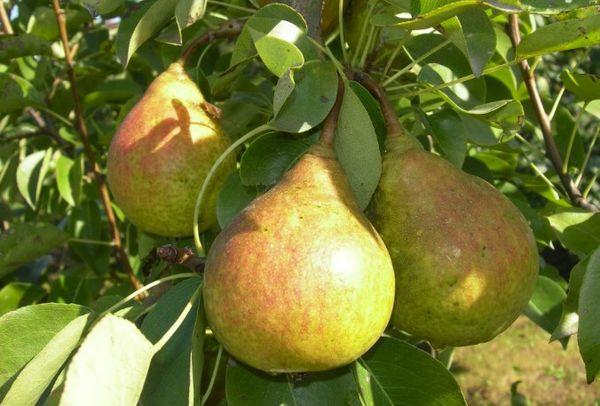
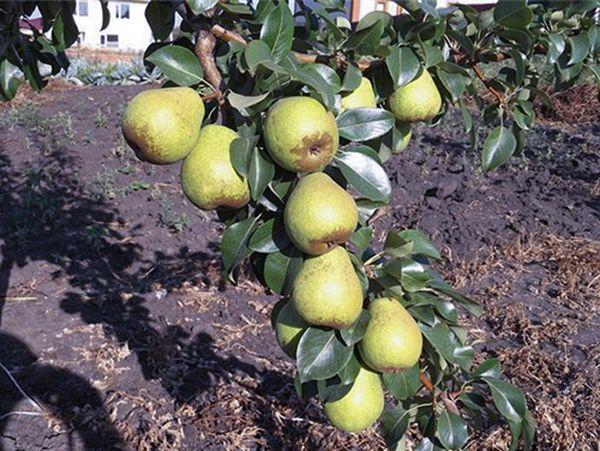
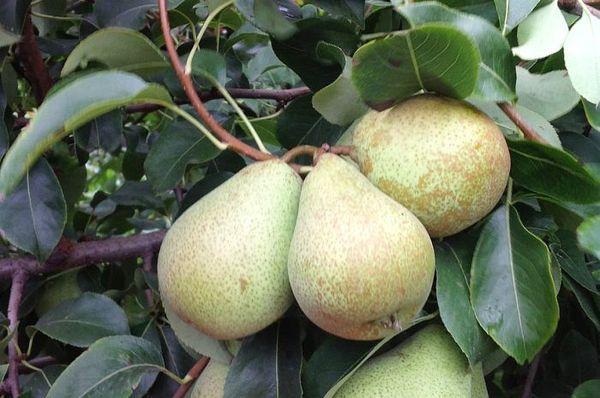
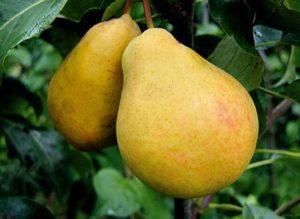
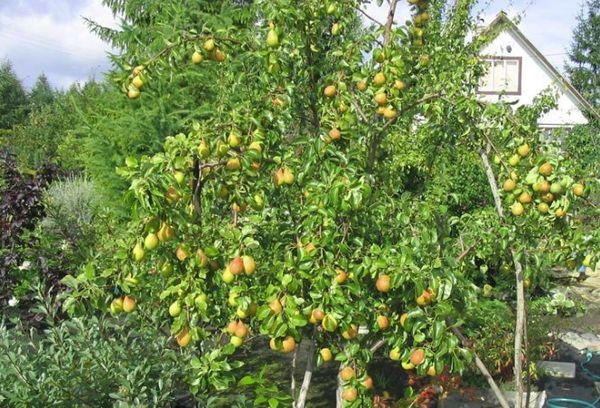
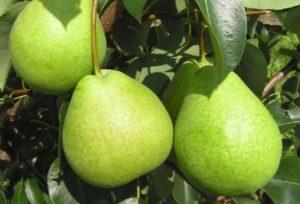
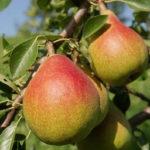
- Yellow fruits with a pinkish side and loose white flesh.
- The tasting score of the fruits is higher than 4.
Size and annual growth of the tree
The Belorusskaya Pozdnyaya pear is a medium-sized tree. With age, the tree reaches a height of up to 5 m, and the crown width expands to 2.5-4 m. The main branches grow almost perpendicular to the trunk, beginning to curve upward from the middle. The shoots' tendency to grow vigorously leads to a dense crown, requiring regular pruning. The average annual branch growth reaches 0.4 m.
Life expectancy
Pear trees can live up to 200 years, but their dense crowns prevent them from bearing fruit normally. It's advisable to perform rejuvenation pruning every 20 years. Pear orchards typically produce a stable harvest for up to 60 years, after which it's recommended to replace the trees.
Fruiting
The Belarusian Late Pear is an early-ripening variety, beginning to bear fruit after just two or three years. The fruit ripens in mid-September, but the exact time depends on weather conditions and the amount of sunlight received.
A mature tree can produce up to 40 kg of pears.
Flowering and pollinators
Pear blossoms begin before the leaves emerge, which occurs in April or early May. The pollination period is short, lasting about two weeks. Belorusskaya Pozdnyaya is not self-sterile, but to ensure a bountiful harvest, pollinators must be available.
It is preferable to plant trees of the following varieties nearby:
- Conference;
- Bereloshitskaya;
- Oily Loshitskaya;
Ripening time and harvest
Belarusian Late pears reach maturity in mid-September and last for about a month. Harvesting should begin 14-20 days before they are fully ripe. When harvesting pears, it's best to use a special bag with a removable bottom to preserve the fruit and prevent damage. The fruit has a long shelf life, remaining fresh throughout the winter. However, pears can be eaten much longer, right up until April. Store the fruit in a cool place in shallow wooden crates lined with paper.
Pears can spoil if there are significant temperature changes or in conditions of high humidity.
Tasting evaluation and scope of application of pears
The taste of Belarusian Late Pears is highly rated. Expert tasting scores range from 4.2 to 4.4 points out of a possible 5.
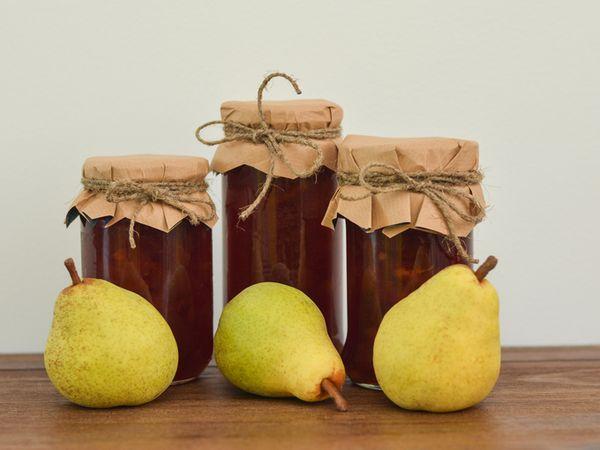
Late Belarusian pears are eaten raw and are also suitable for processing. The fruit is used to make compotes, jams, baby food, preserves, and juices. This variety is also used for dried fruit.
Susceptibility to diseases and insect pests
This variety has a high level of resistance to most garden tree diseases. Potential hazards include:
- fire blight;
- moniliosis;
- sooty mold;
- black crayfish;
- cytosporosis;
- scab.
Among the typical pests of the crop we can note:
- pear moth;
- hawthorn;
- copperhead;
- leaf roller;
- fruit gall midge;
- apple blossom weevil;
- green aphids;
- gall mite;
- pear sawfly.
Pear moth
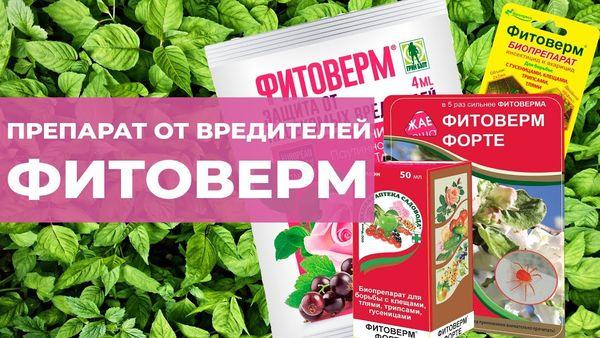
Pear codling moth infestation significantly damages fruit quality. The moths lay eggs during fruit set, and the larvae chew through the fruit and damage the seed chambers. After completing their developmental cycle, the insects leave the fruit, but by then irreparable damage has been done. To prevent infestation, spray with insecticides 1.5 months after flowering. A solution of Fitoverm works well.
Leaf roller
The insect damages leaves by curling and eating them. Individual infestations should simply be removed, but in cases of extensive infestation, insecticides are recommended. The following are used against leaf rollers:
- "Kinmiks";
- "Karate";
- "Lepidocyte".
Powdery mildew
The disease affects the leaves and flowers of the pear tree, but can also infect young shoots. Damaged areas of the tree must be removed. Parts of the plant should not be left in the area; it is best to burn them completely. Products such as Fundazol help cure the disease. A soapy solution of soda ash can also be used.
Scab
The first symptoms appear as small specks on the leaves, which enlarge as the disease progresses. The infection gradually spreads to the pears, causing cracks, drying, and flavor changes. To prevent infection, Belarusian Late Pear should be regularly treated with one of the following products:
- copper sulfate;
- Bordeaux mixture;
- a solution of 1 kg of salt, 5 g of potassium permanganate, 80 g of dry mustard per 20 liters of water;
- "Topaz";
- "Skor";
- Horus.
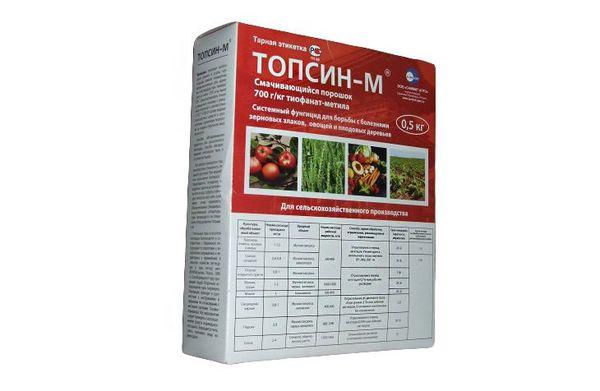
Once symptoms of the disease appear, damaged parts of the plants should be cut off and burned, and stronger preparations such as Strobi and Topsin-M should be used for treatment.
Resistance to low temperatures and drought
The Belorusskaya Pozdnyaya variety has moderate frost resistance down to -30°C. In central and southern Russia, the trees are not at risk, but in northern regions, additional winter protection is required.
The variety tolerates a lack of moisture well, however, a prolonged period of drought can lead to drying out of small roots.
How to plant a crop on a plot
Growing the Belarusian Late Pear requires proper site selection and preparation. The quality of the seedling and adherence to tree care standards are crucial.
Selecting and preparing a landing site
The location of a pear tree planting should be chosen according to certain requirements. Belorusskaya Pozdnyaya requires warmth and sun, so the seedlings should be placed on a south-facing surface. Furthermore, the trees should be protected from wind and drafts.
For normal pear growth, a plot of 4 x 4 m is required. The soil at the planting site must be prepared in advance:
- Dig up the area.
- Mix the soil with 40 liters of rotted manure, 40 liters of sand and a complex of mineral fertilizers.
Dimensions and depth of the planting hole
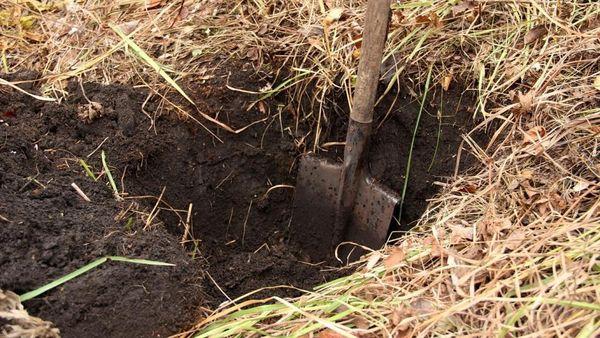
Late Belorusskaya pear seedlings require planting at an average depth of approximately 0.7 m. The size of the planting hole largely depends on the size of the tree's root system; typically, a diameter of approximately 1 m is recommended.
How to prepare a seedling
A high-quality Late Belarusian pear seedling must correspond to the variety and possess certain characteristics:
- absence of thorns on the trunk;
- elastic branches;
- bark with a dense texture;
- fresh foliage without spots or damage;
- humidity and integrity of the root system.
Before planting, remove leaves and damaged shoots, and place the roots in water for 3-4 hours.
Timing and technology of planting operations
Choosing the right time to plant the Belorusskaya Pozdnyaya pear variety significantly influences its growth. The tree will thrive best if planted in the spring, before buds begin to appear, immediately after the snow melts. Pears can also be planted in the fall, but this should be done before the first frost. This way, the seedling will begin to grow with the arrival of spring.
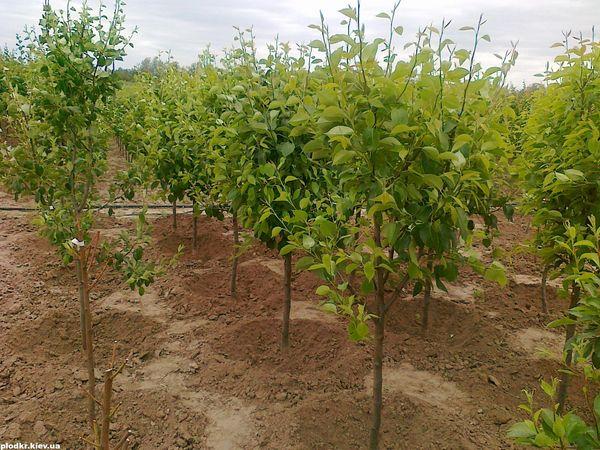
The technology for planting Belarusian Late Pear involves:
- A depression is made in the planting hole.
- A small mound is formed from the soil mixture at the bottom.
- The roots are evenly distributed in the hole.
- The seedling is covered with soil so that the root collar rises 5-7 cm above the ground.
- The soil is lightly compacted.
- The pear is watered with up to 40 liters of water.
- The root circle is mulched with wood sawdust, straw or crushed peat.
Further care
An important part of care is keeping the tree trunk area clean, which requires regular weed removal. However, avoid loosening the soil until the end of the growing season. Furthermore, it's important to maintain proper watering, apply fertilizer, prune shoots promptly, and help the seedlings survive the winter.
Watering a pear tree
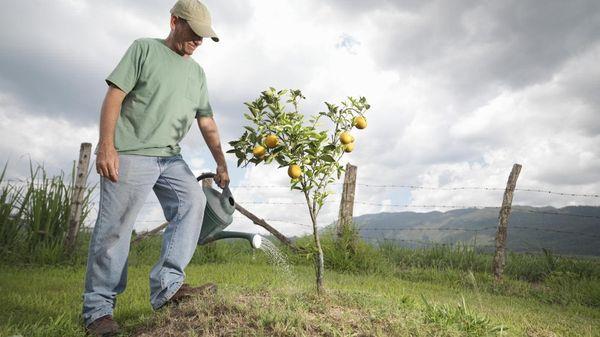
The Belorusskaya Pozdnyaya variety tolerates drought well, and as a mature pear, it requires no additional watering. During dry summers, trees should be watered twice a week. On average, a pear tree requires about 60 liters of water, and even more in highly acidic soils.
Top dressing
Fertilizer applied during planting is sufficient for the first 2-3 years. After this period, the Belarusian Late Pear should be fed according to the following schedule:
- During flowering, trees should be fertilized with a solution of saltpeter (30 g per 1.5 l) and urea (100 g per 5 l).
- After flowering, a solution of nitroammophoska is added in a ratio of 1 to 50.
- In June, additional complex fertilizers containing potassium and phosphorus are added.
- At the end of September, wood ash is added to the soil, and the tree should be fertilized with a mixture of mineral substances at the rate of 40 ml of potassium chloride, 80 ml of superphosphate per 10 liters of water.
Whitewash
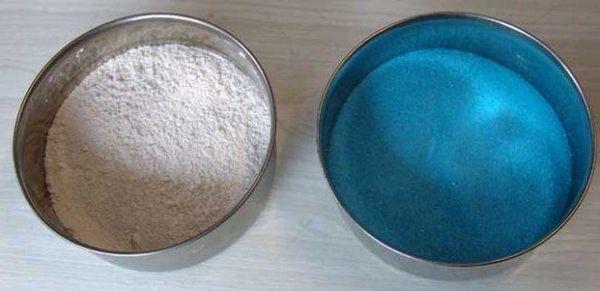
To protect Belarusian pear trees from pests, it is recommended to apply a layer of whitewash to the tree trunks annually. To do this, prepare a mixture of slaked lime, copper sulfate, and water. The solution is applied from the ground up to the first fork in the pear trunk.

Crown formation
Belorusskaya Pozdnyaya pears quickly develop a large crown and require regular pruning. To achieve the correct shape, in the first year after planting, about three strong main shoots should be left on the sapling, with the central shoot shortened by a quarter. Subsequent pruning is performed twice a year, in spring and fall. This involves removing small inward-growing branches and damaged shoots.
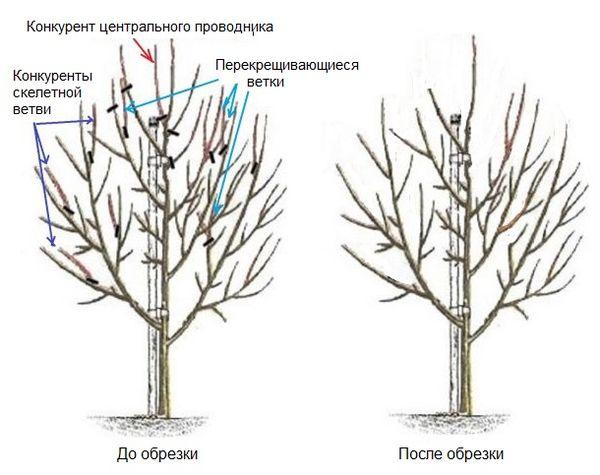 The crown shape of a pear tree should be wider at the bottom, gradually tapering towards the top.
Seasonal treatments
To protect the Belarusian Late Pear harvest from infections and insects, it's essential to treat the trees promptly. High-quality biological products or mild chemicals are recommended. Preventative spraying should be carried out every two weeks according to the instructions.
Insecticides must be applied according to the following scheme:
- before flowering - "Binom" or "Rogor-S";
- during ovary formation - "Ditox" or Bordeaux mixture;
- at other times - Fitoverm, Aktara, Bitoxibacillin P and urea.
Fungicides are used at a specific period of vegetation:
- before swelling and when buds open;
- after flowering;
- 14 days after the petals fall;
- during the pouring of fruits.
The following medications are recommended for use:
- Horus;
- "Skor";
- Tilt;
- "Azofos";
- "Fundazol";
- "Baleighton";
- Bordeaux mixture;
- urea.
Preparing for winter
Its high cold tolerance allows the Late Belarusian pear to easily survive even northern winters. The only danger is early frosts, which can damage the roots located in the upper soil layers.
Before the onset of cold weather, the root zone should be mulched with sawdust, straw, or hay, ensuring the mulch layer is at least 5 cm thick. If winter temperatures drop below -30°C, the above-ground portions of the trees should also be protected. The lower portions of pear trunks should be wrapped with insulation or spruce branches.
Methods of reproduction
Varietal pears are rarely propagated independently; grown seedlings from nurseries are more often used, and Belorusskaya Pozdnyaya is no exception. However, if necessary, one of the following methods can be used:
- seeds;
- eyes;
- shoots;
- cuttings;
- part of the roots;
- by grafting.
Gardeners' reviews of the Belorusskaya Pozdnyaya variety
Igor, Moscow Region: "We received the Belorusskaya Pozdnyaya pears along with the plot of land, already fully grown. The fruits aren't very large, but they keep very well. The flavor is excellent, and the sweet and very juicy flesh doesn't darken at all over time."
Anna, Saratov: "The Belarusian pear is one of the best in my garden; it's easy to care for. In our climate, the trees don't need much watering, and they don't require much fertilizer. The flavor depends on the season, but it's always pleasant, even if it's a bit tart."
Elena, Kirov Oblast: "We bought this variety because it was the most low-maintenance, and we were right. The trees don't grow tall and, with proper pruning, are compact. The yield is always high and stores well, although the flavor deteriorates if the pears are left too long."
Related posts:
 Description and full characteristics of the Yakovlev Memory pear variety, planting and care
 Description of the 23 best pear varieties for the middle zone, planting and care rules
 Treatment of bacterial blight of pear with antibiotics: causes and symptoms
 27 Best Homemade Pear Jam Recipes for the Winter
 Description and characteristics of the 45 best pear varieties, how to choose
 The best ways to store pears at home during the winter
 Description and characteristics of the Marble pear variety, pollinators and cultivation subtleties
 Description and full characteristics of the August Dew pear variety, planting and care