
- Who is the causative agent of the disease?
- Causes and factors of the disease
- How does fire blight infection occur?
- Which varieties are susceptible to fire blight?
- Signs and symptoms of damage
- How to combat bacterial blight
- We use chemicals
- Antibiotics
- "Streptomycin"
- Gentamicin
- Tetracycline
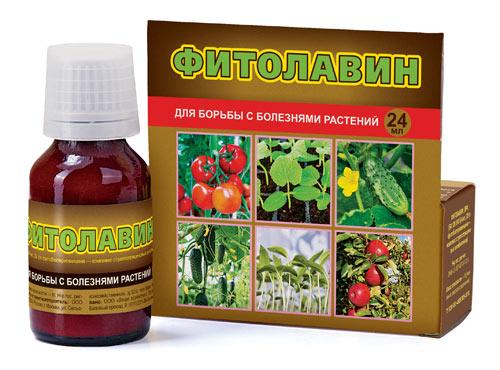
- Fitolavin
- Folk remedies for treatment
- Radical methods
- Prevention
- Selecting resistant varieties
- Garden Pest Control
- Disinfection of garden tools
- Carrying out preventive work
- Summer varieties of pears
- Autumn pear varieties
- Winter pear varieties
With timely treatment of fire blight on pears, it's possible to save an orchard from destruction. It's important to detect the disease early and take measures to prevent the spread of infection. Fire blight is especially dangerous for pear seedlings. Toxins released by pathogens exposed to cadmium weaken the immune system.
Who is the causative agent of the disease?
The Erwinia amilovora bacterium was first identified in the United States. It causes fire blight, which causes pear and apple trees to wither. Among gardeners, the disease is often referred to as "erwinia." Previously, the infection affected orchards in the United States (Canada, USA) and Australia. Trees showing signs of fire blight can now be found in Russian hobby and commercial orchards.
A dangerous disease that causes widespread mortality among fruit trees emerged in the south of the country in the 1990s and continues to spread. Fighting the infection is difficult because the bacteria attack all tissues, even those deep beneath the bark. The bacteria infest sap, blood vessels, and the cambium. Without proper treatment, an infected pear tree dies within 2-3 years.
Causes and factors of the disease
Scientific research into Erwinia amilovora continues. Scientists are identifying the factors that influence the development and spread of this dangerous infection. The main causes of the disease are believed to be:
- birds and insects, they are carriers of bacteria;
- the presence of mechanical damage to the bark, which facilitates the penetration of infection;
- windy weather;
- unbalanced root feeding, leading to excess nitrogen in the soil;
- You can introduce fire blight into your garden through new, infected pear seedlings or by grafting infected cuttings.
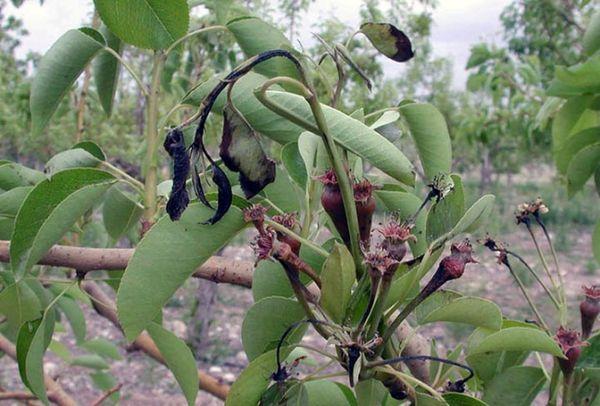
Scientists note factors influencing the intensity of infection spread. These include a sharp rise in air temperature in late spring and early summer and increased humidity during prolonged rains.
In early summer and spring, the disease is carried by bees collecting honey from flowering pear trees. In autumn, the infection is spread by wasps feeding on the sap of ripe fruit. Low temperatures reduce the activity of Erwinia amilovora. Pear trees are not infected with fire blight in winter.
How does fire blight infection occur?
Bacteria form colonies on the bark, fruit, and leaves of the pear tree. They appear as droplets of amber-colored liquid and appear in the summer. Birds and insects that come into contact with the exudate become carriers of the infection. The pear tree's weakest point is the flower buds. They are the first to be infected, and then the bacteria spread to other parts of the tree.
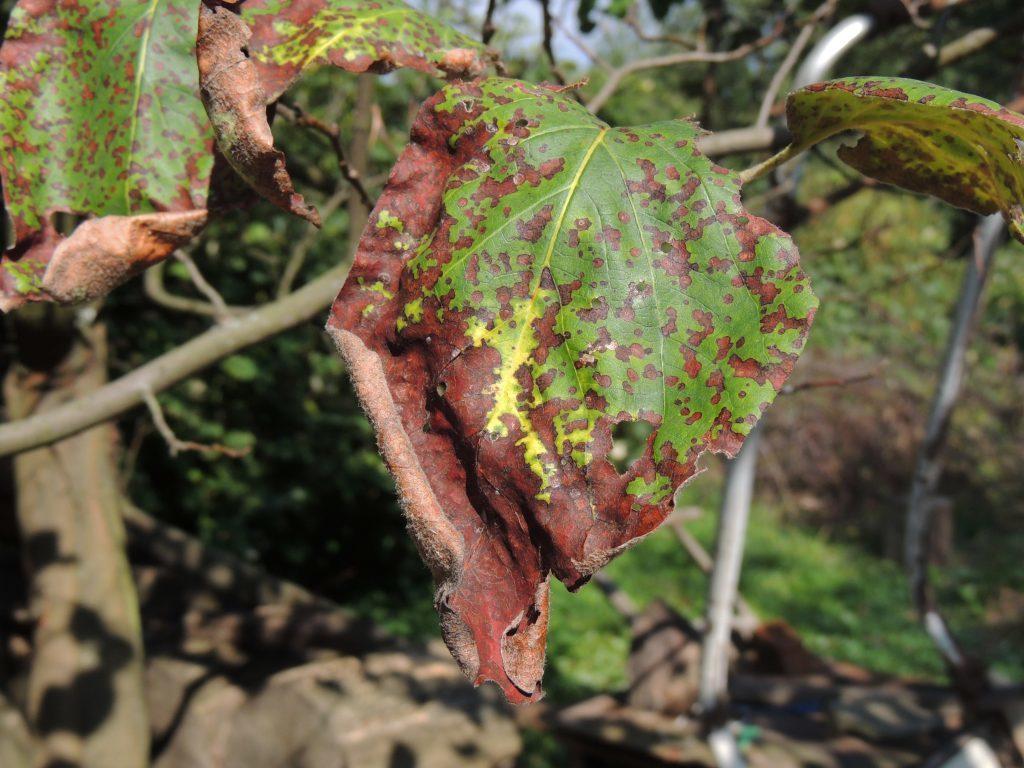
The disease progresses at varying rates, depending on the pear tree's stage of development when the bacteria invade. Buds turn black and dry out if the infection occurs during bud break. Flower buds wilt and darken, and shoots and leaves turn black if Erwinia amilovora infects the pear tree during flowering.
In the final stages of the disease, the bark softens and exudates. This exudate is initially white, then turns brown when exposed to atmospheric oxygen. The bark of the diseased pear tree becomes blistered and discolored.
The tree dies if pathogens penetrate the root system.
Which varieties are susceptible to fire blight?
There are no varieties that are 100% immune to fire blight.Modern pear varieties vary in susceptibility to bacterial infection. The following foreign-bred pears are susceptible to Erwinia amilovora:
- Williams;
- General Leclerc;
- Santa Maria;
- Durandu;
- Estimator.
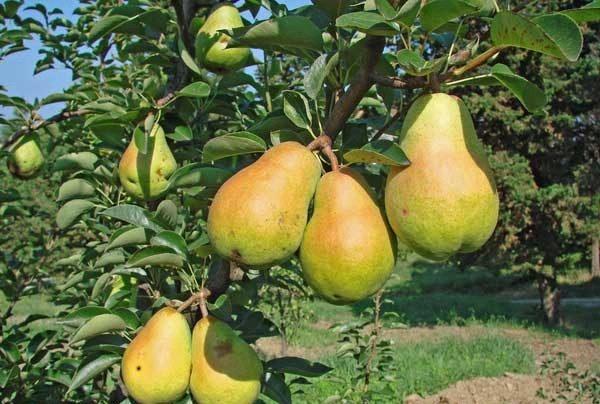
The "Conference" variety is popular with Western European gardeners, but is relatively resistant to fire blight. The old American "Favoritka" variety and the frost-hardy "Lukashovka" pear, bred for Siberia, are vulnerable.
Signs and symptoms of damage
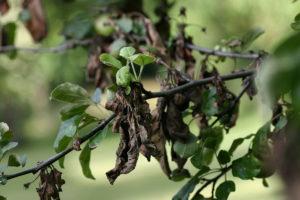
The first symptoms of fire blight can be seen on pear trees in the spring during bud swelling and flowering. Infected buds fail to open, turning dark and drying out. Buds and open flowers dry up and turn black.
In the next stage, the disease attacks the leaves and developing fruit. With fire blight, pear leaves curl and turn black, while the ovaries dry up, darken, and stop developing. They can remain mummified on the tree until late fall.
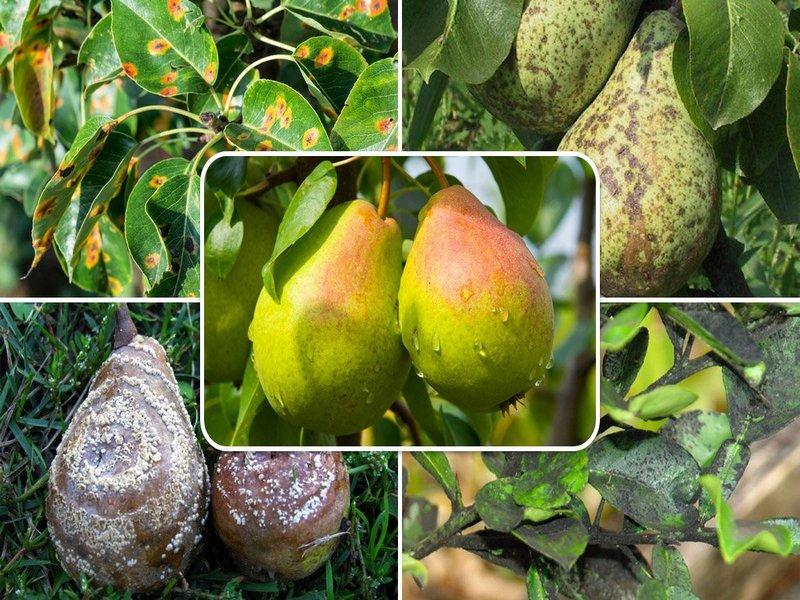
Penetrating the tree's tissue, the bacteria attack the shoots. Branches become deformed and bend, their bark turns black, and spots appear. Diseased pear trees appear charred and burnt. In the final stages of fire blight, a reddish-brown pattern appears on the trunk and skeletal branches.
It's formed by sap leaking onto the bark. Initially, it's white, later turning reddish-brown. The pear tree's bark begins to peel. It's impossible to save the tree in the final stages of the disease. Gardeners may have difficulty making a proper diagnosis because similar symptoms can occur with insufficient soil moisture and bacterial canker.
How to combat bacterial blight
Fire blight is dangerous because its initial symptoms resemble those of fungal diseases. Many gardeners treat bacterially infected pear trees with fungicides (HOM, Skor). These treatments are ineffective, and the trees continue to suffer, leaving time to heal. They are effective against moniliosis and cytosporosis.
Erwinia should be controlled in the spring and in a comprehensive manner, treating the pears with fungicides and antibiotics.
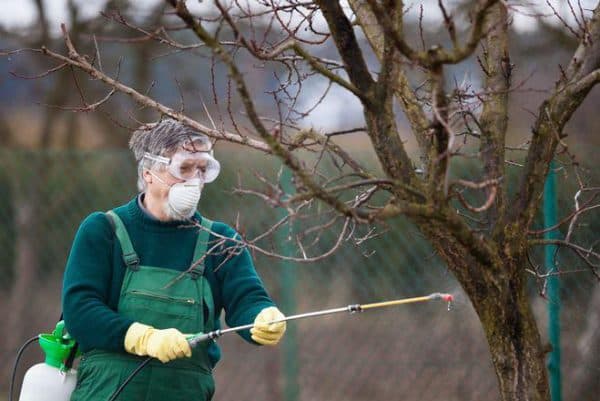
Any spraying with chemicals is effective for a short period of time, lasting a maximum of two weeks. Bacteria emerge from the capsules at the beginning of sap flow and are vulnerable until flowering. It's important for gardeners to watch for the appearance of sticky exudate on the bark. A single drop of it contains millions of bacteria. Wind, rain, and insects spread them over a large area, infecting new trees.
We use chemicals
Before the leaves appear, the trunk and branches of the pear are treated with chemicals containing copper or zinc:
- "HOM";
- "Tsineb".
Avoid using copper sulfate or Bordeaux mixture. They are highly toxic and harmful to plants. Chemical treatments should be stopped about five days before flowering. "HOM" and "Zineb" do not kill bacteria; they inhibit their reproduction and kill the fungal infection that always accompanies fire blight.

Antibiotics
Antibacterial medications are used before, during, and after flowering. If exudate appears, apply a compress of an Ofloxacin solution to the pears. Dissolve one tablet in a liter of water, remove the sticky mucus, and apply a cloth soaked in the antibiotic solution to the wound.
"Streptomycin"
This inexpensive product is successfully used in both commercial and amateur gardens. To obtain a working solution, simply dilute one ampoule in 5 liters of water. Pears showing signs of fire blight are sprayed every 20 days, beginning in May.
In severe cases, pears are injected into the wood. First, the wood around the infected area is cleaned, then the injection is administered.
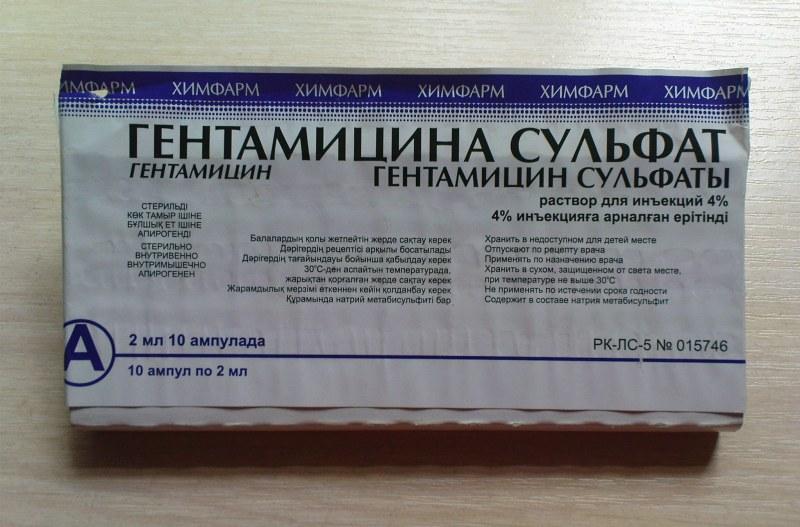
Gentamicin
During the summer, pears are sprayed at least three times at 5-day intervals. How to apply the working solution:
- water - 1 l;
- 2 ml ampoule - 1 pc.
Tetracycline
The antibiotic is used no more than once a year. Dissolve two tablets in 3 liters of water. The antibiotic's effectiveness is increased when used concurrently with streptomycin. Avoid spraying in hot weather, as the solution's antibacterial properties are reduced at high temperatures.
Fitolavin
To treat one mature pear tree during the growing season, bud and ovary formation, 2 to 5 liters of working solution are required. It is prepared in the following proportions:
- water - 10 l;
- "Fitolavin" - 20 ml.
The antibiotic is applied at the very end of flowering, mixed with "Skor." During active shoot growth, it is combined with "Zineb," "HOM," and "Acrobat." A solution of "Fitolavin" is effective during cold spells.
Folk remedies for treatment
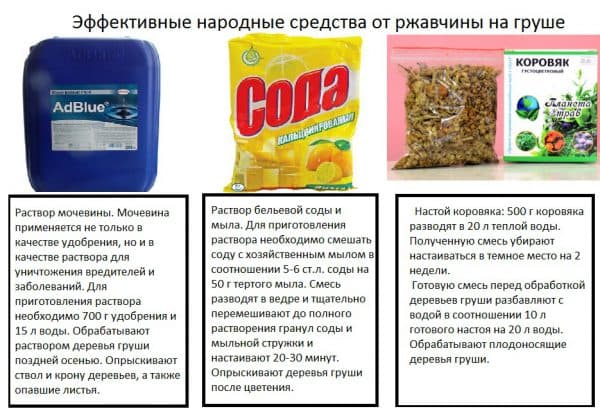
There are no effective treatments for fire blight on pears, so gardeners generally don't consider using folk remedies. There is some evidence that the drug "Pharmaiod" is effective against fire blight. It is used according to the instructions in the table.
| Phase | The amount of "Pharmaiod" per 10 liters of water (ml) |
| Green cone | 5 |
| The appearance of the first pink buds | 5 |
| Formation of ovaries | 10 |
| Pouring fruits | 10 |
Pears are sprayed in calm, dry weather, not late in the evening or early in the morning.
Radical methods
Radical control methods are used if the garden is large and contains many young fruit trees. Blackened trees infected with bacteria are uprooted and burned. The area where they grew is cleared of weeds.
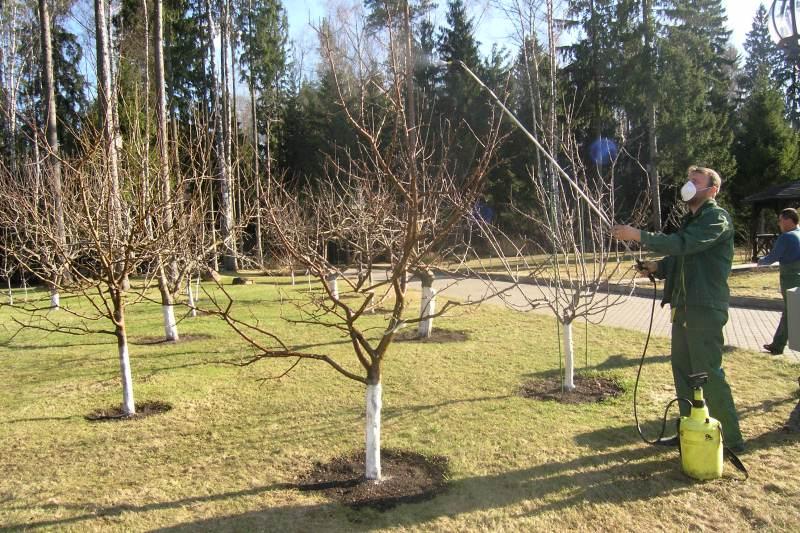
The remaining pear and apple trees are treated with an antibiotic solution weekly. The medications are alternated to prevent addiction. Trees showing the first signs of erwinia are examined with clean instruments, and diseased branches are pruned.
When pruning, remove some healthy wood. All wounds are first treated with an antibiotic solution and then sealed with garden pitch.
Finally, the pears are treated with a mixture of antibiotic and copper sulfate. If there are diseased trees in the orchard, all buds are removed from young pears for the first two years. This reduces the risk of bacterial infection through flower buds.
| The degree of tree infestation | Control measures |
| Crown drying out > 30% | Uprooting and burning trees |
| Crown drying out < 30% | Removal of diseased branches with the capture of healthy wood |
Prevention
The main preventative measures are planned for the fall. Using antibiotics to treat Erwinia amilovora during this period is pointless. The bacteria, preparing for winter, stop reproducing and transform into capsules. Medications cannot penetrate them.
Selecting resistant varieties
You can purchase an infected seedling at the market or from a nursery, so when purchasing, carefully inspect the plant for any mechanical damage to the trunk or branches. Specialized nurseries offer pear varieties resistant to the Erwinia amilovora bacteria:
- Carmen;
- Northerner;
- Long-awaited;
- Larinskaya;
- Rainbow;
- Dekabrinka;
- Uralochka.
Garden Pest Control
Pests that parasitize pear trees weaken their immune system and transmit viruses, bacteria, and fungi. Garden pests contribute to tree infestations, carrying exudate particles on their paws containing millions of dangerous microorganisms that cause fire blight.
Harmful insects are controlled using standard methods:
- In summer, keep tree trunks and row spacing clean, regularly removing weeds;
- in autumn, fallen leaves and fruits are raked up and destroyed;
- Throughout the spring-autumn season, pear tree crowns and tree trunks are treated, modern insecticides and herbal infusions prepared according to traditional recipes are used.
Disinfection of garden tools
Pruning shears, loppers, and knives are used in various gardening tasks. They need to be disinfected each time, otherwise they can spread infection. Hobby gardeners do this in a variety of ways:
- calcine over a fire;
- wash the blades with kerosene;
- wipe with alcohol or vodka;
- dipped in a solution of copper sulfate;
- use a strong solution of potassium permanganate.
Carrying out preventive work
In autumn, measures are taken to increase the frost resistance of pears, protecting the bark from frost cracks and fissures. Before the first frost, trees are watered generously. This planned procedure is called moisture-recharging irrigation.
It increases frost resistance in pear trees, reducing the formation of cracks in the bark in winter. In the spring, it will be more difficult for bacteria to penetrate the bark.
To protect against sunburn and frost cracks, the trunk and skeletal branches are whitewashed with lime or a special garden paint. In summer, foliar sprays are applied to control aphids, leafhoppers, and other insects. In June and July, high doses of nitrogen fertilizers are avoided under pear trees. Summer greening operations are not performed in infested orchards.
Summer varieties of pears
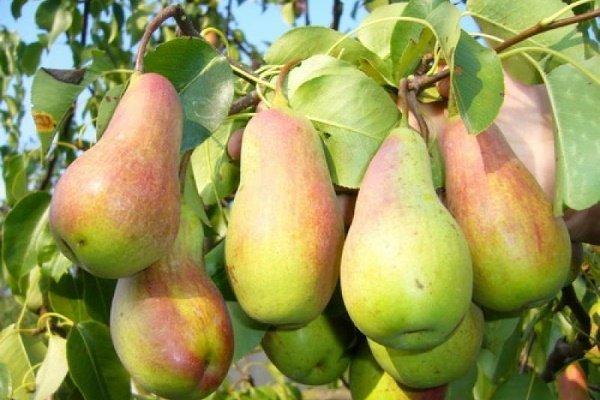
Summer varieties are among the first to bloom in the garden. They are sprayed with Fitosporin and antibiotics:
- Tetracycline;
- Ofloxacin;
- "Streptomycin".
The solution is applied to the tree's crown and trunk. When planning the purchase of new seedlings, consider varieties resistant to fire blight. Among the summer varieties, the following are of interest:
- Beauty;
- Northerner;
- August dew.
| Characteristic | August dew | Beauty | Northerner |
| Precocity | 4th year | 4-5th year | 3-4th year |
| Ripening period | Mid-August | Beginning of August | Beginning (middle) of August |
| Tree height | 3 m | 4 m | 3-5 m |
| Fruit weight | 110-130 g | 90-120 g | 80-120 g |
| Shelf life | 2 weeks | 1-2 weeks | 2 weeks |
Autumn pear varieties
The South Ural Research Institute developed the Larinskaya autumn variety, resistant to fire blight. The tree begins bearing fruit in its fifth or sixth year. Beginning in its tenth year, it produces approximately 46 kg of fruit annually, weighing 110-140 g. The harvest ripens in the first ten days of September and is stored until November.
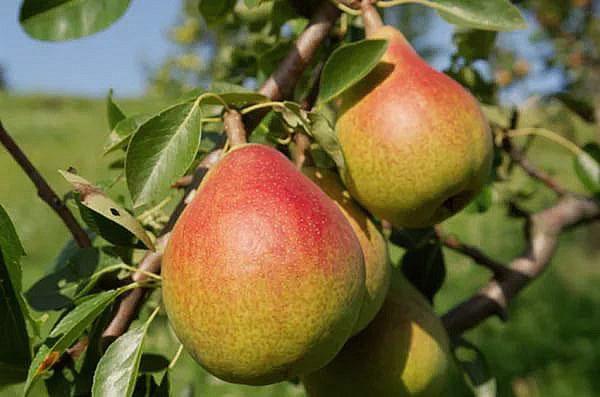
There won't be any problems with the new Favorita pear variety. It's resistant to fire blight and scab. The harvest ripens in mid-September and has a shelf life of about 30 days. The 160-250g fruits are considered the best-tasting of all autumn varieties. They have green-yellow skin and white, juicy flesh.
The Vekovaya pear variety has excellent winter hardiness, resistance to scab, fire blight, and mites.
The tree begins bearing fruit in its fourth or fifth year. The harvest ripens in mid-September and has a shelf life of approximately 30 days. The fruits are sweet and sour with juicy white flesh, weighing 110-180 g. Individual specimens can weigh up to 500 g.
Winter pear varieties
Hobby gardeners highlight the winter varieties Maria, Noyabrskaya, Yablunivskaya, and Moldova as more resistant to fire blight. Dekabrinka, a variety bred by the South Ural Research Institute, deserves special attention. This variety has high resistance to fire blight and 100% resistance to scab. Dekabrinka is considered the best variety for autumn and winter use. The harvest ripens by mid-September and has a shelf life of three months. The fruits, weighing 100-120 grams, are very sweet with white, juicy flesh; their flavor is rated at 4.9.
Existing control measures do not guarantee 100% recovery from Erwinia amilovora infestation in a garden. It is essential to purchase healthy planting material to prevent the spread of this dangerous infection. Regular inspections of garden trees and scheduled treatments with insecticides and copper-containing products can help prevent outbreaks.
Related posts:
 Description and full characteristics of the Yakovlev Memory pear variety, planting and care
 Description of the Belorusskaya Pozdnyaya pear variety, pollinators and cultivation details
 27 Best Homemade Pear Jam Recipes for the Winter
 The best ways to store pears at home during the winter
 Description of the 23 best pear varieties for the middle zone, planting and care rules
 Description and full characteristics of the August Dew pear variety, planting and care
 Description of the Cathedral pear variety, planting and care features
 Description and characteristics of the 45 best pear varieties, how to choose
What a horror!!! A whole dissertation on fire blight! Why all the details, the pear classification, and a ton of completely unnecessary information? Because it's essentially just three lines, and the author thought that wasn't enough, so he decided to add WATER?!