
Spider mites, tiny insects that appear on cucumbers, can quickly destroy cucumber crops due to their voracity and fecundity. They are difficult to control because they quickly become resistant to chemicals. To understand how to get rid of spider mites on cucumbers in a greenhouse and outdoors, you need to know the favorable conditions for their reproduction and what products repel and kill them.
Description of the pest
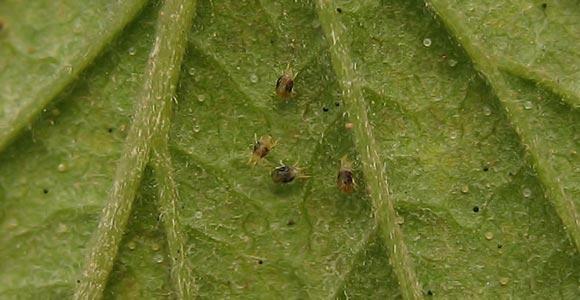
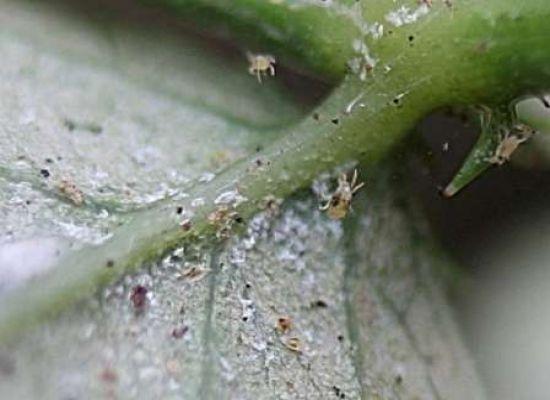
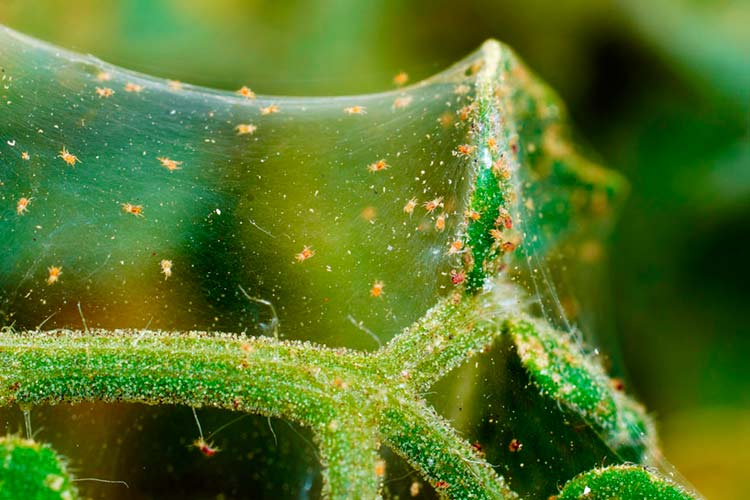
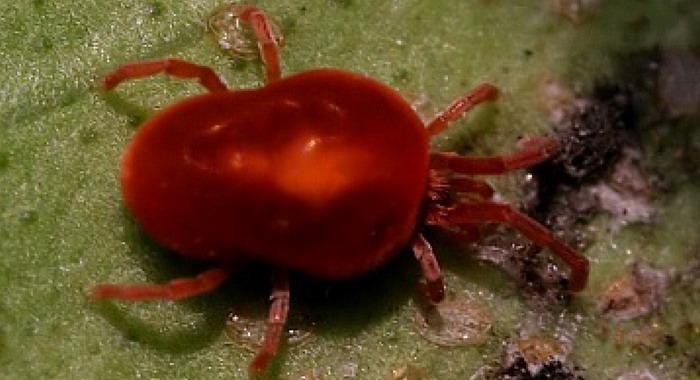
The cucumber mite is a tiny, reddish or brown parasite (0.5 millimeters long) classified as an arachnid. Adults have four pairs of jointed legs, while larvae have three pairs. Females first lay eggs, and the emerging larvae look like this: greenish with dark zones on their sides. They then grow into nymphs and then adults.
Ticks grow much faster in warm weather; the higher the temperature, the more actively they reproduce and the faster they grow in size. However, if the weather is extremely hot or very cool, the females will not drink cucumber juice. As a result, the plants become weakened and their immunity is compromised.
In addition to drinking juices, mites can spread diseases such as gray mold.
The larvae thrive in dry, warm air, and hatch from the eggs within three days. Each parasite lives less than a month, but the mites reproduce very quickly. They can be seen on the undersides of leaves, where the mites pierce them to suck the sap. A marbled pattern is also visible on the foliage after mite activity. The webbing that appears on the foliage can also help detect the mites. In the fall, females hide in the ground, where they spend the winter.
Reasons for occurrence
The reasons for its appearance may be:
- Failure to observe crop rotation.
- Contaminated land.
- Infected wooden parts of the greenhouse.
Methods of controlling spider mites
There are various ways to eliminate tick colonies, including planting them near insect-repellent plants or watering cucumber plants with special infusions. You can also spray the plants with biological products or use chemical acaricides.
Helper plants
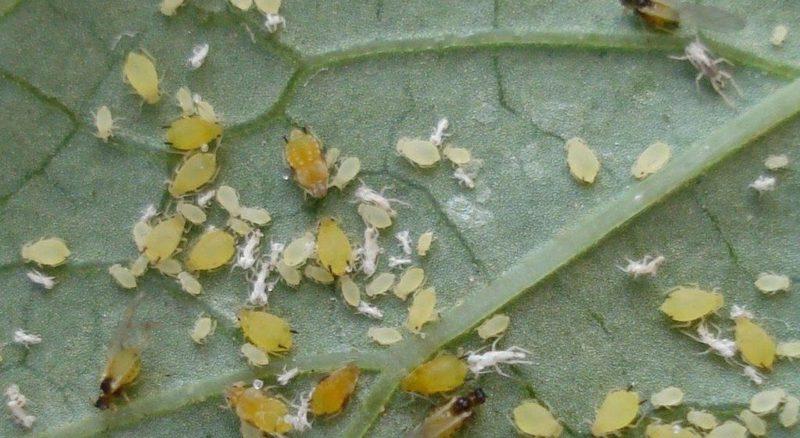
A good and completely safe method of control is to sow marigolds around the crops, plant potatoes or tomatoes, onions, or garlic; these will repel spider mites. You can also plant cucumbers, tomatoes, and cabbage together.
Biopreparations
Treating bushes with biological products is very effective. For example, the biological product Fitoverm can be used to kill ticks. It's virtually safe for humans and animals. It does kill ticks and aphids. Unfortunately, it doesn't affect eggs or females that have migrated into the soil. Because of this, treatments are repeated several times.
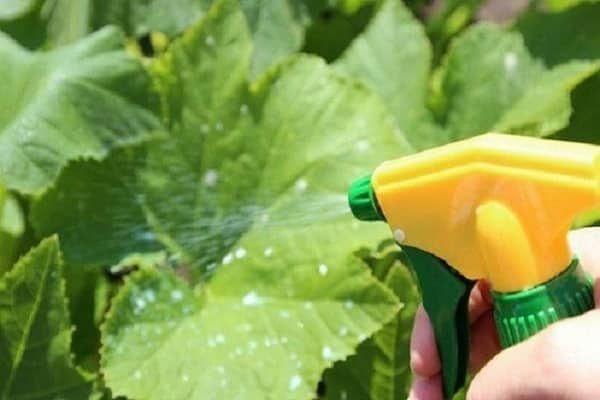
To spray the bushes with Fitoverm, choose a day without rain or wind. Spray evenly. It will be effective against insects for a week, after which it's time to repeat the spraying.
Acaricides
What other treatments can I use to treat cucumbers in greenhouses and open ground against spider mites? Spraying the plants with acaricides can help eliminate the pests. This treatment should be repeated 2-3 times until all the mites are gone. Allow a week between treatments.
Caution! Before spraying foliage, remove the spider web, otherwise it will prevent the toxic substances from reaching the foliage.
The most commonly used acaricides are:
- Floromite can be used to kill pests. Its active ingredient is bifenazate. It affects insects upon contact and also when it enters their intestines. Make a solution by adding 4-6 milliliters to a 10-liter bucket filled with water. This solution is enough to treat 10 acres.
- Apollo. It kills mite eggs and larvae, and adult mites stop reproducing. The product is thoroughly sprayed onto the foliage. It does not harm other insects or bees.
- Flumite. Add 2 milliliters of the solution to 5 liters of water and mix thoroughly. Then, thoroughly spray the affected plant parts with the solution. This solution also sterilizes female mites.
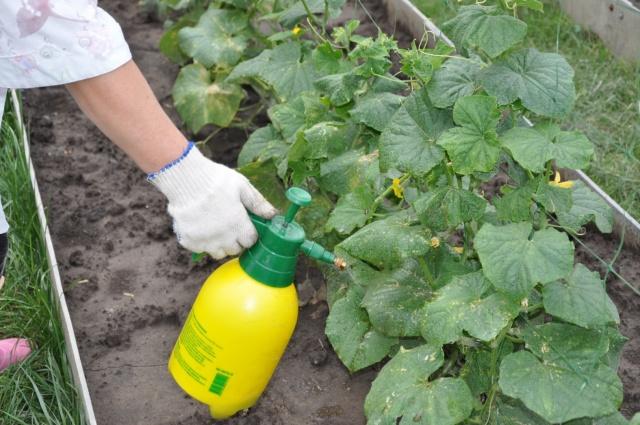
Important! Acaricides are toxic to humans and should be used with protective equipment: overalls, gloves, and a mask.
Folk remedies
If your seedlings are infested with spider mites, iodine can help. Make a solution of 7 drops of iodine, 10 parts water, and 1 part milk and spray the seedlings with it. If the spider mites have only recently appeared, meaning there are no curled, dried leaves on the bushes and there are almost no webs, you can use ammonia or hydrogen peroxide to kill them.
Ammonia is used by adding 1 tablespoon to 10 liters of water. Hydrogen peroxide is used by adding 2 tablespoons to 1 liter of water. Spray with this mixture 3-4 times at a temperature of 20°C. The interval between sprays is 5 days. You can also dust the foliage with tobacco dust.

If cucumber foliage shows signs of damage such as a marbled pattern of white or dark spots, the bushes should be sprayed with infusions. Folk remedies include preparing infusions from a variety of herbs. These can be poured onto the affected foliage.
A solution to pests is an infusion of tomato tops. Collect 4 kilograms of the tops, pour them into a bucket, and add water. Bring to a boil for half an hour. Then cool the infusion. Add 40 grams of grated soap. Then, for every 5 liters of infusion, add another 4 liters of water and moisten the leaves.
Another control measure is to collect 1 kilogram 200 grams of potato tops, pour them into a bucket, fill with warm water, leave for 4 minutes, and then spray the foliage.
A common folk remedy involves soaking a cotton ball in 96% rubbing alcohol and thoroughly wiping the leaves. However, this method does leave parasite eggs behind.
A home remedy for ticks is to use ordinary soap. Treatment of bushes begins with wiping the foliage and branches with a damp, soapy sponge. Another key to successfully eliminating the insects is to spray the soil with soapy water, but sparingly, so that the soap doesn't penetrate the roots.
After soaping the foliage, wait 5 minutes and then rinse off the foam. This is because soapy water forms a film on the foliage, preventing the plant from "breathing." After rinsing off the soap, cover the plant with a plastic bag and leave it for 24 hours, then remove it. You can use dishwashing liquid instead of soap.
Another way to make a garlic infusion is to take two heads of garlic and chop them very finely. Place them in a glass jar, add 1 liter of water, and cover with a lid. Then place the jar in a dark place and let it sit for 5 days. Then, dilute the mixture with 1 part water and spray the plants.
You can collect 100 grams of onion peels, pour them into a 5-liter jar, and fill it with water. Let it sit for 5 days. Then the infusion is ready to use.
Preventive measures
Ticks will not appear if you plant and grow cucumber plants correctly. Dig the garden regularly, remove the tops, and pull out weeds. This will prevent ticks from appearing and multiplying. However, preventative measures for tick infestation differ slightly depending on whether you grow cucumbers in a greenhouse or outdoors.
In greenhouses
In the spring, burn a sulfur candle in the greenhouse. This will disinfect it and kill mites and other parasites, as well as viruses and fungi. After the final cucumber harvest, remove all vegetation from the greenhouse. And the following year, it's best to replace the top 20 centimeters of soil.
Mixed plantings of tomato and cucumber beds are also effective in protecting cucumbers from pests in a greenhouse. Weed regularly. When digging the beds, leave wide spaces between them. Maintain humidity in the outbuilding at a constant level of 80-85%, as spider mites prefer dry conditions. You can destroy spider mite nests by placing leaves with phytoseilus around the bushes. These insects will eat the spider mites.
In open ground
Prevention - To prevent spider mites from infecting your plants, you should:
- Weed out weeds regularly.
- In autumn, it is necessary to thoroughly dig up the area and burn the remaining vegetation.
- Crop rotation should be observed, meaning that cucumbers should be planted after legumes have grown in the same area the previous year, as they absorb nitrogen from the air and convert it into nitrates, which are then actively used by cucumber plants.
Spider mite-resistant varieties
Varieties that are completely immune to spider mites have not yet been developed. However, several varieties have been bred that are reasonably resistant to these pests.
Hybrid Rodnichok
It requires a lot of watering, but the bushes have excellent resistance to pests and diseases. Fruiting begins 50 days after the first shoots emerge.
Variety Murashka F1
This early-ripening variety is resistant to disease and pests. The green cucumbers have an excellent flavor and are perfect for salads and pickles.
Hybrid Benefit F1
With proper cultivation and care, the variety's bushes are practically not affected by spider mites. If you follow the tips listed above, you will have a fruitful year and will collect a lot of cucumbers from the garden.
Related posts:
 How to properly combat spider mites on currants, prevention
 Control measures for gall mites on pear trees, signs and causes of the disease
 Description of acaricides, their mode of action on plants and the best remedies
 Instructions for use of Masaya, insecticide composition and mechanism of action
 Pests and diseases of gooseberries and their control using chemical and folk remedies
 How to control aphids on cucumbers using folk remedies, what to treat and spray with
 How to control aphids on currants using chemicals and folk remedies
 Causes and treatment of late blight on cucumbers, treatment with drugs and folk remedies