
- The history of the Severianka pear breeding
- What is special about this variety?
- Tree dimensions
- All about fruiting
- Flowering and pollinators
- Ripening period and harvest
- Scope of application of fruits
- Immunity to diseases
- Winter hardiness and drought resistance
- Varieties of culture and description
- Red-cheeked
- Yakovleva
- Summer
- Planting, growing and care
- Planting hole layouts and dimensions
- Distance between trees
- Timing and technology of planting operations
- Seasonal watering
- Top dressing
- Rejuvenation and crown formation
- Sanitary pruning and treatments
- Caring for the tree trunk circle
- Do I need to cover it for the winter?
- Methods of reproduction
- Gardeners' reviews of the variety
Humanity first learned to cultivate pears over 3,000 years ago. Since then, numerous hybrid varieties have been developed, both commercially and in private gardens. But even with such a plethora of varieties, the Severyanka pear remains a sought-after cultivar. Its resistance to low temperatures and frosts makes it suitable for growing in the harsh climates of northern regions.
The history of the Severianka pear breeding
The hybrid pear variety Severyanka was developed in the middle of the last century by breeders at the Michurin Research Institute. The Koperechka Michurinskaya pear and the Lyubimitsa Klappa variety were also involved in the development. After many years of work, in 1965, the Severyanka pear was added to the state register of fruit crops, with a recommendation for cultivation in temperate and northern latitudes.
For a long time, the Severyanka pear was considered the main fruit crop grown commercially. But with the advent of more modern hybrids, the variety fell into disuse. Now, the Severyanka pear can only be found in private gardens and orchards. It is especially prized in the Urals, Siberia, and the Far East.
What is special about this variety?
Before growing a fruit tree, it is necessary to understand all the advantages and disadvantages of the variety, as well as familiarize yourself with the full characteristics of the garden crop.
Advantages of the variety:
- Due to its resistance to low temperatures, Severyanka is grown in any climate zone.
- If a tree freezes during the winter, it quickly recovers in the spring.
- Early fruiting and ripening of fruits.
- High yield rates.
- The small size of the tree allows for growing fruit crops in small areas.
Also, the advantages of the variety include the possibility of partial self-pollination.
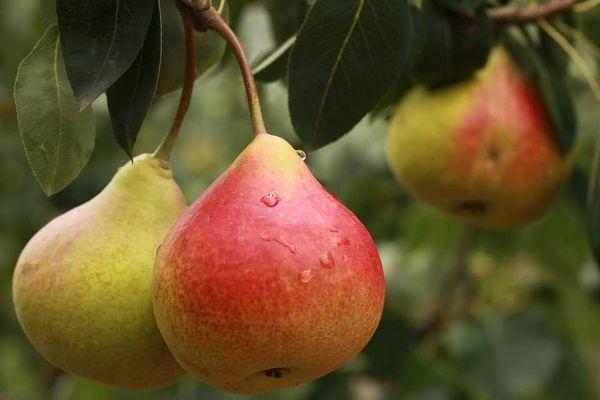
Flaws:
- Pears of this variety prefer very moist soil. Insufficient moisture negatively affects the fruit's flavor.
- The ripening fruit harvest falls off.
- The fruits are not suitable for long-distance transportation or long-term storage.
- To increase yield, the Severianka variety requires pollinators.
Note: Pears contain a huge amount of vitamins and nutrients necessary for the proper functioning of the human body.
Tree dimensions
Pear trees grow slowly, reaching their maximum height of 5 to 6 meters only by the age of 14 to 15 years. Young plants are medium-sized with a wide, spreading, rounded crown. Side shoots and branches grow quickly, but do not create a dense crown. The leaf blades are oval, pointed at the tips, and serrated along the edges, and are dark green.
The tree's bark is smooth and silvery-gray.
Depending on climatic conditions and agricultural technology, the lifespan of a fruit crop ranges from 30 to 65 years.
All about fruiting
Trees begin to bear fruit in the second to fourth year of growth in open ground. Yields increase each year. A seven-year-old tree can yield up to 20-25 kg of ripe fruit. Mature trees can yield up to 100 kg of fruit.
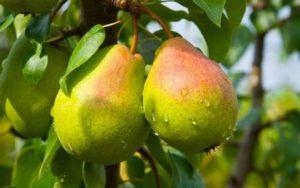
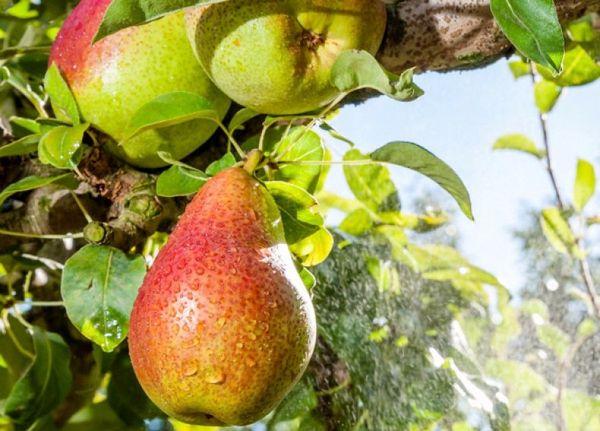
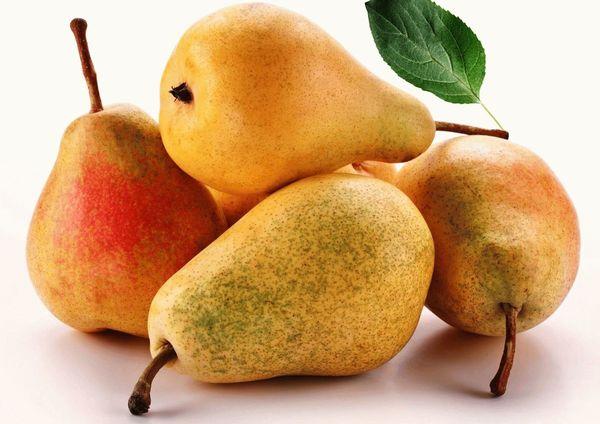
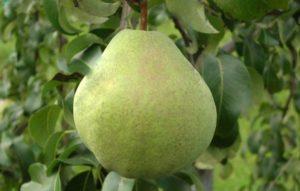
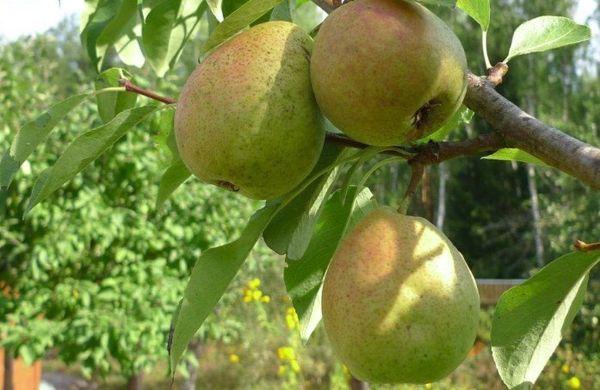
Ripe fruits are small to medium in size, weighing up to 120g. The skin is dense, thick, and greenish-yellowish in color, sometimes with a faint pinkish blush.
The fruit pulp is crisp, with a juicy, sweet and sour taste and a slightly tart aftertaste.
Important! The Severianka variety is one of the few that doesn't require rest to bear fruit. The tree blooms and produces fruit every year.
Flowering and pollinators
Although the Severianka variety is capable of self-pollination, it occurs only partially, and accounts for no more than 35% of the total mass of ovaries.
To increase fruit yield, fruit trees need pollinating neighbors. Any pear tree variety with similar flowering times can serve this role.
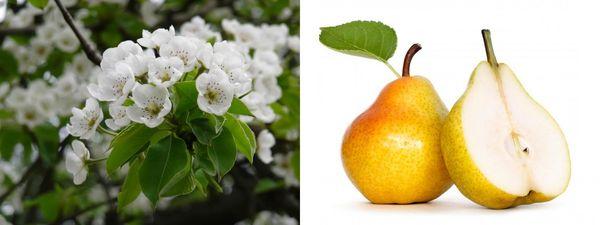
The northern rhododendron blooms in late April, before the leaves emerge. Large inflorescences emerge on the tree, which blossom into white flowers.
Ripening period and harvest
The fruits fully ripen by mid-August. They must be picked quickly, otherwise they will fall off. Ripe pears can be stored for no more than two weeks, after which the flesh darkens and becomes inedible.
To extend the shelf life of the harvest, harvesting begins 6-8 days before full ripening. After harvesting, the fruit is stored in a cool, dark place where it will keep for 1.5-2 months.
Please note: When fully ripe, the fruits fall completely from the trees within 1-2 days.
Scope of application of fruits
The Severianka pear is a universal variety; the fruit is consumed both raw and processed.
Fruits are used to make desserts, add to baked goods, and add to salads. Experienced home cooks also make jams, compotes, preserves, dry, and freeze them.
Immunity to diseases
When developing a hybrid variety of fruit crops, increased natural immunity to fungal infections and pests was also taken into account.
Severyanka is resistant to most viral and fungal diseases and is rarely attacked by pests.
Important! After harsh, cold winters, trees are often susceptible to bacterial infections. The foliage and young shoots are the first to be affected.
Winter hardiness and drought resistance
Fruit trees of this variety tolerate cold, harsh winters well. Even if the plant freezes, it quickly recovers in the spring and begins to grow and develop.
The variety is not particularly drought-resistant. Prolonged droughts negatively impact fruit ripening and flavor.
Varieties of culture and description
High resistance to severe frosts and diseases, excellent yields, and rapid fruiting. These qualities of the Severyanka pear have become the main incentive for breeders to continue developing new hybrid varieties.
Red-cheeked
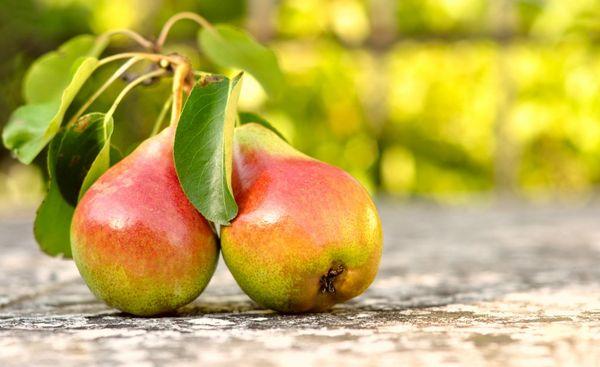
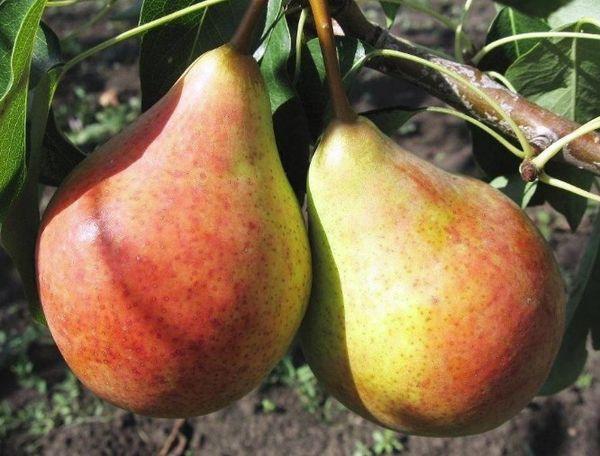
This hybrid fruit variety is successfully cultivated in temperate and northern climates. The trees are frost-hardy and virtually immune to fungal and bacterial attacks. The fruits are medium-sized, with a bright red blush and juicy, sweet-tart flesh.
Yakovleva
A high-yielding variety. Fruiting begins in the 3rd or 4th year of growth. The fruits are medium-sized, yellowish-green, with crisp flesh and a juicy, sweet flavor. They ripen in the first ten days of August.
Summer
Medium-sized trees with a wide, spreading crown. Productivity is high, with fruiting beginning in the second or third year of growth. Fruits are medium-sized, weighing 80 to 90 grams, and are yellow-green in color, occasionally with a slight pink blush. Harvest time is the first half of August. The fruits have crisp, juicy, and sweet, cream-colored flesh.
Planting, growing and care
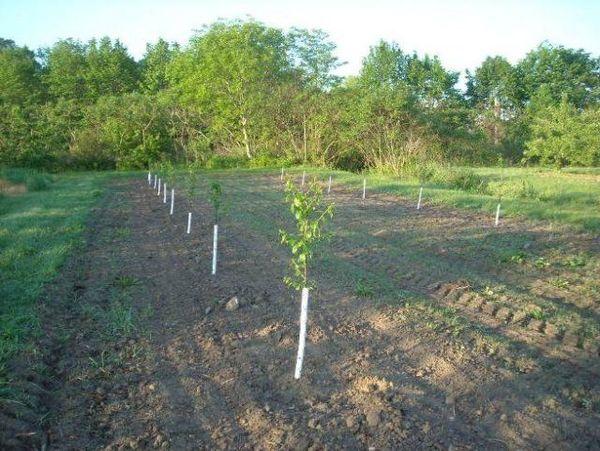
For growing Severyanka, select dry, level, well-lit, wind-sheltered plots of land. The groundwater level should be at least 2-2.5 meters above ground level.
Unfortunately, Severyanka pear seedlings are not sold in nurseries, so you'll have to seek out planting material from experienced gardeners. When choosing a seedling, carefully inspect the rhizome for fungal infections and damage.
Planting hole layouts and dimensions
The pear tree is planted in loose, fertile soil with a neutral acid content.
The area for planting seedlings is prepared 3-4 weeks before the start of work.
- On the dug and loosened area, dig a hole at least 80 cm deep and wide.
- A drainage layer of small stones or crushed stone is placed at the bottom of the hole.
- The next layer is humus mixed with soil and mineral fertilizers. A small mound is made from the soil mixture.
- The hole is thoroughly moistened and left until planting begins.
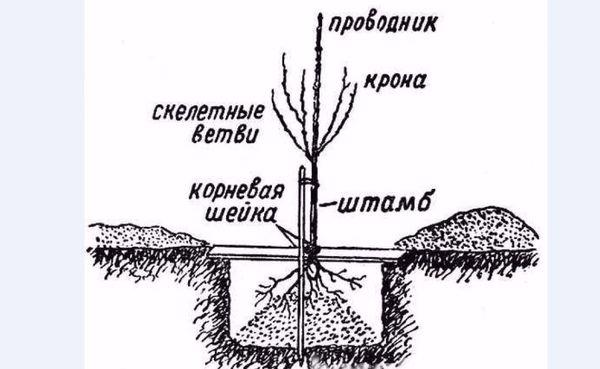
Before planting the seedling, place a stake in the center of the hole to support the tree. The stake is removed once the plant is firmly rooted in the soil.
Distance between trees
The distance between seedlings is based on the size of the mature tree. Severyanka's crown width reaches up to 6 m, so the distance between holes and rows should be at least 5 m.
Timing and technology of planting operations
Saplings are planted in open ground based on the region's climate. In southern and temperate latitudes, trees are planted in the fall. In northern climates, planting occurs in early spring to allow the seedlings time to establish and take root before the winter frosts.
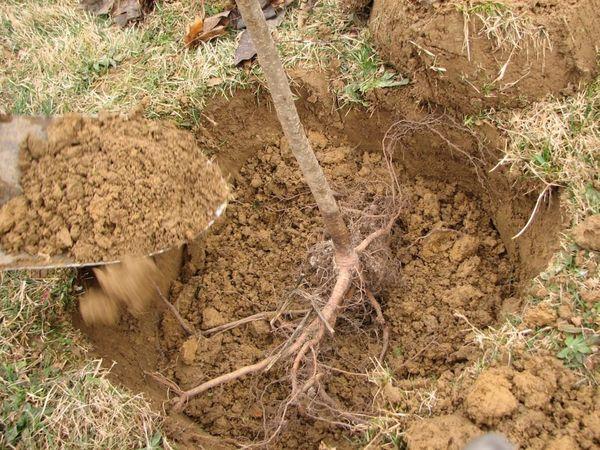
Before planting, place the seedlings in a container with a clay-water slurry and leave for 6-8 hours. After the rhizomes have soaked, treat them with an antibacterial solution.
- A seedling is placed into a prepared hole with fertile soil and fertilizer.
- The plant roots are evenly distributed in the hole.
- When filling the roots with soil, pay attention to the absence of voids.
- The soil under the seedling is compacted and thoroughly moistened, and the tree is tied to a peg.
Important! If planting a seedling in the fall, mulch the area around the tree trunk with a thick layer of humus or manure to prevent frostbite of the root system.
Seasonal watering
Insufficient soil moisture affects the quality and quantity of the harvest. In the absence of precipitation, irrigation is carried out weekly, applying sufficient water to the roots to ensure adequate moisture.
Trees are typically watered once a month. Fruit trees are watered generously in the fall, before the first frost.
Top dressing
Fruit trees require additional nutrition and nutrients. At the beginning of the growing season, pear trees are fed with complex mineral fertilizers. In the fall, humus is added to the soil. Organic fertilizers are applied once every 3-4 years before winter dormancy.
Rejuvenation and crown formation
The first pear tree pruning is performed immediately after planting the seedling, and then annually thereafter. In spring, tiers of 4-6 skeletal branches are formed on the main trunk, and the remaining shoots are pruned.
Mature and old trees undergo rejuvenation pruning. Old, dry, and inward-curving branches are trimmed. The more unnecessary branches are pruned, the better the new shoots will grow.
Sanitary pruning and treatments
During sanitary pruning, all broken, damaged, frost-damaged, and abnormally growing branches are removed, and the cuts are treated with garden pitch. Sanitary pruning is performed in late fall.
Caring for the tree trunk circle
Proper care of the tree trunk area involves loosening the soil, removing weeds and mulching the soil.
It's best to loosen the soil and remove weeds after watering. Loose soil retains moisture and enriches the rhizomes with oxygen.
Mulching is carried out in the fall. A thick layer of humus, peat, and sawdust is spread around the tree trunk. The trunk is then covered with dry leaves or spruce branches.
Do I need to cover it for the winter?
The Severyanka pear variety is a frost-resistant fruit crop and does not require additional insulation during the winter period if all care instructions are followed.
Methods of reproduction
Hybrid varieties of fruit trees are propagated vegetatively by grafting and cuttings.
When propagated by seed, the varietal characteristics of the mother plant are not transmitted.
Gardeners' reviews of the variety
Kirill Andreevich 43 years old. Nizhnekamsk.
Our winters are harsh, and the summers aren't always warm. Until recently, I considered growing a pear tree an impossible dream. It turns out I was wrong. A neighbor not only explained it was possible, but also gave me a cutting of a frost-resistant pear variety, the Severyanka. I've had a beautiful pear tree growing on my property for four years now, and it even bore fruit last year. It requires minimal care; it doesn't freeze in winter, and frozen branches quickly die back.
Larisa Sergeevna, 39 years old. Moscow region.
The Severyanka tree has been growing at our dacha for over 20 years. In all these years, we've never been without a fruit harvest. The tree is resistant to all pests and diseases and has never caused any problems.
Igor Viktorovich 50 years old. Izhevsk.
Some breeder friends recommended I plant a northern pine. They said the Krasnoshchyokaya northern pine is perfect for our climate. I found a seedling with great difficulty three years ago. The tree hasn't borne fruit yet, but it's overwintering just fine.
Related posts:
 Description and characteristics of 14 varieties of the Bere pear variety, planting and care
 Description and characteristics of the 45 best pear varieties, how to choose
 Description of the 23 best pear varieties for the middle zone, planting and care rules
 Description and full characteristics of the August Dew pear variety, planting and care
 Description and full characteristics of the Yakovlev Memory pear variety, planting and care
 Description and varieties of the Duchess pear variety, planting and care
 Description and cultivation of the 15 best cherry plum varieties for the Moscow region, planting and care rules
 Description of the 10 best columnar pear varieties, planting and care