
- Selection of the Veles pear variety and cultivation regions
- Main advantages and disadvantages
- Description and characteristics of pear
- Tree size and annual growth
- Branching of the root system
- Fruiting
- Flowering and pollinators
- Fruit ripening time
- Productivity and taste
- Fruiting cycle
- What are the benefits of pear and its scope of application?
- Drought and cold resistance
- Immunity to diseases and pests
- Planting technology
- Deadlines
- Site selection and soil preparation
- How to choose seedlings for planting
- Tree planting patterns and rules
- Caring for the Veles variety
- Watering and fertilizing
- Trimming
- Crown formation
- Regulatory
- Supportive
- Sanitary
- How to rejuvenate a pear tree at the age of 20-25 years
- Whitewash
- Diseases and pests: preventive treatments
- Preparing for the winter period
- Methods of reproduction
- How to improve your harvest: tips and recommendations
- Gardeners' reviews of the variety
Nurseries offer a wide variety of pears, each with its own specific technical characteristics. Gardeners face a challenging task: choosing from this wide selection a suitable variety that will produce abundant harvests for many years. The Velesa variety delights its owners with delicious pears. It grows and bears fruit well in temperate climates.
Selection of the Veles pear variety and cultivation regions
The Veles variety was developed by N. V. Efimova and Yu. A. Petrov, who are intensively developing new varieties at the Breeding and Technology Institute. The basis for this development were Venera and Lesnaya Krasavitsa. In 2001, the variety was added to the State Register. It is recommended for cultivation in the Central Region.
Main advantages and disadvantages
Veles has many advantages:
- resistant to various diseases;
- not afraid of cold and harsh weather;
- is distinguished by annual fruiting, increasing the yield every year;
- produces fruits with excellent taste and a long storage period.
However, as yield increases, fruit size decreases annually. This deficiency can be controlled with annual stimulating pruning.
Description and characteristics of pear
Thanks to its characteristics and taste, this variety has become a favorite among many gardeners.
Tree size and annual growth
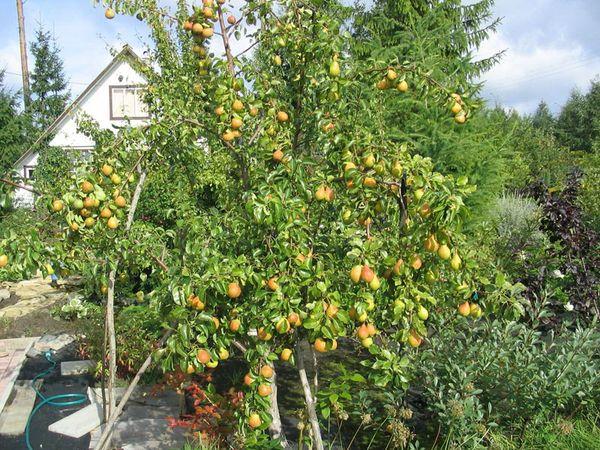
Velesa grows no more than four meters tall and is considered a medium-sized tree. The crown shape depends on the tree's age. In the first few years of life, it is spreading, but gradually becomes pyramidal. The crown is not too dense, making it much easier to care for. Branches grow no more than 40 cm per year.
Branching of the root system
To fully supply itself with nutrition and moisture, the Veles pear has long vertical roots. These extend up to five meters deep, so the tree does not thrive in areas with high groundwater levels. Its lateral roots are highly branched and lie practically on the surface.
Fruiting
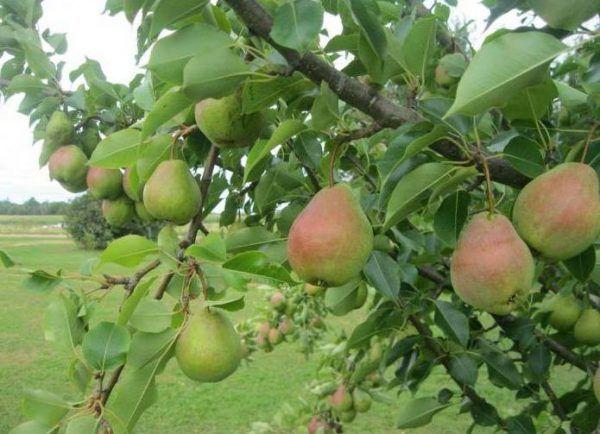
Velesa begins bearing fruit five years after planting. Fruit weight depends on the tree's age and averages 120 grams.
Flowering and pollinators
The Velesa pear tree has a long flowering period, beginning in May and continuing throughout June. It is self-fertile. However, to ensure full fruit production, it should be interplanted with other varieties with similar flowering periods.
Rogneda, Severyanka, and Chizhovskaya are considered good pollinators for it.
Fruit ripening time
The harvest ripens simultaneously. The timing depends on weather conditions and the region. Most often, harvesting can begin in early September. To extend shelf life, the fruit is harvested before it reaches consumer maturity.
Productivity and taste
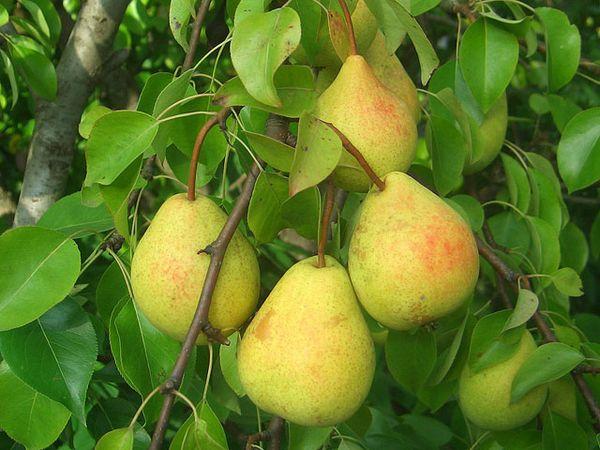
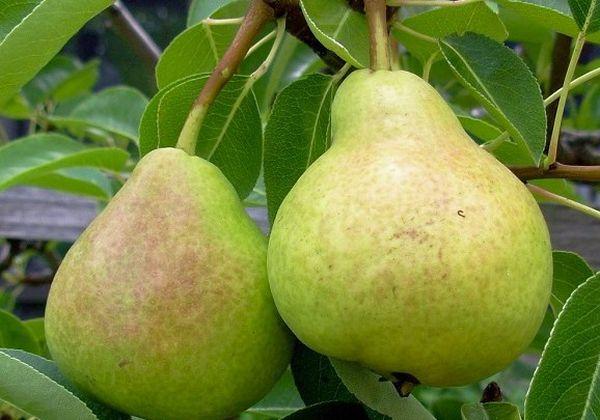
With proper care, a single tree can yield up to 90 kg of fruit. These are greenish-yellow fruits with a dense, smooth skin. The flesh is soft, creamy, juicy, and delicious. The fruit received a tasting score of 4.6.
Fruiting cycle
The Velesa pear stands out among other varieties. It bears fruit annually and requires no rest. The harvest size increases each year.
What are the benefits of pear and its scope of application?
Pears contain vitamins and microelements, including magnesium, calcium, iron, and zinc, as well as vitamins A, B1, B2, and C.
Due to its flavor, the Veles pear is often grown for fresh consumption. However, it is also suitable for canning, producing aromatic compotes, preserves, jams, and marmalades.
Drought and cold resistance
Pear trees tolerate temperatures down to -35°C. However, young and weakened plants require protection when planted in regions prone to frost. When grown in central Russia, flowering is often interrupted by recurrent frosts.
This variety isn't particularly drought-tolerant. When grown in regions with infrequent summer rainfall and light winter snow cover, it requires ample watering.
Immunity to diseases and pests
Velesa has excellent immunity to common diseases and does not require the use of chemical pesticides.
Planting technology
Planting of Veles pear is carried out in the same way as other varieties.
Deadlines
The best time for planting is early spring, if temperatures don't drop below 5°C, or early fall. The choice of season depends on personal preference and availability.
Site selection and soil preparation
The choice of planting location determines not only the timely growth and development of the pear tree, but also the sugar content of its fruit. It should be a sunny spot, protected from drafts by a high fence or buildings.
Soil preparation begins six months before planting. It is thoroughly dug and fertilized with humus, peat, potassium sulfate, and superphosphate. Clay soil requires special attention. Without changing its structure, pear trees will grow poorly and bear little fruit.
How to choose seedlings for planting
The ideal choice for planting is one- or two-year-old seedlings. The trunk should be straight and smooth, free of visible damage and disease. Its length should be approximately 80 cm. The fibrous roots should be free of growths and damage. The cut surface should be white, without dark spots or inclusions.
The length of the roots should be no more than 30 cm.
Tree planting patterns and rules
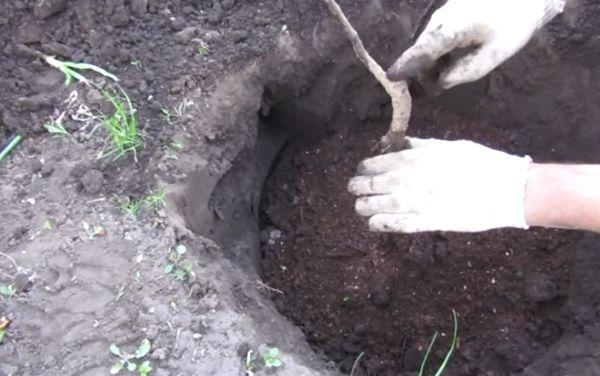
For uniform ripening, the pear tree requires full sun. It is planted at least five meters away from other trees and tall shrubs in prepared, well-fertilized soil, leaving the root collar exposed. After planting, the hole is thoroughly watered with warm water and a rooting agent, and the seedling is tied to supports.
Caring for the Veles variety
Not only the health of the pear tree, but also its fruiting level, depends on careful attention to the tree and the timely completion of all necessary care steps.
Watering and fertilizing
Watering is crucial when growing pears. It's especially important after a winter with little snow, during fruit set, and when preparing the tree for winter.
In early spring, pear trees are fed with nitrogen-containing fertilizers. During flowering, a urea solution is used. In the middle of the growing season, the tree requires phosphorus and potassium fertilizers.
Trimming
Pruning is important for the Velesa pear tree. It prevents the crown from becoming too dense and regulates fruit production.
Crown formation
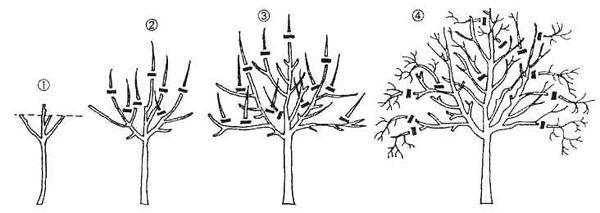
In the second year, four strong branches located on opposite sides of the trunk are shortened by 1/3. All excess shoots are removed. In the fourth year, a second tier is formed. To do this, two strong trunks are left on the skeletal branches and shortened by half. All excess shoots are removed.
Regulatory
The main goal of regulatory pruning is to prevent the crown from becoming too dense. This involves removing all branches that obstruct neighboring branches and create strong shade.
Supportive
To regulate fruiting, maintenance pruning is necessary. Young shoots are shortened by 10 cm, encouraging the development of additional flower buds.
Sanitary
In early spring and autumn, all dry, frozen, and damaged branches are removed from the pear tree and the cuts are carefully processed.
How to rejuvenate a pear tree at the age of 20-25 years
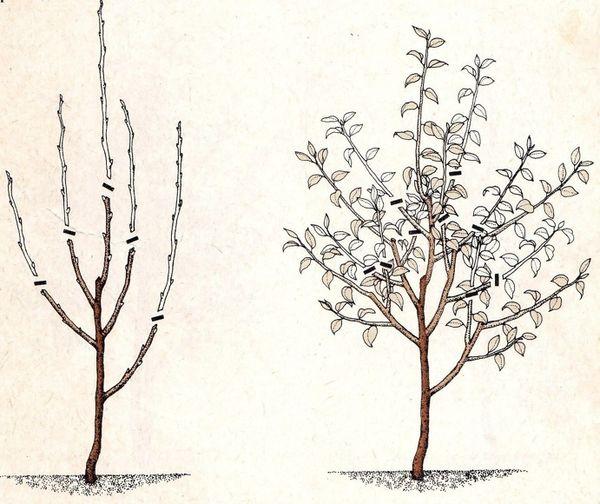
By the time a pear tree reaches 20 years of age, its fruit becomes significantly smaller. To maintain a high yield, the tree can be rejuvenated. This is done by cutting down the old trunk and cleft-grafting young cuttings onto the growing branches.
It's possible to avoid drastic pruning. In this case, severe thinning and rejuvenation of half the crown is performed, while the other half continues to bear fruit actively. After two years, the other half is pruned. By this time, the previously rejuvenated portion begins to bear fruit.
Whitewash
To protect the trunk from sunburn and overheating, it is whitewashed in early spring. This period is especially important in regions with long, hot summers. A second whitewash is applied before winter. This procedure prevents pests from settling under the bark and spreading to fruit trees the following year.
Diseases and pests: preventive treatments
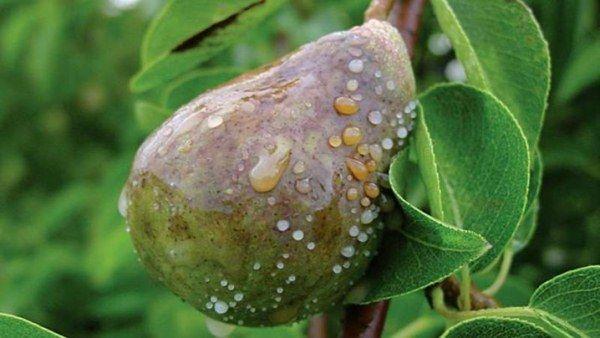
The Veles pear tree doesn't require chemical treatment against various diseases, as it has a strong immune system. However, pests love to infest this tree and cause significant damage. To protect against them, insecticides or folk remedies are used.
Preparing for the winter period
This variety tolerates low temperatures quite well, but requires standard winter preparation procedures. This will require:
- remove leaves;
- carry out pruning;
- whitewash the trunk;
- add the necessary fertilizers;
- water the tree well;
- Loosen the soil to fully saturate the roots with oxygen.
In regions with cold winters, the soil is mulched with humus or straw to protect the roots from frost.
Methods of reproduction
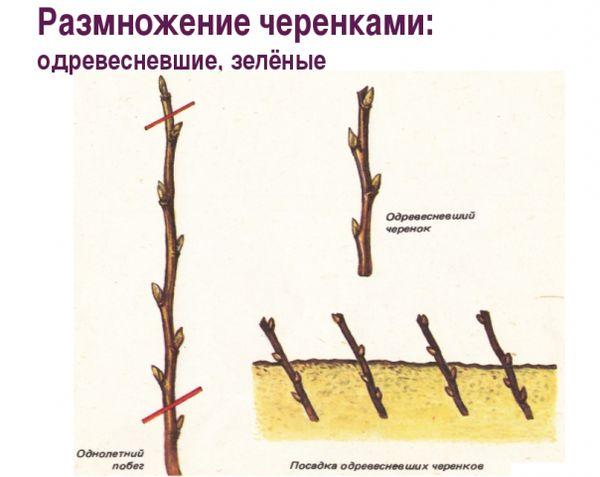
The most affordable option for propagation in your suburban area Veles pear is propagated by cuttingsFor this purpose, green cuttings are prepared in July. They are placed in a solution of water and rooting agent for several days. Then, they are transplanted into shallow boxes filled with sand or substrate. The box is covered with plastic film, creating a kind of greenhouse. The sand is kept constantly moist. Within a month, the cuttings will germinate and be ready for transplanting to a permanent location.
How to improve your harvest: tips and recommendations
To grow pears fruitfully and obtain high yields, experienced gardeners adhere to three main secrets that influence their size:
- Correct selection of location and planting of seedlings in compliance with generally accepted technology.
- Timely care is required not only for a young seedling during the adaptation period, but also for an adult tree.
- Careful preparation for winter.
Timely completion of all the above steps allows the pear tree to feel comfortable at any time of year, receiving sun, moisture, and nutrients in the required amount.
The results of careful care will not be long in coming: the pear tree will thank gardeners with abundant flowering in the spring and large harvests in the fall.
Gardeners' reviews of the variety
According to reviews from gardeners living in the Central regions and growing the Veles pear on their plots, the variety is often damaged by severe frosts and requires shelter for fruitful growth.
The Velesa pear is popular among gardeners due to its technical characteristics. It tolerates cold well. When protected from severe winter frosts and recurring spring frosts, it allows for large annual harvests.
Related posts:
 Description and characteristics of the 45 best pear varieties, how to choose
 Description and full characteristics of the Yakovlev Memory pear variety, planting and care
 Description of the 23 best pear varieties for the middle zone, planting and care rules
 Description of the Abbot Vettel pear variety and the subtleties of growing it
 Description and characteristics of the Marble pear variety, pollinators and cultivation subtleties
 Description and full characteristics of the August Dew pear variety, planting and care
 Description and subtleties of growing the Efimova Elegant pear variety
 Description of the 10 best columnar pear varieties, planting and care