
- Selection of the pear "Memory of Zhegalov"
- Growing regions
- Pros and cons of fruit crops
- Varietal features and characteristics
- Dimensions and height of the tree
- Life expectancy
- Fruiting
- Cyclicity
- Flowering and pollinators
- Ripening time and yield
- Tasting qualities and use of fruits
- Frost and drought resistance
- Immunity to diseases and insects
- Planting a pear tree
- Deadlines
- Soil requirements
- Planting layout schemes
- Preparing the site and seedlings
- The technological process of tree planting
- The subtleties of caring for the Zhegalov's Memory variety
- Watering and fertilizing
- Trimming
- Whitewash
- Loosening and weeding the tree trunk circle
- Seasonal treatments
- Preparing for winter
- Methods of reproduction
- How to Increase Your Yield: Tips and Advice
- Gardeners' reviews of the variety
The Pamyat Zhegalova pear variety is common in central Russia. It bears fruit early, is resistant to cold, drought, and disease, and is easy to care for. The tree is noted for its long lifespan. The fruit has good marketability, ripens in late autumn, and has a long shelf life. The variety's creators named it after the renowned geneticist S. I. Zhegalov, renowned for his research in plant breeding.
Selection of the pear "Memory of Zhegalov"
The creators of "Memory of Zhegalov" are S. T. Chizhov and S. P. Potapov, breeders at the K. A. Timiryazev Moscow Agricultural Academy. The "Lesnaya Krasavitsa" and "Olga" varieties were used as parent varieties. The variety's development was completed at the end of the 20th century. In 2001, it was included in the State Register.
Growing regions
The variety is zoned for the Central Region of the Russian Federation. The best yields from "Pamiat Zhegalov" are achieved in Moscow, Vladimir, Ivanovo, Ryazan, Smolensk, Kaluga, Tula, Bryansk, and the surrounding regions.
Pros and cons of fruit crops
The advantages of the Zhegalov Memory pear include:
- frost resistance;
- drought resistance;
- early fruit bearing;
- high life expectancy;
- consistently high yield every season;
- immunity to diseases and pests;
- versatility and good commercial quality of fruits.
The following are some of the variety's disadvantages:
- self-infertility;
- heavy pollen, which is carried only by pollinating insects, and therefore pollinating varieties must be planted close to the Memory of Zhegalov.
Varietal features and characteristics
The pear Pamyat Zhegalova has a number of characteristic distinctive features that distinguish it from other varieties.
Dimensions and height of the tree
The tree is medium-sized, spreading, reaching a height of 4-5 m.
Life expectancy
The lifespan of the Zhegalov's Memory pear is high - up to 70-80 years, and with good care - up to 100 years.
Fruiting
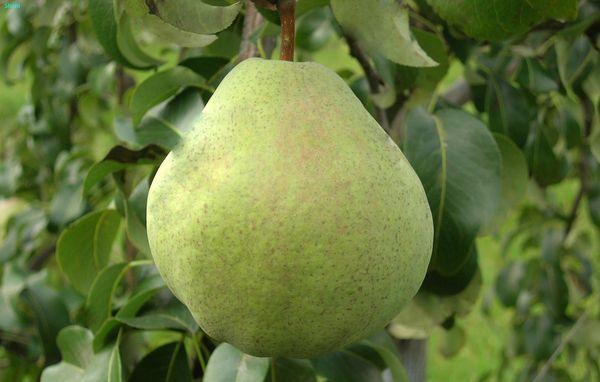
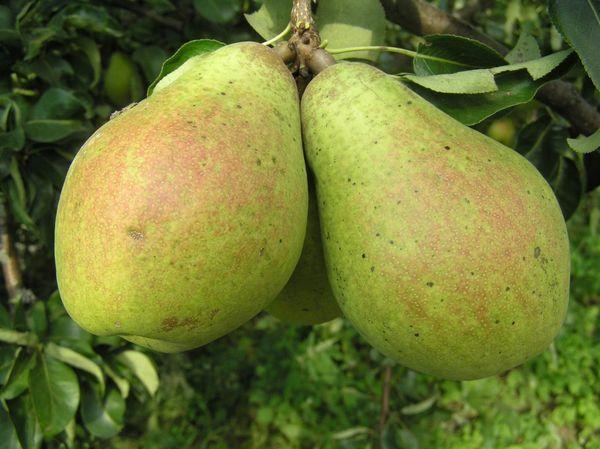
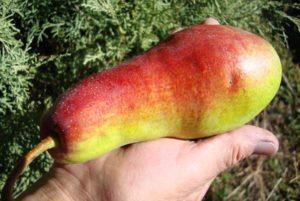
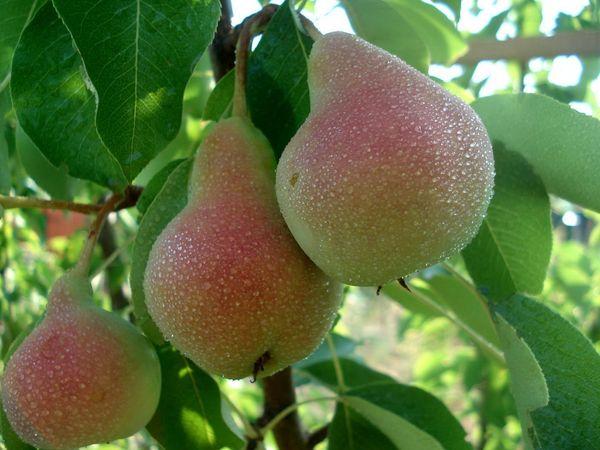
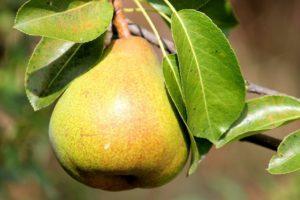
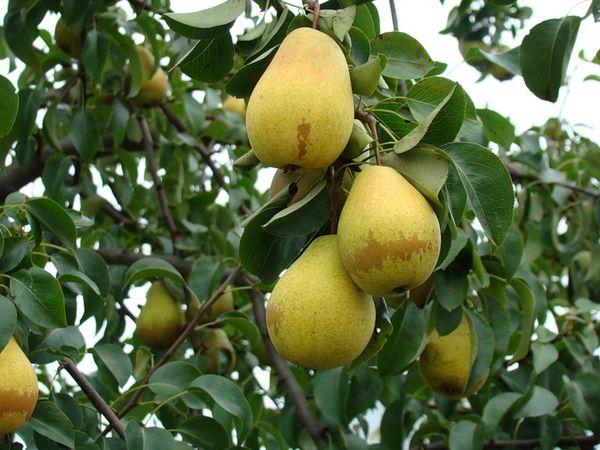
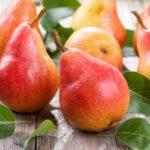
The average weight of the fruit is 120-140 g, in rare cases – up to 200 g. The skin is smooth, green or golden in color, with a slight dull red blush.
Cyclicity
Fruiting of the Pamyati Zhegalov variety is stable and occurs annually.
Flowering and pollinators
The variety is self-sterile. Flowering occurs in April–May. Ideal pollinators are: Bergamot Moskovsky and Lyubimitsa Yakovleva pears.
Ripening time and yield
The variety is early-bearing – it produces fruit 3-4 years after the seedlings take root.
A late-season pear. The fruit is ready for harvest between September 20th and 30th. Fruit drop is low, making this a high-yielding variety. Up to 40 kg of fruit can be harvested from a single tree. They can be stored at room temperature for 25-30 days and at 0°C for 3-4 months.
Tasting qualities and use of fruits
The fruit's flesh is yellowish-white, juicy, and buttery. The flavor is sweet with a hint of sourness and tart notes, earning a tasting score of 4.3 out of 5.
The fruits are versatile: they are suitable for fresh consumption and can be used to prepare desserts and winter preserves.
Frost and drought resistance
The Pamyati Zhegalova pear variety is above average in terms of frost and drought resistance. It can withstand temperature fluctuations, winds, and various natural disasters.
Immunity to diseases and insects
The variety is immune to fungi, especially scab, and is quite resistant to other diseases and parasitic insects.
Planting a pear tree
To ensure that a tree grows well and produces a harvest, it is necessary to follow agricultural recommendations for its planting.
Deadlines
In temperate climates, seedlings can be planted in late April–early May or in the first half of October. In southern regions, autumn planting is preferable, while in northern regions, spring planting is preferable.
In cold climates, seedlings planted in the fall often fail to establish themselves well before the first frost and die. In southern regions, early hot weather can damage plants planted in the spring.
Seedlings in containers can be planted at any time of the season.
Soil requirements
The soil should be light, permeable, and nutritious. Chernozem, sandy loam, and loamy soils are considered the most suitable. Pear trees do not grow in clay, gravelly, sandy, or excessively salty soils. The soil pH should be between 6.5 and 7.2.
New seedlings should be planted in the space where an orchard of old trees once stood no sooner than after five years. In depleted soil, trees will have difficulty establishing themselves and will produce a poor harvest.
Planting layout schemes
Plant seedlings in sunny locations, protected from cold winds and excess moisture. Groundwater levels should be more than 2 meters below the soil surface. Leave at least 3 meters between pear trees and buildings, fences, and trees that provide dense shade.
If a rowan tree grows near a garden, a pear tree should be planted as far away as possible. These trees are susceptible to the same pests and diseases. An apple tree is considered the best neighbor for a pear tree.
Saplings should be spaced at least 4 meters apart. This will ensure mature trees receive sufficient ultraviolet light, warmth, and fresh air.
Preparing the site and seedlings
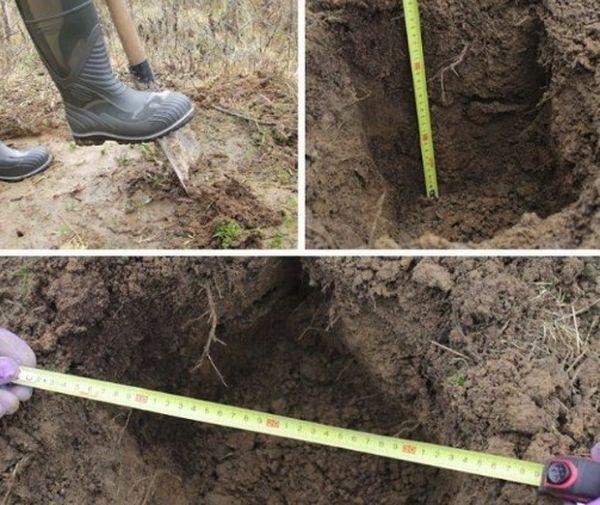
The hole for the seedling is dug in advance: in the fall for spring planting, or 2-3 weeks before fall planting. The hole should be 60-100 cm deep and 70-80 cm wide.
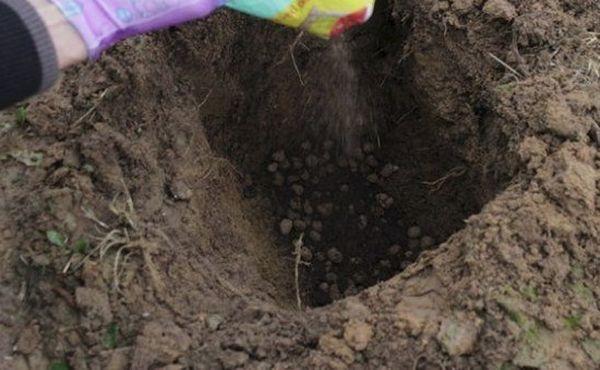
The hole is filled in advance (1-2 weeks before planting) with a nutrient mixture, which is prepared from dug fertile soil, humus in the amount of 10 kg / m2, 2 buckets of sand, 60 g of superphosphate, and 30 g of potassium sulfate. For overly acidic soils, add 400 g of lime.
For seedlings, purchase 1-2-year-old trees zoned for the planting region. The seedlings are purchased in the fall and stored in a specially prepared horizontal pit in the garden until spring.
Before planting, inspect the plants, removing any broken, dry, or rotted roots. Trim any excessively long roots slightly. Soak the root system for 24 hours in a Kornevin solution to promote root establishment and stimulate root growth. Alternatively, sprinkle the roots with Kornevin powder.
The technological process of tree planting
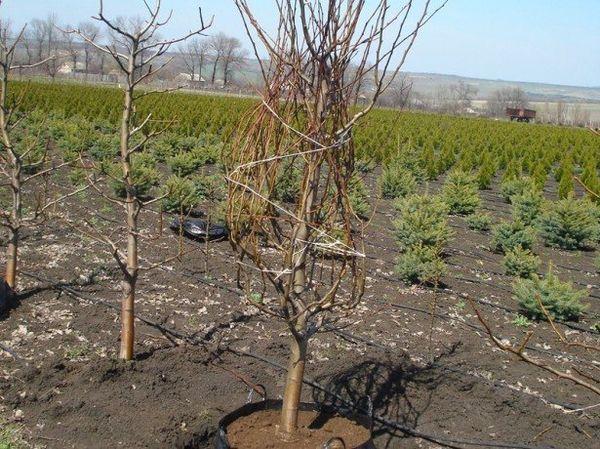
A hole large enough to accommodate the entire root system of the seedling is dug in the center of the planting hole. A mound is formed in the center of the hole. The seedling is placed on top of this mound, and the roots are spread out along the slopes. A stake is driven in 5-7 cm from the mound for support.
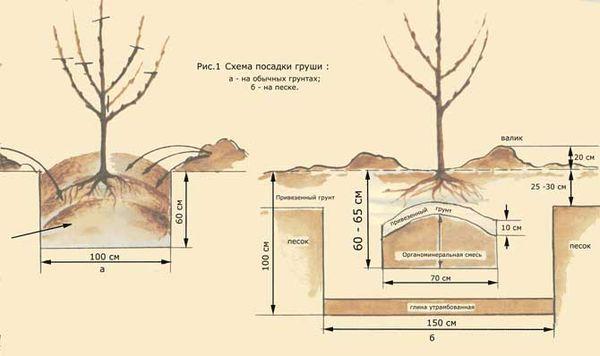
The hole is filled with soil, compacting it layer by layer to eliminate any air pockets. The seedling is tied to a support. A 35-40 cm diameter mound is formed around the tree, raking the soil up toward the trunk.
The soil is watered with 2-3 buckets of water, loosened, and mulched. The central conductor is trimmed to a height of 80 cm.
The subtleties of caring for the Zhegalov's Memory variety
If all recommendations are followed, the tree will produce a consistently high harvest every year.
Watering and fertilizing
After planting, trees are watered once a week with two buckets of water. A mature tree needs to be watered three times per season. The first watering is done in the spring, before flowering, the second after flowering, and the third in the fall, before frost sets in.
In hot weather, water the pear tree once a week, then mulch the soil to reduce moisture evaporation. A mature tree requires 4 buckets of water.
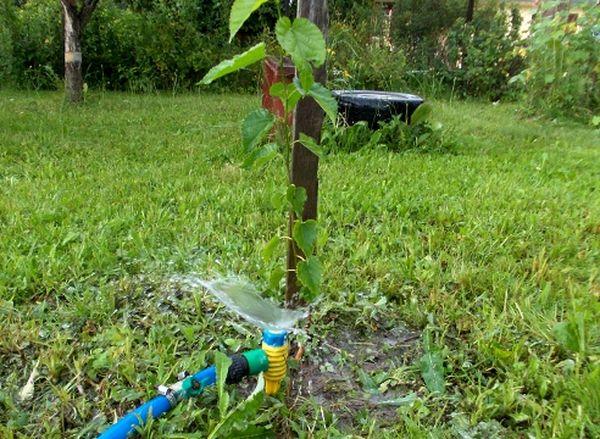
Pear trees can be watered using sprinklers or by pouring water into furrows dug around the tree's trunk. These furrows are dug to a depth of 15 cm and then sealed after watering.
Pear trees need regular fertilization. The first fertilization is done one year after planting.
In early spring, the plant is fed with urea, 30 g of which is diluted in 10 liters of water, and humus at a rate of 5 buckets per 10 liters of water. During flowering, fertilize with 100 g of superphosphate and 60-70 g of potassium sulfate, diluted in 10 liters of water.
In autumn, the soil is saturated with complex fertilizers; they should be added to furrows dug around the entire tree trunk circle, followed by digging up the soil.
Acidic soils are alkalized with 400 g of lime once every 4 years.
It can be carried out in spring foliar feeding of pears with ureaDissolve 20-30 g of fertilizer in 10 liters of water and thoroughly spray the tree's crown. This not only promotes faster nutrient absorption but also protects the pear tree from insect pests. Avoid spraying the tree with urea in the fall, as this will stimulate shoot growth, which will not have time to strengthen before winter and will die.
Trimming
It is recommended to prune in the spring, before the sap begins to flow. The air temperature should be above 8°C. The 'Zhegalov' pear is pruned to form two crown types: sparse-tiered or spindle-shaped.
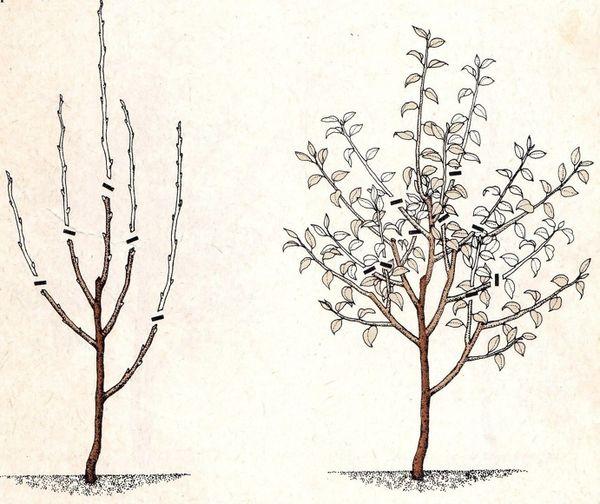
To create a sparse, tiered crown, two years after planting, select three main branches of the lower tier and prune them back by 1/3. The central conductor is cut at a height of 1 m from the top branch. The remaining shoots are removed completely.
In the third year, form a second tier of three branches. The central leader is pruned to a height of 1 m from the branches of the second tier. The remaining branches are removed.
After a year, a third tier of three branches is formed. The tiers are spaced 50 cm apart. The central conductor is trimmed back to 20 cm above the upper branches.
Every spring, the skeletal branches are trimmed by 1/3. Excess shoots are removed.
A spindle-shaped crown consists of branches up to 1.5 m long, evenly spaced around the trunk. To create it, the branches are bent horizontally and reinforced with wire.
Sanitary pruning is performed in the fall, after the leaves have fallen. Dry, diseased, and damaged branches are removed.
Whitewash
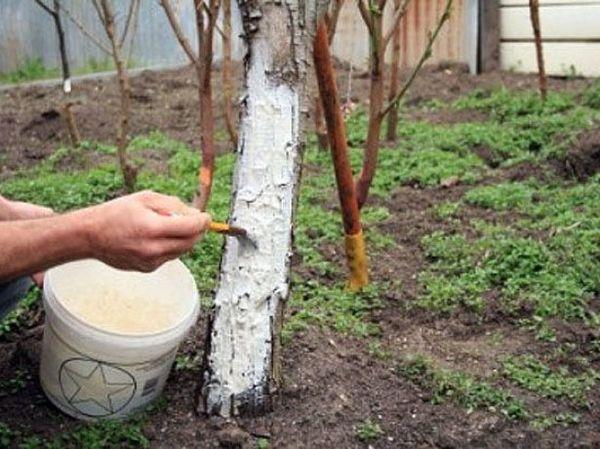
Whitewashing is done in the fall, before the onset of cold weather. The trunk and large branches of the tree are cleared of moss and dry bark and coated with a mixture of 3 kg of lime, 400 g of copper sulfate, 50 g of casein glue, and 10 liters of water.
Loosening and weeding the tree trunk circle
After watering, loosen the soil around the tree trunk and remove weeds. Loosening the soil will improve oxygen access to the roots. Weeds can harbor insects that can harm pears.
Seasonal treatments
In the spring, before and after flowering, trees are sprayed with Bordeaux mixture, copper sulfate, or fungicide solutions to protect against fungal diseases. Insecticide solutions, such as malathion, are used against insects. The treatment is repeated in the fall, after the harvest.
Preparing for winter
Before the cold weather sets in, a moisture-replenishing irrigation is necessary: 8 buckets of water are added to the soil around the tree's trunk. This saturates the soil with moisture and helps the plant survive frost.
The soil around the tree trunk is dug up and mulched with sawdust. The tree trunk is whitewashed.
The trunks of young trees are wrapped in non-woven material soaked in peppermint oil, diesel fuel, or dust to protect against rodents. The tree is insulated with straw, spruce branches, or burlap. In winter, snow is raked under the pear tree to protect the roots from frost.
Methods of reproduction
The Pamyat Zhegalova pear is propagated by cuttings, which are grafted onto seed-grown rootstock using various methods: butt grafting, cleft grafting, under-bark grafting, copulation, improved copulation, and budding. Cuttings can also be grafted onto mature pear trees of other varieties.
'Zhegalova's Memory' successfully propagates from own-rooted seedlings grown from cuttings. This variety can also be propagated by air layering.
How to Increase Your Yield: Tips and Advice
To increase pear yield, you should regularly water the tree and add fertilizer to the soil.
Lupine, clover, mustard, and rapeseed can be planted between rows of trees. In the fall, the plants are mown and plowed under. By spring, they transform into a nutrient-rich fertilizer, enriching the soil with nutrients without the need for additional organic fertilizers.
Planting several trees of pollinator varieties near the "Memory of Zhegalov" tree increases fruit set. If space is limited, cuttings from different varieties can be grafted onto a single plant.
Diseases and insect pests weaken pear trees, leading to poor fruit set and shedding of existing fruit. Therefore, it's important to carry out preventative treatments in a timely manner.
Don't neglect tree pruning. Timely removal of excess branches stimulates the growth of lateral shoots, where flower buds form. Thinning the crown improves ventilation and light conditions, which in turn increases fruit set. Furthermore, the growth of excess branches drains the plant of energy it could otherwise use for fruit production.
Gardeners' reviews of the variety
Vasily, 45, Vladimir: "In memory of Zhegalov, I pick the fruit at the end of September and let them ripen at room temperature. Ripe pears are sweet, juicy, and lemon-yellow."
Anton, 57 years old, Kolomna: “I have trees growing next to Pamyat” pears Pava and CathedralPollination and fruit set are normal, although the yield is average, but the fruits are large. At high yields, the fruits become smaller."
Anastasia, 38, Klin: "The pear is quite productive, winter-hardy, and disease-resistant. The fruit has a long shelf life – it can stay fresh in the refrigerator until January."
Related posts:
 Description and full characteristics of the Yakovlev Memory pear variety, planting and care
 Rules for planting and caring for pears in open ground, how to grow them correctly
 Description and full characteristics of the August Dew pear variety, planting and care
 Description of the Forest Beauty pear variety, planting and care specifics
 Description and full characteristics of the Lada pear variety, care and cultivation
 Description of the Rogneda pear variety, planting and care instructions
 Description of the 23 best pear varieties for the middle zone, planting and care rules
 Description and characteristics of the Forel pear variety, planting technology and care