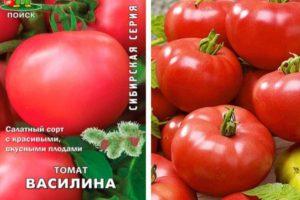
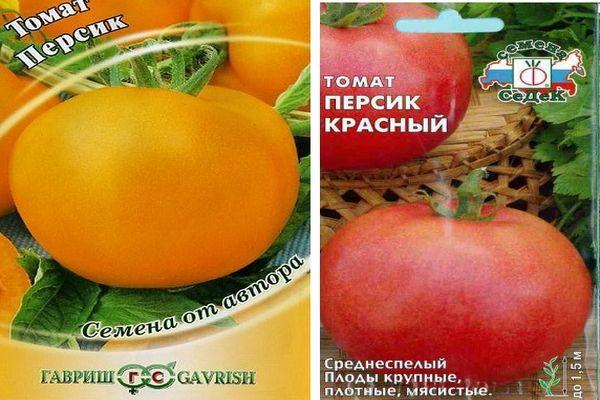
The unusual Peach tomato has several varieties, each with a different fruit color. Other plant characteristics are roughly the same for all members of this group. When purchasing Pink Peach seeds or similar varieties with different colors, you can refer to the description of the group as a whole.
General characteristics of the plant
Based on its bush type, the Peach variety is classified as an indeterminate plant, with an unrestricted main stem. When formed into 1-3 stems, the tomato resembles a vine tied to a trellis. Its height can reach 2 meters when grown in a greenhouse, but in open ground, the plant is significantly smaller.
The Peach tomato variety and Peach F1 hybrids (orange and white) are very early-ripening. Ripening begins 90-115 days after germination. Fruiting is extended and continues until the end of the gardening season, so gardeners can enjoy these unusual berries all summer long. The varieties differ slightly in ripening time: pink tomatoes are the earliest, while red and yellow ones ripen slightly later.
The yield is quite high, reaching approximately 17 kg per square meter at a planting density of three plants per unit area. The fruits form on complex clusters, each consisting of 7-12 ovaries of approximately equal size and weight. Each tomato weighs 100-110 g; its diameter is 5-7 cm.
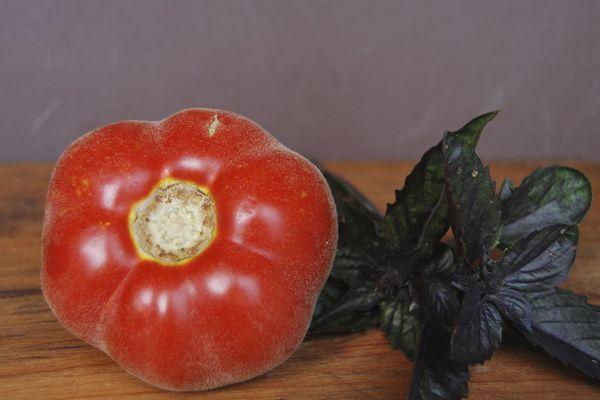
Tomatoes are suitable for both open ground and greenhouses, but they are most often grown indoors in private plots in central Russia. This is dictated by the possibility of obtaining earlier tomatoes (2-3 weeks earlier than in open ground). The characteristics and descriptions of the variety, as provided by vegetable growers, note the dependence of the fruit's flavor and yield on growing conditions.
Peach tomatoes prefer high soil and air temperatures, and lose their flavor in unfavorable seasons.
Disease resistance is high. The Peach variety and its varieties are highly resistant to almost all fungal infections and tobacco mosaic. However, late blight can ruin some of the harvest if the summer is cold and rainy.

Fruit characteristics
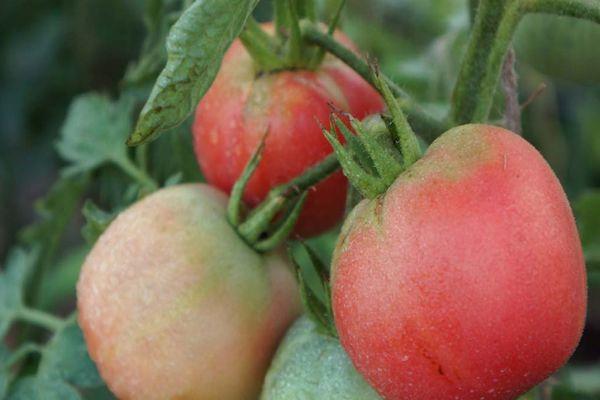
Round tomatoes are attractive even when unripe, hanging in clusters on the stems. But the full beauty of these varieties and hybrids emerges when the berries ripen. Red Peach tomatoes are relatively uniformly colored, but other varieties can be considered bicolor.
At biological maturity, white and yellow peaches have a light, greenish-white or yellowish color with a delicate pink blush. Pink Peach tomatoes resemble nectarines in color, combining shades of orange and pink.
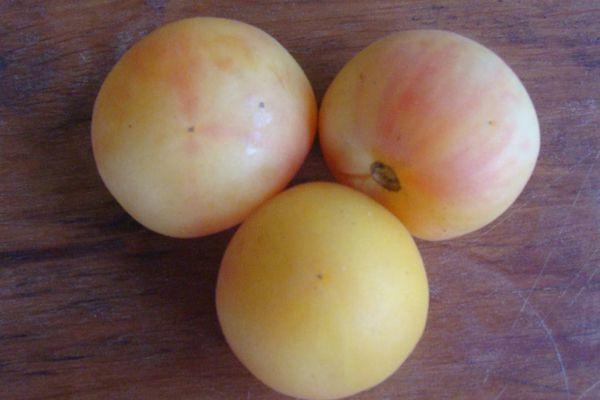
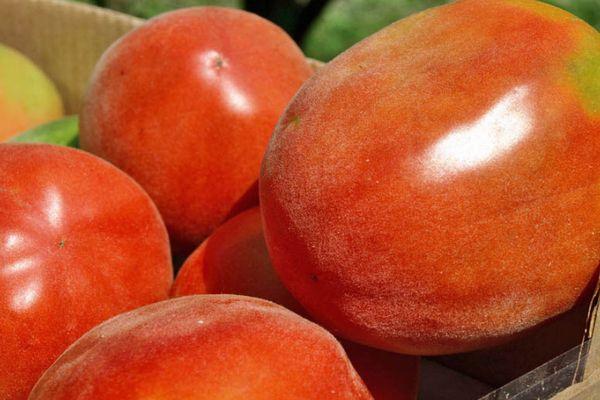
The most distinctive feature of the Peach tomato variety is its skin. Unlike other tomato varieties, it is covered with a light fuzz, creating a velvety effect. The skin is dense; the tomatoes do not crack and are easy to transport without losing their nutritional value or appearance. Ripe peaches store well at room temperature and in the refrigerator.
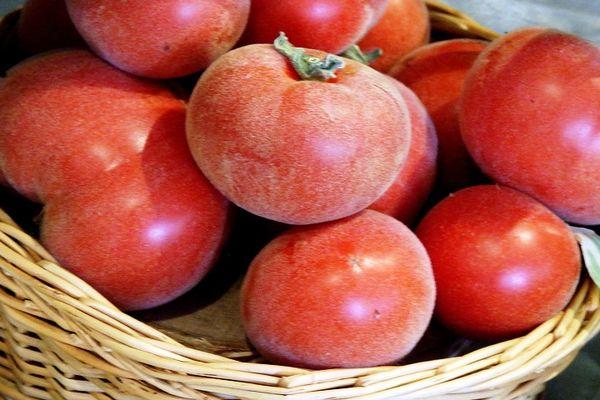
The flesh has a delicate texture, not too dense. The tomato contains 2-3 large seed chambers. Gardeners' reviews indicate that the Peach tomato variety has excellent flavor. The pulp's sugar content exceeds 10%. The tomatoes are sweet, with a delicate tartness and a pleasant aroma with fruity notes.
The flesh of the light-colored varieties is almost white. These tomatoes are considered hypoallergenic and are included in children's diets. Red and orange Peach tomatoes have uniformly colored cores of corresponding shades. The cut of the Pink Peach is very beautiful: the flesh is colored in red and yellow shades, reminiscent of a mixture of peaches and cream. Those who have already planted these velvety tomatoes agree, saying, "I'll definitely plant Peach tomatoes next season!"
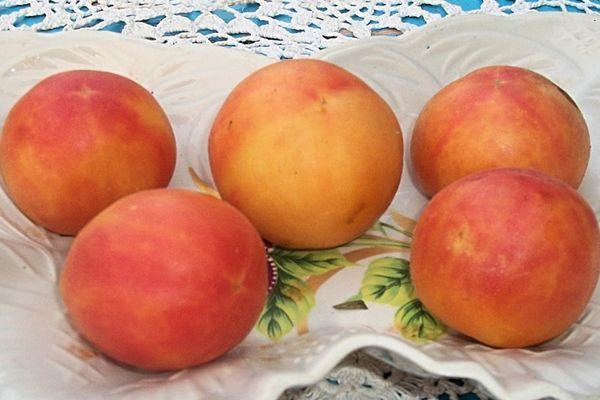
These tomatoes are best eaten fresh. They're so exotic that you'll want to include them in salads and sautés, eat them whole, and use them as a holiday centerpiece. They can be processed for winter in the usual ways: they're perfect for whole-fruit canning, tomato juice, and sauces. Their velvety skin doesn't retain its distinctive appearance when cooked or pickled, and the juice is delicious, but quite ordinary.
Take a look Also

Growing tomatoes
Growing this exotic variety is no different from caring for regular tomatoes. Peaches don't require any special conditions. Sow the seeds approximately 40-50 days before planting if the package indicates a fruiting period of 90-95 days, or two months before for varieties that ripen in 110-115 days.
Ekaterina, an experienced gardener from Voronezh, offers the following advice: "I grow seedlings in a substrate made of equal parts fertile soil, sand, and humus. To reduce acidity, I add 2 tablespoons of chalk or ground eggshells per 10 kg of the mixture. I fill the soil into boxes and soak them in a hot solution of potassium permanganate. The seeds should be sown as soon as the soil cools.
Tomato seeds should be spread on damp soil, covered with a thin layer of dry sand (0.5 cm), and covered with perforated plastic film. Tomatoes germinate quickly when the soil temperature is at least 25°C. Once the sprouts appear, the plastic film should be removed.
Tomatoes should be transplanted when they have 2-3 true leaves. Remove the seedling from the soil, pinch the root by 1/3 of its length, and plant it in a separate 0.5-liter container. If transplanting into a common container, the seedlings should be spaced 10x10 cm apart. Care for the seedlings involves regular watering. It is not recommended to overdry plants.
Tomatoes can be planted in the garden after the last frost, around the first ten days of June. In a greenhouse, they are planted earlier, when the soil warms to +20°C. Space tomatoes 40-50 cm apart; leave 70 cm between rows.
One week after planting, the plants should be fertilized with nitrogen fertilizer. When the first flower cluster has opened, apply a phosphorus-potassium mixture (superphosphate and monopotassium phosphate, according to the instructions). The fertilizer should be diluted in irrigation water.
Related posts:
 How to properly grow a peach tree from a seed at home, planting and care
 How to treat peach trees for aphids and the best methods for pest control
 Description and characteristics of the 45 best types of peaches, growing rules
 Description of varieties and beneficial properties of fig peach, cultivation technology
 Timing and methods of grafting a peach tree, rules of procedure
 Characteristics and description of the Redhaven peach variety, planting and care
 Description of the best varieties of black tomatoes for open ground and greenhouses
 Characteristics and description of the Golden Jubilee peach variety, planting and care