
- Why is apricot pruning necessary?
- We are rationing the harvest
- Thinning the tree crown
- Necessary tools and materials
- Types and features of cuttings
- Regulatory
- Sanitary
- Formative
- Rejuvenating
- Deadlines
- In the spring
- In summer
- In the fall after harvesting
- Trimming patterns
- Sparsely tiered
- Cup-shaped
- Transferring a branch to a lateral shoot
- By the shape of the bush
- The seedling after planting
- Forming a two-year-old apricot tree
- In the 3rd and 4th year after planting
- Rejuvenating an old apricot
- Trimming a columnar tree
- Caring for the crop after pruning
- Tips and recommendations from gardeners
- How to maintain the crown or what to do if the tree grows upward
Pruning fruit trees is one of the most important procedures, positively impacting yield, plant growth, and disease resistance. Apricot trees are pruned twice a year. It's important to follow all agricultural practices.
Why is apricot pruning necessary?
Pruning an apricot tree is essential for its normal development. There are no downsides to pruning if done correctly.
We are rationing the harvest
The main benefit of pruning fruit trees is increasing yield. If a tree grows a large number of small branches, they are of little use. The flowers on them fail to open, and consequently, fruit ovaries fail to form. This leads to a significant reduction in yield.
Pruning to increase yield is carried out in early spring.
In addition to increasing yield, pruning affects the timing of the apricot tree's fruiting. If you shorten the shoots a little after planting, fruiting will occur earlier. But if you prune them too much, the apricot will begin to bear fruit late.
Thinning the tree crown
The second reason for pruning is to thin the crown. As the tree ages, it grows more and more vigorously, producing fewer inflorescences while actively growing foliage. Furthermore, a dense crown prevents fruit from ripening and also promotes disease.
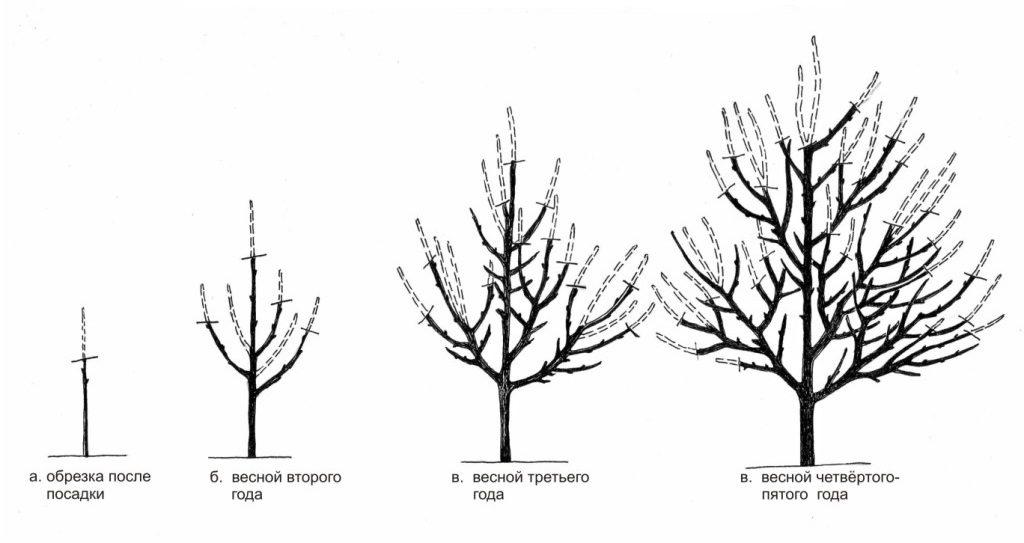
Pruning promotes the flow of nutrients to the cut site, so the branches begin to grow actively, and the length of the growth increases faster.
Necessary tools and materials
Before the procedure, you need to prepare the necessary tools.
Tools for carrying out work:
- garden shears;
- high-quality garden pruning shears;
- stepladder (if the tree is too high);
- garden var;
- disinfectant;
- hacksaw.
Tools must be sharpened to a fine point. There should be no creases at the cut edges.
Types and features of cuttings
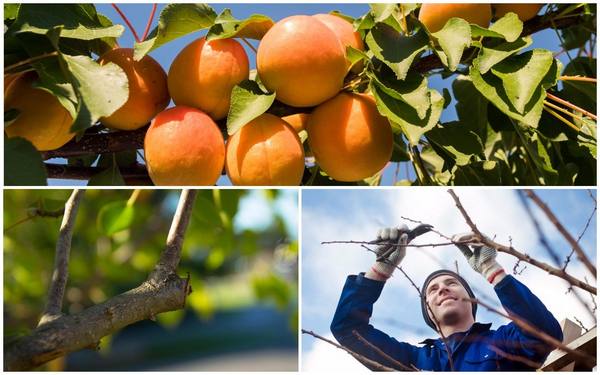
Pruning methods vary depending on the timing and intended purpose. There are four different methods for pruning apricots. For the procedure to be successful, it must be performed correctly.
Regulatory
This type of apricot pruning is performed in late winter or early spring. When growing, the plants can be pruned in the fall. The goal of regulatory pruning is to maintain the correct crown shape and remove branches that are crowding it. During this process, the tree's skeletal branches are strengthened. All nutrients are channeled to the fruit-bearing branches, which in turn increases yield.
Sanitary
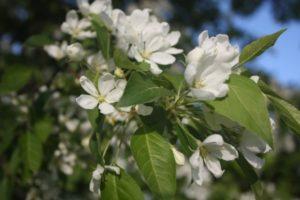
This type of work is carried out in the fall. This procedure is aimed at removing all diseased, dead, and damaged branches. The procedure is repeated in the spring if any branches on the plant are frozen.
Formative
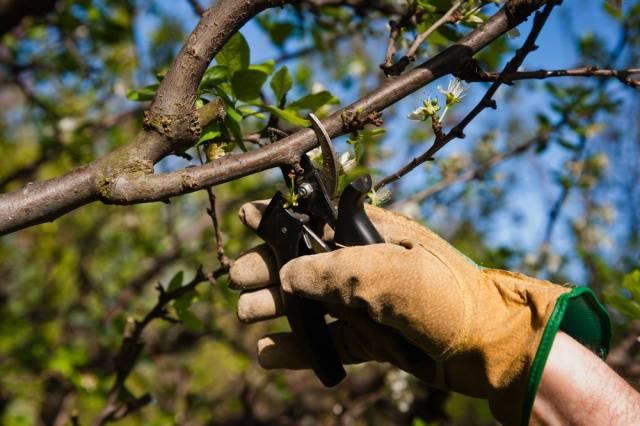
The most difficult type of pruning is formative pruning. The success of this pruning determines the tree's fruiting and health. This type of pruning is especially useful for small plots where you need to create a compact crown without reducing fruiting. Crown shaping can be done in the spring.
Rejuvenating
The final type of procedure is rejuvenation. It is used only on older trees that are beginning to bear little fruit. Rejuvenating an apricot tree can be achieved by removing all old branches. This procedure involves pruning off new growth, which stimulates the growth of larger branches.
Deadlines
Pruning timing depends on the growing region. In the central part of the country, it's done in mid-April. In the south, apricots are pruned earlier, in early spring, while in the north, conversely, it's done later.
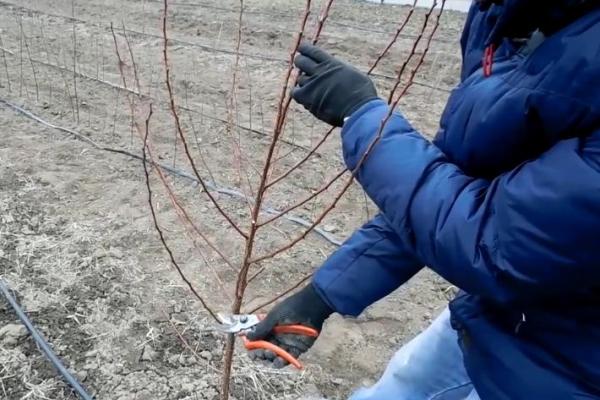
In the spring
Tree pruning in spring is done before sap flow begins (before foliage appears and before flowering). Pruning branches during sap flow will weaken the tree and cause gummosis.
Some gardeners insist that apricots should be pruned when the outside temperature is below freezing (at least -10 degrees Celsius). Others, on the contrary, advise pruning branches when the temperature reaches +5 degrees Celsius.
In the central part of the country, apricots are pruned in late March to early April. In the south, it's done in late February to early March. In northern latitudes, pruning is delayed until the second ten days of April.
In summer
Summer pruning helps increase yield. For example, you can shorten shoots in June, which will cause them to grow back vigorously within two weeks, resulting in a larger harvest. Pruning trees in July is not recommended, as they are beginning to bear fruit. The final pruning is done in August.
Some people believe that if you trim branches in August, the tree will accumulate fewer harmful substances.
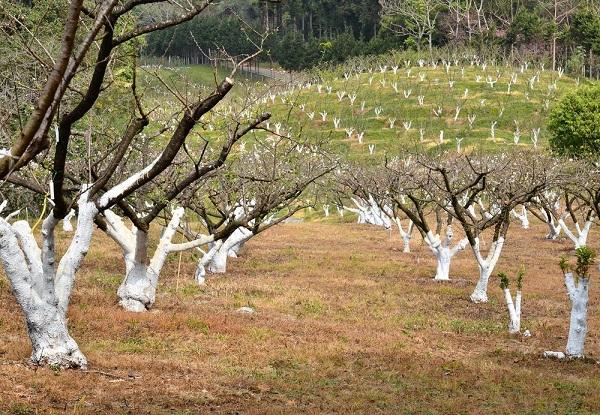
In the fall after harvesting
After fruiting, sanitary pruning is performed. This is done after the tree has shed all its leaves and is preparing for winter. Damaged branches should be trimmed before frost sets in. The optimal time for this procedure is late September. Rejuvenation pruning is also performed during this period. However, if forecasters predict a rainy and cold autumn, the procedure should be postponed until spring.
Trimming patterns
There are several pruning schemes for fruit trees. The choice of method depends on the age of the apricot tree and the purpose of the procedure.
Sparsely tiered
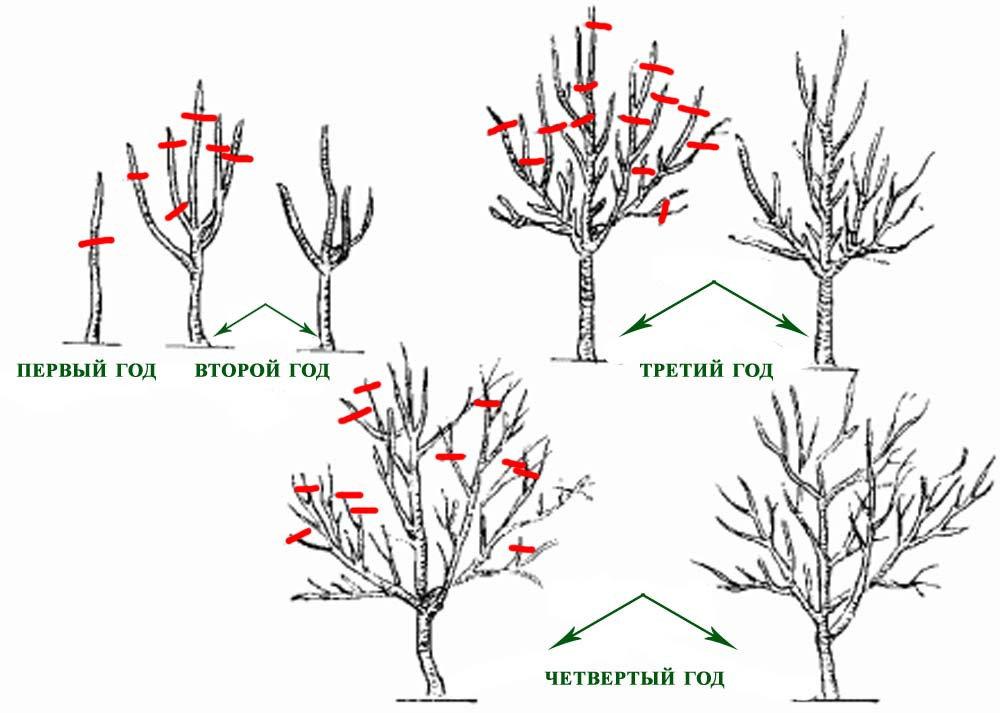
This is the method used to prune young trees. It's done in the spring. The top of the tree is pruned, with 3-4 buds. A length of 80-100 cm is left to allow the first tier to form. The lower buds are cut off.
In the second year, cut back the side branches by 1/3, leaving 2-3 of the largest. The rest are cut back. The top is again trimmed back to 55-75 cm above the first tier.
In the third year, young shoots and some small branches are pruned. Two to three branches are left on the second tier. The top is trimmed back by 20-30 cm. Similar procedures are carried out in the following two years. The top is shortened progressively less each year.
 .
.
Cup-shaped
This method of pruning should be done consistently year by year.
The formation looks like this:
- After planting, cut off the top of the seedling by 50-80 cm.
- A year later, at the same time, the lateral shoots are shortened by one third of their length, and 3-4 of the largest branches are left intact.
- In the third year, 2-3 shoots are left on each branch, and the rest are cut off. The buds closest to the trunk are cut to form a "ring."
As a result, the formed crown should have 8-10 lateral branches.
Transferring a branch to a lateral shoot
Step by step process:
- In the first year, a strong shoot is shortened by one third of its total length;
- In the second year, several branches grow from this shoot, two of them are completely cut off, the second is cut to ½ the length;
- In the third year, the longest branch is shortened and the top of one of the lateral branches is cut off.
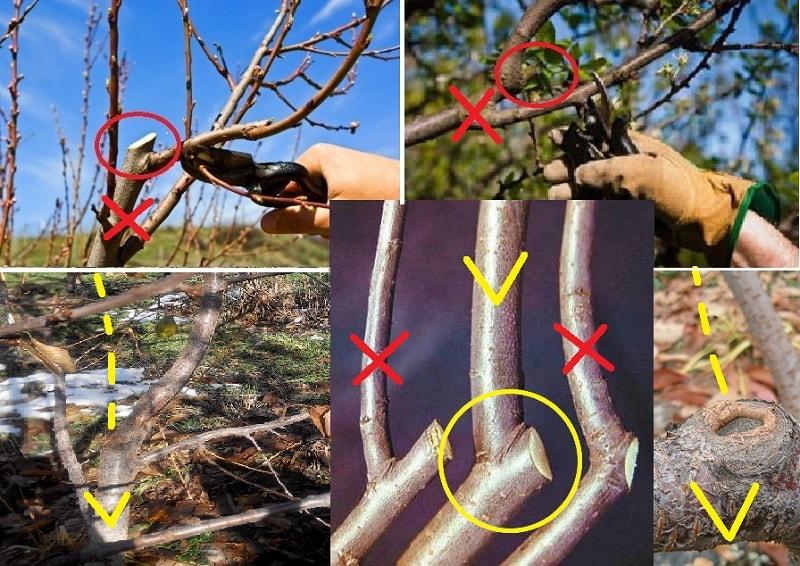
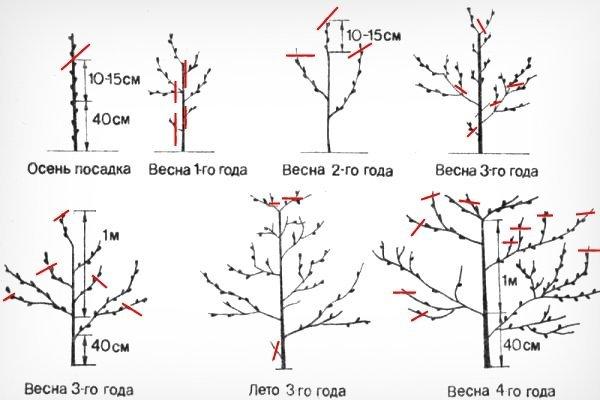 During pruning, the cut areas are immediately disinfected.
By the shape of the bush
The largest apricot stems are cut in half. The rest are pruned using the "ring" technique. The main stem is shortened so that it is 30 cm taller than the other branches. Crown shaping rules depending on tree age. The methods for shaping the apricot crown also depend on the age of the tree itself.
The seedling after planting
Immediately after planting, seedlings must be pruned.
Pruning stages:
- If the planted seedling has no lateral branches, only the top is cut off by 80-90 cm.
- If lateral branches are present, large branches are cut to ½ their length.
- Small and weak branches are cut off completely.
- In this case, the top is shortened by 35 cm.
Pruning a young apricot tree after planting is a mandatory procedure.
Forming a two-year-old apricot tree
In the second year, the tree is pruned again.
Pruning a two-year-old apricot tree:
- Select several branches for pruning, spaced 30 cm apart. Trim them so that the lower branches are longer than the upper ones;
- A distance of 40 cm is left from the conductor to the last remaining branch.
After this, you need to trim the weak young branches.
In the 3rd and 4th year after planting
In the third year, the mature plant is pruned using exactly the same method as in the second year. By the fourth year, the plant's crown should be fully formed. This is the year when most varieties begin to bear fruit. For the next few years, the plant will not need any formative pruning, only sanitary or regulatory pruning.
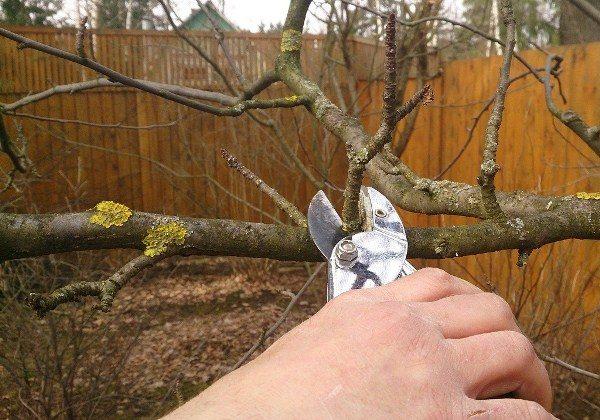
Rejuvenating an old apricot
Old apricot trees don't need to be pruned. They only need rejuvenation. This process is done in stages and takes several years. If all the branches are pruned in one year, the apricot tree will die.
Take a look Also
The process of rejuvenating an old tree:
- First, sanitary pruning is carried out, then the lower branches are cut off.
- Remove all young and unnecessary branches that thicken the crown.
- Cut off all vertical branches.
- Pinch young shoots that are more than 40-50 cm in height.
This procedure can increase the yield of plants that are practically no longer bearing fruit due to their age.
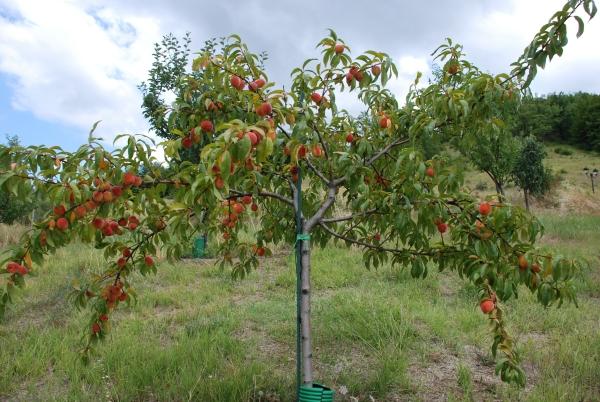
Trimming a columnar tree
Columnar trees must be pruned.
The procedure process:
- In the first year, the top of the seedling is cut to 80 cm immediately after planting it in open ground.
- The side branches are cut off, leaving 3-4 of the largest ones; they should be located 25 cm below the top.
- Those branches that have grown at an angle of 45 degrees are cut off in the summer.
During the remaining years of the tree's life, shoots are shortened annually by approximately 20-30 cm. In addition, sanitary pruning is also performed in the fall and regulatory pruning is performed in the spring.
Caring for the crop after pruning
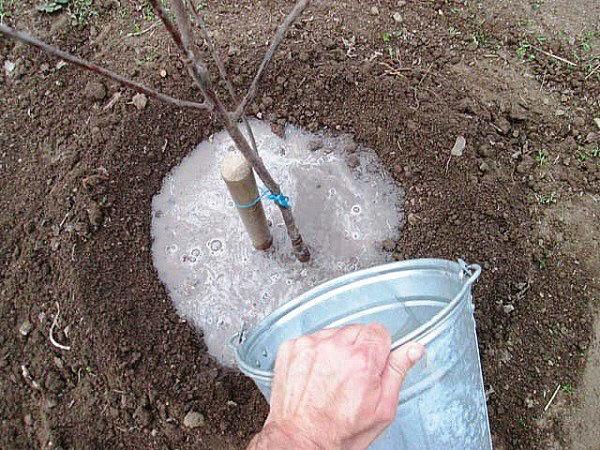
If pruning is done correctly, care must be taken afterward. Trees are watered generously 3-4 times a week, and mineral and organic fertilizers are applied regularly. In the fall, the soil around the trunk is dug over and rotted manure is added along with complex mineral fertilizers.
Tips and recommendations from gardeners
Pruning apricots has its own nuances that you need to know about.
Tips for the procedure:
- The cut areas must be treated with garden pitch to prevent infection.
- To increase frost resistance, the procedure is carried out in late May - early June.
- The cuts are made only with sterile instruments, so before the procedure and after each cut the instruments are treated with alcohol.
If you follow all these tips, pruning will be successful.
How to maintain the crown or what to do if the tree grows upward
An apricot tree can grow up to 15 meters tall. Such a tall tree is of little use; it will no longer bear fruit. All the nutrients are used up by growth, leaving almost nothing for fruit formation. The solution is to shape the crown.
During pruning, the tree should be given a rounded shape. To reduce problems with trunk stretching in the future, the sapling is pruned immediately after planting. The top of the sapling and some of the skeletal branches are primarily removed, leaving three to four main branches.
Related posts:
 Timing and rules for peach pruning, formation scheme after harvesting
 When and how to prune cherry trees correctly, and tree shaping schemes for a good harvest
 Timing and rules for pruning sea buckthorn for beginners
 Rules and timing for pruning cherry plum in summer, crown formation scheme
 When and how to prune currants, the scheme and timing
 How to prune grapes step by step for beginners
 Optimal timing for cherry tree pruning and crown shaping methods
 A diagram and how to prune blueberries for beginners