
- What is a sharafuga?
- Peach-Apricot Hybrid: Pros and Cons
- History of selection
- Description and characteristics
- Features of wood
- Appearance
- Dimensions of the root system and crown
- Who is the pollinator?
- Flowering and fruiting
- Ripening period and harvest
- The taste of the fruit and its scope of application
- Varieties of the variety
- Basic requirements for growing
- Planting technology
- Preparing the site and seedlings
- Required soil composition
- Timing and technology of planting
- How to care for a hybrid crop
- Watering
- Fertilizer
- Loosening and caring for the tree trunk circle
- Diseases and pests: prevention and treatment
- Do I need to cover it for the winter?
Growing fruit and berry trees depends on the characteristics of the chosen crop. Care can be complicated by the fact that hybrid varieties possess different properties inherited from their parent fruit. Sharafuga is a hybrid that combines plum, peach, and apricot flavors. The unusual sharafuga fruit is gaining popularity due to its flavor profile and improved adaptability.
What is a sharafuga?
Nectacotum, or Sharafuga, was created through complex breeding. The hybrid has high quality ratings, can be grown in a variety of locations, and produces fruit reliably.
Peach-Apricot Hybrid: Pros and Cons
Hybrid varieties typically arise within a single species, but sharafuga refers to breeding experiments where different species of related types are crossed. The advantages of hybridization:
- excellent taste characteristics, combining the qualities of peach, plum and apricot;
- wide range of applications;
- increased adaptive qualities;
- high frost resistance.
The disadvantages of the sharafugi are the following:
| Flaw | Characteristic |
| Does not produce seed material | Breeding is complicated |
| Grows only in fertile soils | Requires constant feeding |
| Does not tolerate overwatering | Constant control over watering is necessary. |

Choosing seedlings can be challenging for gardeners. Not all nurseries stock Sharafuga seedlings. Furthermore, the cost of these plants is quite high.
History of selection
It took the renowned American biologist F. Zeiger 30 years to create the Sharafuga. He believed that the Plum subfamily could produce a hybrid with unique qualities. Zeiger achieved this by crossing different plum varieties with peaches, nectarines, and apricots.
Description and characteristics
Sharafuga fruits resemble apricots with an unusual purple coloring. The pattern inside the fruit after the pit is removed is similar to that of a peach. The flavor of the sharafuga flesh has been compared to that of a peach, plum, or apricot at different stages of ripeness. The pit is as easy to remove as that of a plum.

Features of wood
The tree on which the sharafuga ripens resembles a plum tree. Trees of all varieties look similar.
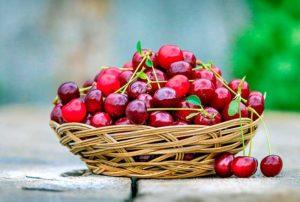
Appearance
The Sharafuga tree reaches a height of 2.5 meters. The trees grow 50-70 centimeters annually, with branches forming a semi-oval crown with dark green, lanceolate leaves. The shape, color, and arrangement of the Sharafuga leaf blades mimic the plum tree's characteristics. Thorns grow on the branches, also characteristic of plum trees. The leaves begin to curl inward, a feature common among apricot trees.
Information! Sharafuga bushes don't take up much space; with timely pruning, they can grow in limited spaces.
Dimensions of the root system and crown
The root system is formed as a taproot. The majority of the roots extend to a depth of 20 to 40 centimeters. The crown size depends on the type of root formation. With proper care, the crown becomes semi-oval, does not spread laterally, and takes up little space.
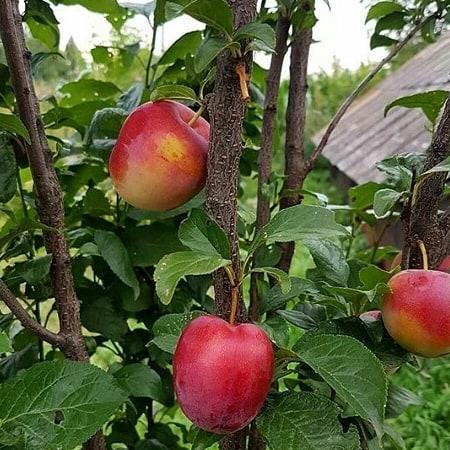
Who is the pollinator?
To ensure the tree develops fully, apricots, plums, or nectarines are planted nearby. Early varieties are preferred.
Flowering and fruiting
The tree begins bearing fruit in the third or fourth year after planting. Flowering is characterized as early and long-lasting. In warmer regions, it can begin in late April and last until June. The fruits reach consumer ripeness by mid- to late August. Fruiting, with supplemental feeding, is characterized as stable. It can grow in the same location for up to 15 years and produce a good harvest.
Information! As soil characteristics change, the fruits on the Sharafuga become smaller.
Ripening period and harvest
A distinctive feature of this hybrid is that it can be eaten at various stages of ripeness. When technically ripe, the fruits resemble plums with a slightly tart flavor; when fully ripe, they resemble apricots. The skin is a glossy variety, meaning it lacks the slight fuzziness typical of apricots.
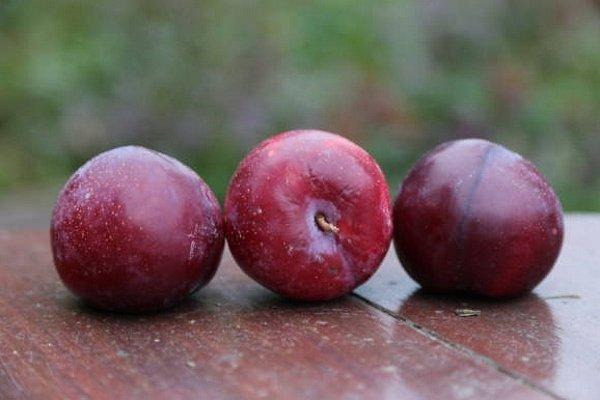
The harvest can be made at any stage; Sharafuga ripens successfully during storage. Due to its thick skin, the fruits are transportable and have a long shelf life.
The taste of the fruit and its scope of application
A single sharafugi fruit can weigh up to 70 grams. The sharafugi flesh is described as sweet and sour. The unusual apricot-plum flavor allows the fruit to be used in a variety of ways. Gardeners note that sharafugi are suitable for fresh consumption, as well as for canning, making jams, and assorted compotes.
Varieties of the variety
In the sharafugi's native America, three varieties are grown, each with a different color and cultivation style. The yellow sharafugi is suitable for home cultivation. Purple sharafugi are grown for the fruit market.

Basic requirements for growing
Growing sharafugi is similar to caring for plum or apricot trees. Soil composition and watering schedules are also important. The trees do not tolerate strong winds or waterlogged soils, so planting sites must be carefully selected.
Planting technology
Planting guidelines for Sharafuga seedlings include choosing the right location. The soil for hybrids is fertilized in advance: if planted in spring, the soil is top-dressed with compost in the fall.
Preparing the site and seedlings
When choosing a landing site, be guided by the following restrictions:
- through winds are excluded;
- Lowlands with high groundwater levels are excluded;
- Do not plant on poor, depleted soils with low acidity.

A good location for the sharafugi is a south-facing spot, sheltered by buildings, with adequate sunlight. Before planting, soak the seedling for several hours in a root biostimulant. Before soaking, clean the root system of any dirt or damaged roots.
Required soil composition
When planting sharafuga, pay close attention to the soil composition. A lack of nutrients can lead to poor adaptation, weakening the plant, and making it susceptible to various diseases.
The pre-dug planting hole is fertilized with organic matter, potassium, and phosphorus-containing fertilizers. The pH level should not exceed 6.5. If it is higher, liming is necessary.

Tip! To reduce soil acidity, add dolomite flour or crushed lime.
Timing and technology of planting
Sharafuga seedlings are planted in spring or fall. Fall planting is quite possible, as the plant is frost-resistant and can adapt to low temperatures.
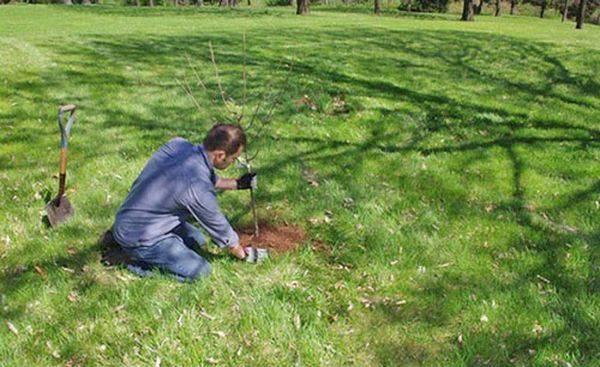
For the sharafuga, dig a hole at least 80 centimeters deep and about 70 centimeters wide. Fertilize the prepared hole with compost if needed. Place the seedling in the center of the hole, next to the prepared support. Cover the sides with a layer of soil and compact it. Form a circle and water the planting thoroughly. During the initial adaptation stage, spray the trunk and young shoots with warm water from a spray bottle, then move on to watering the area around the trunk.
How to care for a hybrid crop
With proper care, the Sharafuga can grow in one place for about 15-20 years. Regular watering is essential.
Watering
When watering, ensure the top layer of soil dries evenly. Overwatering can cause root rot. During droughts, increase the frequency of watering. Use 10-15 liters of water per mature plant.
Warning! Use warm water for watering.
Fertilizer
The characteristics of the hybrid crop require additional application of various types of fertilizers.
- Before the buds form, the soil is fertilized with organic mixtures.
- When buds form, ammonium nitrate and nitrogen mixtures are added to the roots (this will help to increase green mass).
- When buds are forming and at the beginning of flowering, superphosphates and potassium mixtures are added.
- During fruit formation, manganese, calcium, potassium, and selenium are added to stimulate ripening.
- After harvesting the fruits, the soil is fertilized again with organic matter.
Take a look Also


Loosening and caring for the tree trunk circle
The tree's trunk circle is formed at planting. It expands as the tree matures. If desired, the trunk circle can be mulched with special materials:
- pine needles;
- pressed sawdust;
- mown grass.
Some gardeners do without additional mulch; it is necessary when it becomes important to preserve and retain moisture or prevent the spread of weeds.
Loosening is carried out regardless of the presence of a mulch layer. Loosening aerates the soil, making it lighter and more suitable for the growth and development of the underground root system.

Diseases and pests: prevention and treatment
Sharafuga exhibits high resistance to diseases and pests. Preventative measures completely eliminate problems during cultivation:
- in autumn and spring the trunk is whitewashed with a lime solution;
- in autumn, the trunk is cleared of damaged bark, the remaining leaves are removed and burned;
- If you suspect the appearance of insects, carry out foliar treatment with a solution of onions or garlic.
Do I need to cover it for the winter?
The Sharafuga inherited the plum tree's enhanced resistance to low temperatures. The tree can survive winters at -30 degrees Celsius without loss. When its shoots freeze, the Sharafuga revives in the spring and begins to form buds.
To ensure the tree survives the winter, a series of steps are taken to prevent the plant from freezing:
- the trunk is whitened 10-15 centimeters from the base;
- the tree trunk circle is hilled up;
- destroy damaged or diseased branches.
Short-term frosts down to -35 degrees will not cause any harm if the sharafuga is properly prepared.
Related posts:
 The best eggplant varieties for growing in a polycarbonate greenhouse: planting and care
 Methods for planting and propagating cherries at home
 The best grape varieties for growing in the Urals, planting and care rules in summer
 Is it possible to soak treated cucumber seeds before planting and how to do it correctly?
 Causes and treatment of eggplant pests and diseases, how to combat them at home
 Description and rules for growing Solaris grapes
 The health benefits and harms of cherries, rules of consumption, and their effects on the body
 Top 40 DIY New Year's Baking Recipes for 2020