
- History of selection
- Description and characteristics of the culture
- Characteristics of the variety
- Drought resistance and winter hardiness
- Pollination
- Flowering period
- Ripening time
- Productivity and fruiting
- Applications of berries
- Resistance to diseases and pests
- Advantages and disadvantages
- Pollinators
- Iput
- Tyutchevka
- Fatezh
- Jealousy
- Bryanochka
- Michurinka
- Leningrad yellow or pink
- How to plant
- Choosing a location
- Soil requirements
- How to choose and prepare a seedling
- Requirements for neighbors
- Planting diagram
- Recommendations for choosing deadlines
- Care instructions
- Top dressing
- Watering mode
- Sanitary pruning
- Crown formation
- Preparing for winter
- Diseases and pests
- Clusterosporiasis
- Moniliosis
- Aphid
- Cherry fly
- False tinder fungus
- Cylindrosporiosis
- Phyllostictosis
- Leaf roller
- Harvesting and storage
Sweet cherries are one of the first summer berries. They are considered heat-loving and can only be grown in southern regions. Breeders have developed several varieties adapted to frost, including the Leningrad Black Cherry. Below is information on growing sweet cherries in home gardens, their advantages and disadvantages, harvesting, and storing the crop.
History of selection
The variety was developed by specialists at the Pavlovsk Experimental Station, part of the St. Petersburg All-Russian Institute of Plant Industry. The breeders were tasked with developing a cherry variety capable of growing in cold regions, a task they successfully accomplished. Previously, the crop was grown exclusively in warmer climates. Although the variety is not officially included in the State Register of Russian Cherries, gardeners have long enjoyed the fruits from trees grown in their own plots.
Additional information: Dark burgundy cherries are used to make green food coloring.
Description and characteristics of the culture
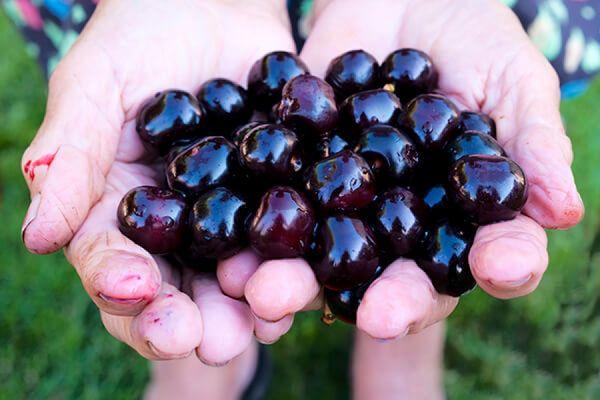
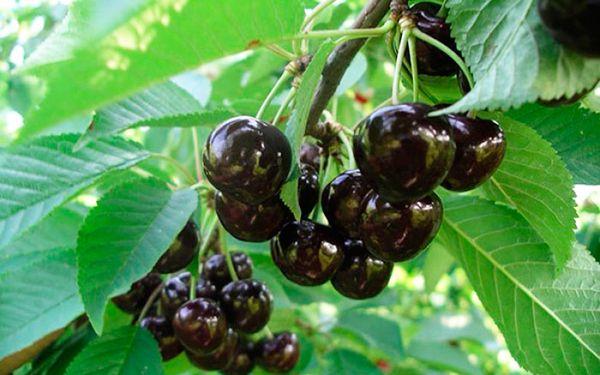
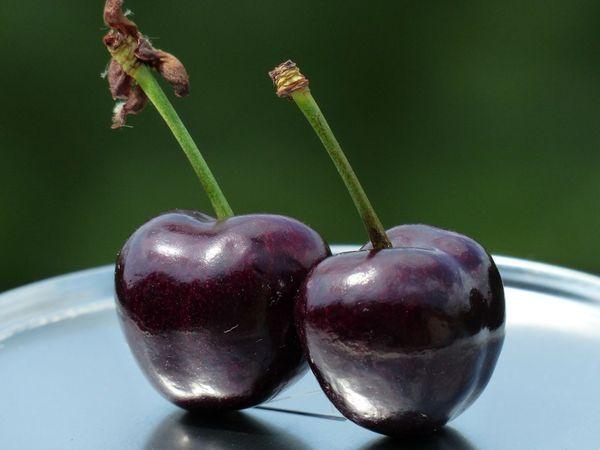
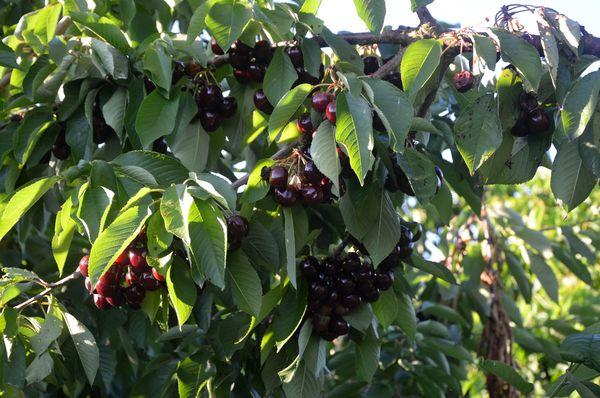
The Leningrad Black tree reaches a height of 3.5-4 meters. It has a broad crown, moderate foliage, and large leaf blades. Inflorescences consisting of 3-5 flowers form on the shoots. The resulting fruits are heart-shaped. Their color is dark burgundy, almost black, and they weigh 3-4 grams.
Characteristics of the variety
The Leningradskaya cherry is an early-ripening variety, with the first harvest occurring 3-4 years after planting. Young trees produce up to 25 kilograms of fruit, while mature trees can reach 40 kilograms. The cherry's flavor is sweet and sour, with a spicy aroma. The better the climate and care, the better the fruit's taste. Its uses are versatile.
Drought resistance and winter hardiness
This variety was specifically bred for cold regions, so it has good winter hardiness. Trees can withstand temperatures down to -30°C. Spring sunburn poses a major threat, causing trunk cracking. The Leningrad cherry tree can survive for long periods without watering, especially when mature. However, it's still best to water the trees periodically, otherwise the fruit won't be as juicy.
Pollination
The Leningrad Black cherry tree is not self-pollinating, so other varieties should be planted nearby. For successful pollination, the trees should bloom at roughly the same time. Bees can carry pollen: beehives can be placed in the garden, and the trees can be sprayed with a honey solution during flowering to attract insects.
Flowering period
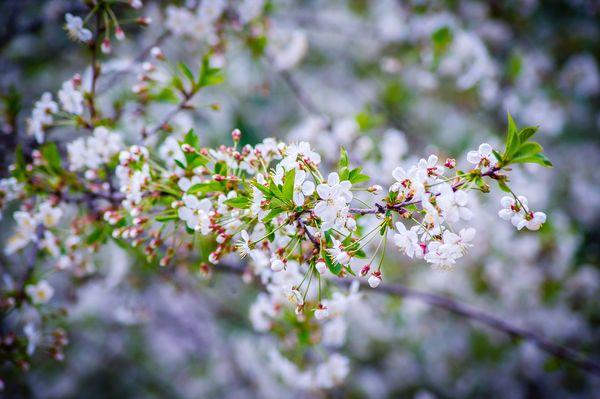
Flowers begin to bloom in the second half of May. They grow in clusters of 2-5. The petals are white. To produce fruit, pollinator trees must be planted in the area.
Ripening time
In warmer regions, fruiting begins at the end of the first month of summer. In northern regions, the fruit is harvested from mid-July. The Leningrad Black variety ripens over several weeks. The fruit does not fall off, but remains firmly attached to its stems.
Productivity and fruiting
Trees begin to produce fruit three to four years after planting. A mature cherry tree produces up to 40 kilograms of fruit, each weighing 3 to 4 grams. Initially, the fruit is red, but then turns dark burgundy, almost black.
Applications of berries
Leningrad black cherries are eaten fresh, dried, and frozen for winter. They are also used to make jams, compotes, and as fillings for confectionery. Some gardeners even make alcoholic beverages from the berries.
Resistance to diseases and pests
The variety has good immunity and is rarely affected by pests. However, under unfavorable climatic conditions, it can be attacked by diseases and pests. Cherries can also be affected by pathogenic microorganisms and harmful insects if not properly cared for by the gardener.
Advantages and disadvantages
The Leningrad Black Cherry has the following advantages:
- good immunity;
- frost resistance;
- drought resistance;
- stable yield;
- early fruit bearing;
- universal application;
- gradual maturation.
Disadvantages include the need to plant pollinator trees due to the self-sterility of the variety, and cracking of fruits during prolonged rainfall.
Pollinators
The variety requires pollination, so other cherry trees are planted nearby. They should have similar characteristics, the most important of which is simultaneous flowering. Below are the best pollinator varieties for the Leningrad Black cherry.
Iput
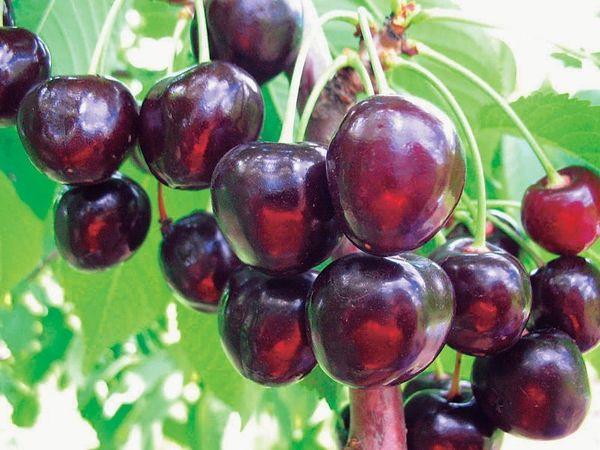
This is a medium-sized tree, reaching a height of 3.5 meters. The leaves are large and dark green. The flowers are white, growing on long stalks that form clusters. The cherry tree blooms in May and bears fruit in June. The berries are red, almost black; the flesh is sweet and juicy. This variety is winter-hardy and resistant to diseases and pests.
Tyutchevka
This cherry variety grows to 4-4.5 meters. The harvest begins five years after planting. The berries are dark red, weighing 5-7 grams. They are versatile. Despite their thin skin, they are easy to transport. Tyutchevka is frost-hardy and has moderate drought tolerance.
Fatezh
The tree's crown is spreading, spherical, and moderately dense. It blooms in May and bears fruit in the second ten days of June or early July. The berries are round, yellow-red in color. The flesh is firm and juicy, with a sweet-sour, dessert-like flavor. A mature tree yields up to 50 kilograms of fruit.
Jealousy
A mature tree reaches a height of 3-4 meters. The crown is pyramidal, with branches growing almost vertically. The berries are flattened and round, weighing 4-6 grams. The fruit is dark red, turning deep burgundy when fully ripe. Their thick skin allows them to withstand transportation well.
Bryanochka
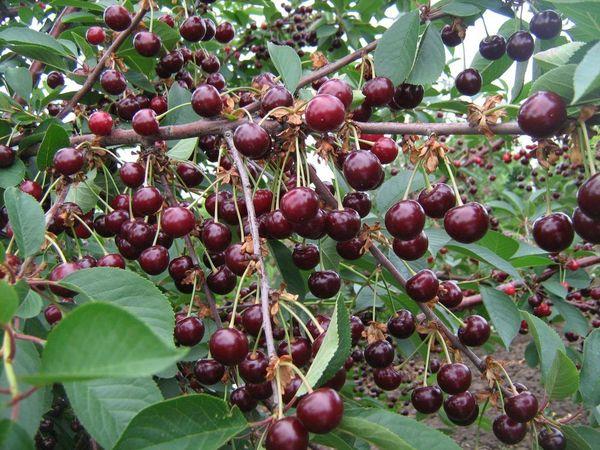
Bryanochka reaches a maximum height of 4 meters. It blooms in May and bears fruit in late July. The berries are deep red, weighing 4-7 grams on average, and have a sweet flavor. A young tree yields 20-25 kilograms of fruit, while a mature tree yields 40-50 kilograms. The variety is frost-hardy, withstanding temperatures down to -30°C.
Michurinka
The Michurinskaya cherry tree reaches a maximum height of 3-4 meters. Its crown is dense, and its shoots are thick. Flowering occurs in May, and fruiting occurs in July. The fruits are heart-shaped, dark red, and sweet in flavor. This variety is highly frost-resistant, making it suitable for cultivation in northern regions.
Leningrad yellow or pink
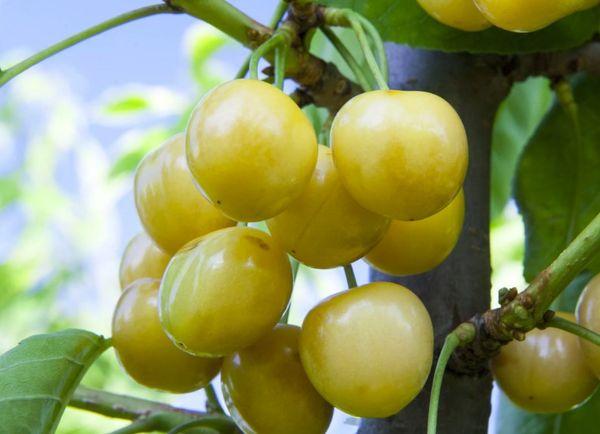
The Leningrad Yellow Cherry's berries are a beautiful golden-amber color. The flesh is juicy, sweet, and slightly bitter. They ripen in August. The Leningrad Pink Cherry's harvest begins in mid-July. The berries are yellow, with the sunlit side turning a rosy red.
Please note! The distance between pollinator trees should be no more than 50-60 meters.
How to plant
The hole is prepared 2-3 weeks before planting the cherry tree. The seedlings are carefully selected, as they will grow in the same spot for decades. It's important to keep in mind that the Leningrad Black cherry tree is self-sterile, so other pollinator varieties should be planted nearby.
Choosing a location
For planting cherry trees, choose a south-facing site protected from cold winds. If the tree's crown receives consistent sunlight, the berries will be large and sweet. Groundwater should not be closer than 2 meters to the soil surface, otherwise the root system may be attacked by fungus.
Soil requirements
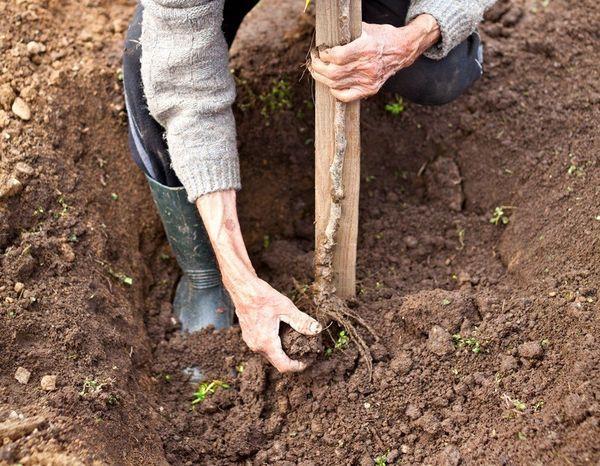
The Leningrad Black cherry tree prefers fertile, neutral soil. Garden soil and loam are added to sandstone. If the soil is heavy and clayey, peat and river sand are added. A drainage layer of expanded clay and small stones is placed at the bottom of the planting hole.
How to choose and prepare a seedling
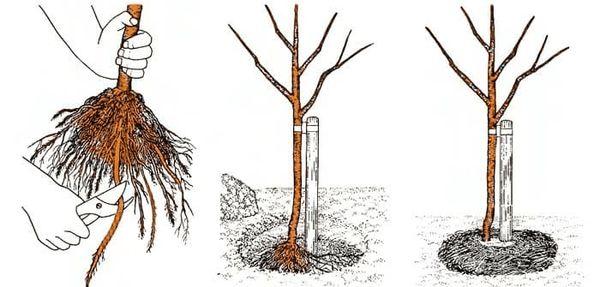
Young trees are purchased from reputable sellers at garden centers or from tree nurseries. A one- or two-year-old seedling will take root most easily. It should have a healthy root system and above-ground part. Before planting, the roots should be soaked in water for 2-10 hours, to which 2-3 drops of growth stimulant can be added.
Requirements for neighbors
The Leningrad Black cherry will thrive alongside other cherry varieties, including sour cherries, hawthorn, columnar cherry plum, grapes, and rowan. The trees should be planted away from stone fruit crops such as apricots, apples, plums, raspberries, currants, and sea buckthorn. It is recommended to sow honey plants such as phacelia, alfalfa, sweet clover, and clover under the cherry trees.
Planting diagram
Young trees are planted as follows:
- they dig a ditch 70 centimeters deep and 1 meter wide;
- a substrate consisting of fertile soil, compost, wood ash, to which potassium-phosphorus fertilizers can be added, is added to it;
- a seedling is placed in the middle of the hole, the roots are straightened out, and covered with soil.
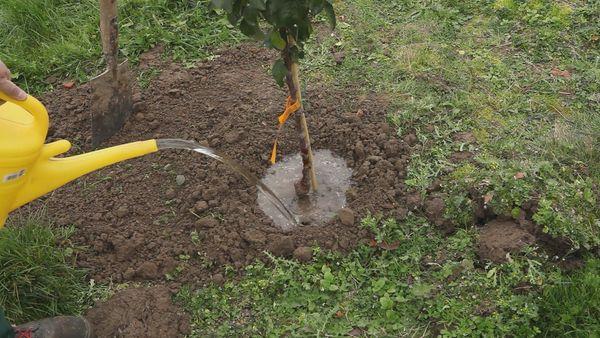
The root circle is compacted and watered generously.
Recommendations for choosing deadlines
In northern regions, cherry trees are planted in the spring, after the soil has warmed. The seedlings will strengthen and become well-rooted over the season. In the south, planting is permitted in the fall, at least a month before the onset of cold weather. If frost sets in earlier than expected, the trees are earthed up and covered with spruce branches.
Care instructions
Trees are cared for throughout the season, including watering, fertilizing, weeding, and mulching. Sanitary and formative pruning is performed annually. Before the onset of cold weather, moisture-replenishing irrigation is performed.
Top dressing
If the cherry tree is planted in fertile soil, the first fertilization is done in the third year after planting. In the spring, after the leaves have emerged, apply a mullein infusion or a nitrogen fertilizer solution. During flowering, the trees are fed with superphosphate and potassium salt. The same mixture is applied again to the trunk circle after fruiting.
Watering mode
The cultivar description states that Leningradskaya Chernaya is a drought-resistant variety, but the soil must be moist to produce high-quality fruit. If the weather is dry and hot for a long time, each tree should be generously watered with warm, settled water. To retain soil moisture, the area around the tree trunk is mulched with peat and humus.
Sanitary pruning
Diseased, dead, and broken branches are removed from trees. Sanitary pruning is not seasonal; it is performed as needed. A sharp, disinfected tool is used to remove branches.
Important! To prevent infection, seal the cut areas with garden pitch after pruning.
Crown formation
In addition to sanitary pruning, formative pruning is performed. This is necessary to ensure air and sunlight reach the fruit. Thinning the crown increases cherry yield and reduces the risk of diseases and pests. Three strong branches are left in each tier during pruning.
Preparing for winter
In late autumn, the area around the cherry tree trunk is watered generously. The moist soil will protect the root system from freezing. The root zone is then mulched with peat or humus. One-year-old seedlings can be covered with agrofibre or burlap.
Diseases and pests
Like all greenery, the Leningrad cherry tree is susceptible to diseases and pests. These problems can be avoided by promptly removing foliage from the tree's trunk, thinning the crown, and spraying the trees with fungicides and insecticides as a preventative measure.
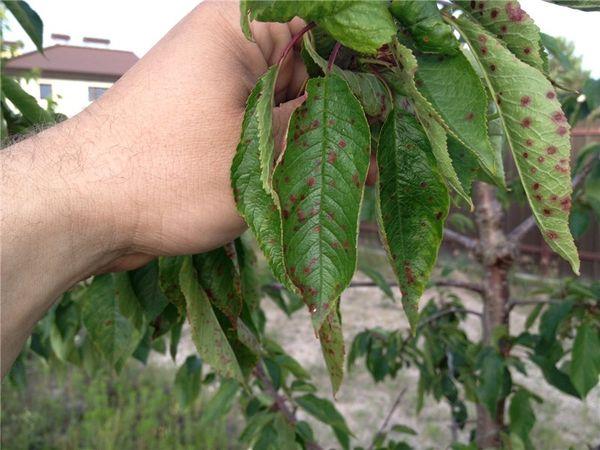
Clusterosporiasis
Another name for the disease is holey spot. Infection occurs in the spring: the fungal mycelium, overwintering in plant debris, easily penetrates cracks in the cherry tree stems and shoots.
To prevent fungal diseases, remove leaves from the tree trunk circle for the winter and treat the crown and soil with a fungicide.
Moniliosis
The fungus attacks flowers, fruits, and leaves, causing them to wilt and fall prematurely. Affected parts of the tree are pruned, and the crown is sprayed with Bordeaux mixture. To prevent the fungus, remove plant debris, and apply Nitrafen in early spring.
Aphid
The insect feeds on plant sap, weakening and depressing it. The quality and quantity of the harvest are reduced. Aphids can be controlled by spraying the trees with Confidor. To prevent the insects from appearing, the soil around the trunk is dug up, and the crown is sprayed with an insecticide.
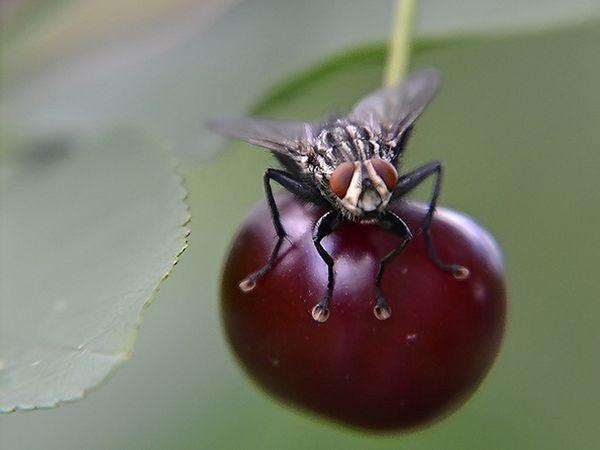
Cherry fly
Its larvae damage flowers and then fruit. The pupae overwinter in the tree trunk circle at a depth of 4-5 centimeters. Therefore, in early spring, the area under the cherry tree crown is dug up and the pests are removed by hand. The fly and larvae are sprayed with Actellic.
False tinder fungus
A fungus appears on the trunk of a cherry tree. Pathogenic microorganisms colonize cracks and wounds, forming yellow and brown growths. To rid the tree of the disease, the trunk must be stripped down to the healthy part, treated with a copper-containing preparation, and sealed with garden pitch.
Cylindrosporiosis
Another name for the disease is white rust, caused by a fungus. Ulcers appear on branches, oozing gum. Trees quickly weaken and may not survive the freezing winter. At the first signs of the disease, wounds and cracks should be cleaned and disinfected.
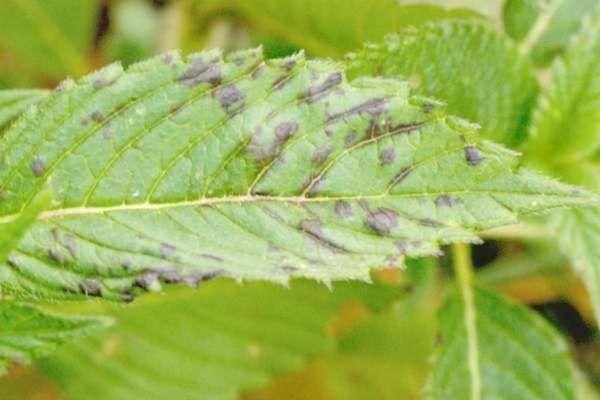
Phyllostictosis
Brown spot affects cherry tree leaves, which soon dry out and fall off. To prevent the disease, remove foliage from the tree's trunk area and treat the trees several times per season with a solution of copper sulfate or Bordeaux mixture.
Leaf roller
Cherry leaf roller caterpillars cause damage to trees. You can tell a tree is infested by the presence of webbing. The caterpillar wraps itself around the cherry tree leaf and then eats it. To prevent this pest, trees are sprayed with insecticide in early spring.
Harvesting and storage
Cherries ripen gradually, so the harvesting process can take several weeks. It's best to harvest in the morning, after the dew has dried. If the cherries aren't immediately available, they should be picked with the stems still attached. Store them in a cool place for no more than two weeks. The berries can be eaten fresh, dried, frozen, or used to make preserves and compotes.
Related posts:
 Descriptions of the 20 best cherry varieties for the Moscow region, their planting and care
 Planting and caring for cherries, feeding and growing rules
 The health benefits and harms of cherries, rules of consumption, and their effects on the body
 Description of the Drogana yellow cherry variety, planting and care
 Description of the best cherry varieties and cultivation in the Urals, planting and care
 Description and cultivation of the Bryansk pink cherry variety, pollinators
 Description and characteristics of the Valery Chkalov cherry variety, planting and care
 Characteristics and description of the Large-fruited cherry variety, pollinators and care