
- Description and characteristics of the Yablonka Rossii variety
- Appearance
- Application of fruits
- Resistance to diseases and pests
- Productivity and fruiting
- Application
- Advantages and disadvantages
- Features of plant cultivation
- Growing in open ground
- Planting in a greenhouse
- How to grow tomatoes at home on a windowsill?
- Further care of tomatoes
- Watering and fertilizing
- Bush formation
- Pest and disease control
- Harvesting and storage rules
- Reviews from summer residents and consumers
Breeders regularly discover new tomato varieties with distinct characteristics. Among the wide variety of tomatoes, the Yablonka Rossii variety has gained popularity due to its low maintenance, excellent taste, and disease resistance.
Description and characteristics of the Yablonka Rossii variety
When choosing a tomato variety for growing, it's important to first study its description and key characteristics. The Yablonka Rossii variety has a number of unique qualities and characteristics.
Appearance
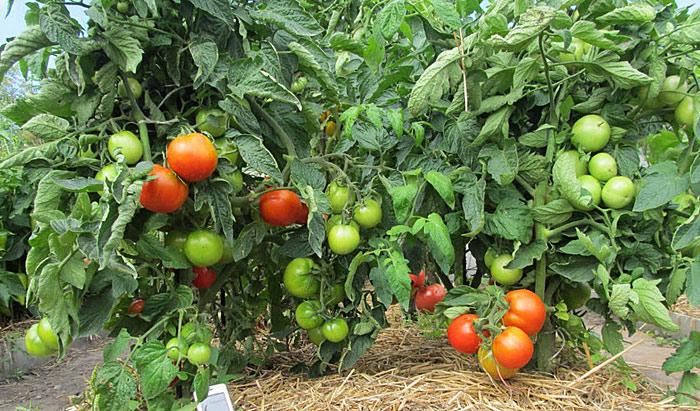
The plant is classified as a determinate or standard plant, with average foliage and branching. The bushes reach a height of 1 m, requiring no pruning of side shoots or support. The stems bear thickened shoots from which the leaves emerge.
Application of fruits
Ripe vegetables have a distinct aroma and a sweet and sour taste. The flesh is firm and fleshy. The fruits are versatile and can be eaten fresh, preserved, processed, or used in salads and other dishes.

Resistance to diseases and pests
The Yabloonka Rossii variety is valued for its increased resistance to common tomato diseases. The fruits are not affected by fusarium, verticillium wilt, alternaria and late blight.
The only problem is the attack of the Colorado potato beetle, spider mite, aphids and thrips when growing plants in greenhouse conditions.
Productivity and fruiting
The fruit ripening period is 120-135 days. The average yield per bush reaches 5 kg with proper care and a favorable climate. Each fruit weighs no more than 80 g.
Application
Tomatoes are suitable for growing in country and summer cottages, as well as on an industrial scale. Due to their attractive appearance and transportability, the fruits are often grown for export.
Take a look Also

Advantages and disadvantages
The Yablonka Rossii tomato variety has a number of comparative advantages and disadvantages. Positive characteristics include:
- ease of care;
- stable fruiting;
- resistance to fruit cracking;
- resistance to temperature changes.
A disadvantage of this variety is the risk of damage from harmful insects. Without protective spraying, yields may decrease.
Features of plant cultivation
When growing tomatoes, there are a number of factors to consider. These nuances depend on the growing region, soil type, and climate conditions.
Growing in open ground
Germinated seeds are planted in open soil. The optimal time for planting is late May to early June, when night frosts have passed. Seedling holes are dug 70-75 cm apart.
To ensure that plant roots begin to develop actively after planting, it is recommended to fertilize the soil beforehand.
For this purpose, a complex fertilizer is applied. Suitable organic fertilizers include well-rotted manure or compost. Covering the seedlings with plastic film also helps speed up their adaptation.
Planting in a greenhouse
When growing vegetables in a greenhouse, it's important to create a favorable environment for the seedlings to thrive. The following points are important:
- Plants should not be planted in cold soil, as the roots will rot and will not grow. The ideal soil temperature is 12-15 degrees Celsius. To warm the soil, you can cover it with opaque plastic for a few days.
- Before transplanting the seedlings into the holes, water them with warm water. Avoid planting them too deeply, to prevent the roots from sprouting under the soil.
- When applying fertilizer, it's important to maintain precise dosages. Over-fertilizing will stimulate foliage growth and can reduce yield.
- Sprouts with yellowed leaves and signs of rot should be separated from healthy ones to prevent the infection from spreading.
- It is better to plant in the evening or on a cloudy day.

How to grow tomatoes at home on a windowsill?
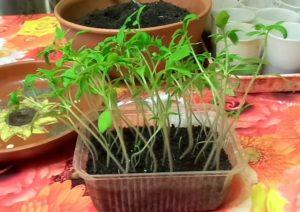
The characteristics of the Yablonka Rossii tomato make it suitable for growing at home. First, prepare the planting material by soaking it in a potassium permanganate solution. The solution kills harmful microorganisms and disinfects them.

The treated seeds are planted in small containers, covered with plastic film to create a greenhouse effect, and left in a warm place. After the first shoots appear, the seedlings are transferred to pots or boxes for further development.
Leaving containers with plants on the windowsill is only permissible if the windows are adequately insulated. It's also important to ensure there are no drafts and sufficient natural light. If the windows with seedlings aren't south-facing, it's recommended to provide additional artificial lighting.

Further care of tomatoes
After transplanting the seedlings to their permanent location, it's necessary to regularly perform comprehensive plant care. The main stages of care include watering the soil, fertilizing, and shaping the bush into one or more stems.
Watering and fertilizing
Do not water the tomato plants for 7-10 days after transplanting them into open ground or a greenhouse. As the tomato plants continue to grow, it's sufficient to water the soil once a week, or more frequently if the soil dries out quickly. The average water requirement for each plant is 3-5 liters.
Tomatoes are watered only at the roots. It's especially important not to water the plants from above during flowering, as water will cause buds to fall and prevent fruit set. High humidity also encourages fungal diseases. During flowering, reduce the amount of water per plant to 1-2 liters.

Bush formation
While shaping isn't essential for the development of the Yablonka Rossii variety, it does help increase yields. Bushes are shaped by removing side shoots. If you want to grow a single-stemmed plant, remove all growing side shoots. When shaping a two-stemmed bush, leave the shoot located under the first cluster and the one closest to it.
Pest and disease control
Despite increased resistance to common diseases, preventative treatments are permitted for plants. Fungicidal products are suitable for protective purposes.

Control of harmful insects involves spraying the bushes with repellents. You can use general-purpose insecticides or products that target specific pests. To combat spider mites, treat the plants with "Karbofos" or an infusion of garlic cloves, dandelion leaves, and liquid soap.
To kill aphids, sprinkle the soil around the bushes with ground hot pepper. Larger pests are removed by hand.
Harvesting and storage rules
It's recommended to harvest ripe tomatoes in warm weather, when there are no drops of moisture on the fruit's surface. It's best to harvest early in the morning, when the tomatoes are firmer. When picking tomatoes from the bushes, inspect them immediately for damage to sort the harvest.


Ripe tomatoes can be stored for a long time. They can be stored in the refrigerator or another cool place, arranged in boxes or on a shelf. To prevent the tomatoes from squashing, arrange them in one or two layers. A stable ambient temperature, moderate humidity, and protection from direct UV rays will help extend their shelf life.
Reviews from summer residents and consumers
Ivan Dmitrov: "I planted the Yablonka Rossii variety for the first time. I read recommendations from other gardeners who had planted this variety, so I had no difficulties growing it. I ended up harvesting about 40 kg from several bushes. The fruits are delicious and aromatic."
Galina Svibskaya: "I've been growing this variety for three years now. I keep most of them for sale. The tomatoes look very good even after a long journey. I prefer this variety because it's easy to care for."
Related posts:
 The best eggplant varieties for growing in a polycarbonate greenhouse: planting and care
 Description of the dwarf apple tree variety "Prizemlennye", planting and care
 Description of the best tomato varieties for pickling and canning
 Description of varieties of sowing peas and cultivation, to which family they belong
 Methods for planting and propagating cherries at home
 The best grape varieties for growing in the Urals, planting and care rules in summer
 Description and characteristics of the best seeds of pea varieties and types
 The best and most productive tomato varieties for greenhouse cultivation in the Urals, with descriptions