
- Reasons why tomato seedlings stretch
- Crop density
- Excess moisture
- Overdose of nitrogen fertilizers
- Insufficient lighting
- Sowing seeds for seedlings too early
- How can the situation be corrected?
- Additional lighting
- Change in temperature
- Stem deepening
- Watering mode
- Top dressing
- Removing cotyledon leaves
- Topping
- Drugs that stimulate growth and development
- Growth regulator "Athlete"
- Growth regulator "Stocky"
- Folk remedies for feeding seedlings
Gardeners who grow tomatoes from seedlings have encountered problems with poor plant growth. They often wonder why their tomato seedlings are thin and spindly. There may be several possible causes, and to understand the problem, a comprehensive investigation is necessary.
Reasons why tomato seedlings stretch
Why does it sometimes happen that vegetable growers' planting material no longer satisfies them? The seedlings become pale, spindly, and barely support themselves? The reasons for this lie in improper care. It's necessary to reconsider your growing tactics and understand why they've become so elongated.
The main reasons why this happens are obvious. Often, gardeners don't consider it important to perform certain procedures when planting. The seedlings then suffer. In the first days after planting, it's essential to carry out essential agricultural practices. Ensure good lighting, watering, fertilizing, and everything else.
Crop density
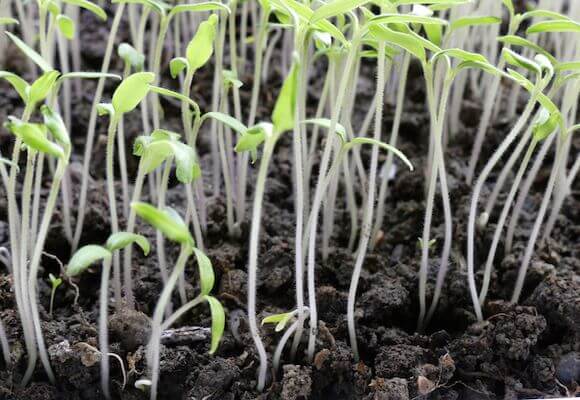
Often, planted seeds sprout too quickly, preventing proper root formation. Small roots prevent the formation of strong and vigorous aboveground roots. As a result, seedlings become stretched, thin, spindly, and very weak.
Tomatoes begin to compete with each other for moisture and sunlight. As a result, neither gets enough.
Excess moisture
Watering intensity affects seedling development. Moisture damages the root system, causing plants to begin to develop above-ground growth. Excessive moisture leads to disease and prevents oxygen from reaching the plants.
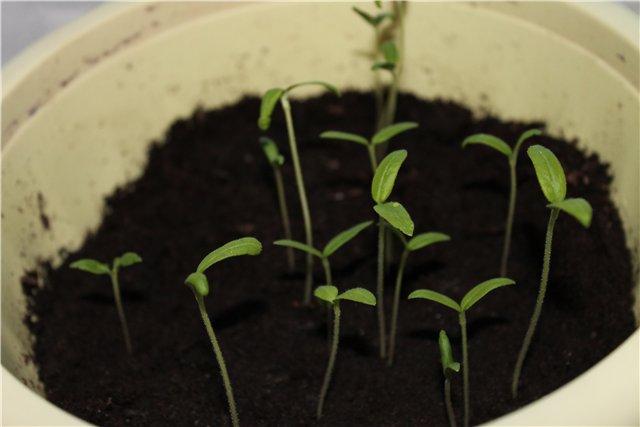
The result of excess moisture in the soil is that the seedling stretches upward, becoming thin and long.
Overdose of nitrogen fertilizers
Gardeners recommend underfertilizing plants; it's better to do so than overfertilize them. Excessive nitrogen fertilizer application leads to increased growth of the aboveground portions of plants.
There's no need to water or fertilize the plants immediately after they sprout. It's best to fertilize them every 10-15 days.
Insufficient lighting
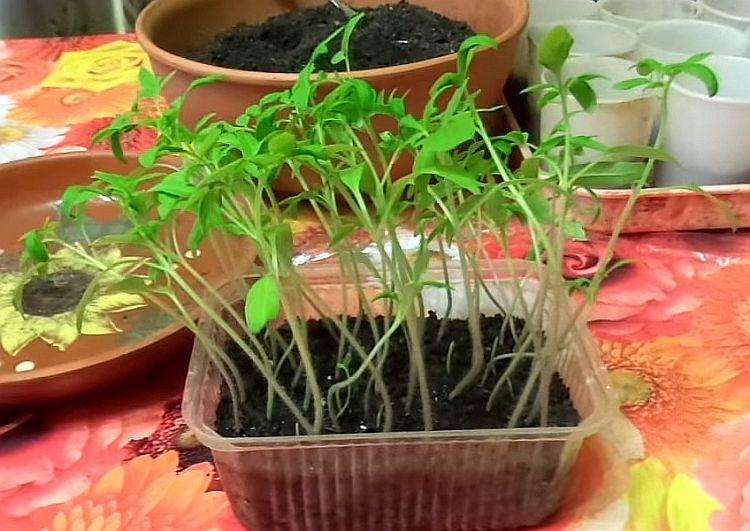
The most common reason for seedlings growing elongated and leggy is that the planting material is sown two months in advance. Often, sowing occurs in late February or March. Daylight hours are short, and the plants don't get enough sunlight. The tomatoes grow thin and pale.
Sowing seeds for seedlings too early
Before sowing seedlings, it's important to plan the timing of transplanting them to their permanent location. Plants planted too early tend to stretch and become spindly. They lack light and nutrients. After germination, place the pots on a well-lit windowsill and provide supplemental lighting.
How can the situation be corrected?
To prevent sprouts from becoming elongated and thinning, it's essential to strictly adhere to the planting technique. Also, follow proper agricultural practices in a timely manner. Even a novice can do this; the key is to follow the recommendations precisely. This will prevent problems like stretching from hindering the growth of strong and vigorous seedlings.
Additional lighting
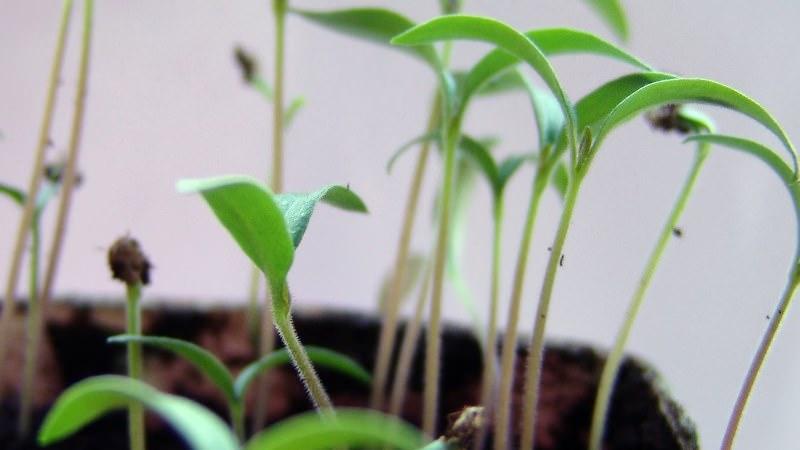
Before placing the pots with seedlings, it is necessary to find the most suitable place for planting.It is advisable to choose a window sill that faces south.
When sunlight is insufficient, supplemental lighting is provided. This is done using lamps of your choice. Manufacturers offer a wide variety of types, shapes, and spectra for vegetable growers to choose from.
Change in temperature
Strict temperature control will help prevent seedlings from becoming elongated. Maintain a temperature of 25°C until the seeds germinate and for several days afterward. Afterward, reduce the daytime temperature to 22°C and the nighttime temperature to 16°C. This will ensure the seedlings grow evenly and do not become elongated.
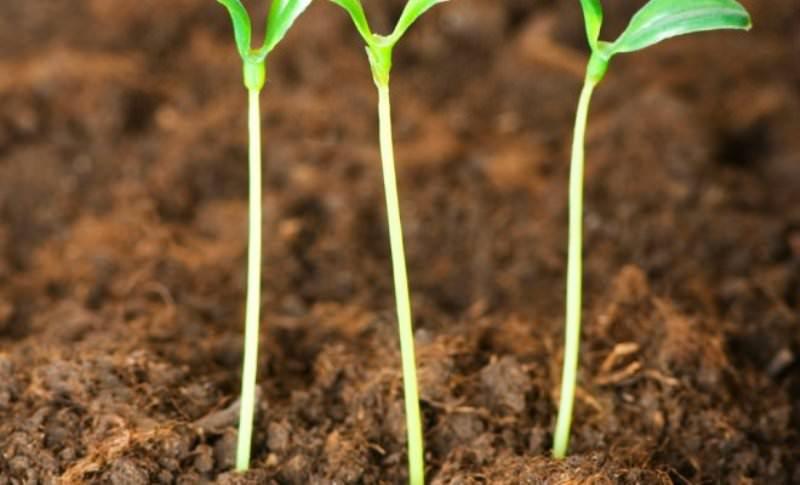
Stem deepening
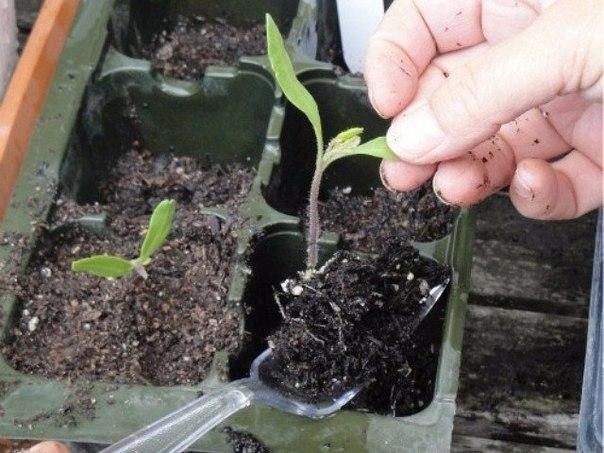
The elongated seedlings are transplanted into individual containers. The stems are planted deep enough to reach the level of the cotyledon leaves. Repotting is only possible if the plants are growing individually. To do this, do not water the seedlings for several days, then twist the stems and cover them with soil.
Watering mode
If the seedlings have become elongated due to overwatering, stop watering the pots for a while. If the situation is severe, transplant the seedlings to new containers in dry, fertile soil.
Following a proper irrigation regimen will prevent this problem. Initially, water the seedlings with a spray bottle, lightly moistening the soil. Repeat this process after the soil has dried. As the seedlings grow, water more thoroughly, but less frequently. Always wait until the top layer of soil has dried out. Loosening the soil will help retain moisture and provide oxygen to the root system.

Top dressing
Fertilizing requires a conscious approach. If you don't feed your tomato plants, the seedlings will be weak; if you overfeed them, they may become leggy and die. Fertilize every 10-15 days. Use organic matter diluted with water or complex mineral fertilizers.
Wood ash will help limit seedling growth. However, its use should be stopped at least five days before the expected planting date.Nitrogen is applied with caution, as its excess leads to thinning and rapid growth of the above-ground part of the tomatoes.
Removing cotyledon leaves
Gardeners recommend removing cotyledon leaves to slow plant growth. This allows tomatoes to develop a strong stem and root system. To prevent stress on the plant, it's recommended to remove leaves one at a time, then another after 7-10 days.
For early seedlings, two true leaves are also removed, also after a week. While the plant recovers, growth stops.
Topping
When tomatoes stretch, vegetable growers practice pinching. They leave 5-6 leaves on the main stem and carefully trim off the top. The trimmed parts of the plants are placed in water and rooted. This yields more planting material.
The pruned seedlings will begin to form new shoots. The top two shoots are left, and the rest are removed. This procedure should be carried out no later than 25 days before planting in a permanent location.
Drugs that stimulate growth and development
To assist gardeners, manufacturers produce special products. They help grow strong and vigorous seedlings, which will ensure a fruitful harvest.
Growth regulator "Athlete"
When it comes to watering seedlings, gardeners recommend using the product Athlete. It has a wide-ranging effect on plants. It not only regulates seedling growth but also helps tomatoes grow stronger.
Action of the drug:
- seedlings are more resistant to unfavorable growing conditions;
- the stem is stronger;
- the root system is stronger;
- accumulation of nutrients occurs;
- growth control;
- prevention of deformations.

The effect of the product becomes noticeable after some time; the stem thickens. The root system strengthens, but it's impossible to verify this since everything happens in the soil.

Spray tomatoes with the preparation once they have formed three true leaves. Then, after 7-10 days, apply the preparation again twice. Dilute the preparation strictly according to the instructions; otherwise, overdosing and the opposite effect may occur.
Growth regulator "Stocky"
You can fertilize your plants with other products. Their effects on tomatoes have been scientifically proven. Gardeners recommend using the product "Korenasty."
Treatment with a regulator helps restore normal growth and development of tomato seedlings. In addition to growth regulation, the product helps plants:
- become more resistant to unfavorable growing conditions;
- stimulates earlier flowering, the timing is shifted by 5-7 days;
- tomatoes no longer stretch;
- the yield of bushes increases.
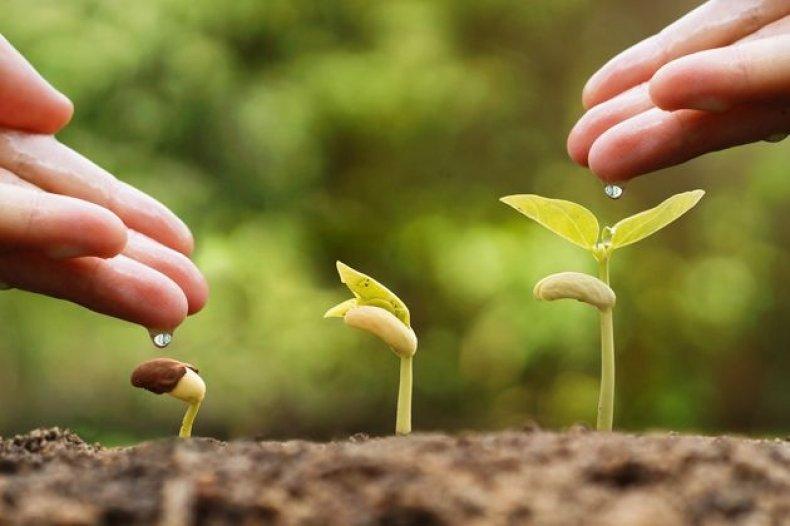
There are no natural alternatives to this product, so it is purely chemical in origin. The decision to use it is up to the vegetable grower.
Folk remedies for feeding seedlings
Gardeners often use folk remedies to treat and feed tomatoes. This is due to the natural origin of the components used in the fertilizers.
The following methods are widely used:
- Nettle infusion. Place fresh leaves and stems in a container, filling it 2/3 full. Add water and let steep for 10 days. Strain and dilute with water at a ratio of 1:10. Water the seedlings at the roots. Do not use frequently, maximum twice a month.
- Whey. 1 liter of fresh whey, 20 drops of iodine, and 10 liters of water. Water at the roots, being careful not to spill any liquid on the leaves.
Thin and elongated seedlings will not yield a good harvest. Gardeners must strictly follow the recommendations of experienced vegetable growers.
Related posts:
 What is the best way to feed tomato seedlings to make them plump?
 How to plant grapes step by step, with a description of the process and care
 Description of the best varieties of black tomatoes for open ground and greenhouses
 How to properly plant peas in a greenhouse and open ground
 How to propagate and grow peas, cultivation technology, and care in open ground
 Rules for growing tomatoes in open ground, choosing a variety, planting and care
 How to prepare soil for tomato seedlings yourself
 Reasons why tomato seedlings die (fall) and what to do