
- Description of the Bobcat tomato
- Fruit
- Bush
- Characteristics of a tomato
- Bobcat tomato yield
- Growing regions
- Resistance to diseases and pests
- Positive and negative traits of the variety
- Growing a hybrid
- Planting seedlings
- Preparing soil and containers for seedlings
- Planting seeds
- Caring for seedlings
- Hardening off seedlings
- Fertilizer
- Picking or transplanting seedlings into a more spacious container
- Transplanting seedlings into open ground
- Vegetable growers' secrets for caring for tomatoes
- Fertilization
- Watering rules
- Bush formation
- Disease and pest control
- Harvesting and its use
- Reviews from summer residents
- Conclusion
Many gardeners want to grow tomato varieties that combine the best qualities. Bobcat tomatoes are considered one such variety, known for their high yield and pest resistance. Before growing this vegetable, it's important to familiarize yourself with its distinctive characteristics and the nuances of planting it in soil.
Description of the Bobcat tomato
It's recommended to familiarize yourself with the description of the Bobcat F1 tomato in advance. This will require a more detailed understanding of the characteristics of the Bobcat F1 fruit and bush.
Fruit
Any introduction to any vegetable variety should begin with a description of the fruits, as this is what many gardeners notice first.
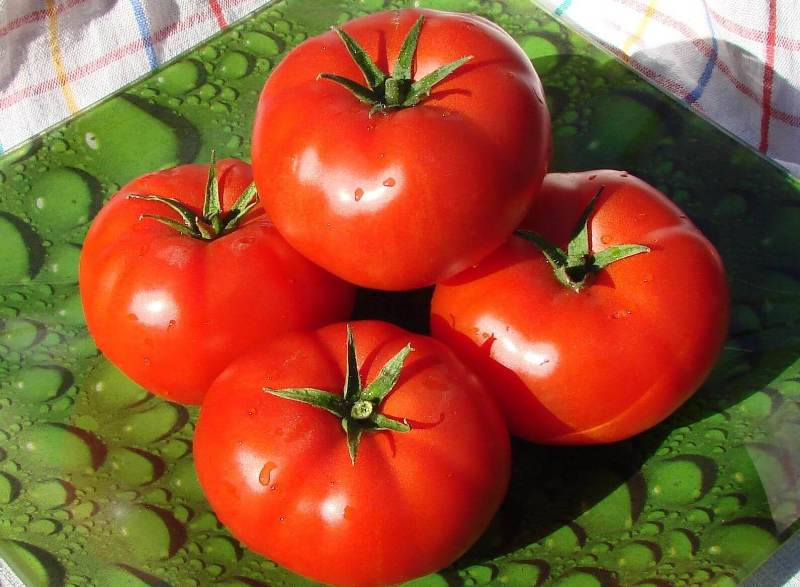
A distinctive feature of ripe tomatoes is their large size, which distinguishes them from other varieties.
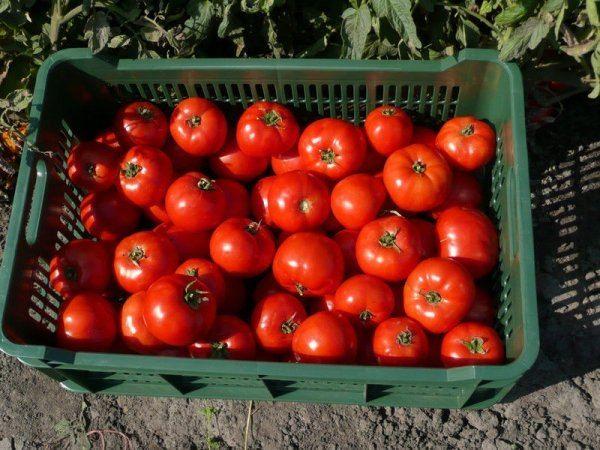
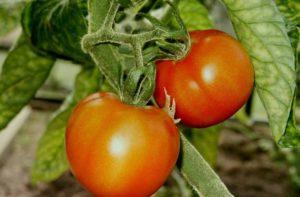
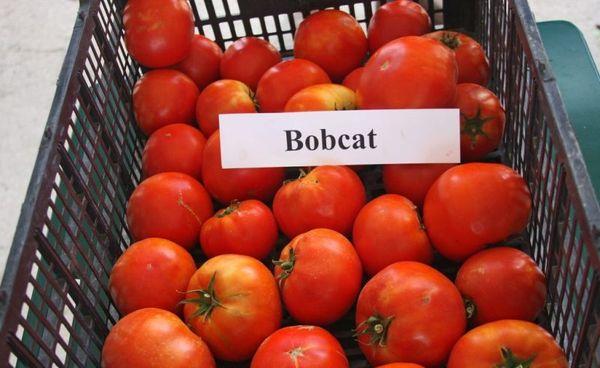
Ripe tomatoes average 280-300 grams in weight. They are a perfect oval shape, slightly flattened at the edges. Their surface is glossy, smooth, and free of roughness. Unripe tomatoes are light green. Once ripe, the skin turns completely red.
Bush
The bobcat is considered a medium-sized variety, capable of growing up to five feet tall. The plant can reach this height when grown in ideal conditions. Its distinctive features include its branching and rapid growth.
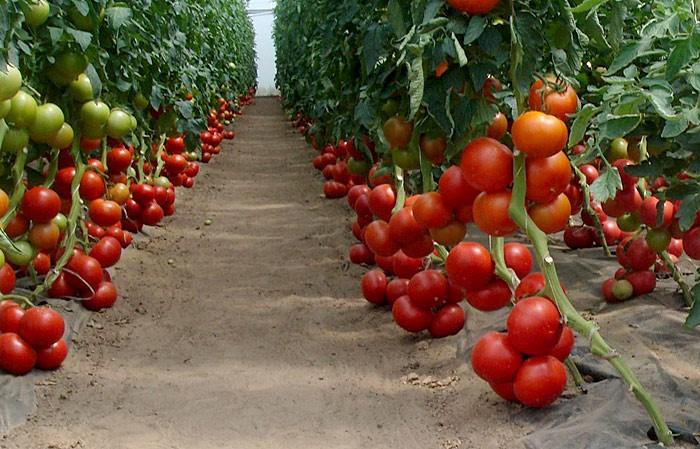
The vegetable has determinate bushes that grow only until the fruiting ovaries appear. After this point, active development of the tomato plants ceases.
Characteristics of a tomato
Before planting vegetables and growing tomato bushes, you will need to familiarize yourself with the characteristics of the tomato.
Bobcat tomato yield
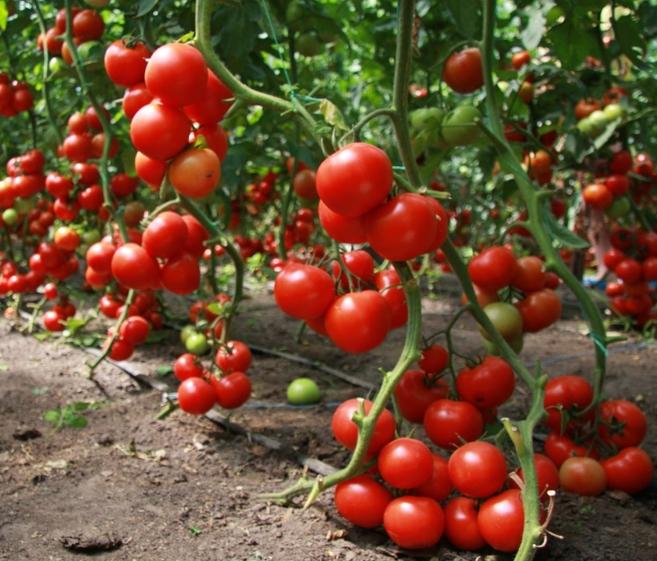
The main characteristic of interest to many gardeners is tomato yield. Bobcat is a medium-ripening variety, producing a harvest that reaches maturity within two months. A square meter of garden space yields 3-5 kilograms of ripe fruit. Some greenhouse growers manage to increase yields to eight kilograms.
Growing regions
This is a heat-loving plant, so experienced gardeners recommend planting it in southern regions for the best yield. Only in such regions can the vegetable be grown outdoors. Gardeners living in northern regions should grow tomatoes in greenhouses, where the temperature will always be above freezing.
Resistance to diseases and pests
This Dutch tomato variety is known for its strong immune system, which resists many diseases and pests. Bobcat is reliably protected against the following common diseases:
- Verticillium wilt;
- tobacco mosaic;
- Fusarium fungus.
The plant sometimes suffers from a disease called powdery mildew. However, if tomato plants are grown at the optimal temperature and properly cared for, the disease will not appear.
Positive and negative traits of the variety
Bobcat, like other tomato varieties, has a number of advantages and disadvantages that every gardener should be familiar with.
The main advantages include:
- resistance to high temperatures and high air humidity;
- ripe fruits are not subject to cracking;
- long shelf life of the harvest;
- good taste;
- transportability;
- productivity;
- resistance to pests and diseases.
However, this variety also has some disadvantages, which include:
- poor tolerance to low temperatures;
- the need for constant care;
- uneven ripening of the crop.
Growing a hybrid
Anyone who is planning to grow Bobcats should know the main features of planting this hybrid variety.
Planting seedlings
Planting begins with sowing seeds for growing young seedlings.
Preparing soil and containers for seedlings
Experienced gardeners who have been growing tomatoes for many years recommend using peat pots as containers. Using these containers will preserve the root system during transplanting, as the seedlings are planted in the soil along with the peat pots. The soil in the containers is pre-fertilized to speed germination. A solution made from ash and dolomite flour is added to it.
Planting seeds
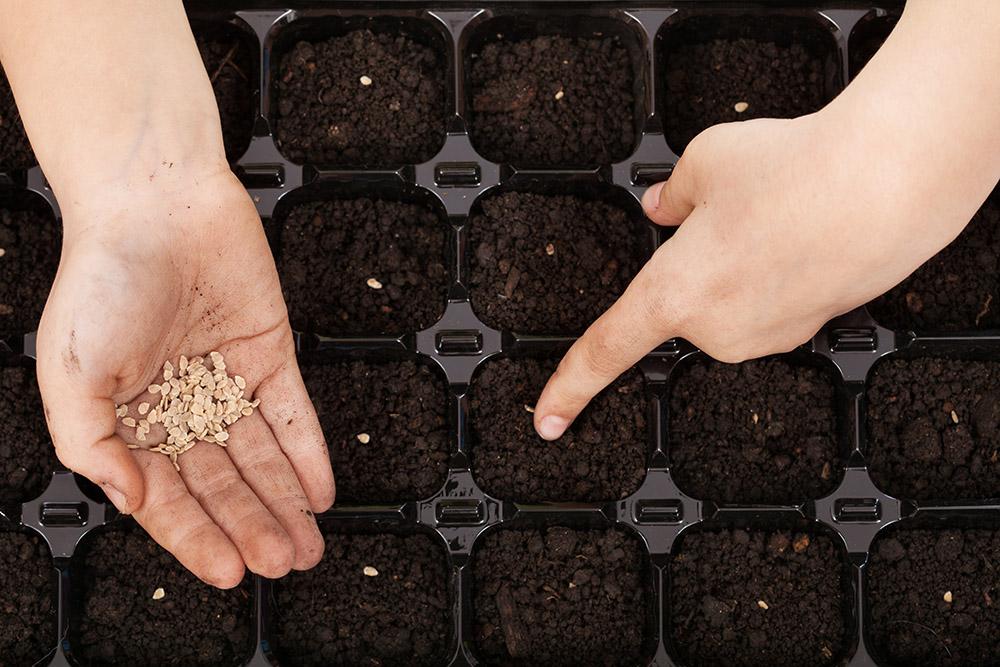
When planting tomato seeds in potted soil, make furrows 1-2 centimeters deep. Place 2-3 seeds in each furrow, spacing them at least 1 centimeter apart. Then fill the furrows with soil and water.
Caring for seedlings
To ensure proper growth, planted seedlings require proper care. Regular watering is essential when caring for tomato plants. Gardeners recommend moistening the soil at least three times a week.
Hardening off seedlings
Tomato seedlings need to acclimate to temperature changes, so they are hardened off. This is accomplished by placing the seedlings outside for 2-3 hours daily.
Fertilizer
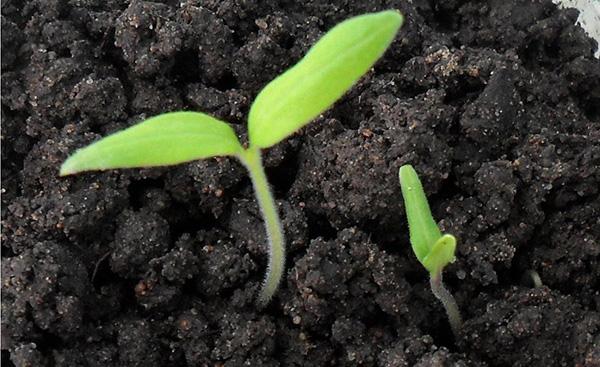
Tomato seedlings are fed a week and a half after the young shoots emerge. Vermicompost, manure, and humic fertilizers are added to the soil.
Picking or transplanting seedlings into a more spacious container
If tomatoes are planted in small containers, they will need to be transplanted into larger containers. In this case, the seedlings are carefully removed from the soil to avoid damaging the young roots. Then, holes 2-3 centimeters deep are dug in the larger pots, into which the tomato seedlings are planted.
Transplanting seedlings into open ground
Transplanting seedlings should be done six weeks after sowing the seeds. It's best not to transplant too late, as this can reduce yield.
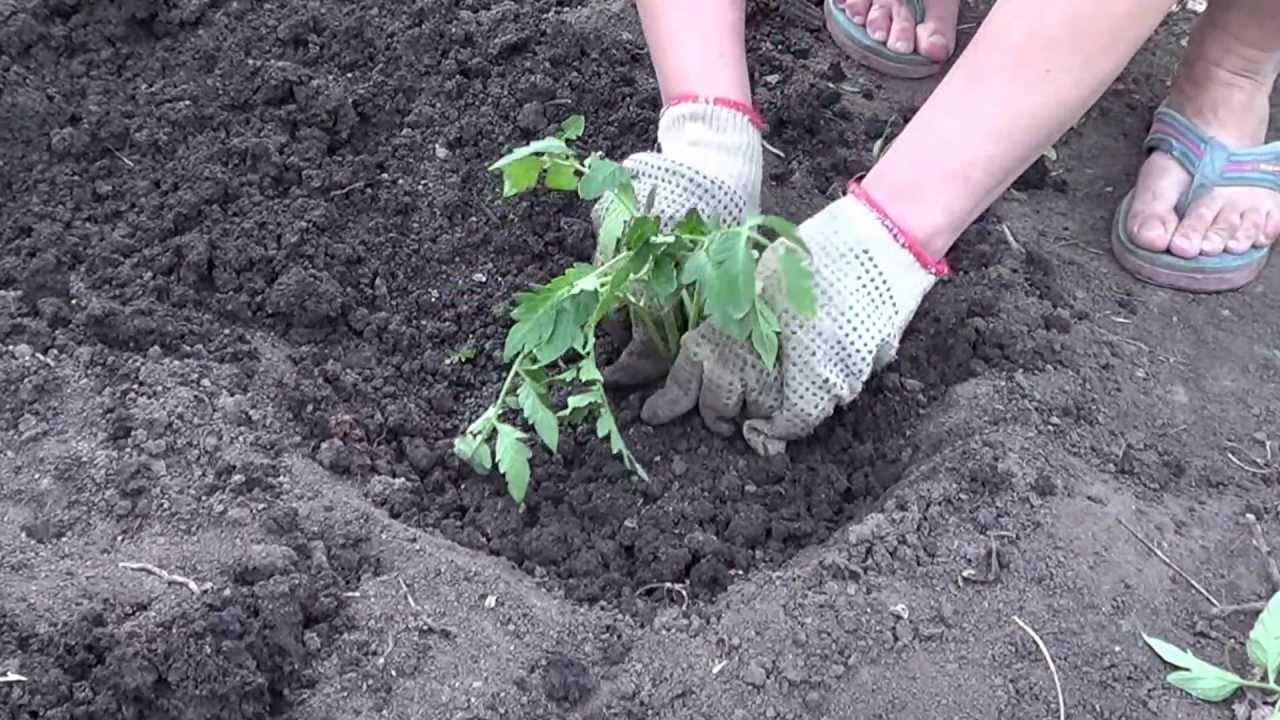
When replanting, dig holes 20-35 centimeters apart. Place the seedlings in the holes so that their central stems are buried only 2-3 centimeters deep.
Vegetable growers' secrets for caring for tomatoes
Planted seedlings must be properly cared for so that they produce a larger harvest.
Fertilization
Growing tomatoes without soil fertilizer is impossible, as the plant requires nutrients. Experienced gardeners recommend fertilizing the soil every 10-15 days. If this isn't possible, you can reduce the number of applications to three times per season. Fertilizers containing potassium and phosphorus are considered a priority. Nitrogen-rich solutions also promote fruit growth and ripening.

Watering rules
Although tomatoes tolerate hot weather, they still need to be watered periodically. In summer, it's enough to moisten the soil twice every ten days. In cloudy conditions, water the plants no more than once a week. Water should be applied at the roots, preventing water from reaching the plants.
Bush formation
When growing tomatoes, it's essential to remove side shoots from seedlings. This is done for the first time when the side shoots reach four centimeters in length. First, trim off the shoots that appear under the trusses, and only then remove the rest. Some gardeners remove the shoots by hand, but this is not recommended. It's better to use a knife to carefully trim away any excess side shoots.

Disease and pest control
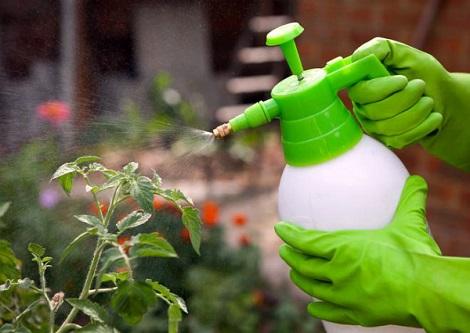
Bobcats are resistant to many diseases, but not all. Therefore, when growing tomatoes, you sometimes have to fight diseases. There are several effective folk remedies that allow you to quickly deal with diseases and pests:
- Spraying with a garlic solution. Garlic-based remedies are very effective against fungal infections, as they help eliminate pathogens. To prepare the solution, add three heads of garlic to ten liters of water, then let the solution steep for 24 hours. Spray 2-3 times a week.
- Using salt solutions. The effectiveness of salt mixtures lies in the fact that after application, the leaf surface is covered with a protective film, which protects the seedlings from infection. To prepare your own solution, mix 100 grams of salt with 7-8 liters of water.
- Using kefir. An effective preventative measure that should be used two weeks after transplanting seedlings. To create a solution, mix 500 ml of kefir with five liters of water.
Harvesting and its use
Tomato harvesting can be done at different stages of ripening, depending on the intended use of the crop.
Most often, vegetable growers harvest red tomatoes that are fully ripe. They use them for preserves, juice, and fresh vegetable salads. Sometimes, they harvest brown tomatoes, which are ideal for pickling and marinating. These tomatoes are fleshier because they are not fully ripe.
People who plan to store their harvest for a long time pick unripe green tomatoes. In this state, they will keep at room temperature for several months. Green tomatoes are not added to vegetable salads, and therefore they are used only for canning.
Reviews from summer residents
Before planting Bobcat, you should read reviews from experienced gardeners who have planted this variety on their plots:
Tatyana Sergeevna: "I've been growing tomatoes for many years, but recently decided to plant Bobcats. I so regret not having bought this hybrid variety sooner. They are the most delicious tomatoes I've ever eaten. And their flavor doesn't deteriorate when pickled or preserved. I recommend them to all gardeners who grow tomatoes every year."
Andrey Nikolaevich: "My introduction to the Bobcat variety didn't start out very well, as I initially failed to harvest much. However, this was due to my improper care of the planted bushes. The plant requires ample watering and fertilizing, without which it produces few tomatoes. Therefore, I advise anyone planning to plant a Bobcat to carefully tend to the seedlings."
Conclusion
Many gardeners plant the Bobcat hybrid tomato to harvest juicy fruits in the future. Before planting this variety, it's important to familiarize yourself with its characteristics and the key rules for growing it.
Related posts:
 Description of varieties of sowing peas and cultivation, to which family they belong
 Description of blight-resistant tomato varieties for open ground and greenhouses
 Description of the best tomato varieties and ratings for greenhouses in 2025
 Description and characteristics of the best seeds of pea varieties and types
 How to choose a tomato variety for growing in Ukraine and when to plant seedlings
 How to propagate and grow peas, cultivation technology, and care in open ground
 Description of the best Dutch tomato varieties for greenhouses and open ground
 The best grape varieties for growing in the Urals, planting and care rules in summer