
Drip irrigation for greenhouse tomatoes provides essential nutrients and is one of the most effective irrigation methods. Following proper care is the key to a good tomato harvest. Proper irrigation is crucial here.
Basic characteristics of the irrigation process
Knowing how to properly water tomatoes in a greenhouse can significantly improve their yield. Nightshades require moist soil, but avoid getting water on the leaves. tomatoes in a polycarbonate greenhouse or other material is necessary without allowing the soil to erode. Therefore, irrigation must be carried out at the root.
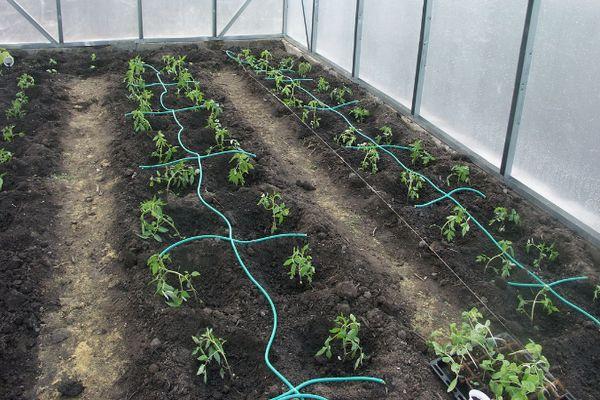
If it's cool outside, you need to warm the water. In hot weather, avoid overheating the water. Even watering ensures that nightshades don't overheat due to evaporation from the leaves. The best time to water plants is in the morning.
How often to water tomatoes in a greenhouse depends on the growing stage they're in. For example, seedlings should be thoroughly watered at least two days before transplanting. This helps them respond well to transplanting. The procedure is repeated after four days.
When planting seedlings in a greenhouse, ensure each hole receives 4-5 liters of water. Watering should be repeated no sooner than after 1 week.
During the period of intensive growth, water the plant as needed, as the soil dries out. One bush requires up to 3 liters of water once every three days. When flowering begins, water the plants 1-2 times a week. On average, one bush requires about 5 liters of water.
Once fruiting begins, watering should be less frequent, but the amount of water per watering should be increased. The recommended water temperature is around 20°C, but no higher than 23°C.
Tomatoes in a polycarbonate greenhouse should be watered twice a week. Rainwater is the best option.
Tomatoes don't like high humidity, so open the greenhouse windows immediately after each watering. If you leave a barrel of water in the greenhouse, be sure to cover it with plastic wrap.
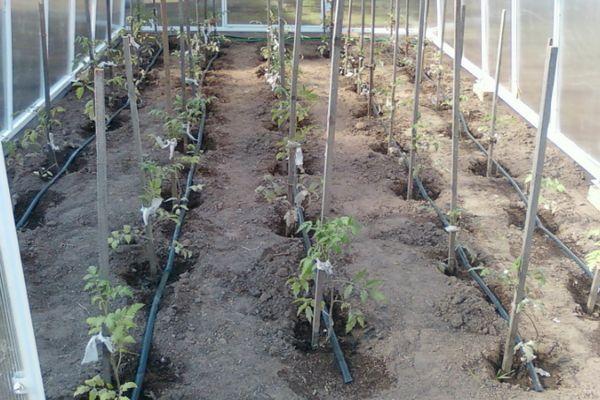
To help tomatoes ripen faster, stop watering them approximately 20 days before harvesting.
There are different ways to water tomatoes. There are several different methods:
- The cheapest and simplest method is to use ordinary plastic bottles without lids and cut off the bottoms, which are buried near all the bushes. This allows the water to flow directly to the roots.
- You can water tomatoes with a regular hose. However, while this method is common, it has significant drawbacks: the risk of damaging the plants and the inability to control the amount of water applied.
- You can use a plastic or galvanized bucket or ladle. This method allows for easy water dosing, but carrying heavy, full buckets is not for all gardeners.
- Drip irrigation for tomatoes in a greenhouse or hotbed allows you to set your own irrigation parameters. This option also eliminates the need for physical force, which is a definite plus.
Features and Benefits
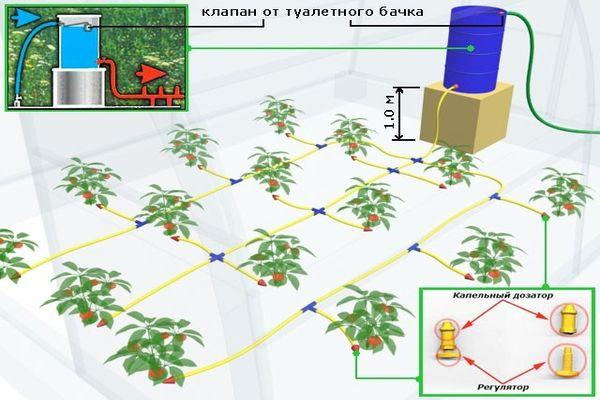
Using drippers for irrigation ensures uniform water flow and movement at every point in the system by creating uniform pressure. The volume of water flowing from the drippers can be controlled.
The drippers are placed right next to the beds, so the liquid is directed in even streams directly to the roots.
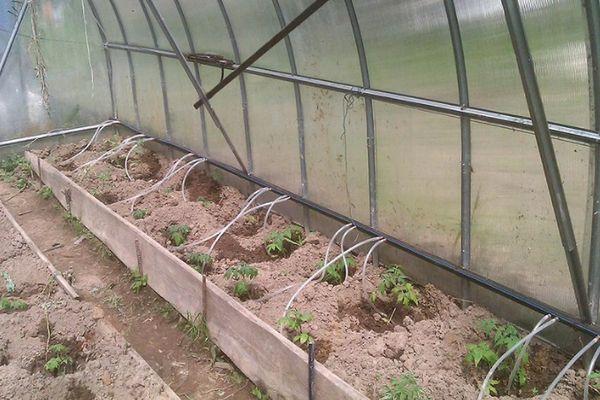
Installing such a system in a greenhouse yourself is not an impossible task and requires no special skills or abilities. Using the system in greenhouse conditions solves the problem of weed removal by directing the water flow precisely to its intended purpose.
To ensure long and trouble-free operation of the system, the liquid must be cleaned using a filter.
Drip irrigation for greenhouse tomatoes has evolved from devices built into a hose to drippers located inside the hose. These so-called compensating systems allow for irrigation in areas with challenging terrain.
The main types of drippers today are the Katif and Supertyph. The difference is that the Katif is used in elastic hoses with a wall thickness of no more than 1.5 cm, while the Supertyph allows for high-precision watering of several bushes using a special device for branching water flows.
Installation and operation
Despite the differences in application, the installation of drip irrigation devices has much in common.
Before installing a drip system in a greenhouse as the primary irrigation method, carefully read the installation and operating instructions. Proper connection ensures long-term and trouble-free operation of the drip irrigation system.
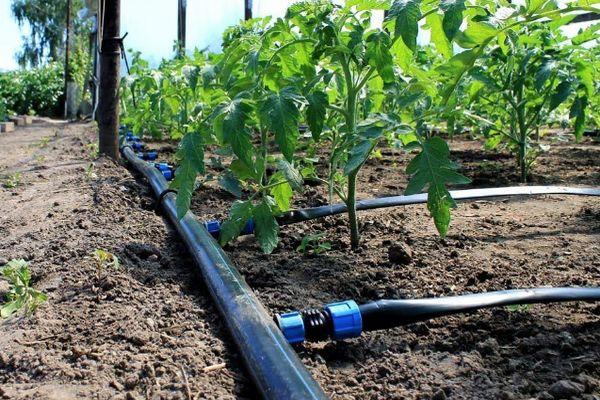
First, let's look at the connections of a katif-type device.
Before watering tomatoes in a greenhouse, you should secure the device to the hose yourself. This is done by cutting holes of the desired diameter in the hose, making sure the edges are smooth. Next, install the drippers themselves. Installation requires considerable force. It is necessary to achieve a tight fit of the tube, so it is better to entrust this work to strong male hands. After installation in all holes, the irrigation system is ready for use.
The Supertyph is installed in the same way. The tube that will supply water to the tomatoes is attached to the device's outlet. A special end, designed to direct the water flow to the desired location, is attached to one end of the tube. This end is placed in the soil near the plant to be watered. A special holder is included in the kit for use if the additional tube is too long.
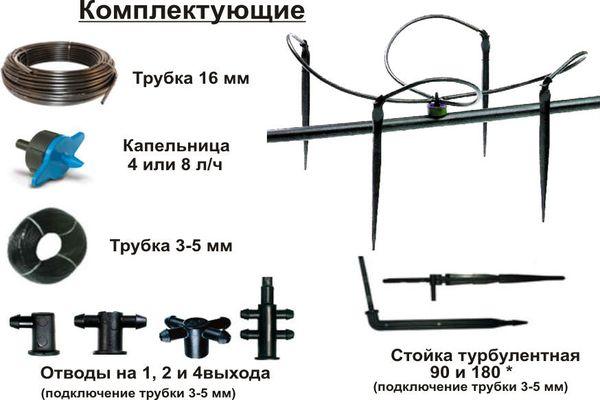
A key advantage of the Supertyph dripper is its special device for branching the water flow in four different directions. Three tubes with special tips installed on this device allow you to water four tomato plants simultaneously.
You can independently choose the system's performance and irrigation directions.
DIY drip irrigation
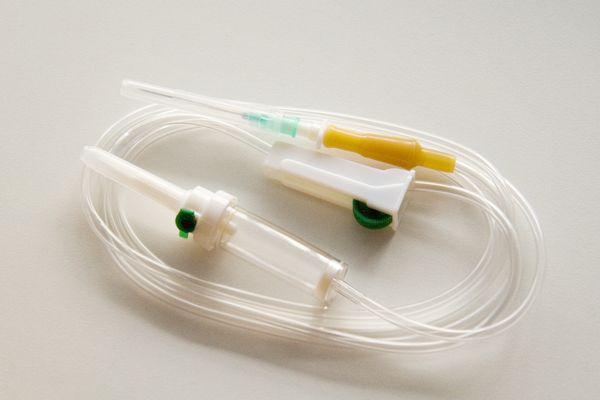
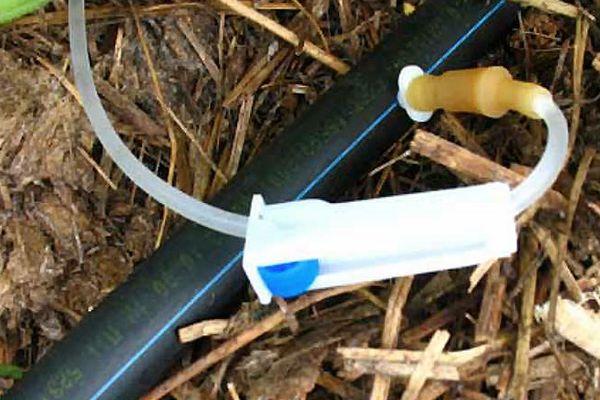
If purchasing a ready-made drip irrigation system isn't feasible for financial or other reasons, you can create a similar system in your greenhouse yourself using medical drippers. Find a 20 mm diameter pipe with a 2 mm wall thickness. Then cut it to the size of your garden beds, drilling holes in it every half meter. The medical drippers should be secured to the pipe, and the amount of water can be adjusted using the wheels included with these devices.
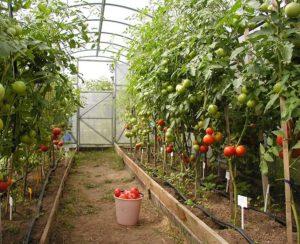
This system is a truly economical and practical option for creating an inexpensive drip irrigation system in a greenhouse. However, it can also be installed in a greenhouse, at even lower costs.
Before installation, it's recommended to carefully plan the length of the system and the location of the water supply line (preferably perpendicular to the tomato rows). A longer system increases the risk of uneven watering.
It would be a good idea to draw a site plan and mark all landscape elements on it; this will allow you to correctly and conveniently place the greenhouse and irrigation system.
Drip irrigation for tomatoes in a greenhouse is an opportunity to set up a convenient and efficient irrigation system. Its use will not only make the gardener's arduous work easier but also allow for a wonderful tomato harvest with minimal time and effort.
Related posts:
 How to make a drip irrigation system for tomatoes from plastic bottles
 Types of automatic irrigation systems for greenhouses and how to make them yourself
 The best eggplant varieties for growing in a polycarbonate greenhouse: planting and care
 How to make a drip irrigation system for cucumbers using plastic bottles
 What fertilizers and when to use for feeding tomatoes in a greenhouse
 How to set up drip irrigation for cucumbers in a greenhouse and open ground
 How often should grapes be watered in the summer while the berries are ripening?
 How to water cucumbers in a greenhouse and open ground, timing and water consumption rates