
- Advantages and disadvantages of drip irrigation
- Basic rules for watering cucumbers
- Optimal watering time
- Water requirements
- Irrigation nuances depending on the development periods of cucumbers
- During flowering
- During fruiting
- Water consumption for drip irrigation of cucumbers
- Watering rates for greenhouse conditions
- Irrigation rate for open ground
- How to make a DIY irrigation system for bushes
- What you will need: tools and supplies
- We organize the device in the greenhouse
- We decide on the method of moisture supply: single-stream or multi-stream
- We are setting up irrigation in open areas
- Gravity
- Highway
- Pumping station
- Benefits of using phosphoric acid when watering cucumbers
- Feedback from experienced gardeners about the method
Gardeners looking to make their work easier can use drip irrigation for their cucumbers. All you need to do is build a small system: install a water container and connect it to hoses that run to each bed. Water will reach the plants by gravity or with a pump. It's a good idea to learn all the intricacies of drip irrigation to ensure the system works properly.
Advantages and disadvantages of drip irrigation
Drip irrigation allows you to water plants using drippers and pipes. This method reduces water consumption and makes life easier for gardeners. Drip irrigation allows you to apply fertilizers and disease control products to the roots along with the water.
Pros:
- water is dosed to each bush;
- the roots do not suffer from drying out;
- the soil remains loose;
- soil crust does not appear;
- the leaves remain dry;
- there are almost no weeds growing between the rows;
- crop yields increase.
Cons:
- the droppers become clogged systematically;
- the system and pipes can be damaged by rodents or animals;
- financial costs for the purchase of equipment and materials for irrigation.
Basic rules for watering cucumbers
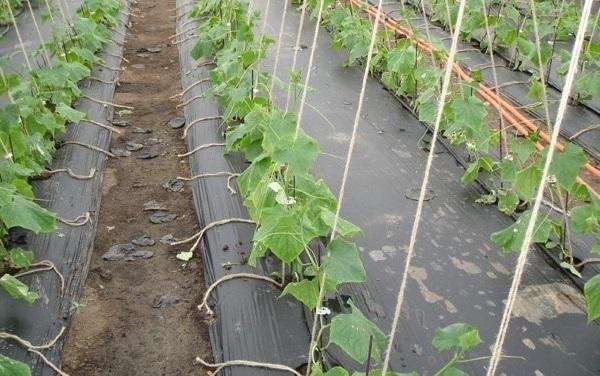
When watering cucumber plants, it's important to consider several characteristics of this plant. The roots of the plant grow in the top layer of soil. However, moisture doesn't stay there for long and quickly penetrates into the lower layers. The surface of the soil quickly dries out. Soon, the roots begin to feel the lack of moisture again.
Cucumbers have large leaves that evaporate a significant amount of moisture. During fruit set and ripening, the crop requires sufficient water. The main rule of watering is frequent and thorough irrigation of the soil immediately surrounding the plant.
Nuances to pay attention to:
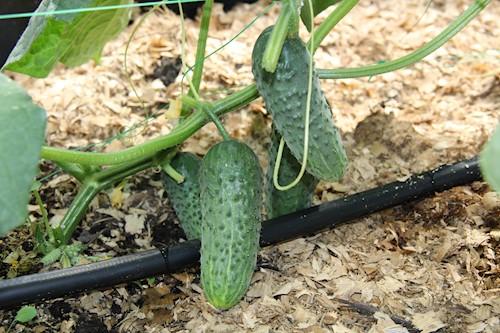
- It is advisable to water the plant near the roots;
- watering is carried out with warm rain or settled water;
- It is important to observe the liquid consumption rate per 1 square meter;
- if the leaves are wilting, increase the frequency of watering;
- In cool or rainy weather, reduce or stop the frequency of watering.
It's important to remember that underwatering causes cucumbers to grow bitter. Overwatering causes the soil to become acidic and waterlogged, and the cucumbers themselves become susceptible to fungal infections and begin to rot.
Optimal watering time
It's recommended to water cucumbers in the evening. During the evening and night, the moisture won't have time to evaporate quickly and will be fully absorbed into the soil. If you water the plants in the morning, as soon as the sun rises, the soil will dry out, and the cucumbers will suffer from drought.

Water requirements
It's best to water the plants with water at a temperature of 25 degrees Celsius. You can fill the containers in the evening. During the day, the water should warm up to the ambient temperature. The water shouldn't be too hard. You can add a small drop of vinegar or citric acid to the container.
In hot weather, the plant can be watered with cold water. When the temperature outside reaches 30 degrees Celsius, the plant will begin to wilt. You can "revive" the plant by pouring a little cold water under the roots. However, it's best not to touch the cucumber leaves; they should remain dry.
In cold weather, when the temperature drops to 10 degrees, the roots of the crop stop absorbing moisture.
Even with ample watering, the bush suffers from dehydration. It can be saved by watering with slightly warmed water (up to 45 degrees Celsius). Water at the roots, not near the stems. Avoid scalding the soil or the plant—it will immediately die.
Irrigation nuances depending on the development periods of cucumbers
Watering frequency and moisture consumption depend on weather conditions and the age of the cucumbers. There are two main stages of crop development: early (growth and flowering) and fruiting. Each stage of development has its own irrigation requirements.
During flowering
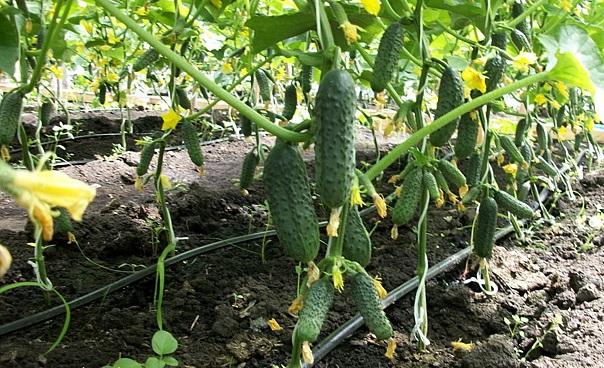
The bushes need to be watered regularly, even before flowering begins. It's recommended to use 2-4 liters per square meter. This optimal amount of moisture will allow the plant to develop, the stem to grow, and not produce too many leaves. This will also encourage more vigorous fruit development. If foliage growth is profuse, reduce the amount of watering and the amount of water used. This watering rate should be maintained during flowering.
During fruiting
When small cucumbers appear, the plant needs more moisture. During this period, water the plant every other day. Use 5-10 liters per square meter. If the plant's leaves are wilting, you can water the bushes daily. In rainy or cool weather, reduce the frequency of watering.

Water consumption for drip irrigation of cucumbers
The amount of water needed during watering depends on the weather and the plant's growth stage. However, it's always important to monitor how the plant is doing. If the leaves are wilting, increase the amount of water; if it's cold and damp, reduce the frequency of watering.
Watering rates for greenhouse conditions
In a polycarbonate or film greenhouse, moisture evaporates less quickly than outside. Even in cool, cloudy weather, it's warmer inside than outside. However, in hot weather, the temperature is much higher than outside. All these factors must be taken into account when watering. In hot weather, you can spray the outside windows with a lime and water solution. This will reduce the temperature inside the greenhouse slightly.
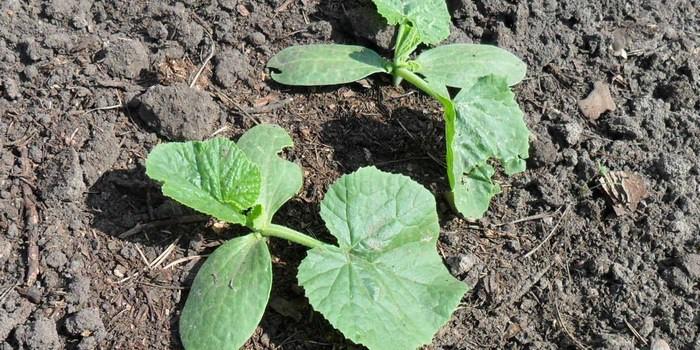
From the moment the first leaves appear until flowering, use no more than 2 liters per square meter. During the period of fruiting and ovary formation, increase the rate to 4-5 liters per square meter. A barrel of settled water should be kept inside the structure. In cloudy weather, water the plant every 4-5 days. In hot weather, water every 2 days.
Irrigation rate for open ground
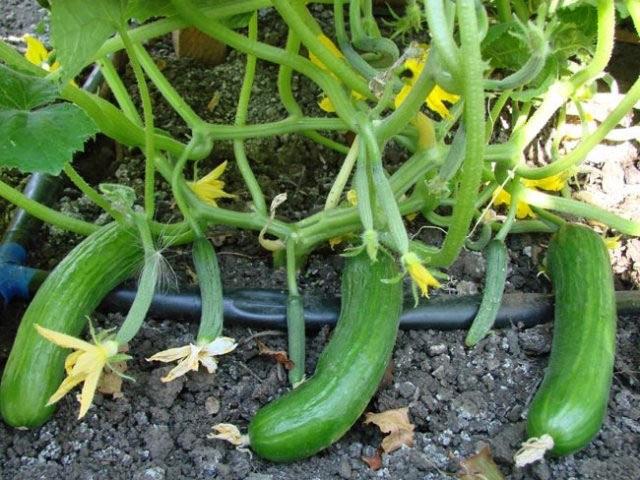
How many liters of water do cucumbers need for a garden with drip irrigation? When the first leaves appear and until flowering, use 4-5 liters of water per square meter. During the period of fruiting and ovary formation, the rate is almost doubled. Use 6-10 liters per square meter of open space. In hot weather, water the plants daily; in normal weather, every two days. During rainy seasons, watering is not necessary. In late summer, the rate is reduced to 5 liters.
How to make a DIY irrigation system for bushes
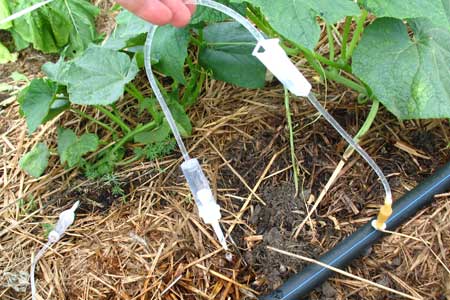
With the drip method, water is delivered to each individual plant using a system of tubes and hoses. The distance from the dripper to the plant should be 3-5 centimeters. Water is drawn from a barrel or tank using a pump. The container can be elevated, allowing the water to flow by gravity. Drip tape (flattened tubes) can be used instead of hoses.
It's advisable to clamp round drippers so that the liquid flows out in drops. You can also simply puncture the hose with a needle in various places. This method will ensure a steady flow of water to the plants, even when the owner is away from home.
What you will need: tools and supplies
If irrigation is carried out by gravity, you will need:
- a barrel or a huge canister;
- tap with valve;
- high base for installing the container;
- a controller responsible for the time and amount of water;
- connectors, couplers;
- a hose with holes at a distance of 30 centimeters from each other, droppers, tubes.
If irrigation is to be carried out using a pump, the following materials are needed:
- water containers;
- electric pump;
- hoses, droppers, tubes with holes;
- pressure regulator;
- check valve;
- filter.
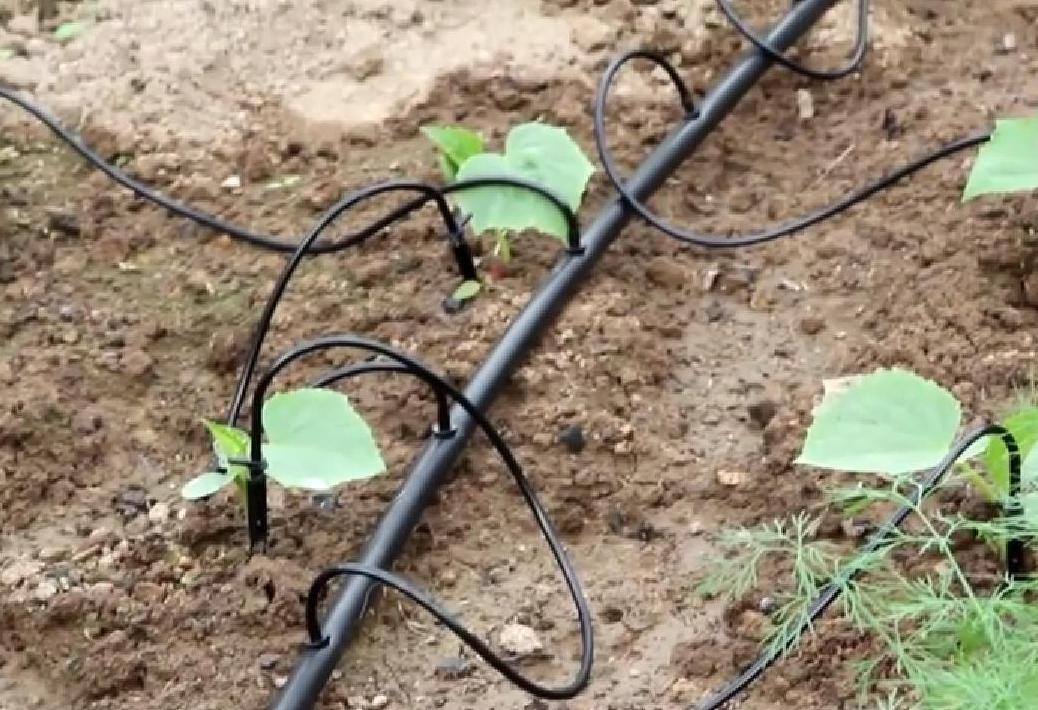
We organize the device in the greenhouse
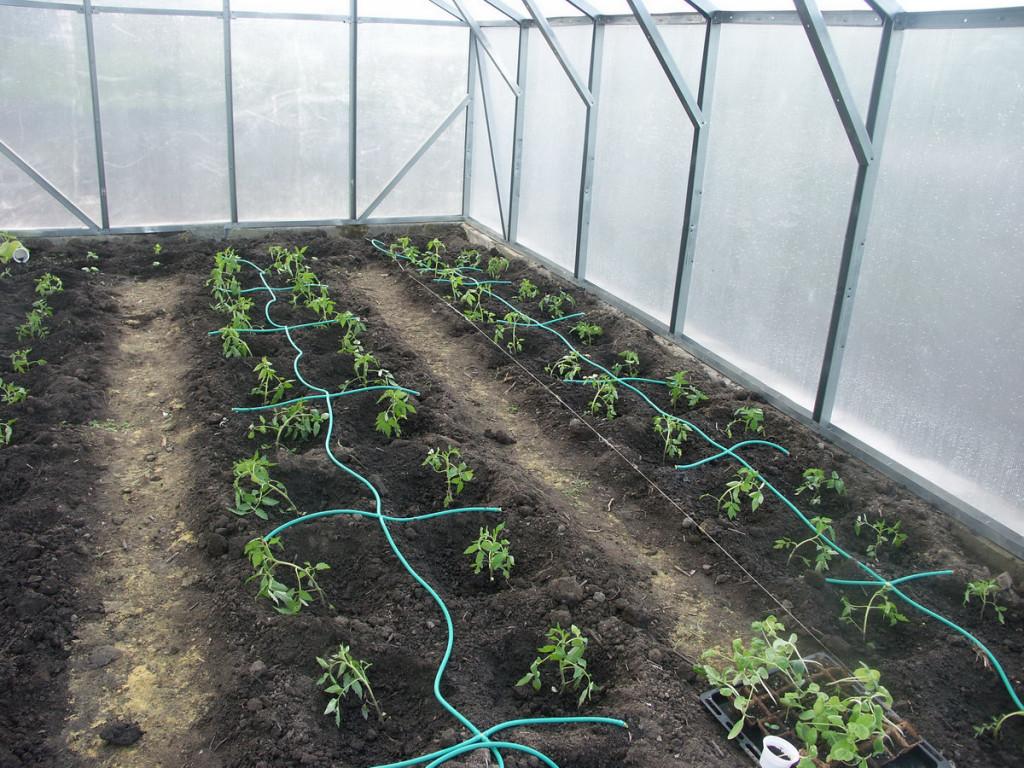
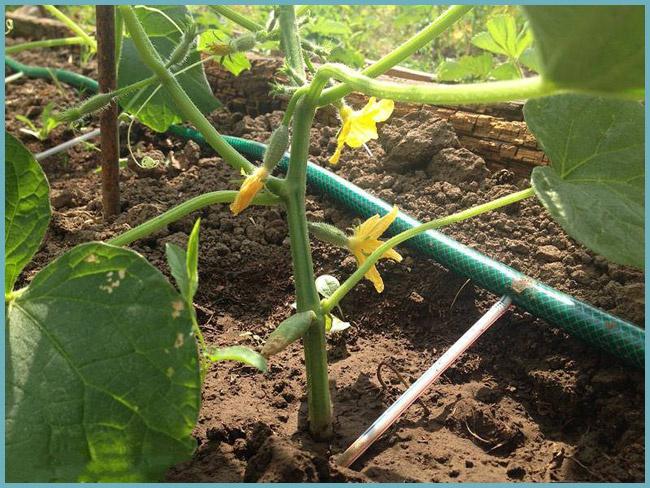
It's advisable to install drip irrigation equipment after planting the seedlings. Drip lines are laid along the ground using hoses, pipes, and special drippers. The pipes should be 5-10 centimeters from the plant. Water will be supplied to the pipes from a tank.
We decide on the method of moisture supply: single-stream or multi-stream
With the single-stream method, a single tube is laid between the rows. A large-diameter hose is preferable. Punch holes in it near each plant. Clamp the holes to allow water to drip down to the plants.
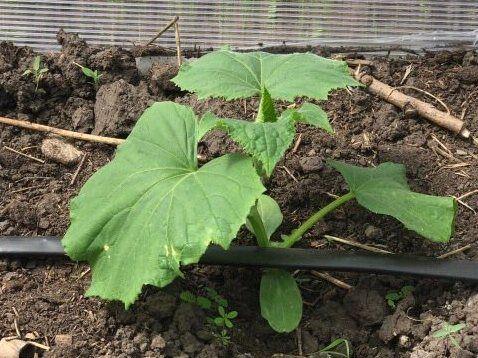
With the multi-stream method, each row of plants has its own small tube. All these drippers are connected to the main pipeline—a larger hose. This, in turn, is connected to a tank. Watering cucumbers with a tube and thin drippers allows you to distribute the water between the rows and reduce the pressure of the incoming water.
We are setting up irrigation in open areas
Any gardener can build a drip system in their garden using scrap materials (an old gas can, various tubes, and hoses). This method can reduce the cost of irrigation. You can take ordinary plastic bottles, fill them with water, poke a hole in each, and insert a thin hose (like a pen stem). Place the bottles near the plants, and the water will drip through the tube to the roots.
Gravity
By installing the tank at a certain height, the water will flow by gravity and spread through the tubes, delivering life-giving moisture to each plant. It's important to choose the correct distance from the ground to the tank to create the necessary pressure.
A hole is made in the tank 8 centimeters from the bottom and a spigot is inserted. A tube is connected to it. A filter and controller can be installed between the hose and the spigot. The liquid will first enter the main pipe, then be distributed through the drip tubes to each row, and then flow out through the holes under each plant.
Highway
You can use water from the central water supply for irrigation. In this case, you need to connect a pressure regulator and control the water flow. However, using the central water supply is highly undesirable. The tap water is cold and chlorinated, which can harm your plants.
Pumping station
A pump can be used to supply liquid to the cucumbers. It is installed near a water tank. A nearby river or lake can be used as a moisture source. The liquid will be supplied to the plants through a system of pre-installed tubes. The pump will draw the liquid into a hose and then distribute it through drippers.

Benefits of using phosphoric acid when watering cucumbers
Orthophosphoric acid is used as a fertilizer. Typically, one tablespoon of 85% phosphoric acid is added to ten liters of water. To reduce soil acidity, one tablespoon of potassium fertilizer is added along with it. These additives are applied three times per season, at two-week intervals.
The use of orthophosphoric acid satisfies the plant's phosphorus requirements. Combined with potassium, it improves fruit set and ripening, and increases yield. The main advantage of orthophosphoric acid in drip irrigation is its ability to remove sediment and impurities from the drip irrigation system.
Feedback from experienced gardeners about the method
Olga Ivanovna, 56 years old:
"My husband set up a drip irrigation system for cucumbers at our dacha using old pipes. Now I don't have to carry a watering can and trample around the garden beds. In the evening, I open the faucet on the canister, and the water flows through the pipes to the cucumbers. I recommend it to everyone."
Related posts:
 Description of unusual methods for planting and growing cucumbers
 How to make a cucumber trellis with your own hands from scrap materials
 How to care for cucumbers in open ground from planting to harvesting
 How to water cucumbers in a greenhouse and open ground, timing and water consumption rates
 Description of the best varieties of Chinese cucumbers, planting, growing and care
 Why do cucumber leaves curl inward and what to do about it?
 Why cucumber leaves are drying out and what to do, how to treat them in a greenhouse and in the ground
 How to properly plant cucumber seedlings in a greenhouse and care instructions