
Mirabella cucumbers were bred by Dutch agrobiologists at the breeding firm Monsanto. Various companies currently produce the seed material. In Russia, the hybrid is known as Herman f1, Mirabell f1, and Mirabelle f1.
This variety does not require pollination by bees, is characterized by a high yield, resistance to major diseases, and is easy to grow.
Advantages of a hybrid
The Mirabella cucumber is a first-generation hybrid; it is recommended for outdoor cultivation in the southern part of the country. In colder climates, it is recommended to grow this variety in plastic or glass greenhouses.
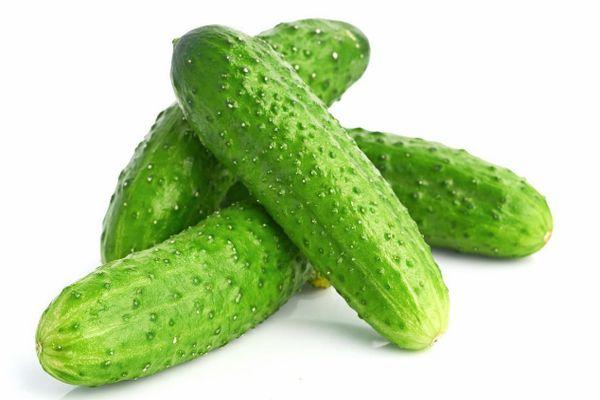
Gherkin is characterized by early ripening: it begins to bear fruit 40-45 days after germination. This parthenocarpic variety does not require pollination by bees.
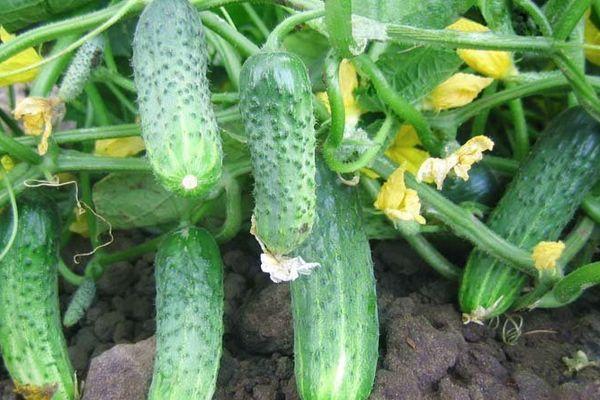
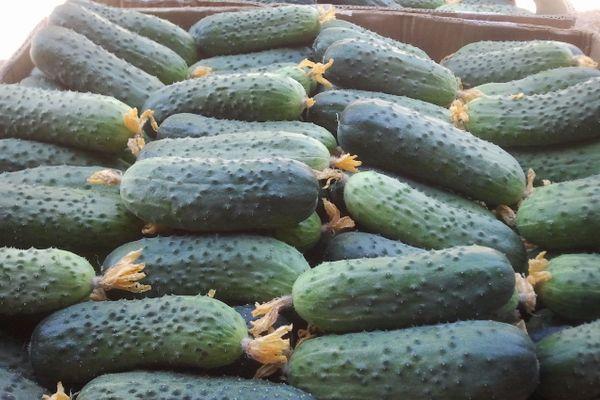
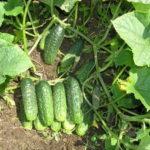
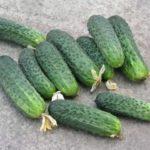
The fruits are deep green and reach a length of 10-12 cm. The surface of the cucumbers is covered with large tubercles; the spines are white. The cucumbers are a perfect cylindrical shape, with a length-to-diameter ratio of 3.25:1.
The bushes are vegetative, vigorous, and have a well-developed root system. The main stem grows up to 5 m. With sufficient nutrition, each node develops a cluster ovary, which produces 6-8 fruits. The cucumbers weigh 80-100 g. The harvest ripens early and uniformly. With proper cultivation practices, 20-24 kg of cucumbers can be harvested per square meter.
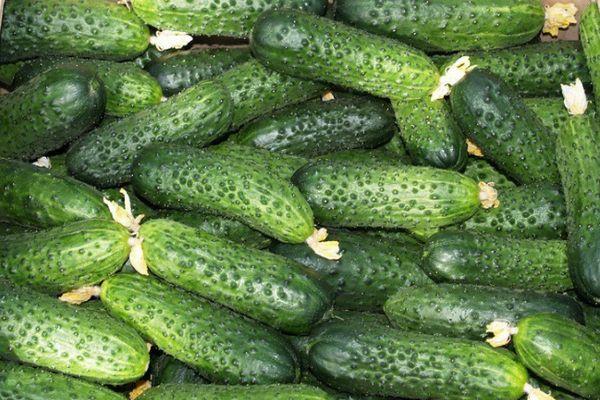
Mirabella f1 cucumbers, described as having excellent flavor, lack bitterness; their seeds are small. The fruit has a thin, glossy skin.
The Mirabella variety has a 100% seed germination rate, and the plants produce virtually no barren flowers. Cucumbers can be grown horizontally or vertically. It is recommended to plant 2-2.5 plants per square meter.
The hybrid's characteristics indicate resistance to cucumber mosaic virus, powdery mildew, and cladosporiosis. The variety has weak tolerance to low temperatures and rust.

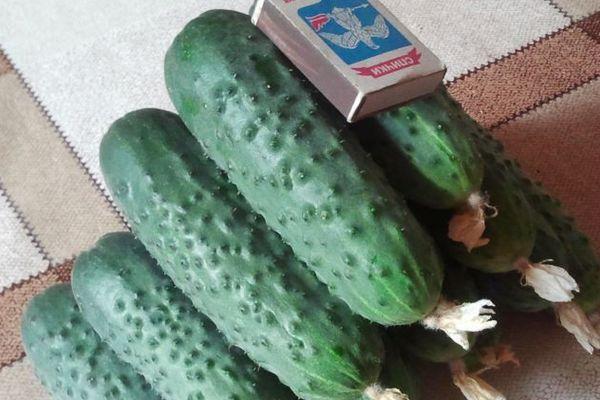
Mirabella F1 cucumbers are used for pickling, salting, processing, and fresh consumption. Cucumber connoisseurs remark on the excellent flavor of the pickled cucumbers, which remain crisp and juicy during cooking.
The harvested crop tolerates long-distance transportation well.
Overripe cucumbers retain their flavor.
Agricultural technology for growing crops
To achieve high yields when cultivating the Mirabella hybrid, experienced vegetable growers adhere to a system of agricultural practices.
Growing in a greenhouse made of polycarbonate or glass requires the following conditions:
- when planting, the soil should warm up to +15 °C;
- for growing you need to use high-quality fertile soil;
- seedlings are planted 30 days after emergence;
- Before planting the hole, water it with a weak solution of potassium permanganate;
- young seedlings are transferred with a lump of soil so as not to damage the root system;
- the plant is covered with soil up to the level of the cotyledons;
- the distance between bushes should be at least 20 cm, and between rows - 40 cm;
- Watering with an aqueous solution of complex fertilizers is carried out 14 days after planting the seedlings in a permanent place in the greenhouse.
Caring for the crop requires providing warmth. It's important to maintain a daytime air temperature of 25°C to 28°C, and a nighttime temperature of 18°C to 20°C.
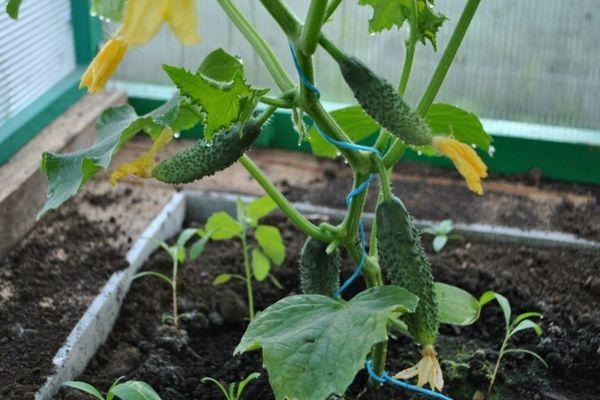
Bushes are demanding of moisture. When growing indoors, it's important to maintain optimal humidity levels. To achieve this, the greenhouse is regularly ventilated, and in summer, it's covered with a shade net or treated with a special paint to create a shading effect.
Regular watering is required for normal plant development. On hot days, water daily. When temperatures remain stable, water as needed.
Water the cucumbers with warm water early in the morning or after sunset. Water them sparingly until flowering begins, then increase the watering once the first flower stalk appears.
At the beginning of ripening, the harvest is removed several times a week, and during mass fruiting - once a day. If you harvest vegetables infrequently, this will negatively affect the productivity of the plant.

For normal crop development and increased yield, regular fertilization is required.
Opinions and recommendations of vegetable growers
Vegetable growers' reviews indicate that high yields are achieved when planting properly. When growing from seedlings, it is recommended to use peat pots or pellets. This prevents root damage when planting the seedlings in their permanent location.
It is advisable to add a mixture of humus and manure, river sand, and mineral fertilizers to the holes.
Bushes can be trained to increase yield. All buds and shoots in the axils of the first four leaves are removed. Pinch off shoots in the axils of the next two leaves, leaving one bud each. Above the 10th leaf, all shoots and buds are left.
Care of the crop includes:
- weeding;
- careful loosening of the soil between the bushes;
- watering with warm water;
- 3-4 feedings with mineral and organic fertilizers during the season.
In the early stages of development, plants are weak, so it is recommended to keep seedlings closer to a source of light and heat.
Related posts:
 TOP 30 best varieties of cold-resistant cucumbers with descriptions and characteristics
 Description of the best varieties of Chinese cucumbers, planting, growing and care
 How to prepare pickled cucumbers in adjika for the winter without sterilization and Caucasian style: recipes
 TOP 10 recipes for quickly preparing lightly salted crispy cucumbers using cold and hot methods in a saucepan
 35 Best Powdery Mildew-Resistant Cucumber Varieties with Descriptions
 30 Best Dutch Cucumber Varieties with Descriptions and Characteristics
 TOP 30 best determinate cucumber varieties with descriptions
 Top 50 Best Cucumber Varieties for Polycarbonate Greenhouses with Descriptions