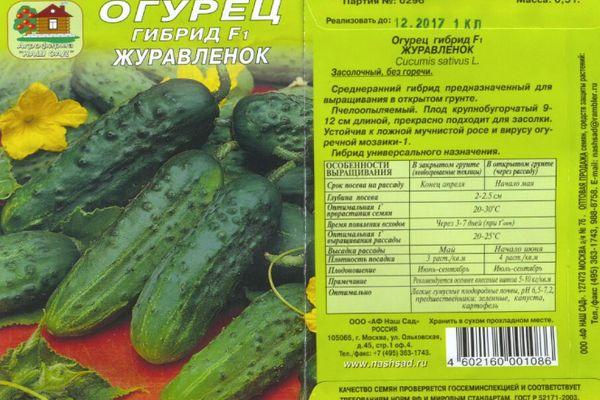
The Zhuravlenok f1 cucumber belongs to the group of early-ripening hybrids. This plant bears fruit after pollination by bees. It can be grown in plastic greenhouses and in fertile open areas. Zhuravlenok cucumbers are canned, eaten fresh, and used in salads.
Technical data of the plant
The characteristics and description of the variety are as follows:
- The first fruit develops after emergence in 40-48 days.
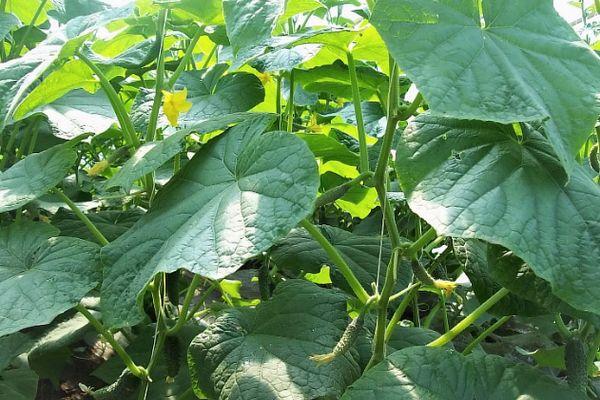
- The height of the bushes ranges from 180 to 200 cm. To ensure the hybrid's branches support the weight of the resulting fruits, the stems must be tied to a vertical trellis or sturdy support.
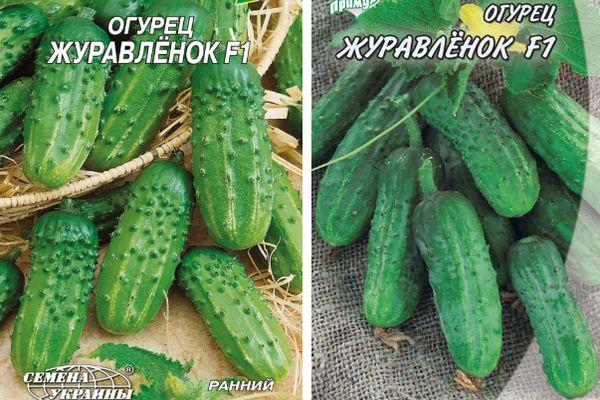
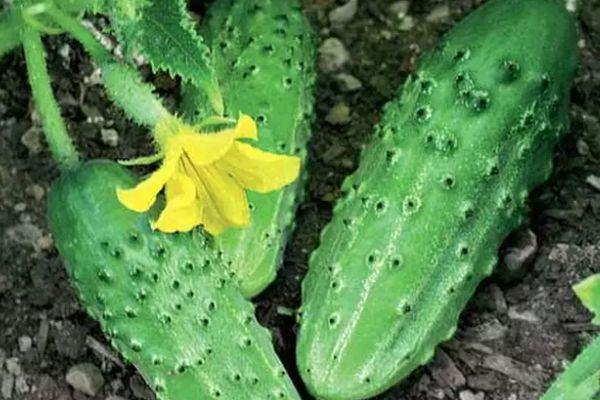
- The Zhuravlenok cucumber variety produces fruits ranging from 85 to 120 mm in length and 32-42 mm in diameter. They lack a neck, and the oval body has a moderate number of tubercles. The cucumber is green in color, with blurred stripes and black dots scattered across its surface.
- One fruit weighs from 90 to 115 g. Reviews from gardeners who grow this plant show that the cucumbers have dense flesh and a pleasant taste without any signs of bitterness.
- The plant successfully resists various diseases, such as downy mildew, powdery mildew, and tobacco mosaic virus.
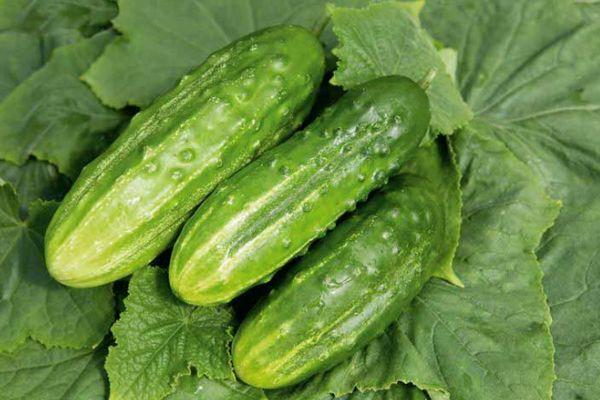
Reviews from gardeners growing this variety indicate that, with proper agricultural practices, 8 to 10 kg of cucumbers can be harvested from 1 m² of garden bed. This hybrid can be transported over any distance, as it tolerates mechanical stress well.
Cucumbers are grown in open ground in the southern regions of Russia. In the central part of the country, greenhouses and plastic film greenhouses are recommended for this purpose. In the northern parts of Russia, greenhouse complexes with forced-air heating are used to ensure normal plant growth.
Growing and caring for bushes
After purchasing the seeds, they are disinfected in a potassium permanganate solution. The seeds are planted in open garden beds in mid-May or early June. In these conditions, when there is no risk of sudden temperature drops and the soil is sufficiently warmed to a great depth, the seeds are planted in holes or trenches 20-30 mm deep.

Before planting the seeds, loosen the bed and add compost to the soil. After sowing, it is recommended to cover the emerging seedlings with plastic film to protect them from nighttime temperature drops. Seeds are planted in rows spaced 0.6 x 0.2 m apart.
If the gardener prefers the seedling method, the seeds are germinated in boxes filled with a homemade soil mixture of peat, garden soil, and sand. These components are used in equal quantities. After the sprouts appear, the boxes are moved to a bright spot.
Regular watering and fertilizing of seedlings is recommended. When the plants develop one or two leaves, they are pricked out. The seedlings are planted in permanent soil in late April or early May.
Fertilize the bushes four times during the growing season. Use mineral or organic fertilizers. If possible, use complex mixtures containing all the necessary elements.
 Regular watering with warm water is carried out twice a week. This operation is best carried out in the morning hours, before the sun rises.
Loosening the soil in the beds will allow the plant roots to receive more oxygen, which will strengthen the plants' immunity to various diseases. Weeding eliminates the threat of late blight and kills some pests that infest cucumber roots.
To prevent plants from becoming diseased, preventative spraying with products that combat fungal and bacterial infections is performed. If symptoms of any disease are detected, the affected bushes are destroyed to prevent the spread of the infection.
Garden pests are controlled using various chemicals or by spraying the bushes with copper sulfate. To repel slugs, ash flour is applied to the soil beneath the bushes.
Related posts:
 How to propagate and grow peas, cultivation technology, and care in open ground
 Description of varieties of sowing peas and cultivation, to which family they belong
 The best grape varieties for growing in the Urals, planting and care rules in summer
 Methods for planting and propagating cherries at home
 How to properly plant peas in a greenhouse and open ground
 The best eggplant varieties for growing in a polycarbonate greenhouse: planting and care
 Carrot care guidelines for outdoor cultivation to ensure a good harvest
 Is it possible to soak treated cucumber seeds before planting and how to do it correctly?