
- Rusty spots on cucumber leaves: symptoms and signs
- Are rusty spots on cucumber leaves dangerous?
- Causes of the problem
- Nutritional deficiencies
- Burn or hypothermia
- Diseases of Culture
- Common cucumber mosaic
- Cucumber bacteriosis
- Blackleg
- Anthracnose
- Ascochytosis
- Angular spot
- Downy mildew (peronosporosis)
- How to deal with rust stains: timing and treatment technology
- Chemicals
- Folk remedies
- Preventing leaf damage on cucumbers
- Conclusion
Cucumbers are considered one of the most common vegetable crops, grown by almost every gardener. Although this vegetable rarely suffers from diseases, rusty spots sometimes appear on cucumber leaves. If spotting occurs, it's important to determine the cause and learn how to get rid of it.
Rusty spots on cucumber leaves: symptoms and signs
Identifying rust on cucumber plants early is fairly easy, as the problem has clear signs. Each leaf becomes covered in oval-shaped, reddish spots. Over time, the spots coalesce, causing the leaves to turn yellow and gradually fall off the plants.
Most often, spotting develops on the underside of leaves. Sometimes it can be seen on the stems of bushes and leaf petioles. If left untreated, the spots will spread to the upper surface of the leaves and cover their surface. The development of rusty spots on the foliage leads to moisture evaporation and drying out.
Are rusty spots on cucumber leaves dangerous?
Some vegetable growers believe that the rusty coating on cucumber leaf surfaces is harmless, but this is far from true. The rusty spots stunt leaf growth and cause them to gradually deform. Deformed and dried leaves fall off, which leads to the death of planted cucumbers.
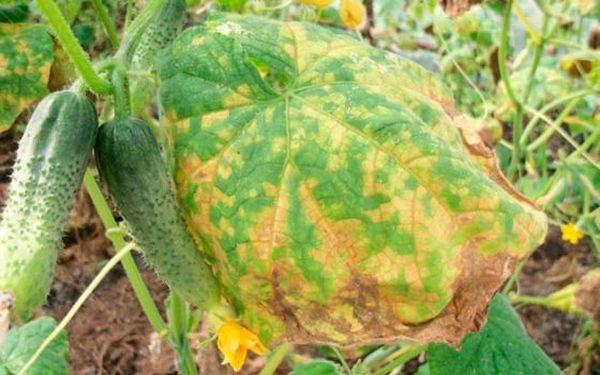
Causes of the problem
It's recommended to familiarize yourself with the causes of rusty spots on leaves in advance. There are several causes for the development of vegetable rust.
Nutritional deficiencies
Yellow spotting may appear on leaves due to a deficiency of the following components:
- Nitrogen. If the soil lacks nitrogen, the foliage of cucumber plants begins to turn pale and wilt. The leaves at the bottom of the seedlings become covered with yellowish spots.
- Magnesium. Magnesium deficiency causes cucumber leaves to rust, with burns appearing on the surface. The lower leaves turn pale and become covered with reddish spots.
- Copper. A copper deficiency causes a brownish coating to form on the foliage. Without copper supplements, shoots weaken and foliage falls off.
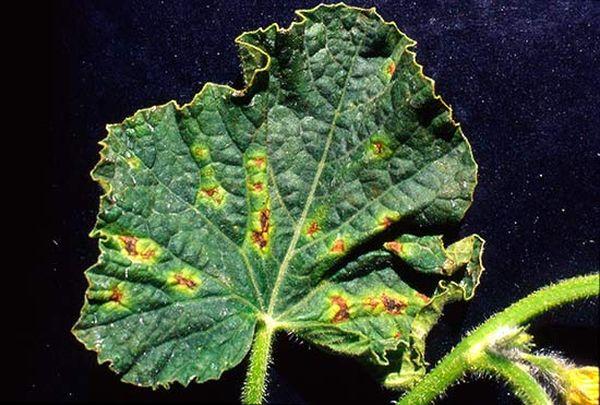
Burn or hypothermia
Cucumbers, like most other vegetables, don't cope well with temperature fluctuations. Growing them in high temperatures is not recommended, as these temperatures promote the development of leaf rust.
Rusty spots can also appear on leaf blades due to scorching. This occurs if planted seedlings are watered during midday in bright sunlight.
Diseases of Culture
The color of the foliage may change due to the appearance and development of fungal or infectious diseases.
Common cucumber mosaic
This is a dangerous viral disease that affects not only cucumbers but many other vegetable crops. Signs of mosaic disease do not appear immediately, but only 10-15 days after infection. A sharp rise in temperature to 30-32 degrees Celsius is believed to be the main cause of the disease.
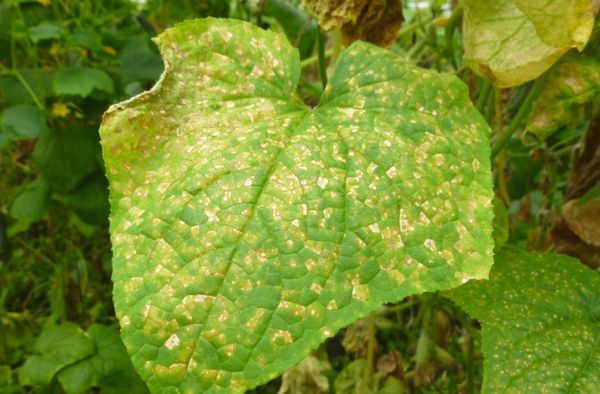
To detect mosaic disease early, inspect the bushes periodically. Orange spots on the stems and leaves indicate the disease's progression. Mosaic disease also causes the leaf blades to become wrinkled and wilted. Formed fruits also suffer from the disease, becoming deformed and beginning to wilt.
Cucumber bacteriosis
Bacteriosis is a common infectious disease that affects plants both in greenhouses and outdoors.
The main source of infection is considered to be contaminated seeds planted without prior disinfection. The disease most often develops in conditions of high humidity and elevated temperatures (28-30 degrees Celsius).
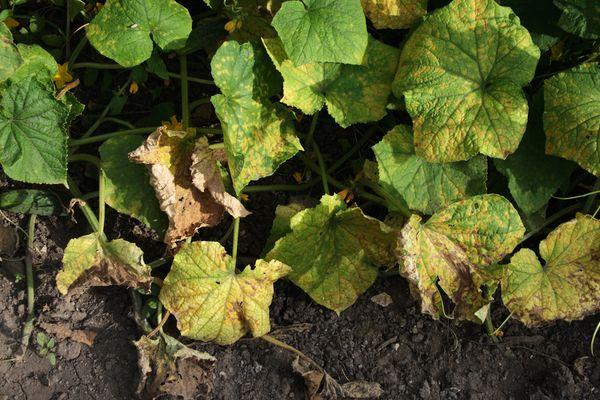
The leaf blades of cucumbers infected with bacteriosis have a reddish coating that gradually covers all the leaves.
Blackleg
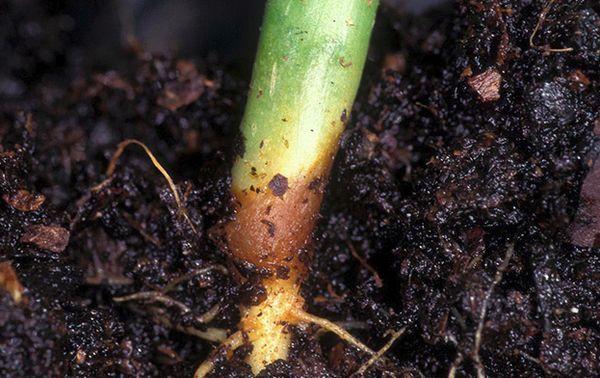
A fungal disease that many gardeners encounter when growing cucumbers. Blackleg is caused by a fungus that infests not only vegetable seedlings but also the soil. Therefore, if the soil is not tilled or treated with fungicides for a long time, the risk of blackleg developing is extremely high.
Symptoms of infection begin to appear on the roots of the plants, which stop developing due to the disease. Due to the weakened root system, the stems and leaves of cucumbers become wilted and yellow. Most plants affected by blackleg die.
Anthracnose
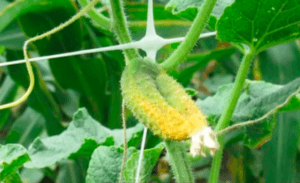
Anthracnose is a dangerous fungal disease that most often affects cucumbers grown in greenhouses. Anthracnose causes yellow spots to appear not only on the foliage but also on the fruiting vines. The first signs of the disease can be seen on the root collars, where brown spots appear on the surface. These spots cause the stems to weaken and break off.
The causes of anthracnose development include increased soil moisture, nutrient deficiencies, and non-compliance with temperature regulations.
Ascochytosis
The disease develops in vegetables grown in greenhouses. In the open ground, cucumbers are rarely infected with ascochyta blight. The main factor that triggers the disease is high humidity, which promotes the development of rot.
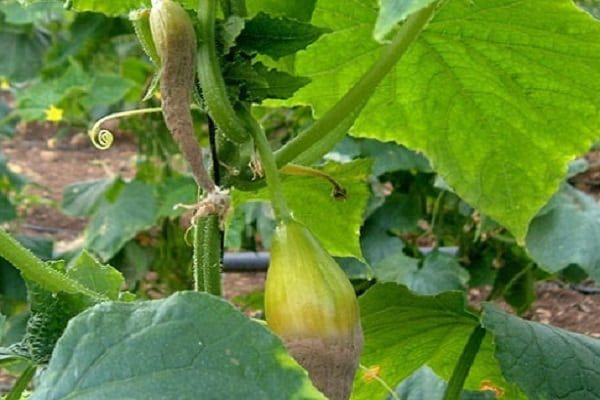
Signs of ascochyta blight include yellowish spots that appear on shoots early in the growing season. These spots gradually expand and completely cover the bushes. If left untreated, affected plants will wilt.
Angular spot
A bacterial disease that most often affects cucurbits. Angular spot is easy to spot early, as symptoms immediately appear on the above-ground portions of the plant. Initially, oily, yellowish spots appear on the leaves, which eventually turn brown. The affected area of the leaf surface gradually dies, leaving a round cavity in the place of the spot. The foliage then begins to curl and fall off.
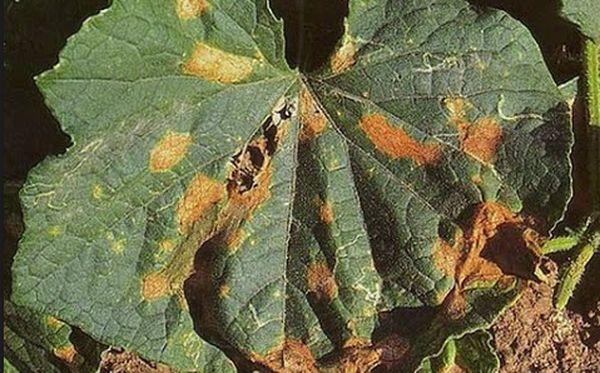
The symptoms of the disease also affect cucumbers. They become covered with water-soaked spots, which then begin to rot.
Downy mildew (peronosporosis)
People growing cucumbers indoors in greenhouses often have to treat their seedlings for powdery mildew. This disease thrives in high humidity and temperatures above 25 degrees Celsius. It leads to reduced fruiting and wilting of the plants.
Signs of powdery mildew first appear on the upper leaves. They become covered with white, round spots. If downy mildew isn't treated, the plant will wilt.
How to deal with rust stains: timing and treatment technology
Many people don't know what to do when rusty spots appear on their cucumber leaves. There are several effective remedies that can help treat the problem.
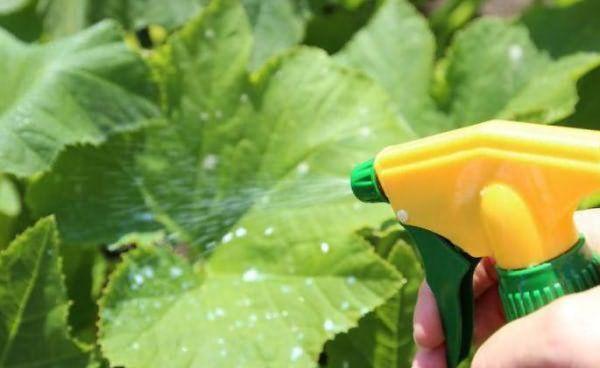
Chemicals
When fighting rust, many people use chemicals:
- Bonide 811. A popular copper-based fungicide. It is used to treat vegetable crops, flowers, and fruit trees. It helps combat diseases that cause leaf rust.
- Spectracide 51000. A universal product used to combat fungal and infectious diseases. It is also used for prevention and additional protection of plants from insects and dangerous diseases.
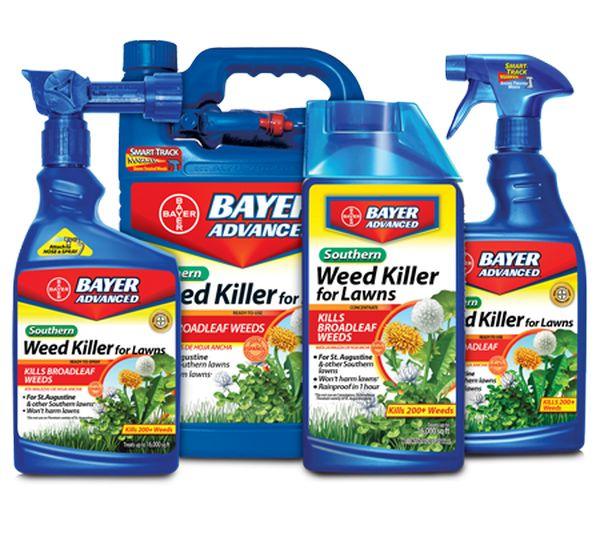
- Bayer Advanced. A systemic fungicide that not only treats but also prevents rust. The bushes are sprayed with the product no more than twice a month.

Folk remedies
Rusty stains can be treated using folk remedies:
- Manganese solution. Used to prevent the further development of powdery mildew and other fungal diseases. To prepare a spray mixture for cucumbers, add three grams of the solution to five liters of water.
- Whey. To eliminate rust on leaves, cucumbers are sprayed with a whey mixture. To prepare the solution, mix ten liters of water with two liters of whey. The plants should be treated 2-3 times per season.
Preventing leaf damage on cucumbers
There are a number of preventative measures that can help protect cucumbers from rust:
- Regular fertilization. To ensure healthy plants, it's necessary to regularly feed them with mineral and organic fertilizers.
- Pre-sowing seed treatment. All cucumber seeds are soaked in a potassium permanganate solution before planting, which will kill pathogens.
- Proper watering. Cucumber plants are watered at the roots to prevent water from splashing onto the leaves and burning their surface.
Conclusion
Gardeners who regularly plant cucumbers in their gardens often encounter rusty spots on their plants. To quickly get rid of rust on cucumbers, you need to familiarize yourself with the basic methods for dealing with these spots.
Related posts:
 Description of unusual methods for planting and growing cucumbers
 How to care for cucumbers in open ground from planting to harvesting
 Description of the best varieties of Chinese cucumbers, planting, growing and care
 How to properly plant cucumbers in open ground with seeds, and at what depth
 Why cucumber leaves are drying out and what to do, how to treat them in a greenhouse and in the ground
 Why do cucumber leaves curl inward and what to do about it?
 How to make a cucumber trellis with your own hands from scrap materials
 How to properly plant cucumber seedlings in a greenhouse and care instructions