
The Emerald Family cucumber is a hybrid intended for sowing in open ground and in unheated plastic greenhouses. The Emerald Family cucumber is listed in the State Register of Russian Cucumbers. The hybrid has a cluster-type ovary development, resulting in a high yield. The fruits are eaten fresh and canned for winter.
Briefly about the plant and its fruits
The characteristics and description of the Emerald Family F1 variety are as follows:
- The hybrid belongs to the group of early-ripening plants. It takes about 45 days from the first shoots to the full harvest.
- The height of the bushes can be more than 1.0-1.2 m. Cucumbers of the described variety have a female type of flowering.
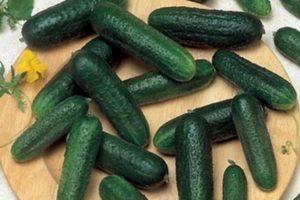
- The cucumber's fruit is cylindrical, and its surface is covered with numerous green bumps and white spines. The flesh inside contains a large amount of juice.
- The fruits range from 35 to 40 mm in diameter and 100 to 120 mm in length. Their weight ranges from 0.12 to 0.13 kg, but gardeners' reviews indicate that if all breeder recommendations are followed, fruits weighing up to 150 g can be obtained.

The variety yields 14.5-15.5 kg of fruit per square meter of garden bed. Farmers note that the Emerald Family is immune to common vegetable diseases such as cladosporiosis, various forms of powdery mildew, and cucumber mosaic virus.
The hybrid is grown in open ground in the southern regions of Russia. In the central part of Russia, unheated greenhouses are used for growing the vegetable. In the northern regions of Russia, the hybrid is typically grown in heated hothouses and greenhouse complexes.

To obtain a good harvest in open areas, cucumbers should be sown in prepared soil. To do this, the soil is loosened and the necessary fertilizers are added. If necessary, the soil is disinfected with a potassium permanganate solution.
![Favorable and unfavorable days for planting cucumbers in June [year]](https://harvesthub.decorexpro.com/wp-content/uploads/2020/06/page-300x185.jpg)
The crop should be sown in sunny areas protected from wind. Cucumbers should not be planted in soil previously occupied by related crops or squash, zucchini, or pumpkins. The soil in the beds should be enriched with humus. It is best to sow the hybrid in loamy or sandy loam soil. Organic fertilizers are used to promote growth.
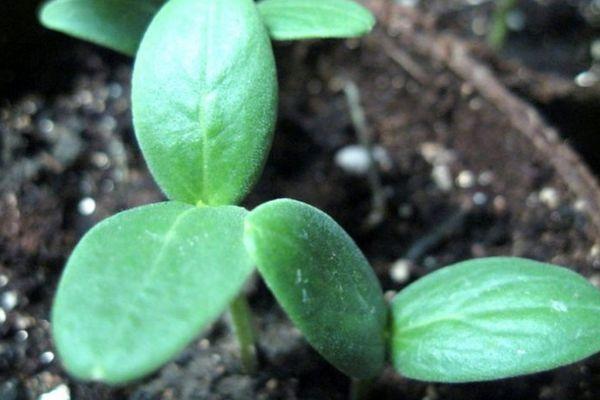
Growing seedlings
To obtain seedlings, it is recommended to use seeds disinfected with a solution of potassium permanganate, although many gardeners plant dry seedlings in the ground. To maximize the use of plot space, it is recommended to use a ribbon sowing method. For this, seeds are sown in beds in a 0.5 x 0.5 m pattern. The same system is used for nest planting.
The seeds are planted 20-30 mm deep. For normal germination, the room temperature should be maintained at +30°C. After sprouts emerge, they are watered with warm water and fed with a complex mineral mixture containing potassium and nitrogen. To improve gas exchange, the soil is loosened every 5-7 days. If there is a risk of a sharp drop in temperature, the young plants are protected with warm material.
Self-care for a hybrid
Cucumbers need to be watered twice a week. This procedure is carried out after sunset. Care should be taken to avoid dripping liquid on the plant leaves, otherwise the bushes will get burned. During extreme heat or drought, increase the frequency of watering to three times a week.
Mulching can replace loosening the soil. This prevents fungal infections and allows plant roots to receive essential oxygen and nutrients. Mulching also helps eliminate certain root parasites that can damage plants.

Weeding cucumbers is essential to prevent the risk of various diseases from weeds. Preventative weeding prevents insects that feed on weeds from spreading to crops.
Breeders recommend removing lateral shoots in a timely manner. Failure to do this can result in a 15% reduction in yield. Plants are fertilized three times per season. Initially, the bushes are given nitrogen and potassium fertilizers, and then, during flowering, phosphorus and potassium are applied. After fruiting, it is recommended to increase the phosphorus content in the mixture or use complex mineral fertilizers.
Take a look Also

Although the Emerald family is immune to some diseases, it's best to treat the bushes with Fitosporin, which will kill bacterial and fungal infections. If an infection occurs, remove all affected bushes from the area and then destroy them.
When various garden pests appear, specialized chemicals are used to eliminate them. Folk remedies are also recommended for this purpose.
Related posts:
 The best eggplant varieties for growing in a polycarbonate greenhouse: planting and care
 Rules for growing tomatoes in open ground, choosing a variety, planting and care
 The benefits and contraindications of lentils for the human body
 What fertilizers and when to use for feeding tomatoes in a greenhouse
 Why potatoes aren't growing well in the garden, and what to do to ensure a bountiful harvest
 The benefits and harms of ginger for the female body, medicinal properties and contraindications
 How to properly plant cucumber seedlings at home and what to feed them with
 What is the best way to feed tomato seedlings to make them plump?