
- Climatic conditions of the region
- Requirements for cucumber varieties
- The best cucumber crops for the Moscow region by ripening time
- Early ripening varieties
- Dmitry Donskoy F1
- Mother-in-law's dessert F1
- Mid-season crops
- Successful F1
- Filippok F1
- F1 actor
- Late-ripening cucumbers
- Nezhinsky
- Droplet
- The best self-pollinating cucumber hybrids for open ground
- Herman F1
- Alliance F1
- Popular high-yielding varieties
- Salad crops
- Openwork F1
- Avoska F1
- Beethoven F1
- Bourgeois F1
- Varieties for canning and pickling
- Vivat F1
- Atlantis
- F1 Day
- Baba Masha F1
- Planting and caring for cucumbers in the Moscow region
Gardeners often ask which cucumbers are suitable for outdoor cultivation in the Moscow region. In warm, rainy summers, early, mid-season, and late-season varieties are recommended. Botanists have developed many early-ripening hybrids that don't require bee pollination. These varieties allow for harvesting as early as early summer.
Climatic conditions of the region
The Moscow region has a temperate continental climate. Spring is cool, so the ideal time for planting vegetables in the garden is late May. Air temperatures should reach 15°C (59°F), and soil temperatures should reach 10°C (50°F). Rain is common in summer. The average summer temperature is 18°C (64°F).
In the Moscow region, cucumbers can be grown using pre-prepared seedlings or without seedlings. Seeds for seedlings are sown in early May. The seedlings should be 20-25 days old and reach 15 centimeters in height before being transplanted to the garden.
At the end of May, you can sow seeds directly into the garden. However, fruiting will occur 1-2 weeks later than with seedlings. However, the plants will grow stronger and more adapted to the Moscow region's climate.
Requirements for cucumber varieties
Early, mid-season, and late varieties are grown in the Moscow region. Fast-ripening crops can be planted twice—in late May and late June. Cucumbers ripen in 38-40 days. With this cultivation method, the harvest can be collected all summer long. Late varieties ripen 45-65 days after planting. To protect the plants from the vagaries of the weather and ensure a good harvest, it is advisable to build a low plastic greenhouse in the garden.
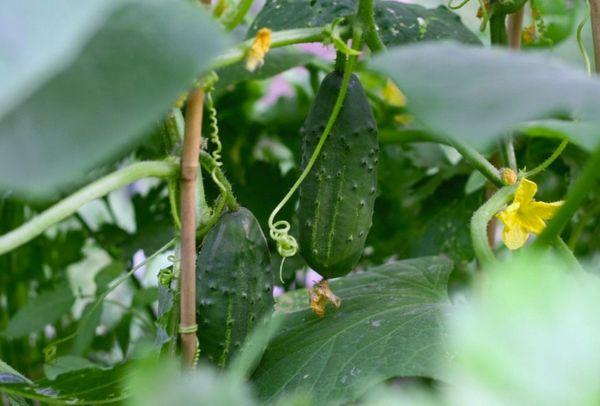
Selection criteria:
- does not need pollinators;
- resistance to fungal diseases;
- early ripening of the crop;
- cold resistance;
- high yield rates.
For the Moscow region, it is advisable to purchase hybrid and varietal crops specially created for this region. Self-pollinating and insect-pollinated varieties are grown in this area. An early self-pollinating hybrid is ideal for the Moscow region.
The best cucumber crops for the Moscow region by ripening time
In the Moscow region, you can grow early, mid-season, and late-season cucumbers. It's advisable to plant several different varieties in your garden.
Early ripening varieties
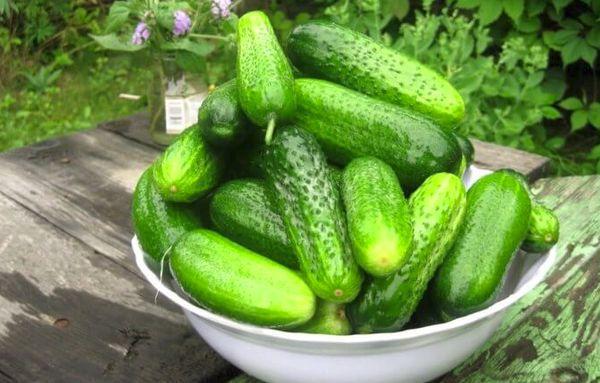
Early vegetables are grown for making light vegetable salads. Some varieties are used for pickling and preserving. Cucumbers ripen in 38-40 days.
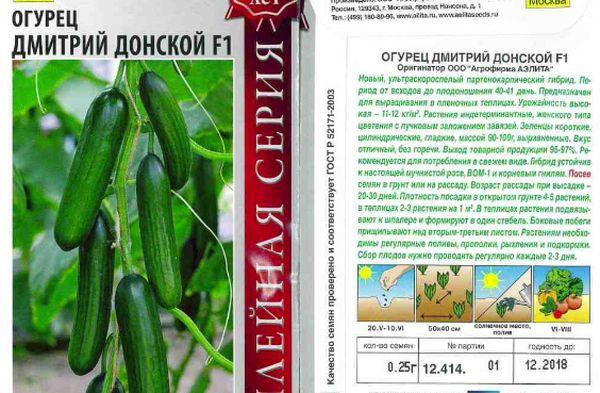
Dmitry Donskoy F1
A parthenocarpic, early-ripening hybrid. The harvest is completed in 40 days. The vegetables are grown for salads; they have smooth, thornless skin. Ripe vegetables weigh 100 grams, are 13 centimeters long, and 3.2 centimeters thick.
Mother-in-law's dessert F1
An early-maturing hybrid that doesn't require insect pollinators. The harvest is ready in 39 days. Ovaries are set in clusters of 3-4 fruits each. The fruits have a small number of spine-tipped tubercles. They weigh 103 grams and are 10.5 centimeters long.

Mid-season crops
These are mid-season plants. They begin to bear fruit after 45-50 days. It's advisable to grow seedlings first. Cucumber seeds are sown in late April or early May. The seedlings are transplanted to the garden bed in late May.
Successful F1
A hybrid indeterminate variety. Requires pollination by bees. Grown for summer salads and canning. Each vegetable weighs approximately 115 grams and grows to 12 centimeters in length. The flavor is good, without bitterness. The skin has bumps with spines. One plant can produce approximately 6-9 kilograms of vegetables.

Filippok F1
A hybrid crop. Mature cucumbers are 6-8 centimeters long and weigh about 70 grams. These are pickled vegetables. They can be eaten fresh or preserved for the winter. The cucumbers are small, knobbly, crisp, and not bitter. All cucumbers are the same size.
F1 actor
A hybrid gherkin crop. The harvest is ready in 50 days. Mature cucumbers are 8 centimeters long and weigh 80 grams. The cucumbers have a small number of small, spine-like bumps on their surface. The plant tolerates extreme weather conditions well. A single stem can yield up to 9 kilograms.

Late-ripening cucumbers
Late-ripening cucumber varieties begin bearing fruit after 50-65 days. The harvest is from July until the first frost. Late-ripening cucumbers do not require shelter. The plants tolerate weather conditions well and rarely get sick. The most popular varieties are: Nezhinsky, Nerosimy 40, Rodnichok, Kapelka, Feniks, Pobeditel, Kurazh, and Domovenok.
Nezhinsky
This variety is sometimes called Malorossiysky. The harvest can be completed in 50-65 days. The plant has a long stem (2 meters) that requires support. Pollinators are essential. Ripe fruits are plump, 10 centimeters long, and weigh 100 grams. They have occasional bumps on the surface. The plant produces abundant fruit and rarely gets sick. This is an ideal variety for pickling.
Droplet
A bee-pollinated crop. The harvest is ready after 60 days. One plant can produce about 10 kilograms of pickling vegetables. Ripe cucumbers are 11 centimeters long and weigh 105 grams. The flesh is not bitter. The plant bears fruit until the first frost.

The best self-pollinating cucumber hybrids for open ground
These crops don't require much care. They require regular watering, timely fertilization, and weed control. A single flower of these crops contains both pistils and stamens. Cucumbers are self-pollinated, without insects, producing fruits with seeds.
Early varieties have juicy, tender flesh. Late self-pollinating varieties are firmer and ideal for canning. The best varieties include: German, Klavdiya, Alliance, Orfey, Zador, Konni, Muromets, Masha, and Gerda; gherkins include Alex, Melody, and Opera.
Herman F1
An early hybrid variety. The cucumbers are tender and without bitterness. They are suitable for vegetable salads and pickling. When ripe, they reach 12 centimeters in length and weigh 95 grams. A single ovary can produce up to 9 fruits. This variety is rarely susceptible to late blight.

Alliance F1
A hybrid that matures in 50 days. This crop produces abundant fruit. A ripe cucumber is 15 centimeters long and weighs 125 grams. A single bunch can produce up to 6 cucumbers. It's best to germinate the seeds before planting. This variety is ideal for canning.

Popular high-yielding varieties
The most productive crops can yield 9 to 15 kilograms of vegetables per bush. These plants are often indeterminate, hybrid, self-pollinating, or parthenocarpic.
Salad crops
Early-ripening varieties or hybrids with thin skin and excellent flavor are grown for salads. These cucumbers should be juicy, crisp, slightly sweet, and free of bitterness. Salad cucumbers range from 12 to 27 centimeters in length. Popular varieties include: Zozulya F1April F1. Mature vegetables weigh 150-250 grams.
Openwork F1
An early-maturing hybrid that doesn't require pollinators. The cucumbers ripen in 45 days. Each cucumber is 11 centimeters long and weighs 100 grams. Ideal for canning and salads, a single plant can yield up to 10.5 kilograms. This variety rarely suffers from cucumber mosaic disease and powdery mildew, and tolerates extreme weather conditions well.

Avoska F1
An early-maturing hybrid that doesn't require insect pollinators. The harvest can be completed in 43 days. One square meter yields 13 kilograms of vegetables. Ripe fruits are 11-14 centimeters long and weigh 135 grams. The fruits are free of bitterness, voids, and yellowish spots. This variety rarely suffers from diseases and adapts well to the Moscow region climate.
Beethoven F1
A hybrid plant. It begins bearing fruit after 44 days. Ripe cucumbers are 8-10 centimeters long and weigh 80 grams. These cucumbers are eaten fresh and used for pickling.
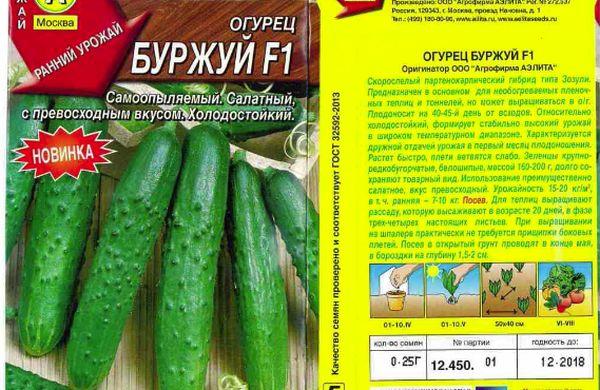
Bourgeois F1
A pollinator-free hybrid with long, smooth, virtually thornless fruits. The crop begins bearing fruit in 45 days. Mature fruits are 20 centimeters long and weigh 200 grams. An early salad variety. One plant can yield approximately 10 kilograms.
Varieties for canning and pickling
Mid-season or late-season varieties are suitable for winter storage. These vegetables ripen in late summer or late summer. They have firm, crisp flesh, no bitterness, a perfect shape, and excellent flavor.
Vivat F1
An early, indeterminate hybrid variety. Mature cucumbers are 10 centimeters long and 3 centimeters in diameter. The fruits do not overgrow. Ideal for canning.
Atlantis
A Dutch hybrid that matures in 50 days. The fruits weigh 120 grams and are 12 centimeters long. The flesh is not bitter.
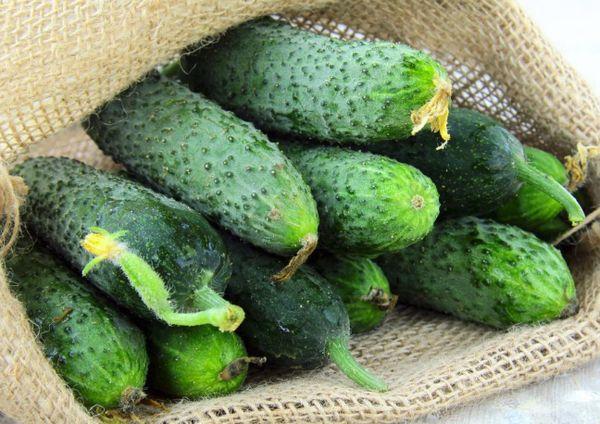
F1 Day
A bee-pollinated hybrid that matures in 55 days. The cucumber is 8 centimeters long and weighs 80 grams.
Baba Masha F1
A hybrid that requires pollinators. Ripens in 40 days. Mature fruits are 8-10 centimeters long and weigh 85 grams.
Planting and caring for cucumbers in the Moscow region
Cucumbers don't transplant well and don't require picking. For seedlings, it's best to use peat pots, which can then be transferred to the garden along with the grown seedlings. The soil for the seedlings should be pre-fertilized with organic and mineral substances. A ready-made potting mix is also available.
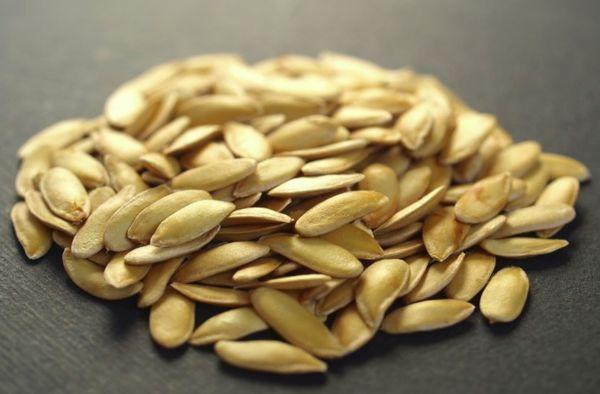
Before planting, seeds are disinfected in a weak solution of potassium permanganate. Cucumber seeds are soaked in this solution for no more than 30 minutes. Some hybrid seeds are sold pre-treated with growth stimulants. Such seeds do not require additional treatment.

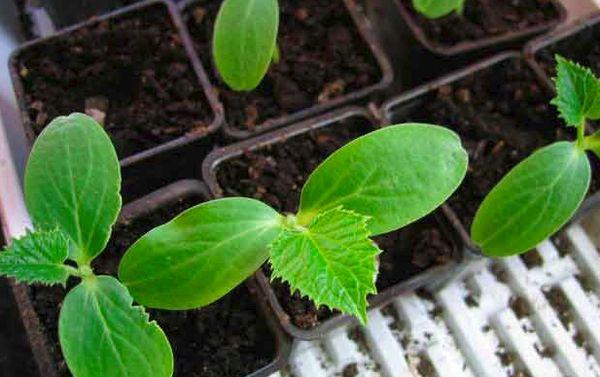
The seeds germinate 2-4 days after sowing. Place the seedlings in a well-lit area. Rotate the pots daily to prevent them from growing too tall. Make sure the soil doesn't dry out completely. It is necessary to water the seedlings regularly. It should take about 20 days before transplanting to the garden. The seedlings should have four true leaves, and by this time they'll be 15 centimeters tall.
Before transplanting into the garden, seedlings are hardened off. They are taken outside for a few hours daily to acclimate to the climate. Transplanting occurs at the end of May. At this time, seeds can also be sown directly into the garden bed. After sowing the seeds, each hole is covered with plastic bottles with the bottoms cut off. To ensure a guaranteed harvest, it is advisable to plant several varieties of cucumbers.
Rain is frequent in the Moscow region. To prevent waterlogging, it's advisable to create raised beds for cucumbers. First, dig the soil, loosen it, and fertilize it with organic and mineral fertilizers. For every square meter of soil, add one bucket of well-rotted compost, 40 grams of superphosphate, 40 grams of potassium sulfate, and 500 grams of wood ash.
Cucumbers are planted in specially prepared holes, usually in two rows. The distance between plants should be 35 centimeters. Between rows, 50 centimeters, and between adjacent beds, about 1 meter.
It's advisable to tie grown plants to a support and raise them upward. This method guarantees a higher yield, prevents the vegetables from rotting, and ensures the crop receives sufficient sunlight. Wooden stakes or trellises can be used as supports. cucumber plastic mesh.
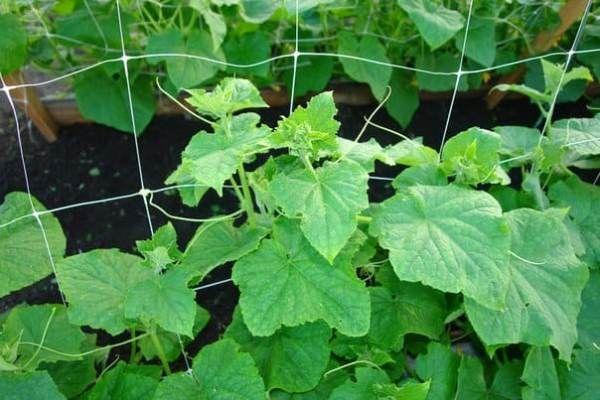
During the growing season, water the plants regularly. Rainwater is preferred. Cucumbers are watered every other day. To increase yield, it's important to fertilize the soil. Fertilize cucumbers for the first time two weeks after planting. Use liquid organic or nitrogen-based mineral fertilizers. During the fruit set period, phosphorus and potassium supplements are added to the soil.
Indeterminate varieties require side shoots, and once they reach trellis height, the tops should be pinched. Bushy determinate varieties require no shaping or pruning. These plants form a low bush with numerous shoots, where the fruit develops.
As the vegetables ripen, they are harvested regularly. The best time to harvest is early morning or late evening. Harvested vegetables can be stored in a cool place for two weeks, and in a warm place for about three days. Cucumbers are eaten fresh, pickled, and preserved.
Related posts:
 Description of the best varieties of bee-pollinated cucumbers, rules for their formation and care
 Growing cucumbers in open ground and greenhouses in the Leningrad region and varieties
 Description of the best varieties of Chinese cucumbers, planting, growing and care
 Which tomato varieties are best for open ground?
 Description of the best pepper varieties for greenhouses and open ground in 2025
 What varieties of tomatoes are best to plant in a polycarbonate greenhouse?
 TOP 30 best determinate cucumber varieties with descriptions
 Description and properties of the 50 best varieties of asparagus beans, benefits and harms