
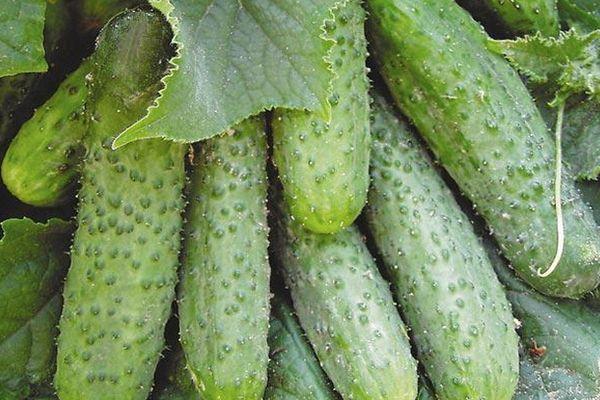
The Kumanek f1 cucumber belongs to a group of hybrids with early-to-mid-season ripening. This variety is suitable for growing outdoors. It doesn't require daily watering, and the bushes don't require bright light. The plant produces fruit well in rainy or cloudy weather. Breeders specifically developed this hybrid for regions with arid climates. The plant is pollinated by bees. Cucumbers of this variety are eaten fresh (in salads), and some homemakers preserve the fruit for the winter.
Some technical data
The characteristics and description of the hybrid are as follows:
- The variety ripens twice. The first harvest is in May, and the next fruiting occurs in June. Seedlings are sown in March.
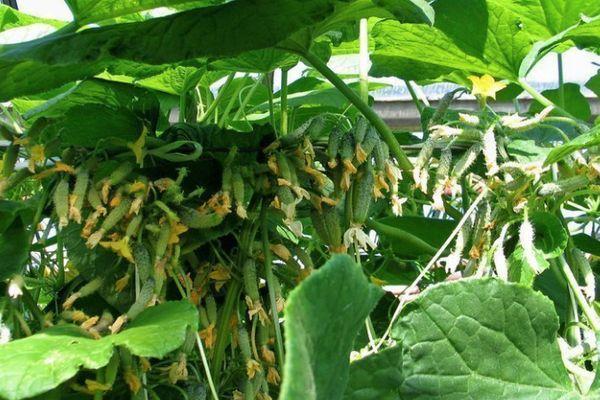
- The ovary forms clusters. Therefore, cucumbers grow in bunches of several.
- The bushes are quite short, but have a large number of branches. The hybrid responds well to shaping.
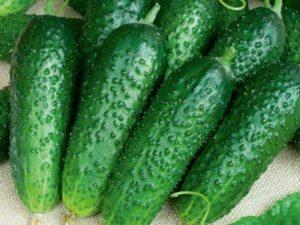
- The cylindrical fruit is 120-145 mm long and 3.5-3.8 cm in diameter.
- The weight of cucumbers ranges from 80 to 100 g.

Farmer reviews indicate that the hybrid's yield in commercial cultivation ranges from 200 to 600 centners per hectare. Kumanek is resistant to diseases such as powdery mildew, rot, cucumber mosaic virus, and downy mildew.
This variety is grown in almost every region of Russia. In the southern part of the country, the hybrid is grown outdoors, while in other parts of Russia, farmers use greenhouses and hotbeds. Sudden temperature changes and frost pose a risk to the plant. Therefore, the bushes should be protected with warm material until the danger subsides.
How to grow seedlings
It's recommended to first carefully examine the seeds and remove any damaged ones. The remaining seeds are collected in a container and hardened off. This is necessary to ensure the cucumbers produce strong vines.
Disinfection is carried out using potassium permanganate. The seeds are soaked in the solution for up to 72 hours and then rinsed under running water. If potassium permanganate is unavailable, it is recommended to use aloe juice or honey to harden the seeds and disinfect them. The plant leaves are cut off, placed in a paper bag, and placed in the refrigerator. The aloe leaves are kept there for 4-5 days. After this, the juice is squeezed out and diluted with water. The seeds are then placed in the solution.
Honey helps stimulate the growth of seedlings and strengthens the planting material. Honey solutions are used to harden and disinfect the seed stock.
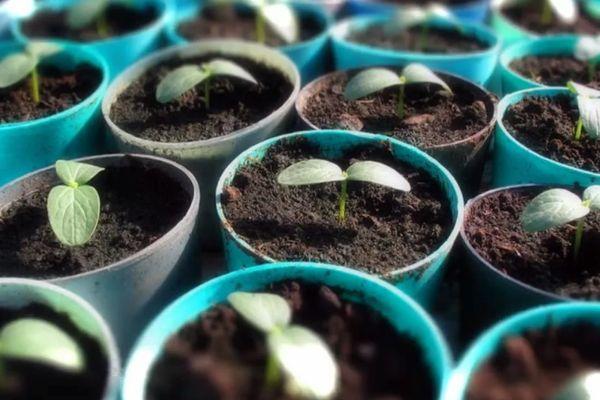
After this, the treated seeds need to be germinated. They are laid out on a damp cotton cloth and covered with a breathable cloth. A bandage or gauze folded into four layers is recommended for this purpose. Keep the cloth moist, but do not overwater it, as this will kill the seeds. Roots will appear on the seeds in 2-3 days.
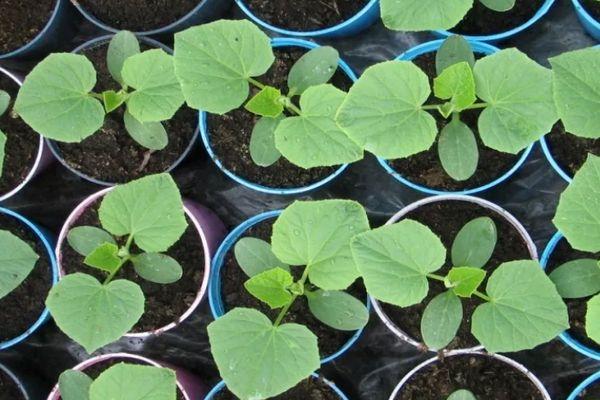
After this, the sprouted plants are planted in pots filled with soil. Peat pellets or individual pots are recommended. Water the sprouts with warm water and feed them with manure or chicken manure. Once the seedlings reach approximately 10 cm in length, they are transplanted to their permanent location.
Bee-attracting plants should be planted near the cucumber beds. The seedlings should be planted at a 0.5 x 0.3 m spacing. The soil should be light and loose. The beds should be equipped with a drainage system. It is recommended to rotate the cucumber planting site every 5 years.
Caring for the hybrid before fruit appears
For normal growth, cucumber bushes require adequate light. Therefore, it's recommended to plant cucumbers on a sunny side of the plot. This location should be free of strong drafts.
Water with warm water, keeping the soil slightly moist. To achieve the desired effect, water the Kumanek using a watering can with a fine nozzle. Be careful not to let water splash on the plant's leaves, as this could cause them to burn.

Fertilizers are applied to the soil under the roots. Slurry is used for this purpose. The beds are then covered with compost. Organic fertilizers, combined with mineral mixtures, are added to the soil along with the manure.
Loosening the soil significantly increases aeration, which leads to rapid bush growth. This also kills some parasites that infest the hybrid's roots.
Weeding of garden beds is performed twice every 14 days. This measure is necessary to eliminate bacterial and fungal diseases transmitted from weeds to crops.
If bushes become infected with any disease, they are treated with appropriate medications or folk remedies are used. However, if the epidemic has affected many plants, the affected bushes will have to be destroyed.
Related posts:
 Methods for planting and propagating cherries at home
 The best eggplant varieties for growing in a polycarbonate greenhouse: planting and care
 Growing and caring for hazelnuts in open ground, rules for planting hazelnuts
 The best grape varieties for growing in the Urals, planting and care rules in summer
 The best methods for growing grapes from seeds at home
 Description and rules for growing Solaris grapes
 Conditions for growing mandarin at home and rules for caring for the tree
 Peach tree care and agricultural secrets, pest control