
- Advantages and disadvantages of growing tomatoes in a greenhouse
- The best tomato varieties for greenhouse conditions
- Eagle's Heart
- Königsberg
- Abakansky
- Golden domes
- De Barao
- How to select and prepare seeds for germination
- Choice
- Preparation
- The optimal time for sowing and planting seedlings
- In an unheated greenhouse
- In a room with heating
- Sowing and growing seedlings
- Technology for planting tomatoes in a polycarbonate greenhouse
- Preparing the premises
- Preparing the soil for planting
- Forming beds for planting
- Transplanting shoots into a greenhouse
- Preparing seedlings for planting
- Picking seedlings
- At what distance should seedlings be planted?
- How to care for seedlings
- Watering
- Top dressing
- Tying up tomatoes
- Formation
- Pinching out stepsons
- Protection from diseases and pests
- Do tomatoes need to be hilled?
- Secrets of growing tomatoes in a polycarbonate greenhouse
- Conclusion
Tomatoes are a common vegetable grown by almost every gardener. They are most often planted outdoors, but sometimes they are grown indoors. Before you begin growing tomatoes in a polycarbonate greenhouse, you need to understand the specifics of planting them.
Advantages and disadvantages of growing tomatoes in a greenhouse
Each method of growing vegetables has its pros and cons, which should be understood. The advantages of growing tomatoes in greenhouses include:
- Fruit ripening speed. Some gardeners are frustrated that tomatoes take 2-3 months to ripen. Therefore, to get a ripe harvest sooner, they plant tomatoes indoors. Even if it is not too warm inside the greenhouse, the fruits will ripen 20-25 days earlier.
- Protecting planted seedlings from any environmental influences. Tomatoes planted in a greenhouse will be unaffected by prolonged rains, sudden temperature changes, strong winds, or hail. This ensures the tomatoes remain unharmed and maintain their marketable quality.
- Protection from dangerous pests. It's no secret that seedlings grown in gardens are often attacked by insects. If you set up a greenhouse properly, pests won't be able to get in and attack your tomato plants.
- Yield. Planting tomatoes in a greenhouse will increase fruiting several times over.
There are relatively few disadvantages to growing vegetables in greenhouses. The main drawbacks are considered to be the difficulty of constructing a reliable structure, as well as the high cost of construction.
Some people are put off by the fact that greenhouse plants need to be fed more often and because of this they refuse to plant them in a greenhouse.
The best tomato varieties for greenhouse conditions
It is recommended to familiarize yourself in advance with the varieties of tomatoes that are contraindicated for growing in open ground.
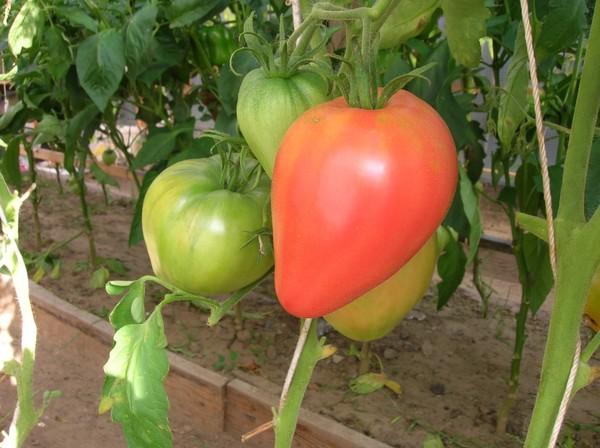
Eagle's Heart
One of the most productive greenhouse varieties is the Eagle's Heart tomato. Its most distinctive feature is its bright red, oblong-shaped fruits. If optimal greenhouse conditions are created when growing the Eagle's Heart, the yield per plant will be 12-15 kilograms.
Königsberg
This variety is classified as an indeterminate vegetable, as it can grow up to two meters. Gardeners recommend tying the Königsberg to supports to prevent its stems from breaking under the weight of ripe tomatoes. The first ripe tomatoes are harvested four months after sowing the tomato seeds. Königsberg is known for its high yield, yielding 15-20 kilograms of tomatoes per square meter.
Abakansky
Gardeners who prefer to grow low-growing tomatoes can plant Abakan tomatoThe maximum height of its bushes is only 65-75 centimeters. During cultivation, the seedlings form fruits, which turn pink when ripe. Each ripe tomato weighs approximately 300-350 grams, but in greenhouse conditions, they can weigh up to 700-750 grams.

Golden domes
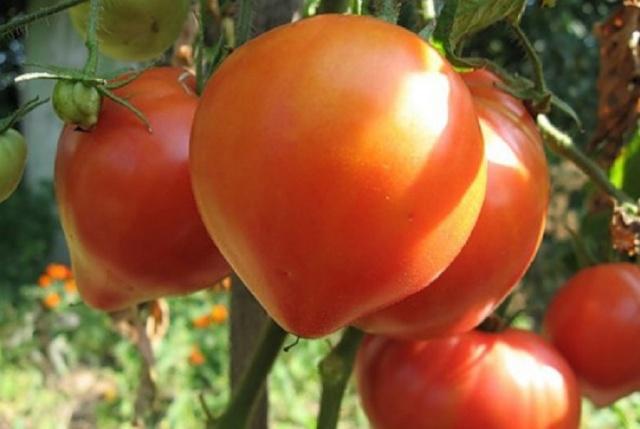
It's no secret that some tomato varieties are susceptible to disease. To prevent yield losses due to disease, plant the Zolotye Domey variety, which is resistant to common diseases. This is a determinate plant with bushes 80-90 centimeters tall.
The distinctive features of the vegetable include its fruits, which are covered with orange skin.
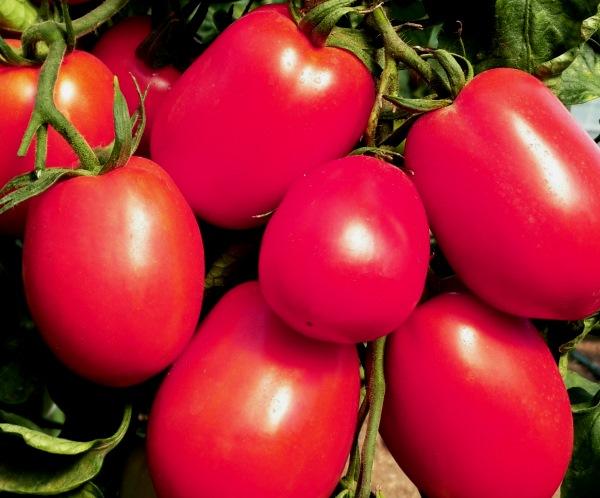
De Barao
De Barao is considered a high-yielding, late-ripening variety. Seedlings require support, as they reach a height of two meters. Advantages of De Barao include the flavor of ripe tomatoes and ease of cultivation.
How to select and prepare seeds for germination
Before planting, it is necessary to select the most suitable planting material and prepare it for planting.
Choice
There are several factors that are taken into account when choosing tomato seeds:
- Packaging. The first thing to look at when purchasing seeds is the packaging they come in. Seeds should be sold in securely sealed bags. It's best not to buy seeds sold in damaged or open packages.
- Height of the seedlings being grown. When choosing the type of seeds, be sure to consider the height of the plants they will grow into. In this case, consider the height of the greenhouse. If it's not too tall, you'll need to select low-growing varieties.
- Pest and disease resistance. Experienced vegetable growers recommend purchasing vegetables that are protected from diseases and harmful insects. Therefore, when purchasing seeds, choose packages marked with the letters P, T, and V. These letters indicate that the seeds are resistant to pests and fungal diseases.
Preparation
To speed up seedling germination and increase their yield, pre-sowing preparation of the planting material is performed. During this procedure, the seeds:
- Warm up. Heat treatment is performed if the seeds have been stored for a long time in rooms with temperatures below 5 degrees Celsius. During the warm-up, the seeds are placed in an oven preheated to 50-55 degrees Celsius for 5-10 minutes.
- Disinfection. To remove all pathogens from the surface of the seeds, disinfection is carried out. To do this, the seeds are soaked in a potassium permanganate solution for 10-15 minutes, then soaked in water and dried.
The optimal time for sowing and planting seedlings
Many people wonder when is the best time to plant seeds and seedlings in a greenhouse. To figure this out, it's important to determine the optimal time for planting tomatoes.
In an unheated greenhouse
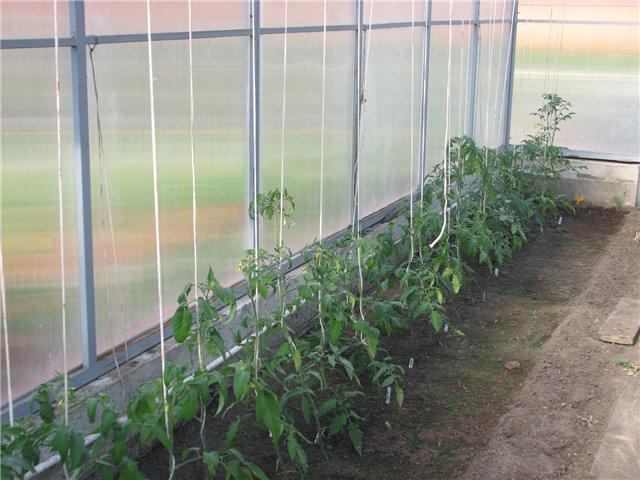
Some gardeners don't install a heating system in their greenhouses, causing the temperature inside to drop to 2-5 degrees Celsius. Tomato seeds are best sown at temperatures between 10-12 degrees Celsius, so they aren't planted until May. When the seedlings are 3-4 weeks old, they are transplanted into the garden beds.
In a room with heating
In greenhouses equipped with heating, it is easier to maintain the temperature, and therefore tomato seeds can be planted at any time of year.
Sowing and growing seedlings
Experienced vegetable growers advise growing seedlings in a greenhouse before planting tomatoes in the beds.
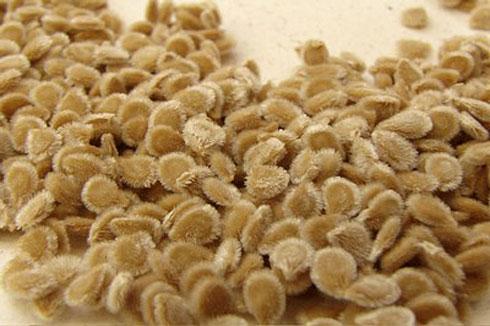
Sowing seeds for growing tomato seedlings is carried out in several stages:
- Choosing a container. First, select the containers in which the seedlings will be grown. Small plastic cups, wooden boxes, or cassettes can be used. However, peat pots are best, as the seeds germinate faster in them.
- Soil preparation. When preparing the soil mixture, use fertile soil with a low acidity level. To improve soil fertility, organic fertilizers are added. The soil is mixed with leaf mold, wood ash, peat, and eggshells. A small amount of river sand is also added to loosen the soil.
- Planting. Before planting, the container is filled with potting soil, then furrows are made in the soil into which the seeds are planted. The seeds are then covered with soil and watered.
The seedlings need good lighting, and therefore, after the first shoots appear, the pots are transferred to a lighted windowsill. If the seeds were planted at the end of winter, you will have to install fluorescent lamps near the pots.
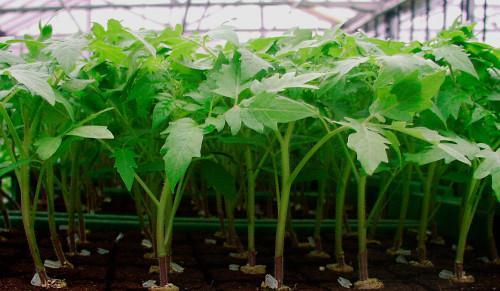
Seedlings need to be grown in moist soil and therefore need to be watered regularly. Avoid using water that's too cold; it's best to warm it to room temperature beforehand.
Technology for planting tomatoes in a polycarbonate greenhouse
When the sprouts develop their first true leaves, the seedlings are transplanted into the garden beds. However, before doing so, it's important to understand the specifics of tomato planting.
Preparing the premises
Before planting seedlings, prepare the greenhouse. Experts recommend disinfecting the greenhouse to eliminate all pathogens.
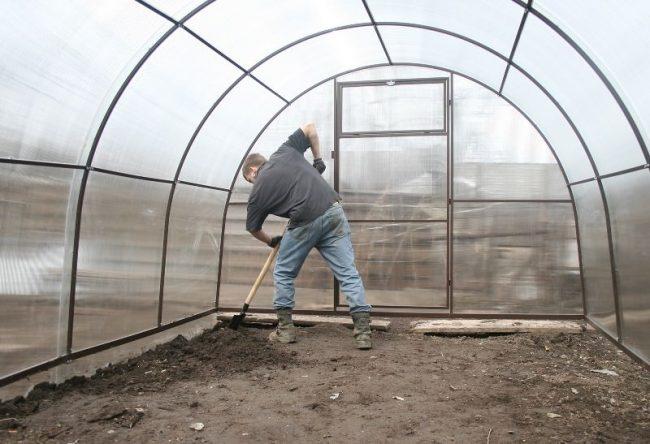
There are two methods of greenhouse treatment:
- Sulfur smoke checkers. This is the most popular and effective disinfection method. Treatment with sulfur smoke will help eliminate all bacteria and fungi. They also remove mold from greenhouses, which can develop due to high humidity.
- Lime. To prepare a lime solution, add half a kilogram of copper sulfate and four kilograms of lime to a ten-liter container of water. Thoroughly spray the walls inside the greenhouse with the prepared solution.
Preparing the soil for planting
Greenhouse soil requires careful maintenance, as it quickly loses its nutrients. Vegetable growers recommend removing 20-30 centimeters of the topsoil annually and replacing it with a new soil mixture consisting of peat, humus, sand, and turf.
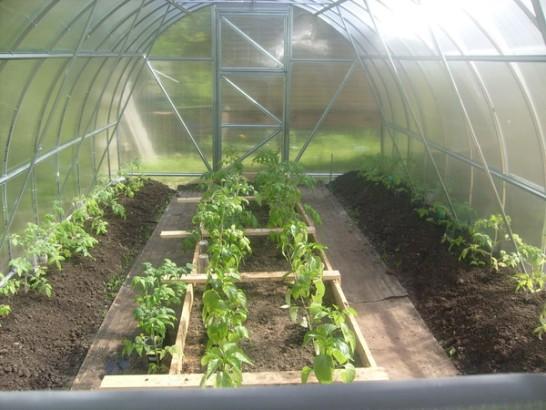
For additional protection against insects, the entire soil is treated with special fungicidal preparations.
Forming beds for planting
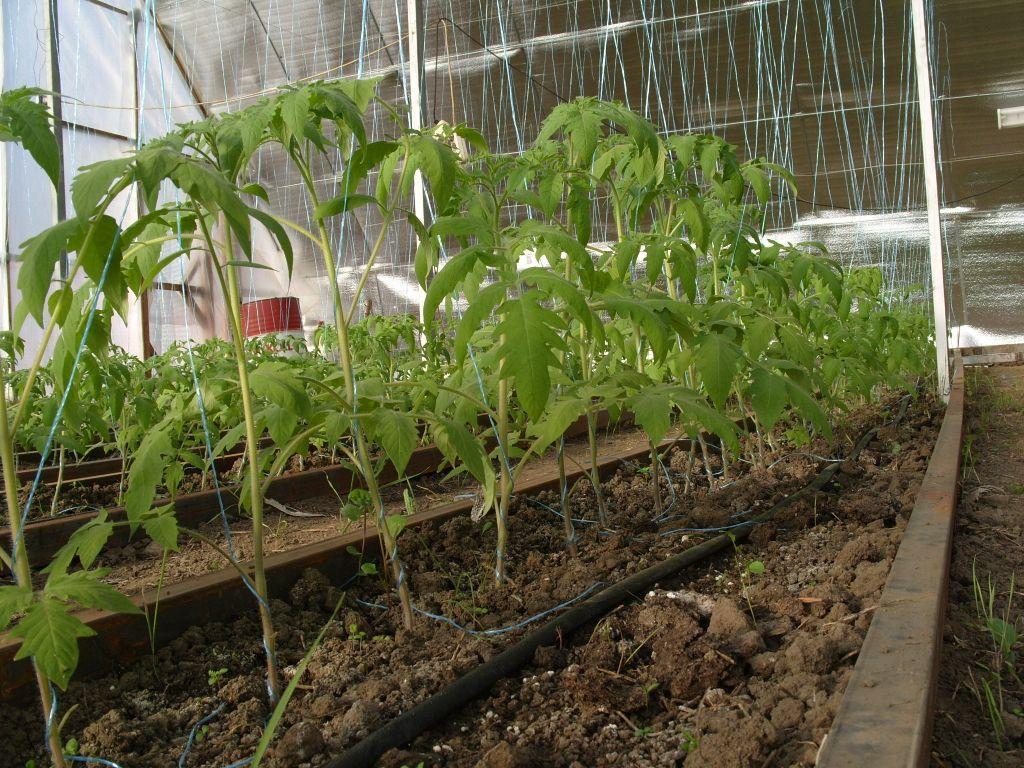
The yield of planted tomatoes depends largely on the quality of the beds. These should be created a week before planting the seedlings. First, mark out the area allocated for planting and determine the size of the beds. Each bed should be about a meter wide. Space them at least 60-70 centimeters apart to prevent the plants from shading each other.
Transplanting shoots into a greenhouse
The process of transplanting grown seedlings consists of three stages.
Preparing seedlings for planting
It's no secret that young seedlings are fragile and therefore need to be prepared for transplanting. To do this, stop watering completely 7-10 days before transplanting. Due to a lack of moisture, the seedlings will lose their elasticity and will be less likely to break.
Picking seedlings
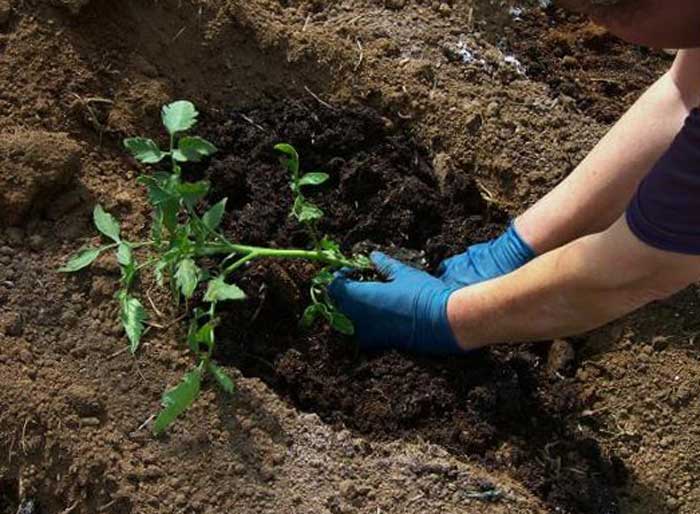
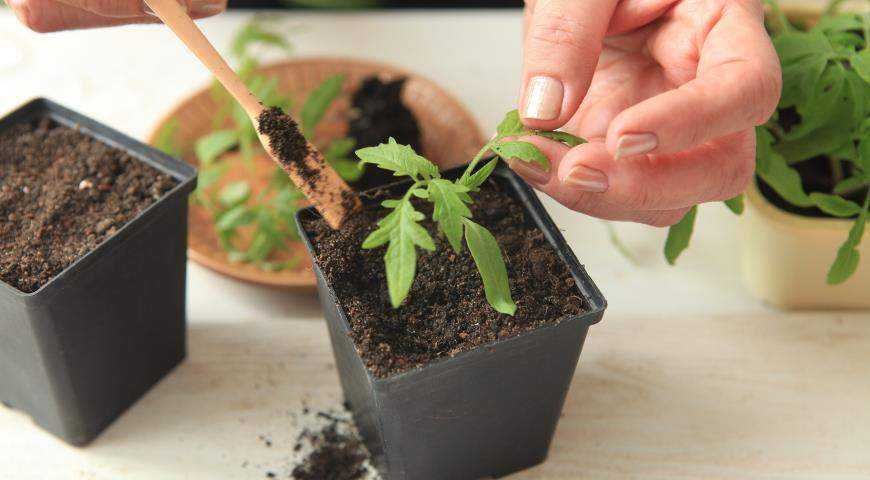
To transplant tomatoes, you need to familiarize yourself with the proper techniques for transplanting tomatoes. Proper transplanting begins with thoroughly moistening the soil in the seedling pots. Next, make a small indentation near the stem with your finger, and then carefully remove the seedling from the soil.
At what distance should seedlings be planted?
A planting pattern will help you properly space your seedlings in the garden bed. Plant the seedlings so that they are spaced 50-70 centimeters apart. If they are placed too close together, the tomato plants will grow poorly.
How to care for seedlings
People who planted tomatoes in a greenhouse, should know how to care for planted vegetables.
Watering
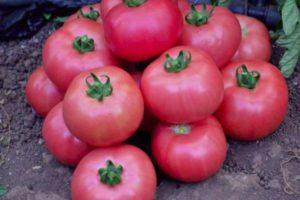
The soil should be kept from drying out and should be moistened 3-4 times a week. Particular attention should be paid to watering during the formation and ripening of the fruit. During this period, the seedlings are watered once a day.
 After moistening the soil, the beds must be loosened with a hoe to get rid of the formed crust.
Top dressing
Fertilize tomatoes 3-4 times per season. Some vegetable growers recommend adding fertilizer to the soil every 15 days. It's best to use fertilizers with a low nitrogen content, as this component negatively impacts yield. To improve fruiting, add a mixture of potassium, superphosphate, and poultry manure to the soil.
Tying up tomatoes
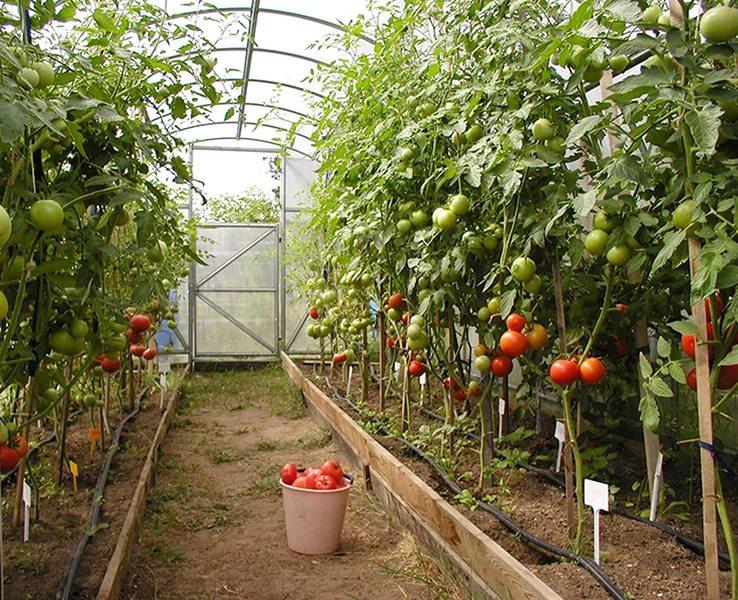
When growing tall tomato varieties, you'll need to tie them to supports. The first staking is done when the plants reach 40-50 centimeters. You can use regular wooden planks or metal rods for support.
Formation
Growing tomatoes without shaping the bushes is impossible, so it's important to understand how to do it properly. When shaping tomato bushes, a single stem is left on the plant, which will support the lateral shoots bearing the fruit. Therefore, a week after the first shoots appear, remove the excess stems from the seedling.
Pinching out stepsons
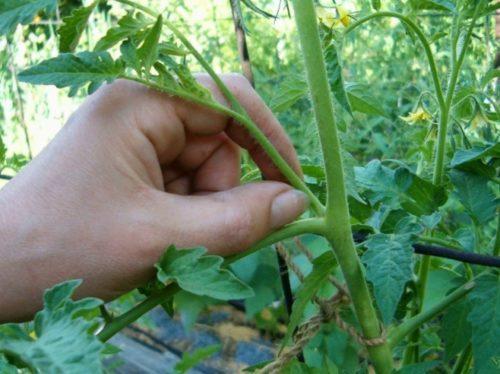
Experts recommend removing side shoots from tomatoes throughout the growing season. This will increase yield and produce larger fruits. When removing side shoots, use pruning shears or garden shears. Breaking off the stems by hand is contraindicated, as it can damage the plant.
Protection from diseases and pests
To protect seedlings from diseases, you should follow these recommendations:
- periodically replace the top layer of soil;
- disinfect the greenhouse before planting vegetables;
- After harvesting, clean the greenhouse from plant debris;
- When the first symptoms of the disease appear, get rid of the infected bush.
Do tomatoes need to be hilled?
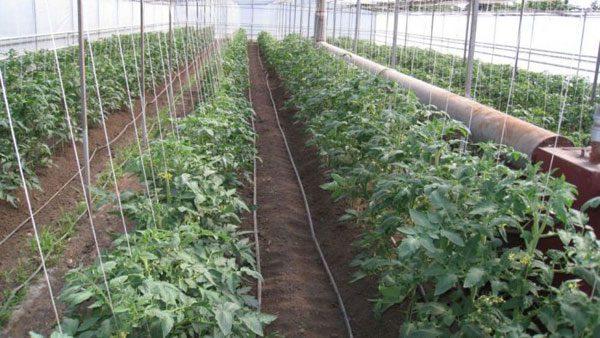
Some people believe that hilling tomatoes in greenhouses is unnecessary, but this is not true. Hilling should be done 2-3 times a week to improve air and moisture penetration to the root system.
Secrets of growing tomatoes in a polycarbonate greenhouse
There are several secrets to growing tomato bushes in a greenhouse:
- To ensure that tomatoes bear fruit better and ripen faster in greenhouses, they are planted from the north to the south side.
- It is prohibited to grow tomatoes in the same greenhouse with cucumbers, as they have different temperature conditions.
- In one corner of the greenhouse, you need to place a bucket of mullein, which releases vapors that destroy dangerous pathogens.
Conclusion
Not all gardeners have the opportunity to plant tomatoes outdoors, so they have to transplant them into greenhouses. To reap a bountiful harvest of greenhouse-grown vegetables, you'll need to understand the key nuances of tomato planting and care in advance.
Related posts:
 The best eggplant varieties for growing in a polycarbonate greenhouse: planting and care
 Rules for growing tomatoes in open ground, choosing a variety, planting and care
 How to prune grapes step by step for beginners
 Description and characteristics of the best seeds of pea varieties and types
 The benefits and contraindications of lentils for the human body
 How to Grow and Care for Melons in a Polycarbonate Greenhouse
 What fertilizers and when to use for feeding tomatoes in a greenhouse
 How to treat grapes for mildew, the best control measures and treatment rules