
- Advantages and disadvantages of growing tomatoes in a greenhouse
- Deciding on a variety for greenhouses
- Step-by-step technology for planting tomatoes
- Sowing seeds
- Germination of seedlings
- Transplanting into a greenhouse
- When to transplant
- Preparing the ground
- We apply fertilizers
- Tomato planting scheme
- We plant seedlings in the beds
- Caring for tomatoes in a greenhouse
- Pinching out tomato bushes
- Regularity of irrigation
- How and what to feed seedlings and mature bushes with
- Garter and shaping the bush
- Pest and disease control
- The nuances of caring for tomatoes
- In the winter greenhouse
- In an unheated greenhouse
- How to achieve a good harvest in greenhouse conditions
- Harvesting tomatoes
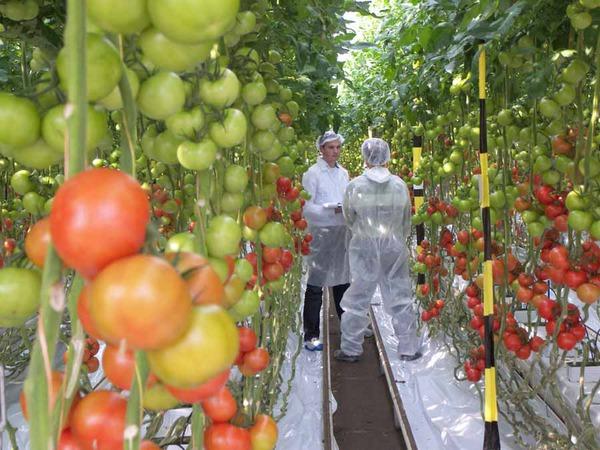
Growing a variety of tomato varieties in a greenhouse allows for a higher yield. Tomatoes are heat-loving crops, and in a greenhouse, enclosed environment, they have time to fully ripen before frost sets in. In a heated space, tomatoes begin to bear fruit as early as spring. These crops require ample daylight, so it's best to locate the greenhouse away from tall buildings and trees.
Advantages and disadvantages of growing tomatoes in a greenhouse
Beginning gardeners are often interested in the question: where is it better to grow vegetables—in a garden bed or in a greenhouse? The method for growing vegetables depends on the climate and the variety chosen. In greenhouses, all plants are protected from adverse weather conditions. Tomatoes planted in enclosed structures begin to bear fruit earlier, produce a larger harvest, and can grow in the garden until the first frost. In a heated greenhouse, tomatoes ripen even in early spring.
However, greenhouse cultivation of vegetables has several drawbacks. The structure itself is expensive. You'll have to water the crops yourself, as well as pollinate the flower stalks. Furthermore, the greenhouse needs constant ventilation—tomatoes don't like stuffy, humid air. If the soil is constantly wet, the plant roots will rot. High temperatures reduce pollen quality, and fewer berries are produced.
Deciding on a variety for greenhouses
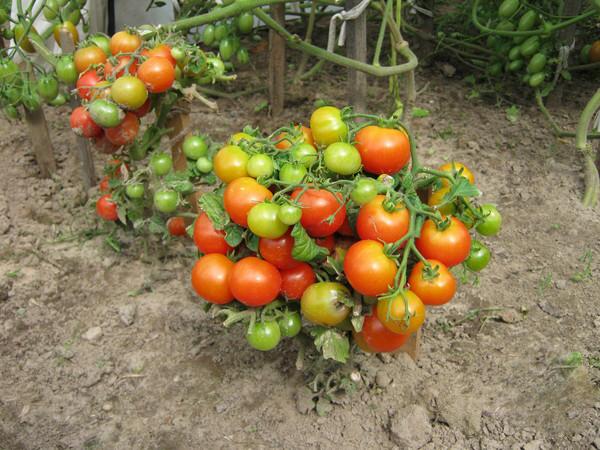
Before growing tomatoes, it's a good idea to select the right variety. In greenhouses, indeterminate, semi-determinate, and determinate tomato varieties are planted. It's recommended to choose hybrids, which are usually trained into single stems. They have a growing season of about three months. These varieties are less susceptible to disease and produce a larger yield. However, the final choice of tomato is up to the gardener.
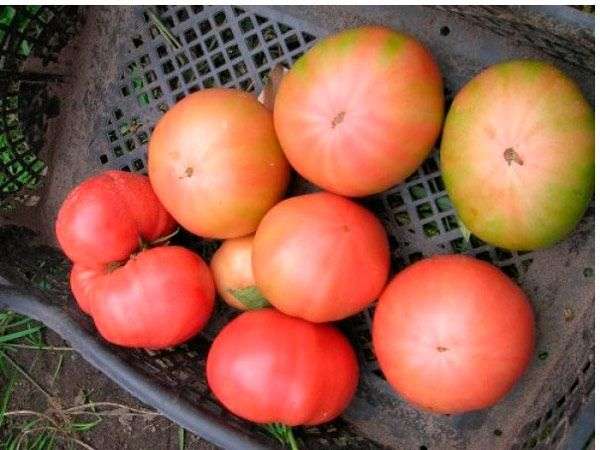
Early varieties are sown in mid-March, and early varieties in late March. Late and indeterminate varieties are sown in late February. Gardeners love to grow large tomatoes for salads in greenhouses. These varieties have fleshy flesh and produce a good, high-quality harvest. For canning, it's preferable to grow small, round or plum-shaped tomatoes.
Step-by-step technology for planting tomatoes
Growing vegetables begins with sowing the seeds in a specially prepared soil mixture. This is the most important agricultural step. Before transplanting the plants to the garden bed, the seedlings are kept in a warm room for about two months. The health and development of the seedlings depend on properly prepared soil. The soil mixture should consist of garden soil, leaf mold, sod, peat, sand, and wood ash.
The soil must be fertilized with organic matter and minerals (nitrogen, potassium, phosphorus). For two buckets of potting soil, take 2 kilograms of rotted compost and 25 grams of various mineral fertilizers, dissolved in ten liters of water. You can also use ready-made potting soil. This type of soil does not require any additional fertilizer.
Sowing seeds
A week before sowing, place small stones in wooden or plastic boxes, then add the soil mixture, and water it with a fertilizer solution. Next, prepare the seeds. If the purchased seeds are brightly colored, they don't need to be treated with anything. These seeds are ready for planting.
Untreated seeds are placed in a Fitosporin solution for twenty minutes. After this, it's recommended to dry them and soak them in the growth-stimulating solution for another 30 minutes. Then, make shallow furrows in the soil, water them with warm water, and sow the seeds. It's recommended to cover the tomato boxes with plastic wrap or glass and place them in a room with a temperature of 22 degrees Celsius.
Germination of seedlings
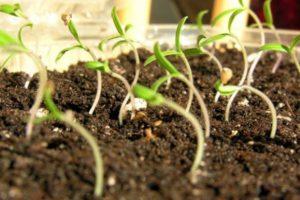
Plants need to be watered once a week and kept moist. Newly emerged seedlings should receive adequate sunlight. Growing tomatoes require 14 hours of daylight. During the dark hours, the seedlings are provided with additional lighting.
When two true leaves appear on the stem, it's best to transplant the plant. Carefully, using a toothpick, remove the seedlings, along with the root ball, from one container and transplant them into another.
For the first 20 days, the stems grow slowly. Then, their growth accelerates. Care must be taken to prevent the seedlings from becoming too tall. To do this, gradually lower the temperature in the room where they are kept, initially from 22 degrees to 18 degrees, and then to 15 degrees. Water the seedlings at the roots once a week. It's advisable to turn the containers daily so that the light is directed toward them, to ensure they grow straight.
Transplanting into a greenhouse
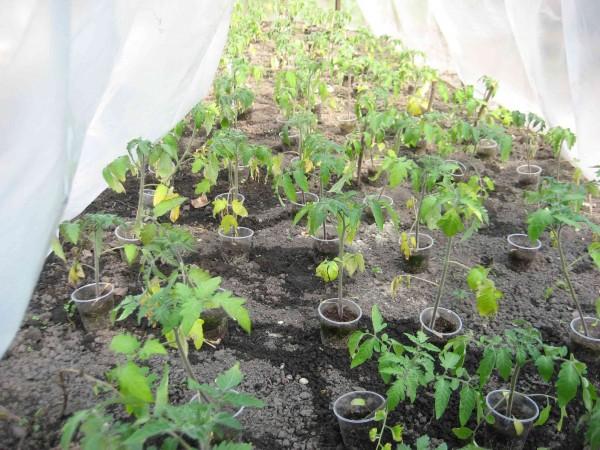
40-50 days after the first shoots appear, the seedlings are transferred to a greenhouse. Tomatoes should not be grown in the same soil forever. The soil is fertilized, new soil is brought in, or vegetable crops in the greenhouse are rotated.
When to transplant
Seedlings are transferred to a plastic or polycarbonate greenhouse in the first half of May, when the air temperature rises to 10-15 degrees Celsius, night frosts have passed, and the soil warms to 10 degrees Celsius. Before transplanting, the grown plants are gradually acclimated to the new conditions. The seedling trays are brought into the greenhouse for several hours. The hardening-off time is increased with each subsequent day.
Preparing the ground
It's recommended to prepare the soil for future seedlings in advance. In the greenhouse, form beds lengthwise, not crosswise. The width of the strip is about one meter, the height 30 centimeters. There should be a 50-centimeter gap between the beds. The soil is dug, loosened, and leveled.
For planting seedlings, use ordinary garden soil mixed with leaf mold, turf soil, peat, and sand. All these components are used in equal proportions. The soil in which the vegetables will grow should be non-acidic. It's a good idea to add a little dolomite flour or regular wood ash (200 grams per square meter).
We apply fertilizers
A few days before transplanting tomatoes, it's advisable to fertilize the soil with organic and mineral matter. Well-rotted manure or compost is recommended (half a bucket per square meter). Mineral fertilizers include ammonium nitrate, superphosphate, and potassium sulfate. Dissolve 20 grams of each fertilizer in ten liters of water and water one square meter of the plot. Potassium magnesium sulfate or sodium nitrate can also be used.
When transplanting seedlings, it is recommended to pour one liter of a pinkish solution of potassium permanganate into each hole. For disease prevention, it is advisable to use the Zaslon preparation. Pour 0.5 liters of this solution into each hole.
Tomato planting scheme
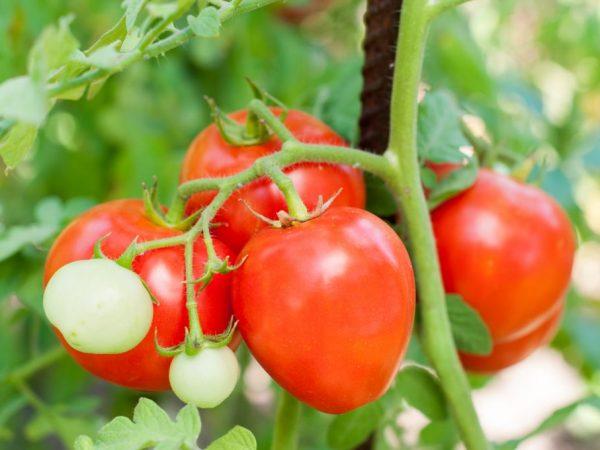
In a greenhouse, it's best to use space sparingly and plant the optimal number of vegetables. Tall vegetables are planted in the center, while short varieties are planted along the edges. tomatoes and early ripening vegetables - in a checkerboard pattern.
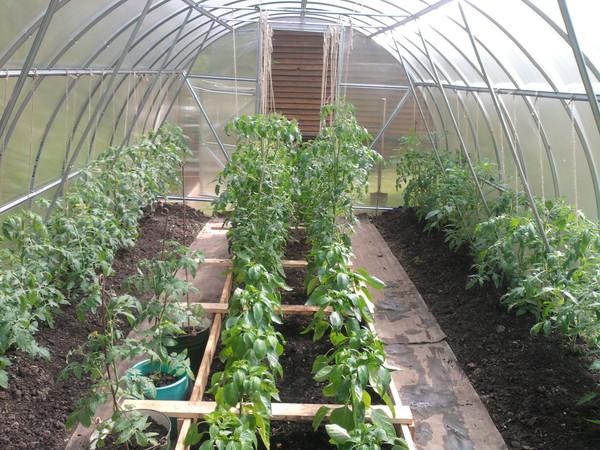
If the greenhouse is intended to grow only a specific variety of tomatoes, the planting pattern is slightly different. Modern planting methods include planting short, early-ripening and medium-sized varieties in two rows, either staggered or opposite each other. The distance between adjacent rows is not too great—just 0.5 meters—and between tomatoes, 0.4 meters.
It's not advisable to plant tomatoes too densely. Semi-determinate varieties are planted 45 centimeters apart. Tall tomatoes are also planted in a staggered pattern in two rows. The distance between adjacent varieties is 65 centimeters.
We plant seedlings in the beds
Three days before final transfer to the greenhouse, it's advisable to remove the bottom two leaves from each plant. This procedure will improve the development of the first flower cluster.
Before transplanting, the seedlings should grow to 30 centimeters. They are planted vertically in holes, covering only the roots with soil.
Before planting, it is recommended to water the soil with warm water and disinfect it with a pinkish solution of potassium permanganate.
Caring for tomatoes in a greenhouse
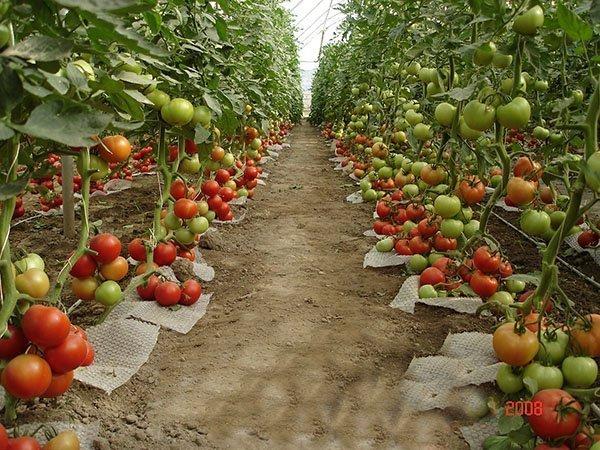
After transplanting, tomatoes require regular care—watering, fertilizing, staking, and pinching out side shoots. Greenhouse crops are difficult to grow, as they require artificial pollination. To do this, gently shake off the flower clusters during the day on a sunny day. Then, lightly mist the plants with warm water.
Pinching out tomato bushes
Lateral branches on the stem are called side shoots. It's best to remove them, otherwise the plant will become too crowded. Nutrients will be lost to the extra branches and leaves, and the fruit will grow small.
Side shoots appear in the leaf axils. They are removed as they appear. However, some varieties do not require side shoots. Variety information is usually provided on the paper bags. Standard tomatoes do not require stem shaping.
Regularity of irrigation
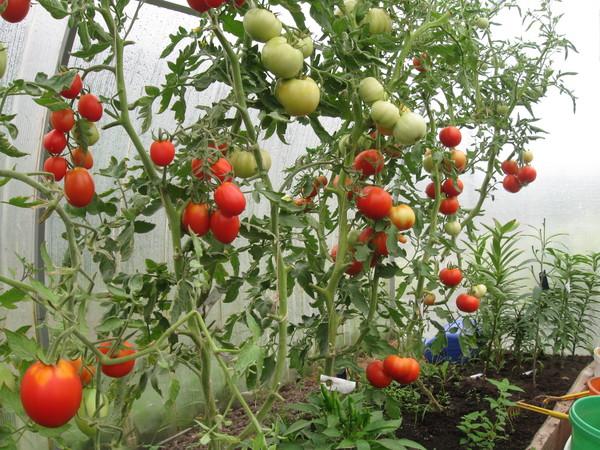
It's best to water tomatoes early in the morning, once or twice a week. During flowering and fruiting, watering can be heavy—2-3 liters per plant. Then, pour no more than one liter of water under the roots of each crop. Water should be warm, settled, and preferably rainwater.
How and what to feed seedlings and mature bushes with
During the development process, planted seedlings need to be fertilized three times. This can increase crop yields. The first feeding is done 14 days after transplanting the seedlings into the greenhouse. Use 30 grams each of nitrophoska, superphosphate, and potassium sulfate per ten liters of water. Pour one liter of the solution under each stem.
The second feeding is not done immediately, but two weeks after the first. Dissolve 30 grams of potassium sulfate and the same amount of "Fertility" fertilizer in ten liters of water. During the period of fruit formation and ripening, plants require more potassium and phosphorus.
After two weeks, apply the final, third feeding. The vegetables are watered with a solution of superphosphate and potassium sulfate. Take 25 grams of each fertilizer and dissolve them in ten liters of water. Then, pour a liter of the mixture under each stem, being careful not to touch the leaves.
Garter and shaping the bush
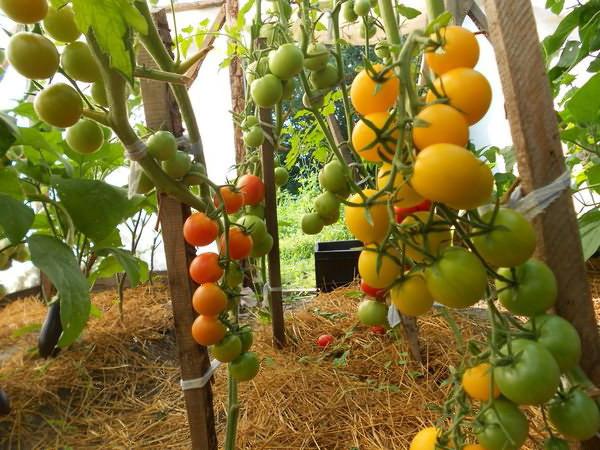
Tomatoes are usually trained into a single stem, or less commonly, into two. Up to 10 flower clusters are left on the plant. Remove excess shoots early in the morning. At this time, side shoots break off more easily. Branches growing from the leaf axils are removed before they reach 5 centimeters, otherwise the plant will experience severe stress.
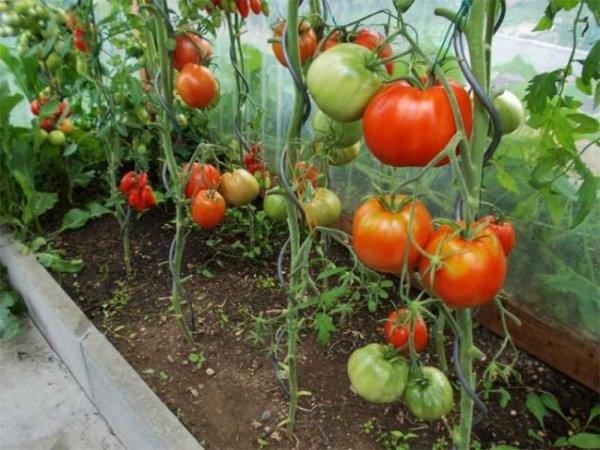
Ten to fourteen days after transplanting, tie the plants to a support. This can be made of any material. You can create a trellis-like support or hang ropes from the ceiling and tie the tomato stems and trusses to them. For shorter tomatoes, use poles driven into the ground as support.
Pest and disease control
Plants can become infected with late blight. The disease occurs when the greenhouse is too humid. First of all, it is recommended to reduce watering. To prevent the disease, treat vegetable crops with Zaslon, Barrier, or Fitosporin-M in the recommended doses. These same treatments also prevent other tomato diseases (rot and brown spot).
The first time tomatoes are sprayed is three weeks after transplanting into the greenhouse, then again 20 days later. The final treatment is with a garlic solution two weeks after the second spraying.
Spider mites may appear on the underside of tomato leaves. To combat this pest, spray the plant with a solution of Fitoverm. If whiteflies appear, use Fosbecid and Citcor. The biological product Strela helps kill caterpillars.
The nuances of caring for tomatoes
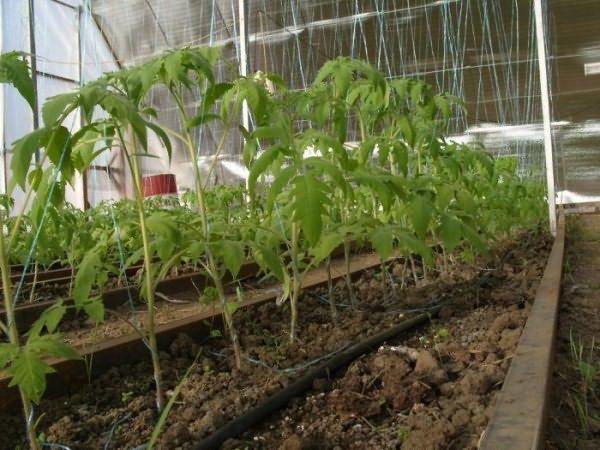
Pre-grown seedlings are planted in greenhouses. Transplanted plants require constant care. Maintaining an optimal watering regime for tomatoes is recommended. In greenhouse conditions, it's very easy to overwater the soil, causing the plants to become diseased and rot.
In the winter greenhouse
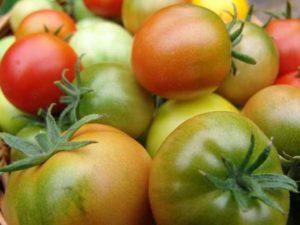
If the greenhouse is heated, you can harvest tomatoes as early as spring. However, the vegetables will need to ripen under artificial lighting and heating. To stimulate plant growth, mineral supplements are used in the usual proportions. To promote fruit set, use fertilizers such as Zavyaz, Bud, and Energen. The supplements are dissolved in water and sprayed with the solution.
In an unheated greenhouse
What secrets should gardeners know about growing vegetables in greenhouses? If growing tomatoes in plastic structures or a regular greenhouse, it's best to sow the seeds in early March. The soil can be prepared in the fall to ensure it freezes thoroughly and is free of pests and diseases. In the spring, it's a good idea to disinfect the soil with a copper sulfate solution or Bordeaux mixture. Lime can also be added to the soil.
After transplanting seedlings into the greenhouse, it is recommended to fertilize them sparingly with organic and mineral fertilizers. Avoid overdoing the nitrogen application to avoid excessive foliage growth. In summer, tomatoes can be fed with a solution made from garden weeds (nettles, dandelion leaves) soaked in water and fermented for two weeks.
How to achieve a good harvest in greenhouse conditions
Crop yields depend on the correct variety, high-quality seed, fertile soil, and regular care. It's best to purchase tomato seeds from reputable producers. Avoid buying seeds at spontaneous markets or from random people, as such seeds may be of poor quality.
There are a wide variety of tomatoes. Breeders have developed varieties specific to each region. In southern latitudes, late- and mid-season tomatoes are recommended. In northern regions, with cool and short summers, early-ripening or early-ripening tomatoes are recommended.
If the greenhouse is heated, hybrid varieties can be chosen. They adapt better to growing year-round. For higher yields, we recommend planting the following varieties: Uragan F1, Poisk F1, Semko-Sindbad F1, Podarok Fei, Pink Angel, Pink Pearl, and Auria.
A good vegetable harvest can be achieved with regular watering. Tomatoes need sufficient sunlight and nutrients. It's not recommended to plant cucumbers in the same greenhouse with tomatoes, as this will reduce yields.
It is recommended to regularly ventilate the greenhouse. In summer, the doors and windows should be fully open. To attract insects to pollinate flowers, it is advisable to plant honey plants (thyme, cornflower, and rapeseed) near the structure.
When tomatoes begin to bloom, it's recommended to spray them with boric alcohol. This will improve the flavor of the vegetables.
The harvest will increase if the soil is mulched with sawdust or dry grass. Regularly removing side stems also improves fruiting. When tomatoes begin to ripen, remove the lower leaves. It's best to trim the leaves in the morning.

Harvesting tomatoes
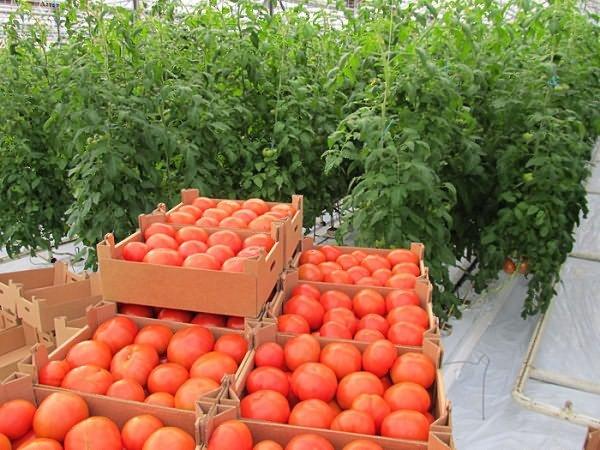
In summer, tomatoes planted in greenhouses ripen in mid-July. However, late-ripening varieties ripen only in September. During the summer, the vegetables are harvested daily to stimulate further fruiting.
Tomatoes are hand-picked, plucked from the plant and leaving the stems on (this ensures longer shelf life). Ripeness levels range from milky, blanched, or full. Tomatoes are picked when they have turned pink, yellow, brown, or red and have reached the appropriate size for the variety. The fruits should be firm, not green, and not overripe.
At the milky stage of ripeness, tomatoes are still slightly green. However, after two weeks in a warm room, they ripen. However, when grown in greenhouses, there is no need to pick the unripe fruits.
Related posts:
 What varieties of tomatoes are best to plant in a polycarbonate greenhouse?
 What fertilizers and when to use for feeding tomatoes in a greenhouse
 Description of the best varieties of black tomatoes for open ground and greenhouses
 When is the best time to plant tomato seedlings in 2025 and when to sow seeds?
 The best eggplant varieties for growing in a polycarbonate greenhouse: planting and care
 What is the best way to feed tomato seedlings to make them plump?
 Which tomato varieties are best for open ground?
 Description of the best tomato varieties for open ground and greenhouses in the Krasnodar region