By using Tatyana's fruitful gardening technology, questions about when to plant tomatoes and the best method will be a breeze. Using proven techniques helps avoid common mistakes and grow a bountiful harvest.
Advantages and disadvantages of the technology
The technology under consideration has a number of comparative advantages. These include the following:
- variability of methods for growing tomatoes;
- convenient systematization of seedlings by variety and planting period;
- saving space for growing seedlings;
- minimal costs of labor and financial resources.
A disadvantage for beginning gardeners may be the need to follow a specific sequence when planting seedlings. Caring for the seedlings can also be challenging.
The best varieties
Tomato varieties are selected taking into account the growing region, climatic conditions and personal preferences..
The best universal varieties based on yield are considered to be: Rio Grande, Snow Leopard, Asvon, Gazpacho, Astrakhan.
When to sow tomatoes
Most tomato varieties are sown for seedlings in March. Typically, sowing occurs 50-60 days before transplanting to a greenhouse or open ground. When determining sowing dates, consider the weather conditions the tomatoes will experience.
Methods of sowing and growing seeds
There are several modern methods for sowing seedlings that differ from the traditional method. For growing seeds, specialized materials and unusual containers can be used to promote intensive seedling development.
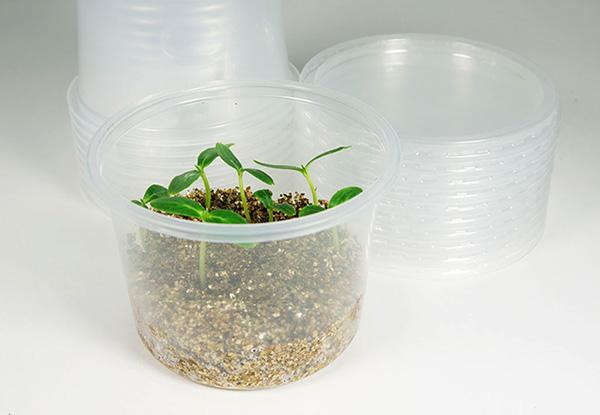
In vermiculite
Vermiculite is a free-flowing, eco-friendly material. It's used to loosen soil and is added to the soil when growing many vegetable crops. Tomato seedlings are grown in vermiculite before transplanting.
To prepare the substrate for planting, simply pour the granules into a small container, add water, and let sit for about half an hour. Tomato seeds are spread on the vermiculite surface and covered with a thin layer of soil.
In paper cigarettes
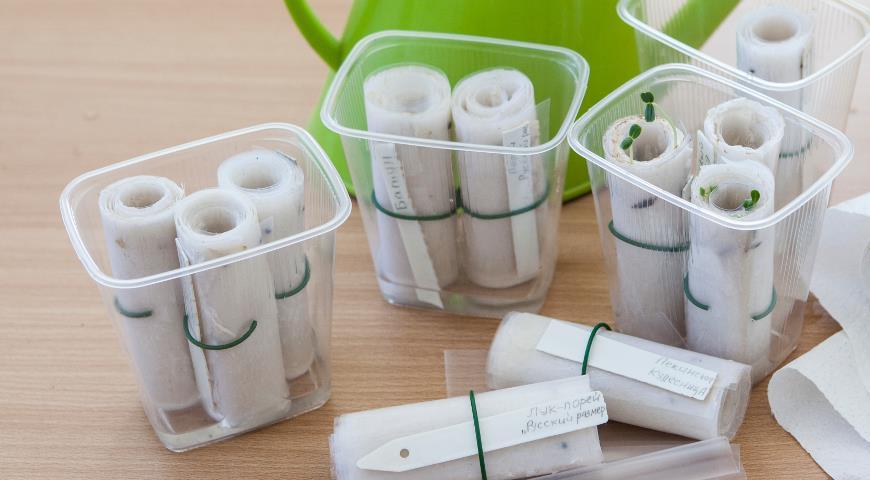
To grow tomatoes in rolling papers, you'll need a plastic bag and paper. Fold the bag in half and lay it on a table, then place three layers of paper on top—the first and third along the top edge, and the second along the bottom. This prevents the growing roots from getting caught between the layers, making it easier to transplant the seedlings.
Before planting tomatoes, the rolling paper is soaked in a solution of water and hydrogen peroxide to stimulate seed germination. About 20 seeds are placed in each rolling paper, spaced 1.5-2 cm apart. The rolled paper is kept in a plastic cup filled with 1 cm of water.
In bags
Growing seedlings in bags is a practical and convenient option. For an early harvest, tomatoes are sown in sturdy 10-liter bags. The substrate is prepared from a mixture of soil, vermicompost, and coconut fiber. The bags are folded to a height of no more than 20 cm and filled with moist soil. Uncrushed eggshells are placed on the bottom to serve as both fertilizer and drainage. As the seedlings grow, more substrate is added to the bags.
Tomatoes sown in bags are characterized by a well-developed root system, resistance to diseases during transplantation, vigorous growth and flowering, and early fruiting. Both early and late varieties can be grown in bags.
How to properly care for tomatoes
Caring for tomatoes of any variety requires a complex process. Without proper and timely care, plants will not produce a consistent, large, and healthy harvest.
Picking
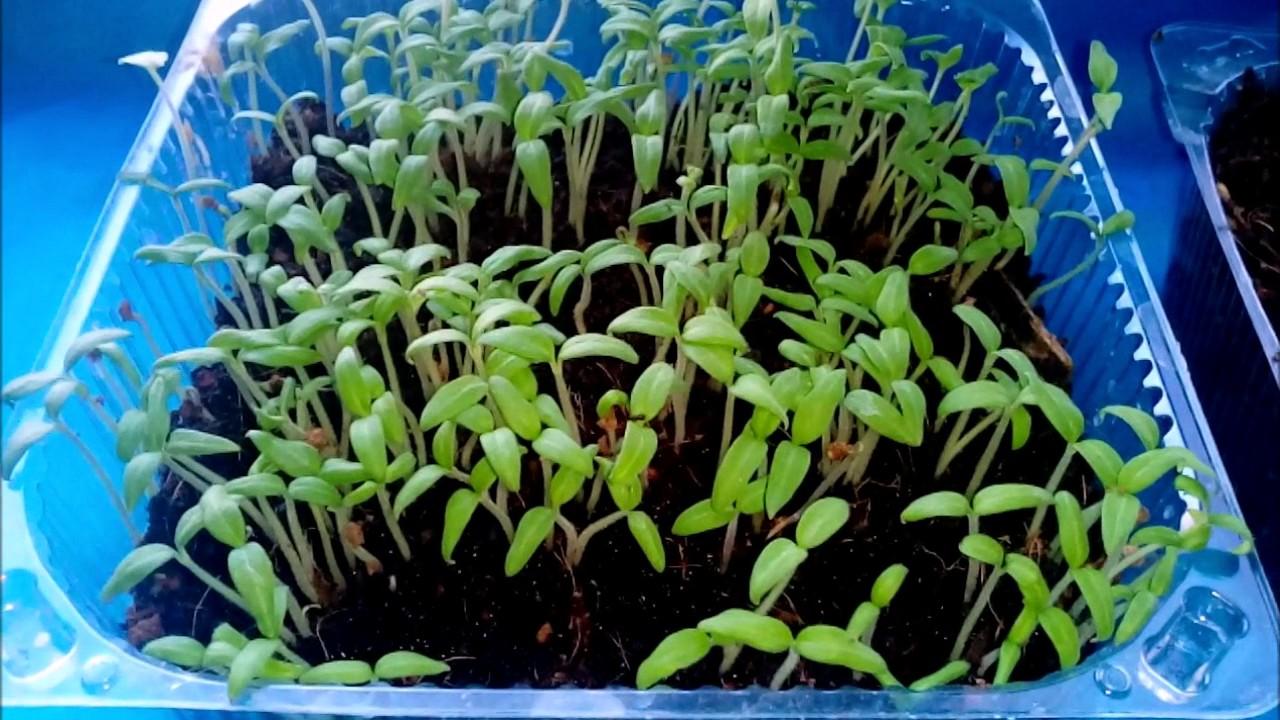
Pricking out is done when two leaves have formed. A couple of days before, the seedlings are watered generously to make them easier to remove from the soil. Pricking out is done as follows:
- prepared containers for seedlings are filled with soil;
- the plants are carefully removed from the common container, leaving a small lump of soil on the roots;
- make a hole in the pot for transplanting and place the seedling in it;
- the stems are deepened to the cotyledons;
- The soil around the seedlings is compacted and watered.

Watering and fertilizing
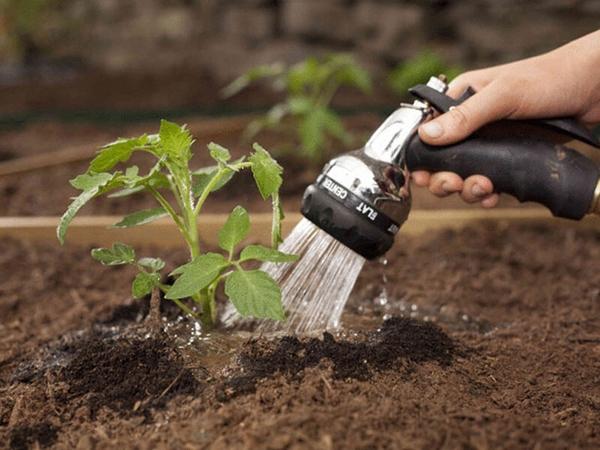
Tomatoes need watering whenever the soil dries out. Excessive moisture can cause root rot and plant death, while under-watering can cause the green parts of the plants to dry out. Water the tomatoes at the roots, being careful not to get it on the leaves. Misting the tops of the plants occasionally is acceptable.
Tomatoes are fertilized three times per season. The first application is made before planting in open ground or in the ground, the next application is made 4-5 weeks later, and the final application is made 10-12 days before the expected fruiting season.
Garter and shaping the bush
Bush shaping involves removing yellowed leaves, old branches, and damaged plant parts that continue to absorb nutrients. Furthermore, pruning allows light to reach the fruit directly and improves air circulation.
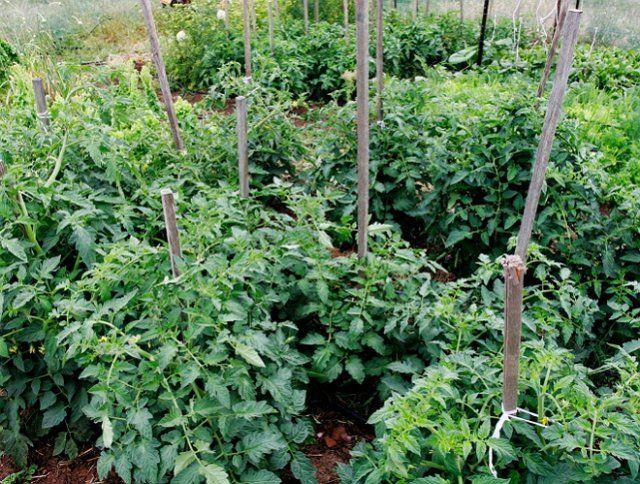
Staking plants is only necessary when growing tall tomato varieties. Supporting the plants ensures their stability during strong winds and other external influences. To secure them, simply drive wooden stakes into the ground around the plant and tie the stems to them with thin threads.
Reviews from summer residents and gardeners
Nikolai: "I tried sowing seedlings in bags for the first time. It's a very convenient method; the seedlings grew on time. There were no problems transplanting."
Anna: "This is my second season growing seedlings in vermiculite. The seedlings are growing large, with well-formed roots."
Related posts:
 Description of the best varieties of black tomatoes for open ground and greenhouses
 The best eggplant varieties for growing in a polycarbonate greenhouse: planting and care
 What are standard tomatoes, description of varieties and cultivation
 Description of the best tomato varieties for open ground in the central zone
 What varieties of tomatoes are best to plant in a polycarbonate greenhouse?
 The best tomato varieties for growing in the Leningrad region for greenhouses and open ground
 Making finger-licking good eggplant caviar with peppers and tomatoes
 How to choose the best tomato varieties for growing in Belarus