
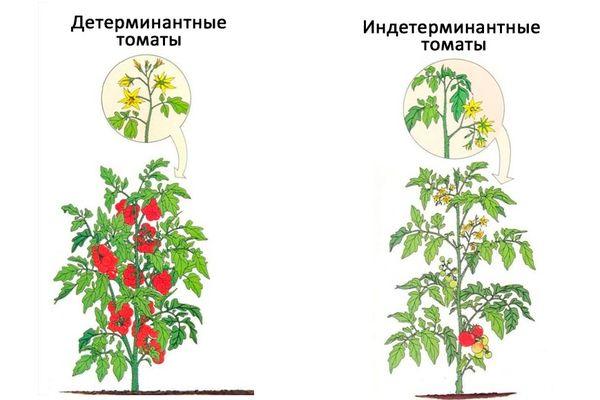
When reading the labels on seed packets, gardeners often wonder how superdeterminate tomatoes differ from other varieties, what it means, and how to grow them. With experience comes the understanding common to most amateur gardeners: determinate tomatoes are short-growing varieties, while indeterminate tomatoes are tall-growing varieties. But there's more to the difference than that.
Which tomatoes are considered determinate?
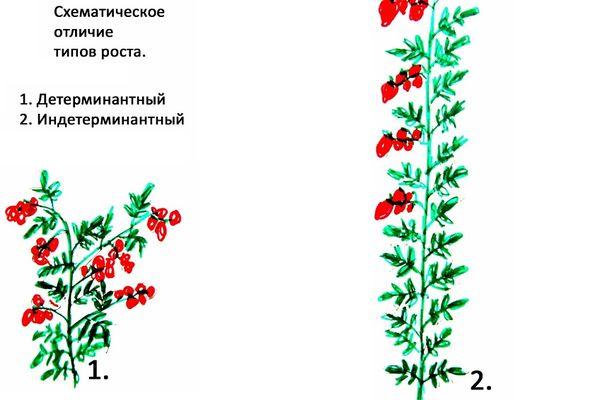
This large group of varieties includes specially bred plants with limited growth. These bushes are truly low-growing and compact, rarely exceeding 70 cm in height. Among the determinate varieties, there are superdeterminate varieties, which possess these qualities to an even greater degree: such bushes can reach a height of 30-40 cm.
But the compactness of the bush isn't the only thing that distinguishes these plants from tall (indeterminate) tomatoes. The main difference lies not in the size of the bush, but in the timing of harvest. In all determinate and superdeterminate tomato varieties, the first flower cluster forms above the 5th to 6th true leaf. This occurs 50 to 60 days after germination.
At this age, seedlings are usually transplanted to their permanent location—open ground or a greenhouse. Tomatoes take root within 7-10 days after transplanting and soon begin to bloom. Superdeterminate tomatoes ripen as early as 80-95 days after germination. They are commonly referred to as ultra-early ripening.
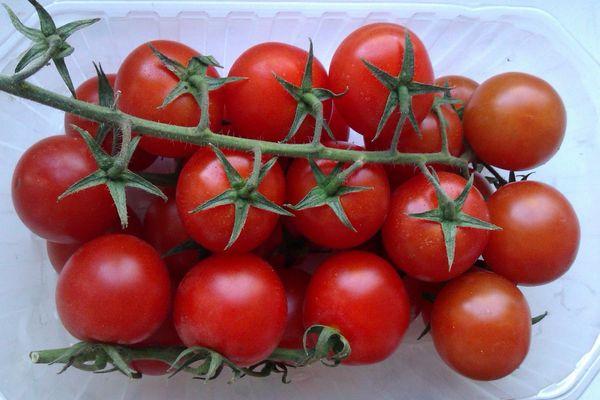
Determinate tomato varieties develop slightly more slowly and produce their first harvest at 100–110 days. This is why they are called early-ripening.
Another characteristic of determinate tomatoes is the limited number of fruit clusters they produce. Depending on the variety, each stem produces 3-5 fruit clusters, after which growth ceases. Superdeterminate varieties also have side shoots (suckers) that exhibit the same characteristic.
Low-growing bushes don't even require much attention from the gardener: they don't need shaping or pinching. However, purely determinate varieties do require shaping.
How are dwarf tomatoes formed?
If you break off all the side shoots on a bush, the harvest will be generous, but will end quickly.
Take a look Also
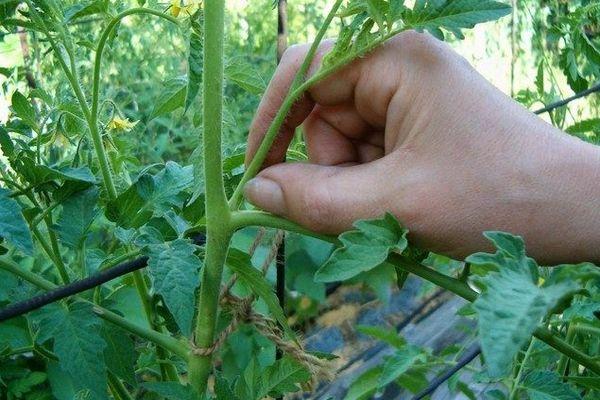
To extend the fruiting period and increase the yield, a bush formation method designed specifically for determinate varieties is used:
- leave a stepson above the lowest leaf;
- wait until 2-4 brushes form on it and pinch off the top;
- the next stepson is left above the first flower brush of the main stem, and is treated in the same way as the previous one;
- In some cases (when growing in a greenhouse), you can leave shoots above the 3rd flower brush in a similar manner.
This method allows you to harvest from the side shoots after the main stem has stopped growing. Some varieties (Gruntovoy Gribovsky, Siberian Early and others) are capable of forming side shoots that grow back from the base of the main stem after it dies. Such tomatoes can produce a second harvest 2-3 weeks after the main harvest.
What determinate varieties can be grown in Russia?
Many varieties of tomato for open ground grow quite well in the short summers of central Russia. Thanks to their early fruiting, they ripen before the season of fungal diseases (late blight or macrosporiosis). These are most often domestic varieties, but recently, imported tomatoes have also appeared on the market.
Modern compact varieties are characterized by relatively large fruits: some tomatoes weigh up to 100-150 grams, sometimes even more. Pickling tomatoes have uniformly sized and weighted ovaries, weighing 50-70 grams, making them ideal for canning. Balcony tomatoes include bushes with small root systems that can be grown in containers. All these varieties are suitable for greenhouses or hothouses.
The following tomato varieties can be successfully grown in greenhouses and open ground in Russia:
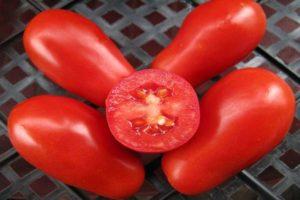
- The superdeterminate Benito F1 is distinguished by its very early fruiting period: it begins producing its first crop at 70 days. Fruits weigh up to 140 g, and are elongated in shape with dense, sweet flesh.
- Don Juan is an early-ripening determinate tomato. It boasts an unusual variegated coloring (red with yellowish stripes). Its plum-shaped form with a pointed tip makes it ideal for canning. The fruits are medium-sized (up to 80 g), with firm skin and firm flesh.
- The Sanka variety has been popular with gardeners for many years. It's ultra-early maturing and superdeterminate. The bushes are very compact, up to 35 cm tall, and are suitable for greenhouses and balconies. Ripening is uniform, with medium-sized fruits (up to 100 g).
- Tomato varieties for greenhouses Sugar plum raspberry These tomatoes are classified as cocktail or cherry tomatoes. They weigh only 25 grams, but their clusters branch extensively, forming true clusters. When trained into a single stem, these tomatoes tolerate close planting well.
- The Superstar variety is a large-fruited variety (up to 250 g), but it is also recommended to be grown indoors only. In this case, the first harvest can be obtained as early as the end of June.
- Among balcony and indoor tomato varieties, there are both determinate and superdeterminate varieties. These are typically plants that rarely reach a height of 50 cm. They tolerate a small amount of soil well and require little watering. Fruits weigh barely 20-25 g, but they are very abundant and are used both for food and for ornamental purposes. Balcony varieties include Garden Pearl, Pinocchio, Minibell, Room Surprise, and others.

The number of superdeterminate and determinate tomatoes is enormous, and new ones are constantly being developed. Breeders focus not only on compact bushes and large-fruited plants but also on flavor and ornamental appeal. Many varieties feature yellow, orange, dark, or variegated colors.
Related posts:
 What is the best way to feed tomato seedlings to make them plump?
 Description of the best tomato varieties for open ground and greenhouses in the Krasnodar region
 The best and most productive tomato varieties for greenhouse cultivation in the Urals, with descriptions
 What varieties of tomatoes are best to plant in a polycarbonate greenhouse?
 Description of the best varieties of black tomatoes for open ground and greenhouses
 Description and characteristics of the best indeterminate tomato varieties for greenhouses
 The best tomato varieties for growing in the Leningrad region for greenhouses and open ground
 Description and characteristics of the best tomato varieties for outdoor cultivation in the Urals