
Experienced gardeners set up their own drip irrigation systems using plastic bottles for tomatoes, as water is a vital necessity in the garden and vegetable patch.
Irrigation methods depend on the size of the plot and the number of vegetables grown. Drip irrigation using flexible containers is the most economical. It requires low water pressure and is used for growing tomatoes in a greenhouse.
Container for creating an irrigation system
To make your own drip irrigation for tomatoes using plastic bottles, you'll need to prepare the following tools and materials:
- flasks of various capacities;
- foam rubber;
- an awl or a nail;
- scissors;
- supports for hanging bottles;
- flexible cocktail straws;
- toothpicks;
- scotch;
- sealant;
- burlap.
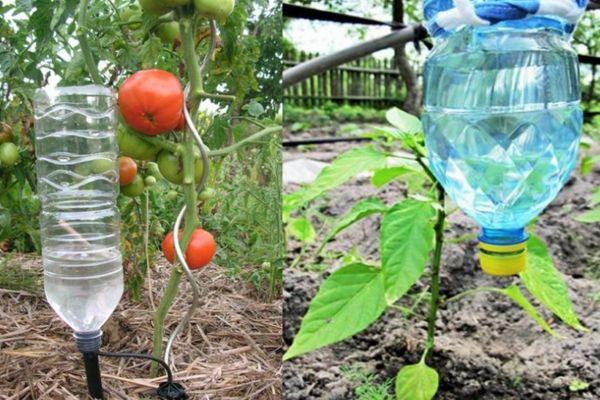 Watering tomatoes in a greenhouse Using a homemade device requires following certain rules. 2-liter containers are the most convenient. For watering a large area, a 5-liter container is needed.
To prevent water loss, make several holes in the bottle, 1-1.5 mm in diameter. Gardeners note that during use, the bottles become clogged with soil particles, so they are wrapped in burlap.
To ensure watering plants in a small area, calculate the number of flexible containers needed. A proper ratio between the number of containers and the number of plants reduces water consumption and improves irrigation quality.
Gardeners use one watering canister per plant. The amount of water needed for tomato irrigation is calculated based on soil type, climate conditions, and watering frequency.
Moisture consumption increases in hot weather due to intense evaporation. The homemade structure is installed in the soil during seedling planting.
The bottle is buried in the soil 15-20 cm from the seedlings. Watering with a plastic container does not damage even the shortest plants and ensures soil permeability to a depth of 30-40 cm.
Take a look Also
Installing the sprayer with the cap down
Watering tomatoes begins with placing a plastic bottle with small holes near the plant's roots. The bottle is filled with settled, sun-warmed water.
Dig a hole at a distance of 15 cm, insert a flexible container so that the lid is at the bottom, and sprinkle it with a small amount of soil.
Water penetrates the soil slowly and doesn't damage the seedlings. Experienced gardeners place the jar in a small nylon bag to prevent soil from seeping through the hole in the cap.
Gardeners avoid drip irrigation if their soil is predominantly sandy, as the water quickly drains from the bottle. The flow is regulated by turning the bottle sideways.
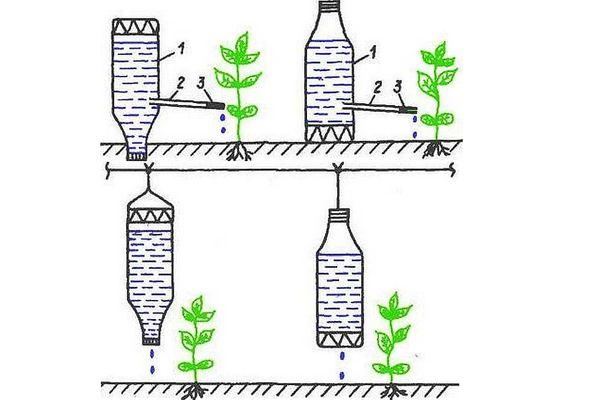
Water consumption is reduced by mulching the soil around the plants with grass or black film. The rate at which water reaches the roots of the seedlings depends on the capacity of the bottle.
Mature plants are watered once a week in several doses. Drip irrigation protects tomatoes from late blight.
The main disadvantage of this method is that it is difficult to fill the bottle with water from a hose, since the hose has a larger diameter than the neck of the bottle.
Upgrading the device
Gardeners often improve their drip irrigation system by attaching a plastic container over a canister. If significant liquid consumption occurs, the bottle can be used to restore the water level in the tank. Watering tomatoes in a greenhouse with plastic bottles is not recommended for tall plants.
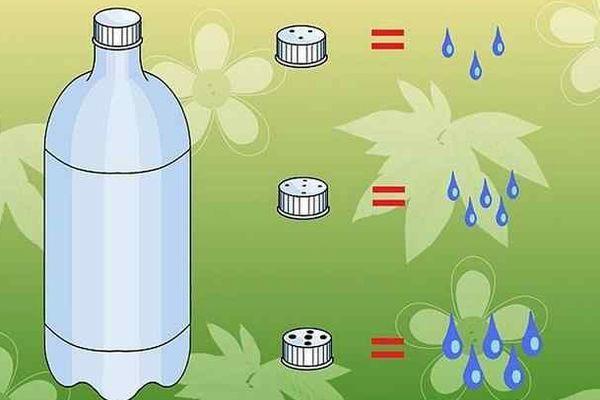
A 5-liter bottle is installed under the tomato plants in the greenhouse, fed with water from a barrel. Several holes, 1-2 mm in diameter, are drilled into the container with a nail. The plastic container is buried in the ground.
A blood transfusion needle is inserted into the lid of the bottle and secured from the inside with adhesive tape. The bottle is filled with water and the lid is screwed on tightly.
Hobby gardeners use a long plastic nozzle for their bottle irrigation system. This eliminates the need to bury water containers in the ground.
Plastic bottles are sometimes placed in the soil upside down. If the bottom of a bottle is cut off, it should be left in place and used as a lid later to prevent evaporation of the liquid.
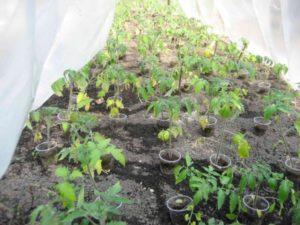
Root watering
2-liter containers are often used for watering tomatoes. Watering is done once a week, as excessive moisture can kill the seedlings. Three to four bottles of water are poured under each plant once every seven days.
It's recommended to water the plant twice a day in the morning, and repeat the same amount in the evening. On hot days, water once every 5-6 days.
In greenhouse conditions, plants absorb not only moisture but also mineral fertilizers well. With drip irrigation, the air in the greenhouse is dry, and tomatoes are not susceptible to late blight.
During periods of intensive tomato growth, watering is reduced before signs of disease appear. Subsurface drip irrigation in the greenhouse keeps the surface of the beds dry and protects tomatoes from disease.
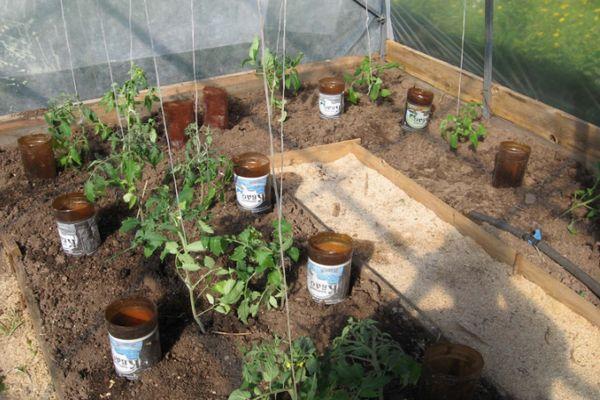
Young plants are watered as the surface dries, as the seedlings have shallow roots. In a polycarbonate greenhouse, they are watered generously during planting. During fruiting, the irrigation volume is 12 liters per square meter, 2-3 times a week.
Suspension system
To drip-irrigate tomatoes using plastic bottles, use containers attached to a support. The bottom of the bottle is removed, and several holes are punched in the cap to allow water to reach the soil.
Gardeners install a forked support on both sides of the bed. A crossbar is placed between the supports. A bottle of water is secured upside down. The soil is covered with a plastic sheet to prevent it from washing away.
Water from a flexible container falls onto the protective layer and then penetrates the soil. A suspended system made of plastic bottles helps control weeds by keeping the soil dry and killing the seeds of harmful plants.
If hanging containers over tomato seedlings, poke small holes at the top and bottom of the jar. Be careful not to let water splash on the leaves, as this could kill the seedlings.
For a suspended irrigation system, the hole diameter should not exceed 1.5 mm, otherwise the water consumption will double.
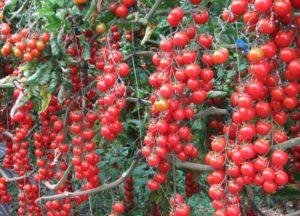
Advantages and disadvantages of the method
The drip irrigation system has proven itself to be a proven solution, as even novice gardeners can benefit from its advantages.
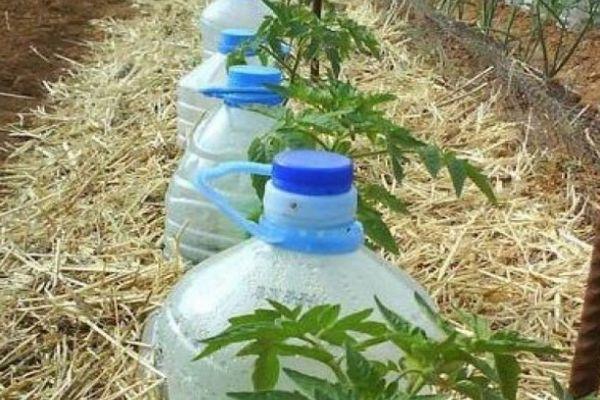
It's easy to build your own device, even without specialized knowledge. The irrigation system doesn't require a large investment. The design is reliable, reduces water consumption, and improves irrigation uniformity.
A homemade drip system is not without its drawbacks. It is not suitable for watering large areas of tomato plants.
A device made of plastic bottles is not suitable for regular and abundant watering of vegetables. It is used only for irrigating tomatoes in greenhouses.
Water applied pointwise affects root development, causing compaction and dysfunction. Using the system on loamy soils is not recommended, as the holes in the bottles become clogged with soil.
Some gardeners are concerned about the interaction of harmful substances with the soil, so they do not use plastic jars for watering tomatoes.
Using drip irrigation offers gardeners many advantages, and experience in its use allows them to obtain high tomato yields.
Related posts:
 How to make a drip irrigation system for cucumbers using plastic bottles
 How to make a drip irrigation system for tomatoes in a greenhouse yourself
 How to water cucumbers in a greenhouse and open ground, timing and water consumption rates
 The best eggplant varieties for growing in a polycarbonate greenhouse: planting and care
 Description of blight-resistant tomato varieties for open ground and greenhouses
 How often should you water cabbage in open ground, how many times, and with what kind of water?
 Types of automatic irrigation systems for greenhouses and how to make them yourself
 How to spray tomatoes with boric acid, cultivation and processing rules