
- How the Snegir potato was bred
- Advantages and disadvantages
- Characteristics and description of the variety
- Ripening time
- Productivity
- Taste and value of the root crop
- Tubers and bushes
- Scope of application
- Necessary growing conditions
- Planting a crop on a plot
- Landing times in different regions
- Planting density
- Step-by-step algorithm for carrying out planting operations
- Caring for the "Bullfinch" on the plot
- Watering
- Fertilization
- Loosening and mulching the beds
- Hilling
- Protection and treatment against insects and diseases
- Harvesting and storage
- Reviews of the variety
The Snegir potato is included in the state register, and a description of the variety, photos, and reviews are included in this article. It is widely used in northern regions due to its resistance to low temperatures and early maturation. It is grown commercially, for sale, and for personal consumption.
How the Snegir potato was bred
The Snegir potato was developed by Russian breeders and is included in the state register.
Advantages and disadvantages
The Snegiri variety has its advantages and disadvantages. The advantages include:
- early maturity;
- transportability;
- high taste qualities;
- disease resistance;
- good appearance;
- yield of the variety;
- resistance to low temperatures;
- ease of care.
Among the disadvantages, the variety is susceptible to nematode infestation.
Characteristics and description of the variety
The variety characteristics include: ripening time, yield, area of application, description of the appearance of potatoes and bushes.
Ripening time
The Snegir variety is early maturing, producing ripe fruit 55 to 60 days after planting. If planted in May, the potatoes can be harvested mid-season. In southern regions, a double harvest is possible.
Productivity
The bullfinch has a medium yield. Ten to fifteen tubers are harvested from a single bush. One hectare of land yields 300 to 400 centners of potatoes. With proper nutrition and proper growing conditions, the yield can reach 500 centners per hectare.
Taste and value of the root crop
Tasters rate potatoes as highly palatable. The tubers contain approximately 18% starch and soften when cooked. They also contain large amounts of potassium, vitamins A, and C.
Tubers and bushes
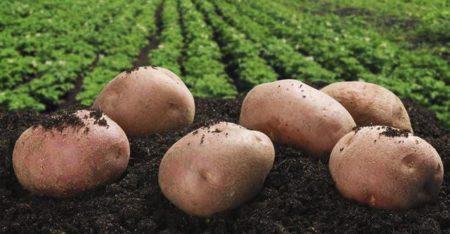
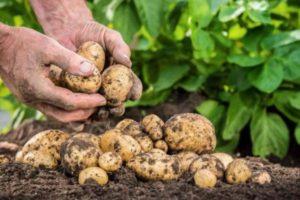
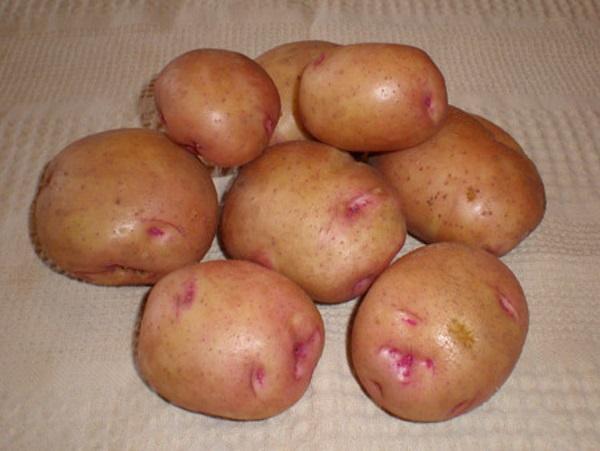
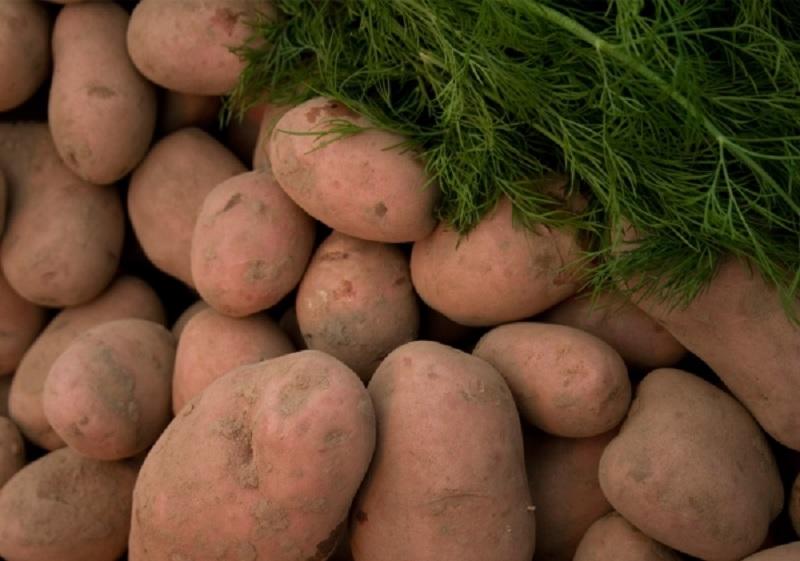
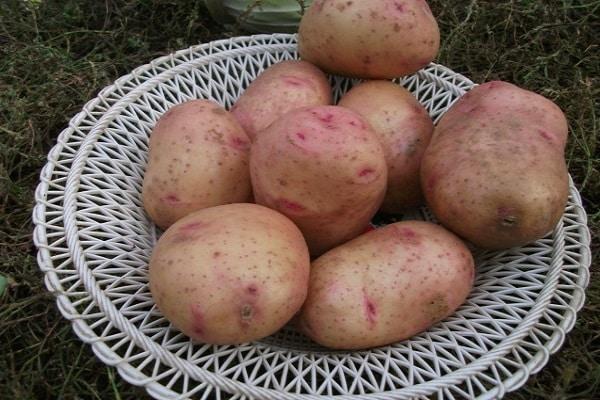
Potatoes form upright stems with spreading leaves. The leaves lack the characteristic wavy texture. During flowering, purple flowers appear. The tubers are brownish-pink in color and bear numerous shallow eyes. The roots weigh between 70 and 90 grams. The fruits are white when cut.
Take a look Also
Scope of application
The bullfinch potato is grown commercially, for sale, and for personal consumption. Due to its uniform fruit shape and size, it sells well. The crop is easy to transport and has a good shelf life.
Necessary growing conditions
To grow a decent harvest, it is necessary to create the following growing conditions:
- For planting, choose a well-lit place, protected from drafts.
- Soil preparation begins in the fall, with digging, weeding, root removal, and removal of rocks, along with the addition of organic fertilizer. In the spring, the soil is dug again and mineral fertilizers are added.
- The planting site is selected after growing cucumbers, pumpkins, legumes and cereals, zucchini, and corn.
- Before planting, drainage is laid in the ground.
- Select areas with light, loose, airy soil.
- Before being transferred to the soil, the seed material is treated with a solution of manganese.
- Two weeks before planting potatoes, the tubers are taken out to a lighted place to allow sprouts to form.
 Important! It is not recommended to plant potatoes in the same location for three years.
Planting a crop on a plot
When planting crops, the timing depends on the growing region, the density of tubers in the bed, and the manipulation algorithm.
Landing times in different regions
The Snegir variety is suitable for growing in all regions. It produces high yields in Siberia and the Urals. The tubers are transplanted into the soil when the soil warms to 10°C, to a depth of 10 cm.
Potatoes are planted there at the end of May, and the harvest is collected at the end of June or the beginning of August.
In temperate climates, planting occurs in mid-May or early June. In southern regions, planting begins in May, the first harvest is collected, and the second harvest occurs in late June.
Planting density
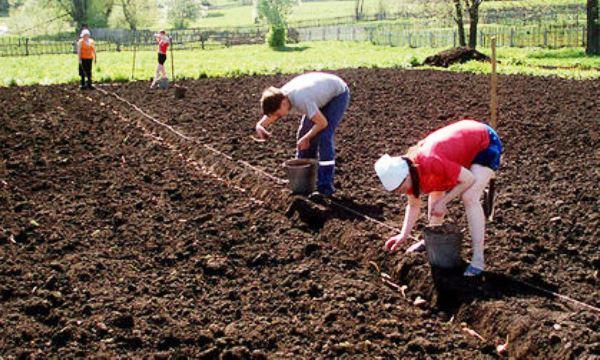
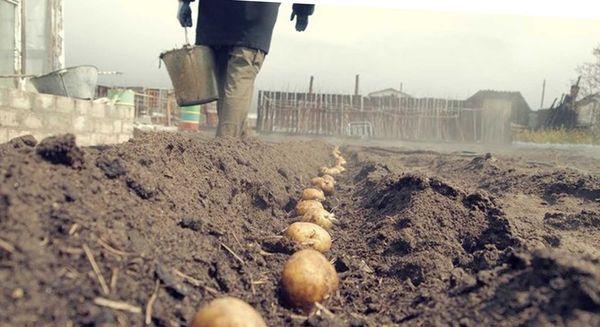
After the beds have been formed, the tubers are placed in the soil, maintaining a distance of 25–30 cm between them and 50 cm between rows.
Step-by-step algorithm for carrying out planting operations
Potato planting is carried out according to the following algorithm:
- On the prepared area, beds are formed and holes are dug.
- The seed material is treated with a solution of manganese.
- A small amount of water is poured into the hole.
- Place drainage material.
- Each tuber is placed in its own hole at a depth of 10 cm.
- They bury it in the ground.
- The bed is leveled with a rake.
Caring for the "Bullfinch" on the plot
To increase potato yields, proper care is essential. This includes watering the crop, applying mineral fertilizers, loosening the soil, mulching, and hilling the plants.
Watering
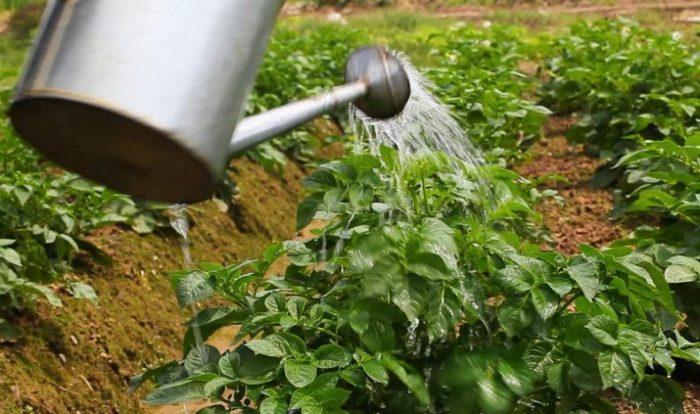
The first watering begins after the first shoots emerge. Three liters of water are poured per bush. The water should be settled first, or rainwater or spring water should be used. The second watering occurs during budding and flowering, and the third after flowering has finished.
Important! Tap water is not suitable for watering potatoes, as it contains chlorine, which is detrimental to the development of plants and tubers.
Fertilization
Potatoes are fertilized with mineral or organic fertilizers.The crop prefers complexes containing phosphorus, potassium, nitrogen, and manganese. Fertilization is done either through root or foliar application. For root application, dry or dissolved fertilizers are applied near the base of the plant. For foliar application, dissolved fertilizers are sprayed onto the plant leaves. Fertilization is done every two weeks. It's important not to overdo it, as excess minerals are detrimental to potatoes.
Loosening and mulching the beds
Loosen the soil after each watering and rain. Weeds are removed simultaneously with loosening. This ensures additional oxygen supply to the roots.
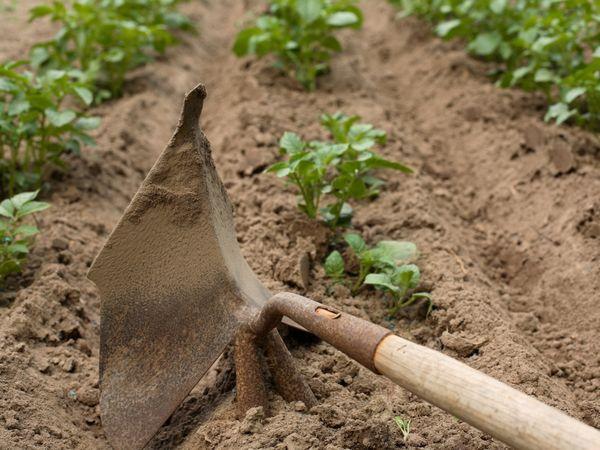
After the seedlings emerge, the potato plants are mulched with straw. The material is evenly distributed around each plant, covering every surface. This helps retain moisture at the roots and prevents weed growth and pest infestation.
Hilling
Hilling is done three times per season. The first hilling is done after the seedlings reach 20 cm in height, the second two weeks later, and the third three weeks later. The bush is covered with soil, leaving two to three pairs of leaves exposed.
Protection and treatment against insects and diseases
The Snegiri variety is resistant to potato cancer, porsha, and many viral infections. It is not affected by late blight, as their life cycles do not overlap. Snegiri is prone to nematode infestation. At the beginning of the growing season, plants are treated with fungicides and insecticides to prevent disease development. To prevent nematode penetration, the area is well fertilized.
Pests that affect potatoes include:
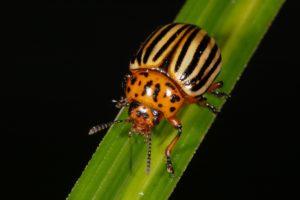
- Colorado beetle;
- green and black aphids;
- wireworm;
- mole cricket.
Insects feed on the plant's leaves and roots. To combat them, bushes are treated with insecticides and traps are set.
Important! Growing mustard between potato rows will repel pests. They dislike the smell of mustard.
Harvesting and storage
The harvest begins 55 to 60 days after the start of the growing season. By this point, the tops have dried out, and the tubers are easily separated. The dug-up roots are transferred to a cool, ventilated area and spread into an even layer. They are left for 7 to 14 days to dry. Then they are packaged in boxes or cloth bags. The best and largest tubers are reserved for seed.
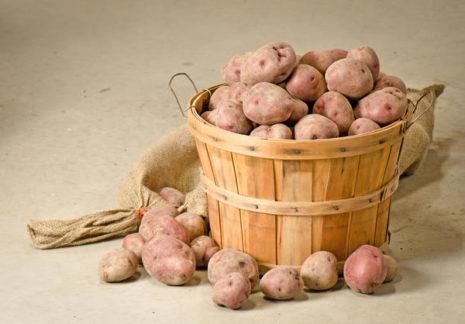
Store potatoes in a cool, dark place. The temperature should be no higher than 4°C. They retain their appearance well until the next season.
Reviews of the variety
Vladislav 35 years old, Krasnodar
I grow potatoes for sale. I've been using the Snegir variety for three years now. I harvest twice a season. The roots sell well due to their appearance. Customers praise their taste. After planting, I carry out preventative treatments to keep the plants disease-free.
Yadviga, 46 years old, Moscow
I chose the Snegir variety to plant at the end of June, as I didn't have time to tend to potatoes in May. I was afraid I wouldn't be able to grow a good harvest. I was mistaken; in early September, we dug up 12-15 potatoes from each bush. We fed them with organic fertilizer when planting, and treated the bushes for beetles and diseases.
Sofia, 65 years old, Arkhangelsk
In our region, potato planting begins at the end of May. This year, I tried the new early-ripening variety, Snegir. I planted it according to all the rules. I planted it next to the bushes. mustard against the Colorado potato beetleAfter two months, we had a good harvest. Since we didn't plant a lot, the potatoes sold out quickly. I'll be growing them again next year.
Related posts:
 Description and characteristics of the Rodrigo potato variety, cultivation and care
 Description of the best potato varieties of domestic and foreign selection
 Why potatoes aren't growing well in the garden, and what to do to ensure a bountiful harvest
 Description and characteristics of the Sante potato variety, planting rules and care
 Description and treatment of potato diseases, methods of control using folk and chemical means
 Description and characteristics of the Gulliver potato variety, planting and care
 Description of the Snegiri tomato and cultivation techniques for the variety
 Description and characteristics of the Gala potato variety, planting and care instructions