
- Causes of potato diseases
- Potato diseases: description and treatment methods
- Bacterial diseases
- Ring rot
- Brown bacterial rot
- Mixed internal rot
- Wet rot
- Blackleg
- Viral diseases of potatoes and their control
- Common mosaic virus
- Gothic potato tubers
- Striped mosaic
- Potato tuber necrosis
- Wrinkled mosaic
- Fungal diseases
- Late blight
- Black scab
- Silver scab
- Powdery scab
- Potato cancer
- Dry rot
- Verticillium wilt
- Anthracnose
- Potato diseases caused by nematodes
- Potato golden nematode
- Potato stem nematode
- What to do if you can’t understand what’s wrong with the culture?
- Prevention of potato diseases
Potato tuber diseases often affect planting stock. These conditions negatively impact the yield and taste of the vegetables. Diseases spread quickly throughout the plot and lead to crop failure. Proper care and crop rotation ensure a healthy harvest.
Causes of potato diseases
Potato diseases are primarily caused by improperly selected planting material, which is already infected at the time of planting. The following are possible causes of potato diseases:
- Incorrect selection of tubers for planting, in which case the tops at the base rot.
- Incorrect planting and failure to follow crop rotation rules. These factors often cause white plaque to appear on the stems, caused by fungal infections of the crop.
- Improper care during growth.
- Unfavorable conditions for growth.
Regardless of the cause of diseases appearing on vegetables, timely treatment will help avoid crop loss.
Potato diseases: description and treatment methods
Potatoes are often susceptible to disease during the growing season if the tubers are not properly treated with special antiseptics before planting in the soil.
Bacterial diseases
Most often, these types of diseases are transmitted through the use of infected planting material. One tuber can quickly infect others even after being planted outdoors.
Ring rot
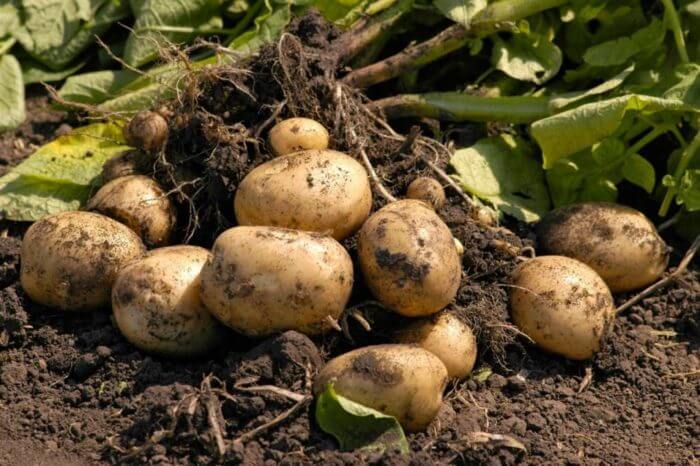
This type of disease manifests itself on bushes. The plant begins to rapidly wilt and eventually dies. These symptoms are most often noticed in hot weather or when moisture accumulates in the soil.
When cutting an infected vegetable, a gardener may see a dark spot; such a specimen should not be eaten.
Once infected, the plant is untreatable. The affected plant is removed along with the tubers. The growing area is treated with a weak solution of manganese. To reduce the risk of disease, potassium fertilizers should be applied.
Brown bacterial rot
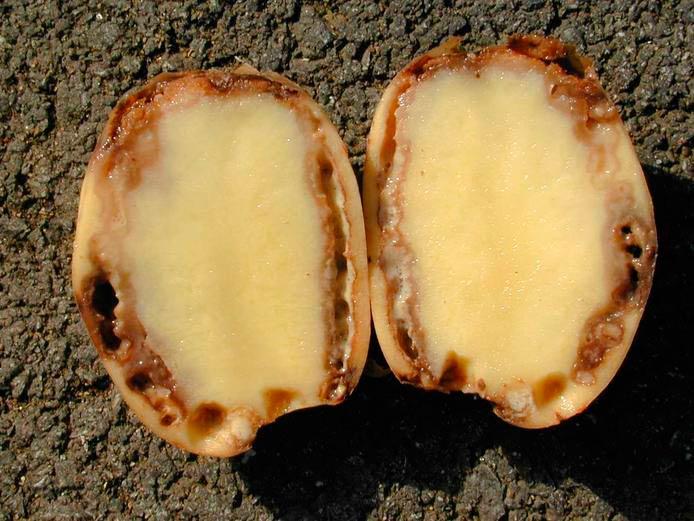
The disease attacks the tubers and gradually spreads throughout the plant. Infection occurs when potatoes are planted and develop dark spots. This type of disease most often appears during flowering. The first symptoms are plant weakness, and brown spots appear when the tuber is cut. The plant typically loses its foliage and dies.
To reduce the risk of disease, it's important to practice crop rotation and avoid planting tomatoes and onions next to each other. Also, promptly remove weeds that carry the disease.
Mixed internal rot
This type of bacteria penetrates the tuber when there is damage. The disease manifests itself as rot within the potato. The potato may appear healthy on the outside, but when cut, gardeners notice brown spots of rot.
During storage and transportation, potatoes should be regularly inspected and damaged ones removed. Before storing potatoes, all areas in the basement should be treated with copper sulfate or a manganese solution.
Wet rot
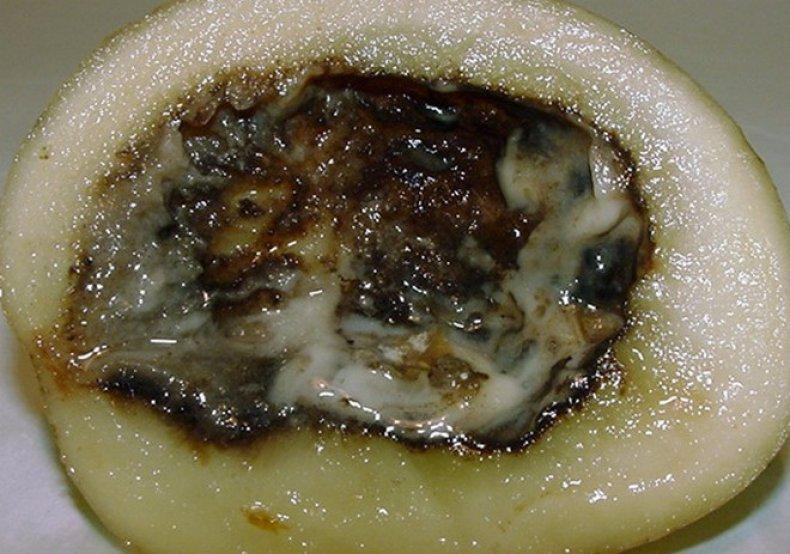
A bacterial disease that enters the tuber through mechanical damage during harvesting. It appears after some time of storage in the basement. The tubers become watery and have a foul odor.
To prevent the disease, it is necessary to treat basements with an antiseptic and sort potatoes, removing cut and soft tubers.
Important: A single tuber affected by soft rot can ruin an entire crop in a short time. Therefore, it is recommended to sort through your potatoes once a month.
Blackleg
The disease occurs when crop rotation rules are not followed. It manifests itself as darkening and rot of the plant shoots near the roots. Yellow spots appear on the leaves, gradually spreading throughout the plant. The tubers have dark spots when cut.
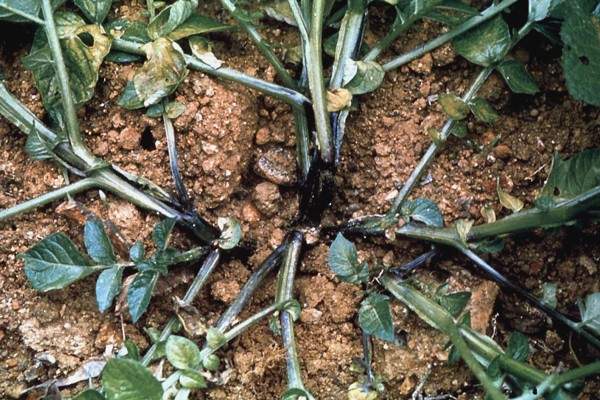
To eliminate the disease, remove infected bushes along with the potatoes. Treat the growing areas with an antiseptic. Before planting, it is recommended to soak the tubers in a light solution of potassium permanganate.
Viral diseases of potatoes and their control
Viral diseases negatively impact plant development and reduce crop yields. These plants often produce small tubers.
Common mosaic virus
The disease manifests itself as yellow spots on the leaves. It most often occurs when the plant is infected with a fungus. Infected plants are weak. To prevent viral diseases, it is necessary to keep the garden bed clean. Treat the crops with a 3% solution of "Pharmaiod."
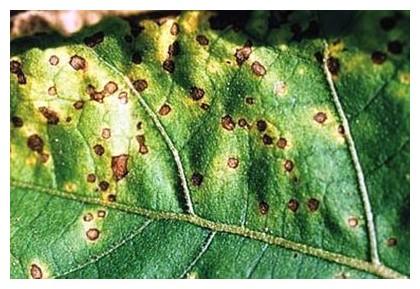
Gothic potato tubers
The disease is caused by contact with harmful insects. The virus can quickly penetrate tubers and stems and infect the plant. Equipment used to cultivate the beds during planting is also a common source of the disease.
The disease manifests itself as small leaves that quickly turn yellow. The bushes lack additional branches. Potato tubers are small and have numerous eyes.
To prevent virus infection, it's important to choose the right location for planting potatoes. It's recommended to grow green manure crops beforehand. After the seedlings emerge, dust the potato beds with wood ash.
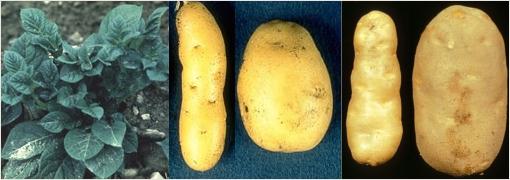 Important: Potatoes affected by this type of disease are edible, but have poor taste.
Striped mosaic
It manifests as small dark spots on potato leaves. When the plant is heavily infected, the spots develop into brown and russet stripes. The plant becomes weak, and the leaves quickly wilt and fall off. If left untreated, the virus appears on the tubers as brown spots.
A solution of laundry soap is used for treatment. To prepare, a bar of soap is crushed and dissolved in 10 liters of water.
Potato tuber necrosis
The first symptoms appear as yellow spots and brown streaks. However, as the disease progresses, the upper part of the foliage dries out. Dry spots of dead potato particles appear on the tubers. Potatoes may not show any symptoms of the disease.
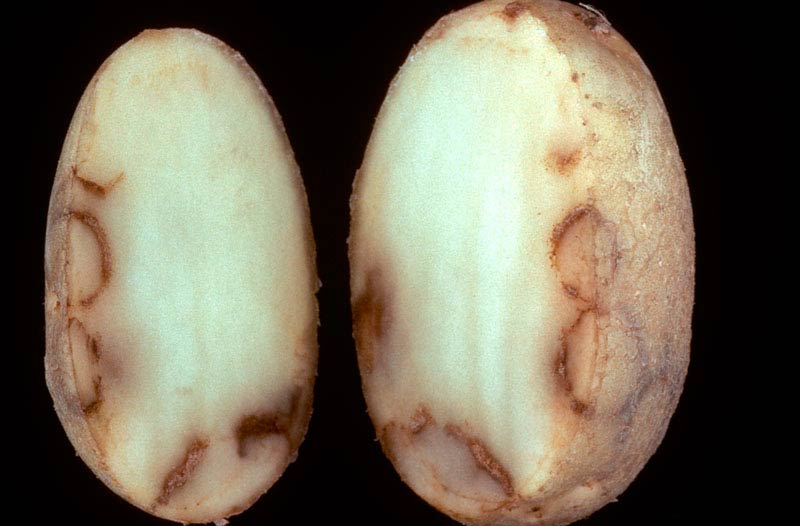
To prevent the disease, it's necessary to rotate the crop's growing locations. Affected plants should be removed and treated with a potassium permanganate solution.
Wrinkled mosaic
The disease most often manifests itself during the hot season. The plant develops poorly and fails to flower. The leaves on the tops curl and become wrinkled. The leaves gradually change color and become wilted. The disease is untreatable. Infected plants are removed. To prevent the disease from progressing, potatoes should be treated with potassium permanganate before planting.
Fungal diseases
Fungal diseases most often accumulate in the soil. After planting potatoes, infection occurs, quickly affecting the entire plant.
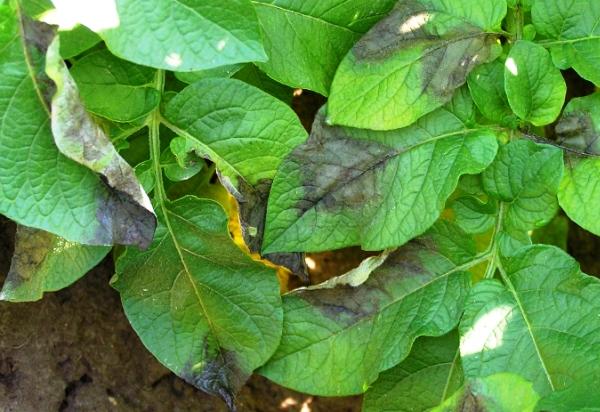
Late blight
It often occurs on potatoes and can lead to complete crop loss. The disease is spread by spores, which can be found in the soil or on potato tubers. It often develops during rainy weather. Symptoms of this fungal disease include:
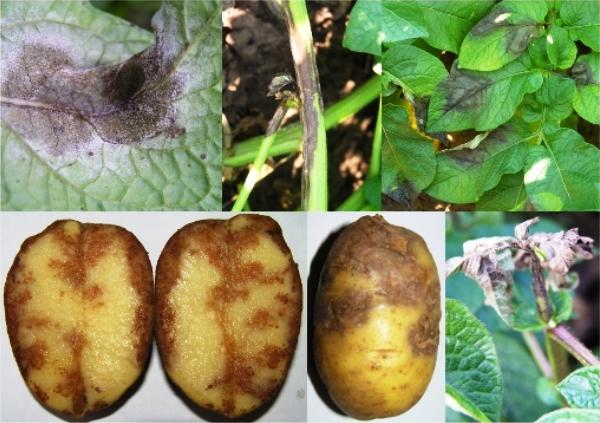
- dark spots on leaves;
- the stems become covered with spots and compactions of brown and brown color;
- the tops wither and dry out;
- A white coating can be seen on the leaves, and the tubers have dark spots.
To prevent the disease, potassium fertilizers are applied immediately after planting potatoes. When symptoms of the fungus appear, treatments such as Ridomil and Agat are used. Mustard is also planted nearby as a preventative measure.
Black scab
The disease manifests itself as small dark spots on the tubers. The plant stems also rot. If the crop is affected early in its development, young shoots may die. The disease most often manifests itself under conditions of high humidity and frequent precipitation.
Preparations such as "Colfugo" and "Maxim" are used for treatment. The disease can also be prevented by regularly loosening the beds and treating the tubers with potassium permanganate.
Silver scab
The fungus most often develops in moist soil and attacks potatoes after planting. The disease manifests itself as light-colored spots on the tubers. Affected tubers also become wrinkled. The crop does not rot, but only becomes wilted.
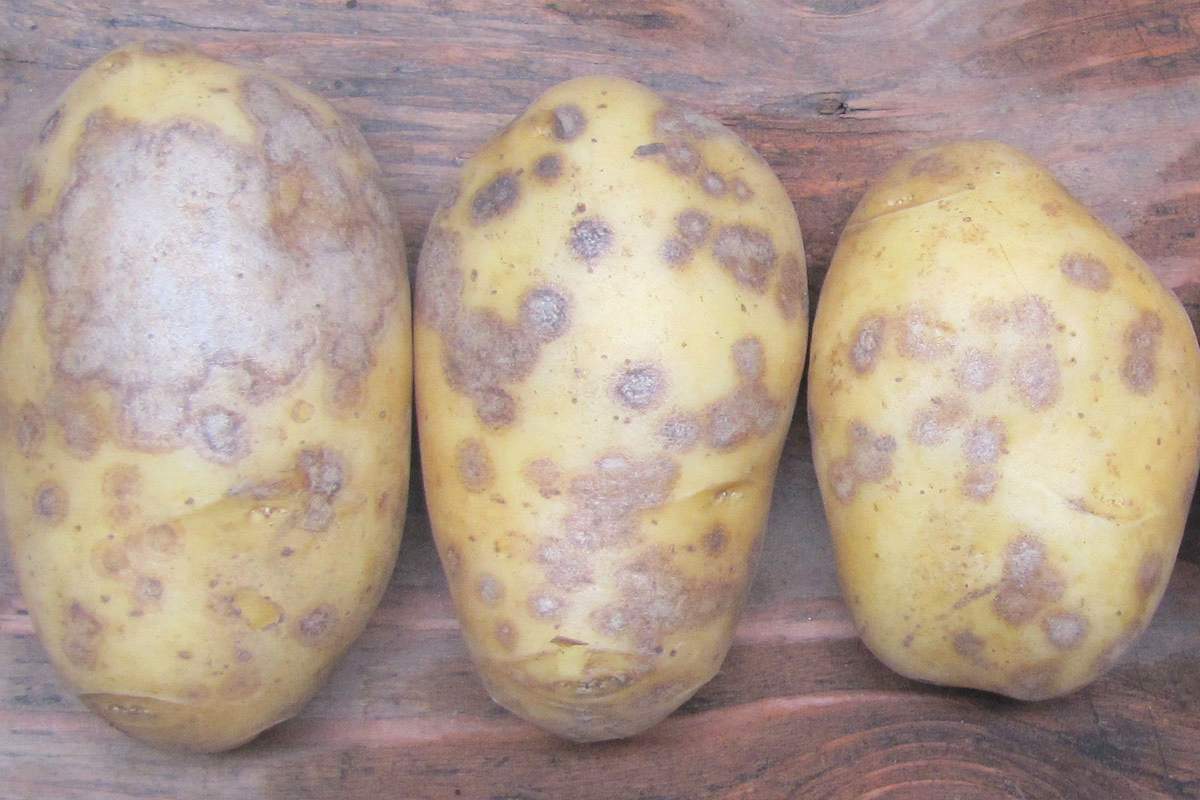
For treatment, drugs such as "Maxim", "Fitosporin", "Kalbit" are used; spraying is carried out every 10 days until the symptoms disappear completely.
Important: Affected tubers do not sprout and are not used as planting material.
Powdery scab
The fungus is common; its spores travel from infected tubers to healthy ones. The disease can appear on both the potato plant and its tops. Symptoms include:
- formation of dry spots and rot on tubers;
- a white coating is observed on the root;
- the tuber becomes covered with small brown growths.
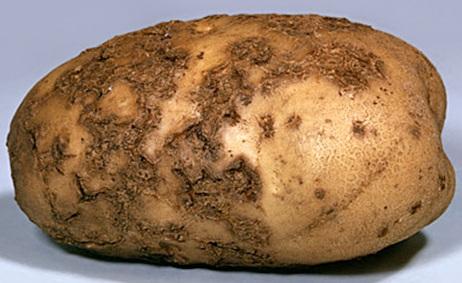
Storing damaged vegetables leads to complete destruction of the potatoes. Treatment includes "Agat" and "Fitosporin." To completely eliminate spores, treatment is recommended every 15 days.
Potato cancer
A dangerous potato disease. Symptoms include:
- white growths appearing in the eye area;
- wart-like growths that rapidly increase in size;
- the appearance of growths on the leaves and stems of a plant.
Spores can accumulate in the soil and be carried by harmful insects and worms. Plants infected with the disease cannot be treated. The affected plant should be dug up and burned; the vegetables should not be eaten. The growing area should be treated with boiling water.
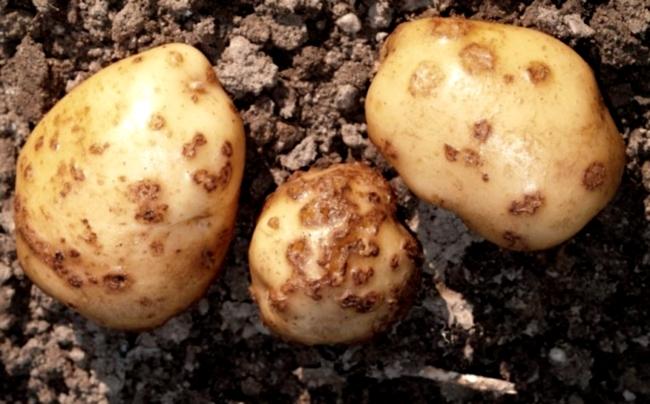
Dry rot
Fungal infection occurs during the plant's growth period, but on tubers the disease most often appears during the storage period of the harvest in the basement.
The symptoms of the disease are as follows:
- Gray spots on potatoes. The spots may have small indentations.
- The tops begin to turn yellow during the flowering period.
- When cut, the tuber contains dust.
To prevent infection, the soil is treated with potassium fertilizer before planting. Mature plants can be treated with the following products: Fitosporin, Baktofit, and copper sulfate. Potato storage areas should be treated with a copper sulfate solution at a rate of 2 grams per liter of water.
Verticillium wilt
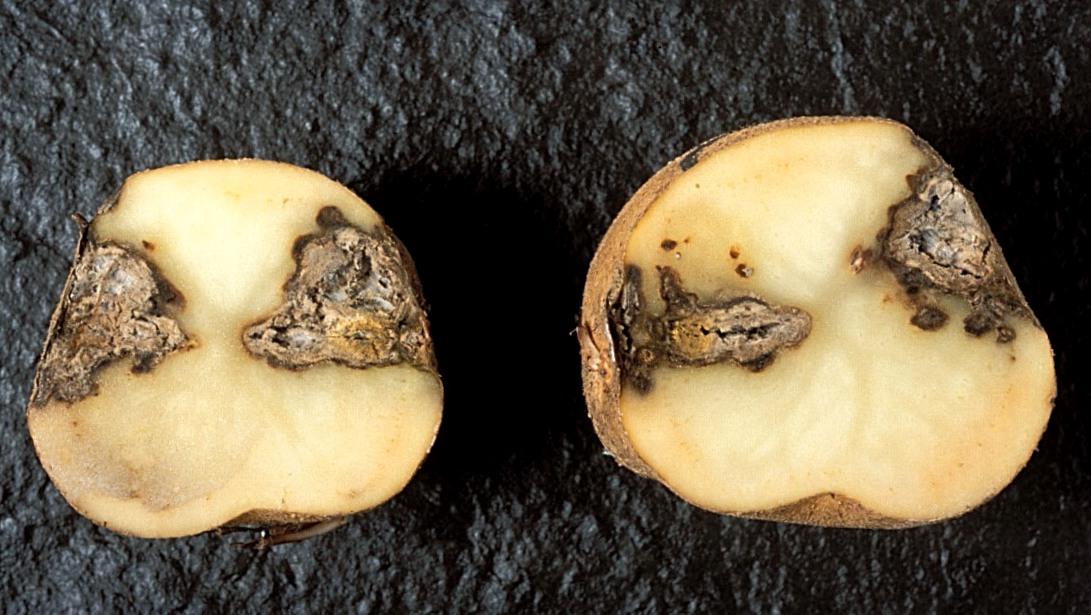
The first symptoms of the disease are wilting of the foliage. The disease most often manifests itself during flowering, with leaves gradually wilting, starting from the lower leaves and gradually reaching the top. Brown spots may appear on the leaves. The stems wilt and die. Potato tubers darken, and dry cavities appear around the eyes.
To prevent this type of disease, it's necessary to apply mineral fertilizers during planting. Weeds should be removed promptly and the bushes should be hilled. Infected bushes should be removed to reduce the risk of further disease development.

Anthracnose
The fungus attacks not only the stems and leaves, but also the tubers. The disease manifests itself with the following symptoms:
- the appearance of small spots on the stems;
- the stems become brittle and shortened;
- affected leaves dry out;
- black spots appear on the tubers;
- chlorosis appears on the leaves.
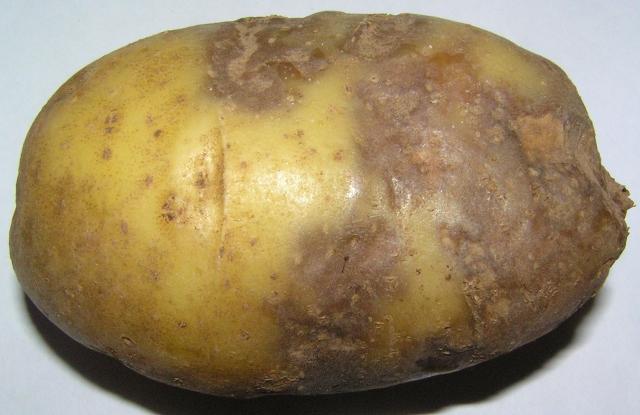
Before planting, spray potatoes with "Maxim." After harvesting, dry shoots should be burned. Potatoes should be planted in the same area at intervals of at least four years.
Potato diseases caused by nematodes
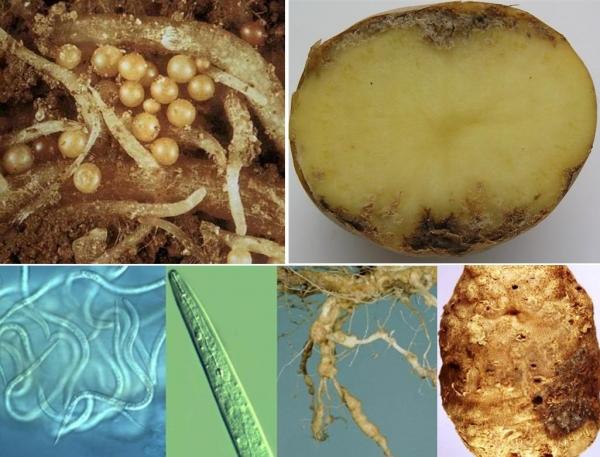
Diseases that arise as a result of damage to plant tubers and roots by nematode worms.
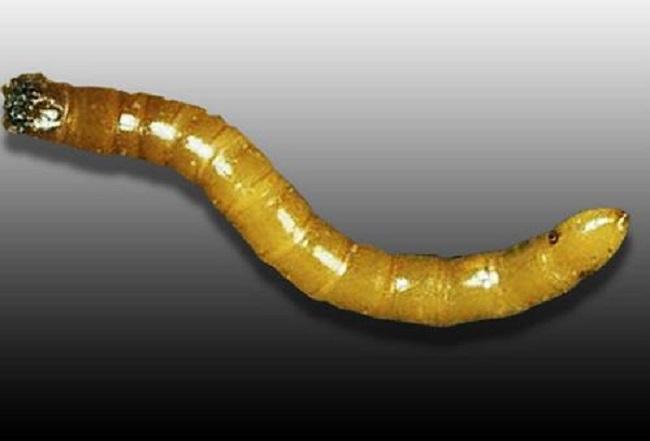
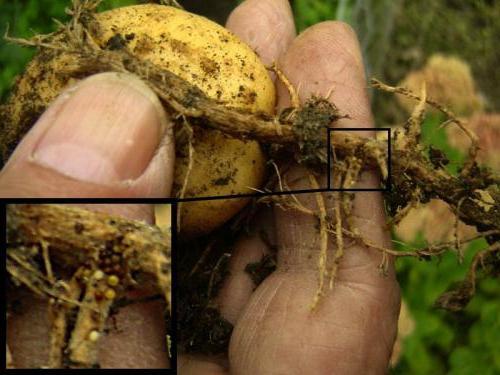
Potato golden nematode
The parasite can be found in the soil, most often developing in the root zone of the plant. The pest attacks roots and stems, and much less commonly, tubers. The disease manifests itself with the following symptoms:
- seedlings are weak;
- leaves turn yellow and wither;
- no flowering;
- formation of chlorosis spots throughout the bush;
- formation of additional root shoots;
- the tubers are small.
To prevent disease, apply Nematorin before planting outdoors. Follow crop rotation rules and treat all equipment with an antiseptic after harvest.
Potato stem nematode
Potato disease most often appears during storage in the basement. Symptoms:
- rotten spots appear on the tubers;
- the appearance of cracks on vegetables, resulting in the tubers drying out;
- the stems have seals;
- the leaves are small.
Use crop treatments such as Nematorin and Nemabact. Use potato varieties that are resistant to pests.
What to do if you can’t understand what’s wrong with the culture?
If the gardener fails to identify the type of disease, it is necessary to use methods for comprehensive impact on the crop:
- Use wood ash. Mix the mixture with water at a ratio of 1 kg per 10 liters of water, and then apply.
- Apply potassium and phosphate fertilizers.
- Treat the beds with a solution of manganese.
- After harvesting, the planting material should be changed and treated with an antiseptic before planting.
- Remove damaged bushes to prevent further development of the disease.
Purchase preparations such as "Maxim" and "Fitosporin" from specialized stores and treat the beds.
Prevention of potato diseases
Several methods can help prevent potato diseases. These include:
- observe crop rotation;
- After harvesting, remove tops and weeds;
- Dig up the area thoroughly in the fall, as spores cannot tolerate exposure to low temperatures;
- the seed material must be thoroughly dried and treated with antiseptics;
- do not use contaminated seeds;
- carry out hilling of beds;
- apply fertilizers if necessary.
Proper care is essential to prevent disease. Potatoes are a undemanding crop, but like most vegetables, they are susceptible to diseases and pests. Prompt treatment and removal of infected vegetables will not only reduce the risk of further infection but also preserve the harvest.
Related posts:
 Why potatoes aren't growing well in the garden, and what to do to ensure a bountiful harvest
 Description of the best potato varieties of domestic and foreign selection
 Description and characteristics of the Rodrigo potato variety, cultivation and care
 Description and treatment of potato pests, control measures
 Causes and treatment of cherry diseases, methods of pest control
 Causes and treatment of eggplant pests and diseases, how to combat them at home
 Description of the best potato varieties for 2025, selection for regions
 Description of tomato diseases and their treatment, how to process them
All my diseases were caused by pests, so I've been paying special attention to insect control for the past few years. My yield has increased severalfold, and I still use the same fertilizers.