
- Description of the Rodrigo potato variety
- Characteristics of the culture
- Climate zones
- Productivity
- Purpose
- Taste qualities
- Country of origin, year of registration
- The main positive and negative aspects
- Specifics of plant cultivation
- Selecting a location and preparing a garden bed
- Landing procedure and preparation
- Tips for caring for the crop
- Watering
- Fertilizers
- Weeding
- Loosening
- Hilling
- Protecting potatoes from diseases and pests
- Harvesting and storing potatoes
- Reviews from experienced gardeners
The Rodrigo potato variety is widely grown by domestic farmers and gardeners across much of Russia due to its short ripening period and attractive appearance. Originating from Germany, this potato boasts high yields and excellent flavor.
Description of the Rodrigo potato variety
The plant's growing season, from planting to full tuber maturity, is 75–80 days. Potatoes are dug up 15–20 days earlier, when they reach maturity, when the skin is still thin, but their size and flavor are suitable for culinary use.
The tall (up to 80 cm) Rodrigo potato bush consists of 3-5 medium-thick stems with large, finely wrinkled, dark green leaves. The plant blooms with light purple or pink inflorescences three months after planting. As the potato ripens, the above-ground portion of the plant turns yellow and collapses.
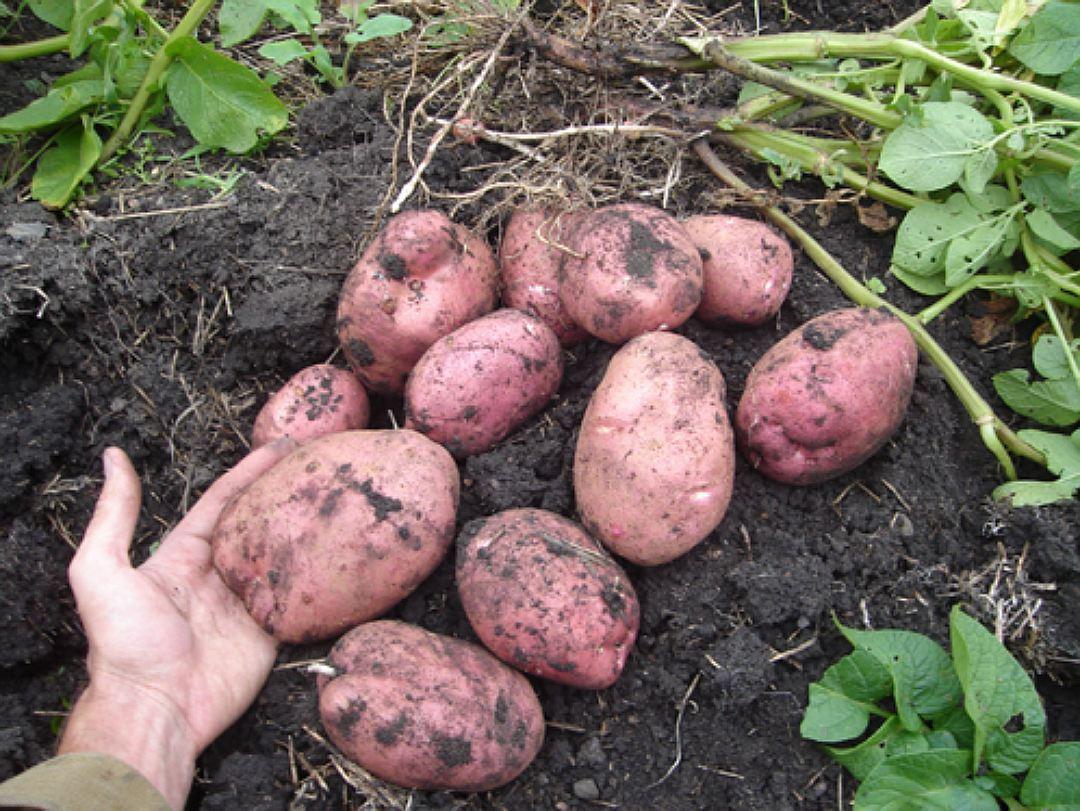
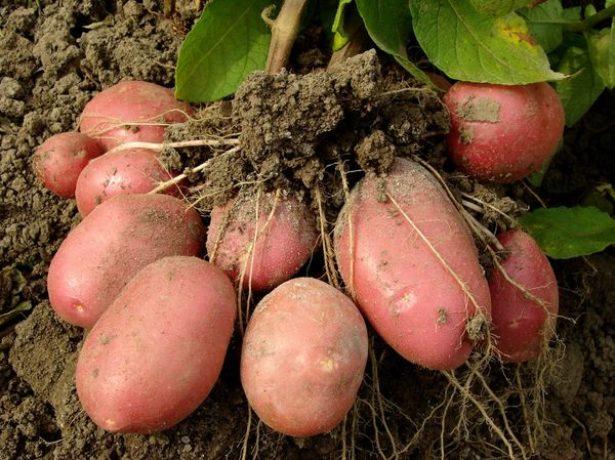
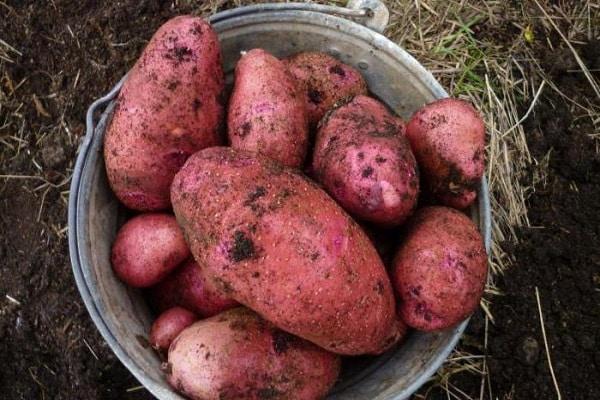
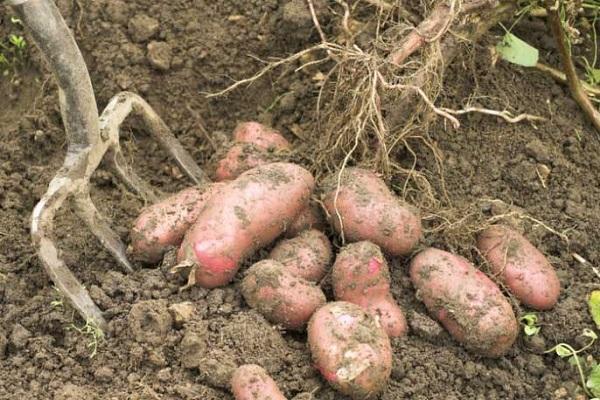
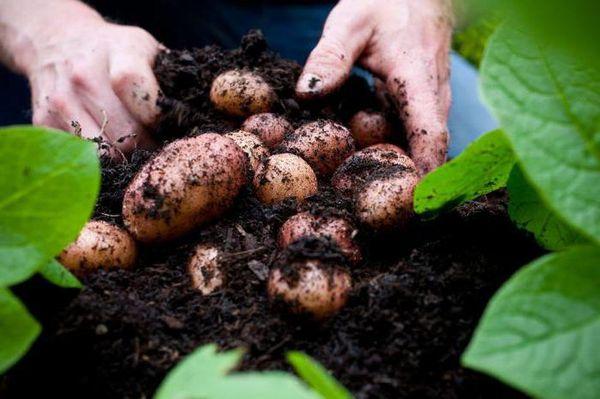
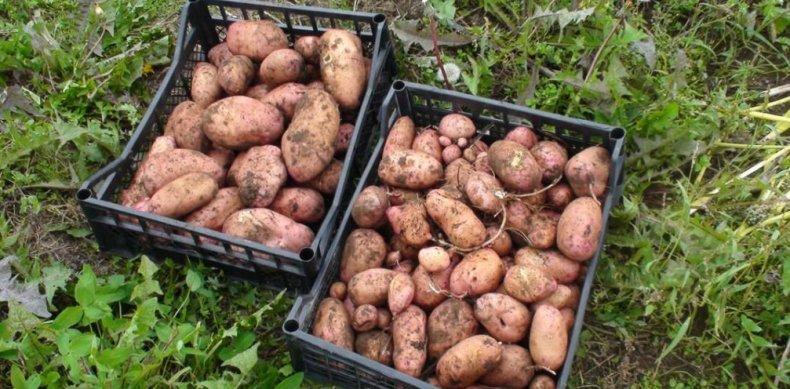
The pink tubers are uniformly oval in shape, averaging 120 g. With proper care and favorable weather conditions, they can grow up to 0.5 kg, and in exceptional cases, up to 0.8 kg. A benefit of growing the Rodriguez variety is the superficial placement of the eyes, making it easier to prepare.
The tuber flesh is yellow or creamy and medium starchy, which indicates good cooking properties.
Characteristics of the culture
The Rodrigo potato has received positive, and sometimes even enthusiastic, reviews from gardeners for its pleasant taste, productivity, and ability to be grown in various regions of the country.

Climate zones
The Middle Volga region is among the favorable growing zones for the Rodrigo potato, where it produces consistently high yields. The crop is recommended for commercial planting in the Far East, Central Russia, and the North Caucasus. It is also cultivated by amateurs throughout Russia and abroad.
Productivity
The mid-early Rodrigo potato variety is a high-yielding variety. It yields between 1.5 and 4 kg per square meter. A single plant produces an average of 8–10 potatoes. A distinctive feature of the variety is its uniformity. Small, unmarketable tubers are virtually nonexistent.
Purpose
Potatoes are intended for inclusion in the diet after cooking. They are suitable for boiling, mashing, and casseroles. The tubers are eaten fried and stewed. The crop is used for the industrial production of starch and alcohol.
Raw potato juice, rich in vitamins and minerals, is used for medicinal purposes. This healing drink is used:
- to speed up digestion;
- as part of complex therapy for gastritis and gastric ulcer;
- for heartburn, hypertension, lipid metabolism disorders.
Rodrigo's potato has found application in cosmetology as a rejuvenating and skin whitening agent.Potatoes containing high levels of the toxic substance solanine, which forms in tubers when stored improperly, should not be consumed.It is recommended to limit vegetables in the diet of diabetics.
Taste qualities
To achieve high yields, high disease resistance, and early maturity, breeders have to sacrifice flavor. This doesn't apply to the Rodrigo potato. The tubers, with bright yellow flesh, have a sweet flavor with a delicate aroma.
Potatoes hold their shape well when boiled and fried. Their medium starch content (10–15%) makes for delicious and fluffy mashed potatoes.
Country of origin, year of registration
The variety was developed by German breeders, namely Solana GmbH & Co. It was added to the Russian State Register of Breeding Achievements in 2008 as a mid-early table variety under the name Rodrigue. The plant was assigned the identification code 9358785.
The main positive and negative aspects
Gardeners cite one minor drawback: premature lodging of the stems, which makes hilling difficult. Otherwise, the Rodriguez potato variety is nothing but a success:
- consistently high yields;
- commercial appearance of tubers;
- the presence of artificially created immunity that resists diseases typical of potatoes;
- undemanding to soil composition and watering;
- preservation of varietal characteristics for up to 7 years;
- high taste and nutritional qualities;
- universal use;
- maintaining a presentable appearance during long-term transportation.
Gardeners note another amazing property: the tubers survive mechanical damage.

Specifics of plant cultivation
The proper development of Rodrigo potato bushes and the manifestation of varietal qualities depend entirely on the choice of location, soil, crop rotation, preparation of planting material, and adherence to the planting pattern.
Selecting a location and preparing a garden bed
To ensure a good harvest, follow crop rotation rules when choosing a planting site. Solanaceae should be planted in the same spot for no more than two years in a row. If tomatoes, peppers, or eggplants were grown in the same bed last year, find a different spot for potatoes. The plant grows well after root vegetables, legumes, onions, all varieties of cabbage, and cucumbers.
Rodrigo potatoes prefer open, sunny locations with neutral loamy soil.
The optimal soil pH is 5.0-5.5. If the soil pH is higher, alkalize the soil by planting green manure, adding lime (100 g per square meter), and dolomite flour (500 g per square meter). Fertilize the soil with ash or bone meal. The crop is undemanding regarding soil composition, except for sandy and marshy soil.
Landing procedure and preparation
A sunny, open plot of land for potato growing is dug over in the fall, simultaneously adding organic matter. In the spring, the soil is loosened or dug again, after first spreading ash (one cup per square meter) or a complex mineral fertilizer with a focus on nitrogen over the entire area.
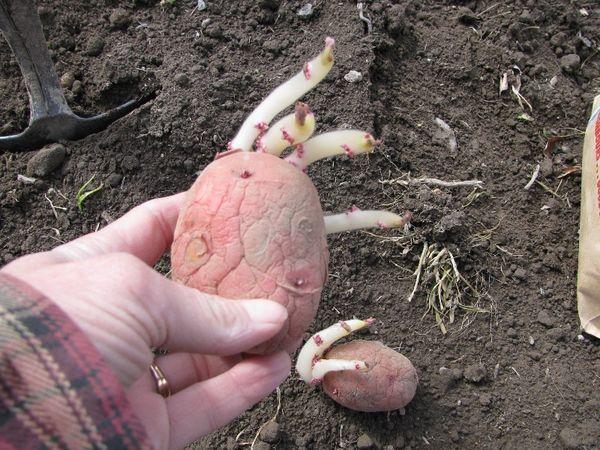
Selected tubers are removed from storage a month before planting. Germination takes place in a warm, well-lit room. Diseased specimens that have not produced strong sprouts are discarded. Rodrigo potatoes are planted whole or cut into sections. To stimulate growth, the planting material can be soaked in Zircon or Immunocytophyte growth stimulants, if desired, and treated with potassium permanganate for disinfection.
Immediately before planting, when the average daily temperature has been around 8°C for several days, mark out the rows using string and two stakes. The optimal distance between rows is 70 cm, and between bushes, 35 cm. The planting hole should be 10 cm deep.
In light soils, Rodrigo potatoes are planted with a spade; in heavy peat soils, it's recommended to plant them on raised beds to prevent overwatering. To protect the plant from recurring frosts, water each buried tuber and mulch it with peat and straw.
Tips for caring for the crop
Caring for Rodrigo potatoes requires timely watering, fertilizing, loosening and hilling the soil, and treating the crop with special agents to protect against diseases and pests.
Watering
The bush's spreading stems allow for long-term moisture retention. Rodrigo potatoes are irrigated to a depth of 20 cm during dry summers, with no precipitation for more than three weeks. Watering requirements increase during tuber formation.
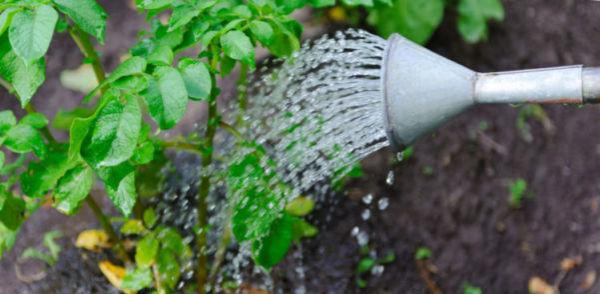
I repeat this procedure every week, early in the morning or evening, to prevent sunburn. Suitable irrigation methods include drip irrigation or sprinkler irrigation.
Fertilizers
The Rodrigo variety responds well to fertilization with an infusion of chicken manure (1.5 tablespoons per bucket of water) or mullein (500 g per 10 liters of water). Add 15 g of urea or saltpeter to the solution. The second fertilization includes potassium and phosphorus supplements. The final, third fertilization is carried out three weeks before harvest. Apply half a liter of slurry with 30 g of superphosphate under each bush.
Weeding
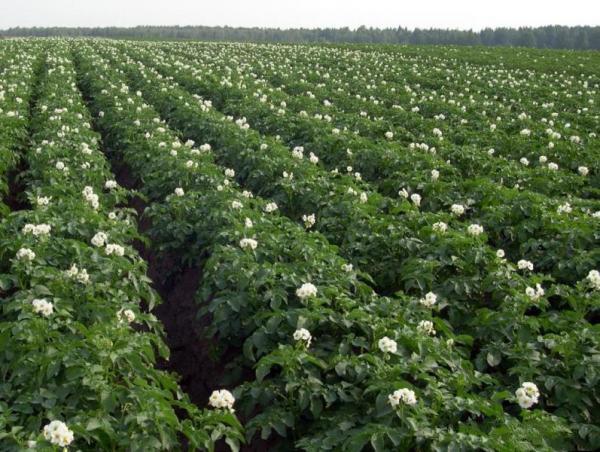
Weeding creates favorable conditions for the growth of varietal potatoes. Removing weeds prevents premature soil depletion. Rodrigo potato roots are weaker than weeds. If left untreated, the crop becomes stunted, and the emerging tubers rot. A stem height of 10–15 cm is the signal to weed.
Loosening
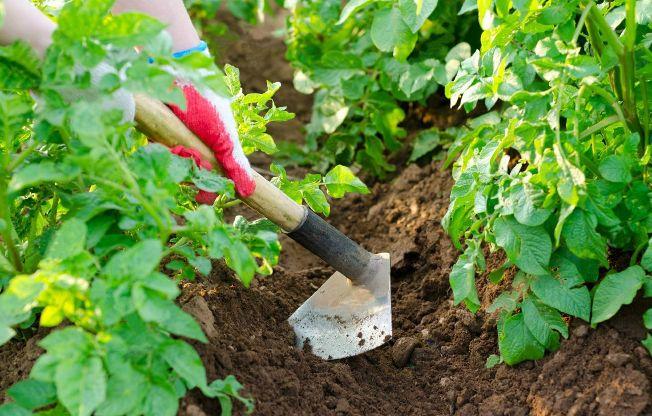
The first loosening is necessary even before the tops emerge. This agronomic practice is carried out simultaneously with weeding and after each rain, breaking up the crust that has formed. Aeration increases the availability of oxygen and moisture to the roots, which positively impacts tuber formation.
Hilling
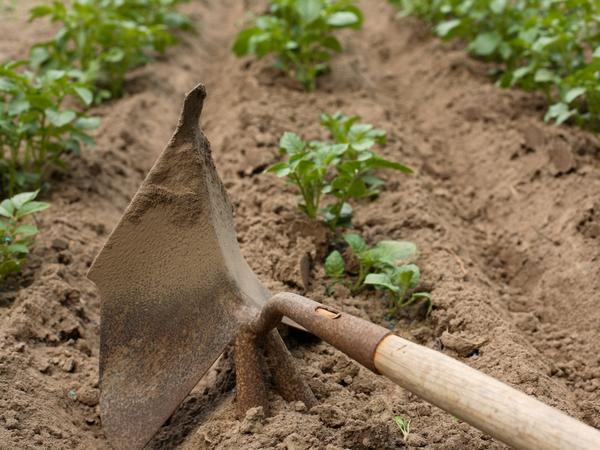
Potatoes are hilled 2-3 times. The first time is when the stems reach 15 cm in height, the second time is two weeks later, and the third time is as needed. This involves raking the soil from the row spacing to the base of the plants. After hilling, the yield of the Rodrigo variety increases by a quarter due to the following factors:
- appearance of stolons;
- moisture conservation;
- increasing illumination, warming up tubers;
- aeration;
- creating barriers for insect pests;
- destruction of weeds.
If the threat of late frost has not passed, the first hilling should completely cover the tops with soil. The second time, rake the soil onto the stems at the base just before flowering. The third time, create a low ridge of earth.
Protecting potatoes from diseases and pests
Built-in genetically modified immunity protects Rodrigo potatoes from many diseases. The main threats to a full harvest are late blight, mole cricket, Colorado potato beetle, and wireworm.
Fungal infections are becoming more difficult to combat. While the disease previously manifested itself as a dark coating on the outer leaf surface and a whitish coating on the inner leaf surface in the second half of summer, late blight symptoms now appear on early seedlings.
Antifungal treatment of tubers begins at planting and continues throughout the growing season, with spraying. In the early stages, when potato plants are no taller than 25 cm, Thanos is recommended. Later, Ridomil or the safer Fitosporin-M or Acrobat MC are used. The final spraying is best done with Shirlan, which provides protection to the tubers.

Insect control involves crop rotation and mechanical harvesting of pests. Colorado potato beetles are controlled by treating stems and leaves with chemicals such as Kinmix, Prestige, and Tabu. Mole crickets and wireworms, which live in the soil and feed on potato tubers, are controlled by adding Barguzin granules to the soil before planting.
The use of chemicals that suppress diseases and pests is stopped 2–3 weeks before harvest.
Harvesting and storing potatoes
Once the tops have yellowed and dried, and a thick skin has formed on the tubers, harvesting begins. Choose a clear, sunny day for this task. The dug potatoes are left in a dark room to dry.
Next, they sort the tubers, reserving any with mechanical damage for immediate use. The remaining harvest is divided into planting material and marketable tubers and stored. A wooden box with ventilation holes, placed on a balcony and insulated, is suitable for this purpose. A hole can be dug in the garden or stored in a cellar.
 For planting next year, select tubers the size of a chicken egg. Planting small tubers leads to the degeneration of varietal traits.The shelf life of Rodrigo potatoes reaches 90%. The loss of flavor and firmness of the tubers occurs 4 months after harvest.
Optimal conditions for storing the crop:
- humidity no more than 80%;
- storage temperature: 1–4 °C;
- ensuring air circulation;
- lack of light.
If the potatoes are damp but not shriveled, dry them out and put them back into storage. Green, rotten, or shriveled potatoes are not suitable for consumption. It is not recommended to wash the harvest or store it near other vegetables.
Reviews from experienced gardeners
Before choosing the Rodrigo potato variety, you should read reviews from experienced gardeners.
Sergey Ivanovich, 47 years old:
"Rodrigo surprised me with its productivity and ease of maintenance. From 10 small tubers ordered from an online store and delivered by mail, we managed to get two buckets of premium potatoes. My wife appreciated the pleasantly sweet flavor. We saved half a bucket for planting next year; the vegetable is so good."
Lyudmila Vasilievna, 53 years old:
"I've been growing the Rodrigo potato variety for three years. The varietal qualities remain consistent. The tubers are smooth, oval, and almost all the same size. I've noticed that the harvest needs to be done immediately after ripening. If you don't dig them up in time, they'll start to rot."
Anna, 35 years old:
"I like Rodrigo in any form—boiled, fried, stewed. It's a versatile potato. If slightly overcooked, it doesn't turn into mush, and it's just the right amount of crumbly. And it doesn't require much care. I didn't water it once all season; the rain was enough. I planted it, weeded it, earthed it up a couple of times, and sprayed it with copper sulfate once as a preventative measure."
Related posts:
 Description of the best potato varieties of domestic and foreign selection
 Description and treatment of potato diseases, methods of control using folk and chemical means
 Why potatoes aren't growing well in the garden, and what to do to ensure a bountiful harvest
 Description of the best potato varieties for 2025, selection for regions
 Description and characteristics of the Bellarosa potato variety, planting and care
 Description and treatment of potato pests, control measures
 Description and characteristics of the Rocco potato variety, cultivation and care
 Description and characteristics of the Gulliver potato variety, planting and care