
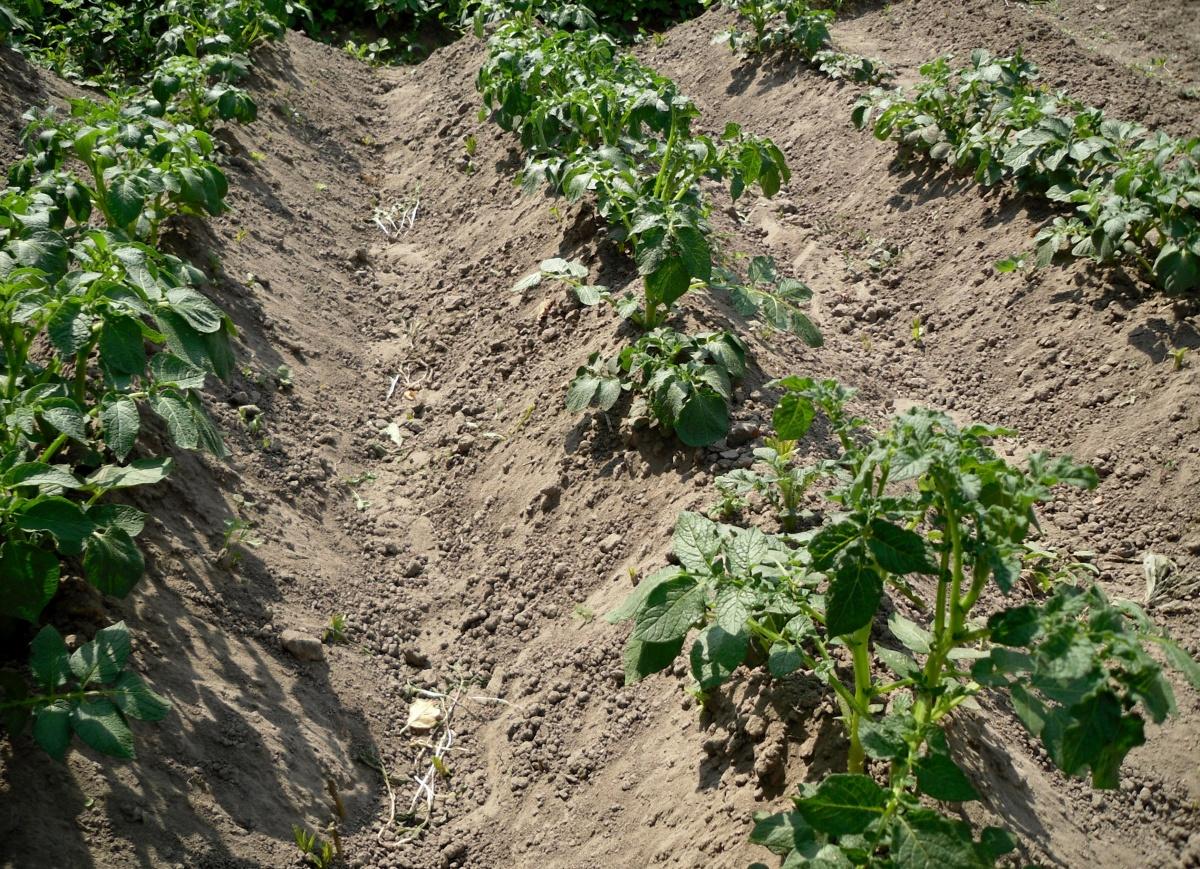
Hilling potato beds with a walk-behind tractor has many advantages. This method is suitable for larger plots. However, to avoid damaging the plants during the process, you need to prepare the walk-behind tractor. Adjust the machine's settings and begin hilling the potato plants.
The purpose of hilling, terms and conditions
Hilling potatoes achieves the following goals:
- retaining moisture in the root area, which leads to the development of tubers without loss of nutrients and taste;
- hilling reduces the risk of diseases and pests in tubers;
- the risk of damage to the upper tubers, which may protrude to the soil surface and be adversely affected by the sun, is reduced;
- preventing the impact of negative factors on potato tubers;
- The hilling procedure increases the size of the crop;
- If potatoes are planted ahead of schedule, using this type of treatment will protect the crop from frost;
- reduction of the number of weeds.
Hilling is carried out in stages, which include:
- The first stage of treatment is carried out after the potato sprouts reach a size of 10 cm. This action will prevent possible frost damage.
- The second stage is potato treatment, which should be carried out after buds begin to form. This will promote tuber development.
- The third stage is carried out if necessary, if excessively hot weather is observed, negatively affecting the development of tubers.
Hilling is done in the evening. This period will help retain moisture longer. It is also recommended to apply mineral fertilizer before hilling if the soil is poor and the plant lacks nutrients.
Features of hilling with a walk-behind tractor
In order to facilitate the process of processing large areas of crops, special devices are used.

The method of hilling with a motor cultivator requires compliance with the following features:
- Maintaining the correct number of treatments. Two to three treatments are required to obtain a harvest. Gardeners often perform only one hilling procedure, but this is incorrect, as potatoes require proper care throughout the entire ripening period, as the yield largely depends on this.
- A distance of at least 55 cm must be maintained between rows to prevent damage to the bushes during the process.
- The rows should be even, this will make the processing easier.
- Before starting the procedure, it is necessary to check the angle of the blades and the depth of immersion.
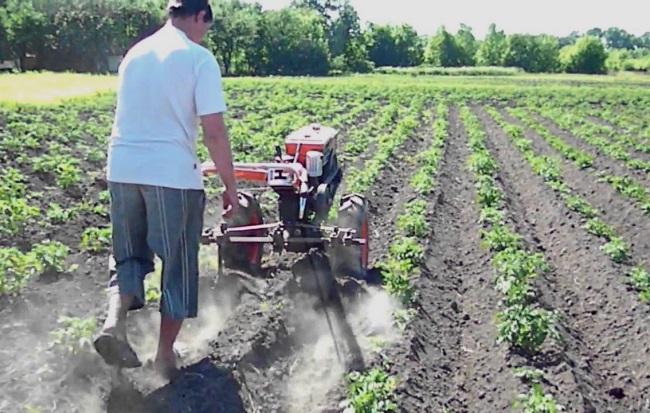
It is easier to carry out processing with a tractor, since no physical effort is required.
Types of devices
Motor cultivators come in various types. However, the operating principle of all these devices is the same. Homemade types of hilling devices are also common.
Important: During bud formation, it's important to carefully cultivate the beds to avoid damaging the inflorescences.
With a plow-shaped hiller
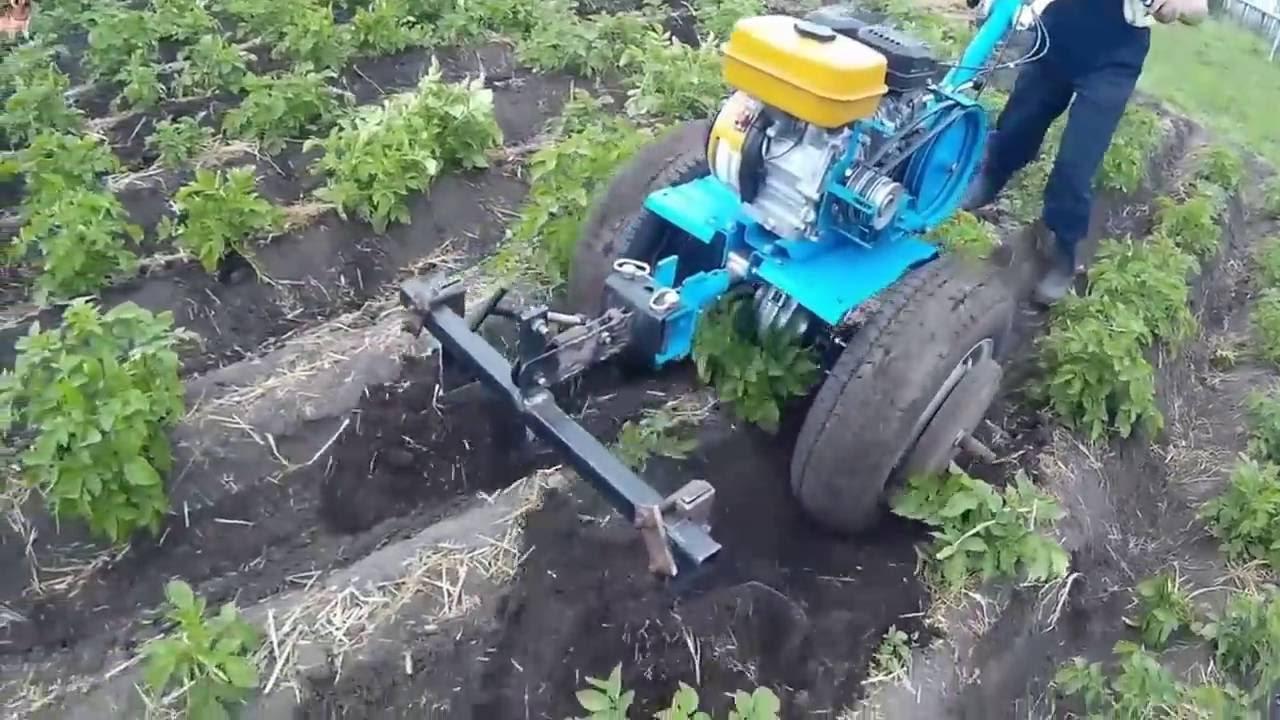
Using a plow-type attachment requires caution. Adjust the depth and angle before beginning work. Otherwise, the plant, root and all, may be uprooted. Once all necessary adjustments are made, push the attachment into the soil and work through one bed, then adjust the tiller's operation if necessary. Two-row plow-type hillers can work on two potato beds simultaneously.

With a disc hiller
Using disc hillers is much more convenient than using plow-type hillers. The discs are set at the desired angle, and the gardener then operates the device to hill the rows. The discs collect soil evenly, ensuring uniform cultivation across all rows.
Using disc hilling, you can only process one row at a time.
How to properly hill potatoes?
In order to properly carry out the process of cultivating a crop with a cultivator, it is necessary to follow the following rules:
- install special soil looseners on the device;
- the walk-behind tractor is placed between the rows in the center;
- the device turns on at minimum speed;
- carefully guide the walk-behind tractor along the row.

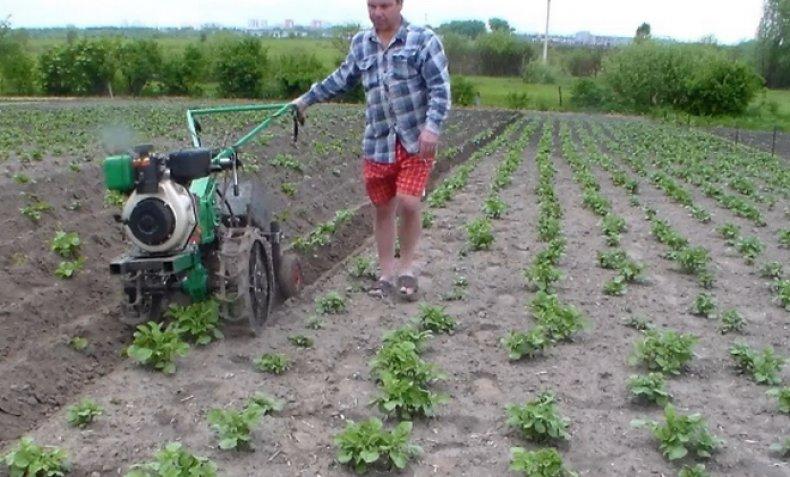
After each row is completed, the machine is carefully turned around, and all the crop beds are processed in this manner. Potato cultivation with a walk-behind tractor is easy when the distance between the beds is maintained.
Benefits of using
Using a walk-behind tractor for crop cultivation has the following advantages:
- rapid processing of culture;
- soil drainage when using special devices;
- uniform weed control;
- uniform penetration into the soil and the required slope of soil cultivation.
This method of cultivation requires little physical effort. A walk-behind tractor can cover large areas of plantings in a short time.
How to make a hiller yourself
Gardeners often make their own hilling machines, which saves money and allows them to determine the required soil depth. To build one yourself, follow these steps:
- Prepare a pipe 1 meter long with a diameter of 25 mm.
- A hilling holder is attached to one side. It should be shaped like a flange with holes for mounting the knives.
- A horizontal pipe is welded to the other end of the pipe to serve as a tie rod. The ends of the pipe are bent at right angles. The pipe size is determined individually, but it should not be less than 1 meter.
- In the middle of the structure it is necessary to make a mount for mounting on a walk-behind tractor.
- Metal plates are used, onto which faceted triangles are welded, acting as knives.
- The plates are attached to the main structure by screwing.
Once the product is manufactured, the seams must be treated to prevent rust. The structure can be used for a walk-behind tractor or for manual gardening. The structure must be constructed of metal that can withstand the load.
Reviews from summer residents
Maxim Yegorovich Ivanov, 39, Bryansk: "We regularly hill up our potatoes at least twice a season. Previously, we used a special tool called a hoe. Now, using a walk-behind tractor, we can cover the entire plot in an hour, without any physical effort."

Svetlana Yegorovna Novikova, 56, Novoselovsky District, Krasnoyarsk: "Hilling is essential for harvesting. This method reduces the risk of disease and eliminates weeds. Hilling is done at the first emergence and mid-season."
Proper potato care contributes to a productive harvest. Hilling is essential for tuber formation. A walk-behind tractor can be used for hilling, which not only saves the gardener time but also ensures uniform cultivation of the crop to the required depth.
Related posts:
 How to plant grapes step by step, with a description of the process and care
 How to propagate and grow peas, cultivation technology, and care in open ground
 How to properly plant peas in a greenhouse and open ground
 How to control onion flies using natural and chemical methods
 Description of varieties of sowing peas and cultivation, to which family they belong
 How to combat powdery mildew on onions using folk and chemical remedies
 Why and when to hill up potatoes, the rules and timing
 Step-by-step instructions and timing for replanting currants