
- Why do you need to hill up potatoes?
- Advantages and disadvantages of the procedure
- Optimal timing for hilling
- How many times should potatoes be hilled?
- General rules of execution
- How to hill potatoes
- Motoblock
- Disc hiller
- Plow
- Hoe
- Is it possible to hill up potatoes when they are flowering?
- In what cases is hilling not required?
- Do you need to hill up potatoes in a rainy summer?
Potatoes are a vegetable no homeowner can live without. They are grown commercially and in small gardens. The plant requires little care; aside from watering, weeding, and pest control, the plants require hilling. Why is potato hilling done, when and how should it be done, and how does it affect yield?
Why do you need to hill up potatoes?
Hilling is the process of raking soil up to the plant's trunk on all sides, forming a ridge of loose soil around the vegetable plant. Hilling potato plants improves their quality and increases their yield. This procedure is especially necessary in areas with heavy soils, where a dense crust quickly forms on the soil after rain.
In northern regions, hilling is essential soon after germination to protect the tender sprouts from subsequent frosts. Shallow planting protects potato tubers, which turn green from exposure to sunlight. These potatoes are unfit for human consumption due to the presence of solanine, a powerful toxin produced in potato tubers during photosynthesis.
Important: green vegetables should not be eaten—even if the greens are completely cut off, they remain dangerous to humans. They should be stored separately and used as planting material the following year..
Hilling up the soil makes potato plantings more resilient to wind, rain, and other atmospheric influences. Hilled plants become strong, straight, and protected from pests and diseases. Hilling increases the number of lateral shoots, which are where tubers develop. Increasing their number leads to a significant increase in yield.
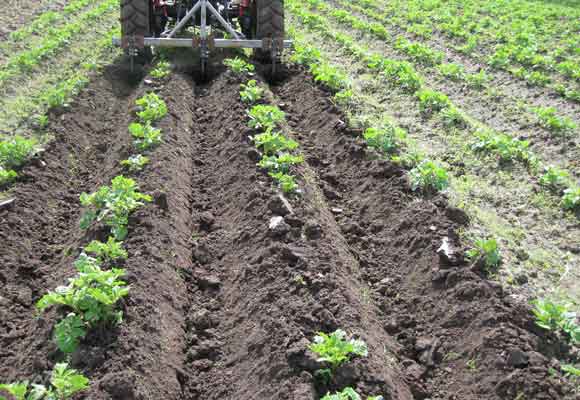
Furthermore, this procedure removes the soil crust and oxygenates it, which promotes plant development and growth. It removes weeds and significantly simplifies the process of planting, both mechanically and manually. It prevents the soil under the bushes from drying out and removes excess moisture. When harvesting by hand, it significantly simplifies the process—the tubers can be easily removed from the loose soil.
Advantages and disadvantages of the procedure
Hilling potatoes is a crucial agricultural procedure and, in addition to what has already been listed, allows for:
- ensure soil drainage, protecting plantings from waterlogging;
- improve soil warming and aeration, which leads to increased tuber growth;
- protect plantings from diseases and pests - the process of hilling destroys insect larvae.
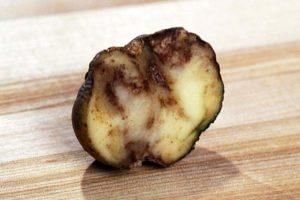
The procedure has few disadvantages, they are not noticeable if hilling is done correctly:
- if the ridge is too high, the shoots may lag in development and their growth will slow down;
- the areas from which the soil is raked away dry out and become weathered;
- As a result of an incorrectly performed procedure, the plant roots go too deep into the soil.
Compliance with the hilling procedure and the timing of agrotechnical interventions allows you to get an excellent harvest.
Optimal timing for hilling
Hilling potatoes shouldn't be done too frequently; experienced gardeners rely on the weather in their region and perform the procedure 2-3 times per season.
Potatoes should be hilled for the first time after germination, when the young sprouts reach 7-12 centimeters. This occurs approximately three weeks after planting the tubers in open ground. This procedure protects the sprouts from adverse weather conditions, especially in northern regions, where snow and severe frosts are possible even in May, after planting, which can destroy the tender greens. The soil layer during hilling should not be deeper than 5-7 centimeters to ensure the sprouts have enough strength to break through the soil.
Important: ridges that are too high can kill young shoots.
The soil is raked a second time when the sprouts reach 25-30 centimeters, before the bushes begin to bud. This helps rid the plants of weeds, encourages stolon formation, and, consequently, increases the number of future tubers.
How many times should potatoes be hilled?
Super-early potato varieties are hilled once, before flowering. This is also sufficient for mechanized planting, as frequent raking of the soil is harmful to the plants, as it can easily damage the developing tubers.
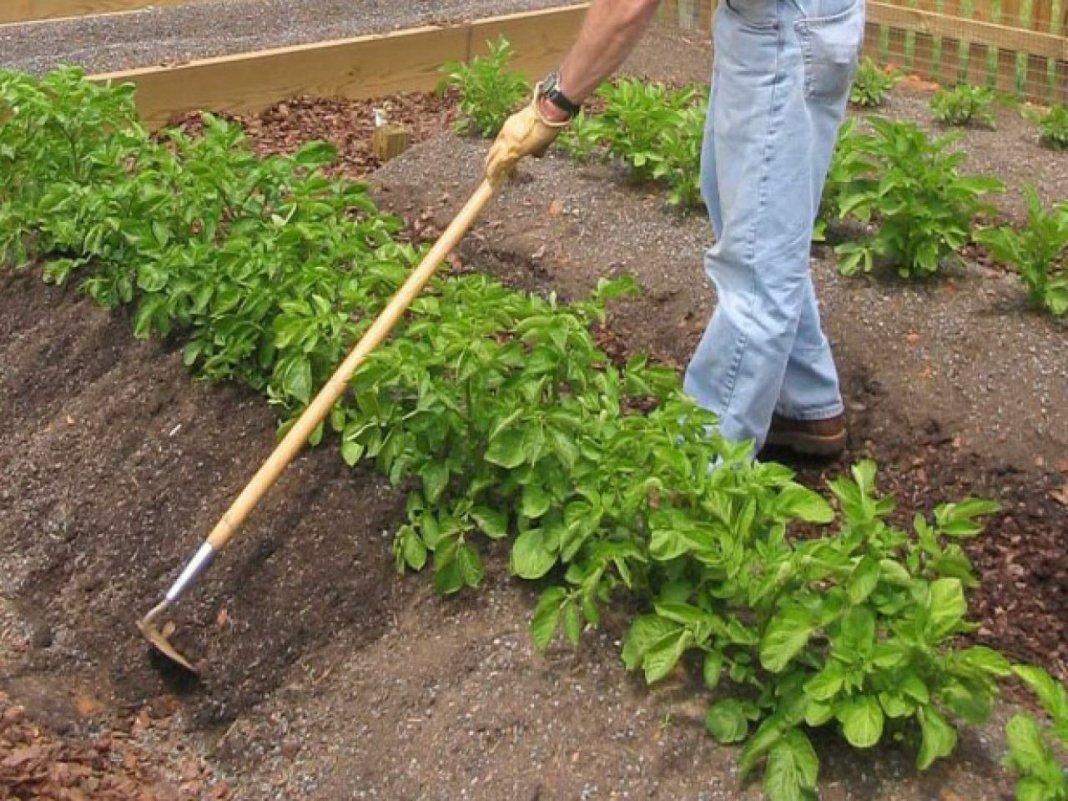
If you're tending your plants manually and the plot is small, you can perform the procedure more frequently. Some gardeners hill up their potatoes every two weeks before flowering. In heavy soils, where a dense crust quickly forms, the plants should be hilled up more frequently than in lighter soils.
General rules of execution
Hilling potatoes is done in cloudy weather, early in the morning, or after sunset. This process slightly damages the plant's roots, so bright daytime sun can damage the plants. Hilling is done after watering or rain, on slightly damp soil, which helps loosen and oxygenate the soil.
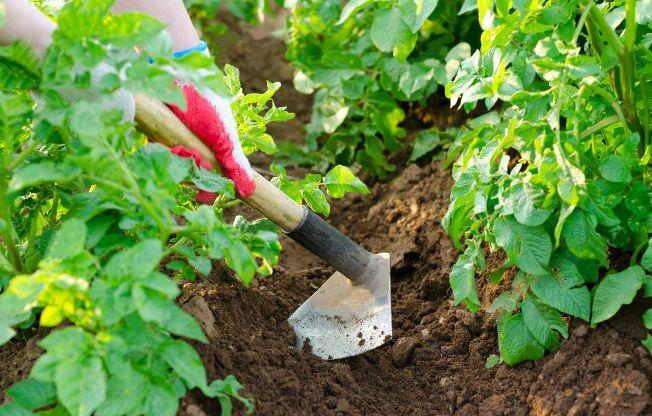
The soil is raked on both sides or around the bush, forming a high ridge. Manual work requires a hoe or a hoe, while mechanical methods hilling requires the use of a walk-behind tractor.
During flowering, hilling of plants is not carried out; it can be postponed and carried out after the bushes have finished flowering, or you can limit yourself to the work already done.
How to hill potatoes
There are tools for manual and mechanized hilling. If a walk-behind tractor is used, the furrows should be perfectly even, with row spacing of 55-65 centimeters.
When manually cultivating plantings, the row spacing is made 70 centimeters wide, otherwise there will be nowhere to take soil from when hilling the beds.
Motoblock
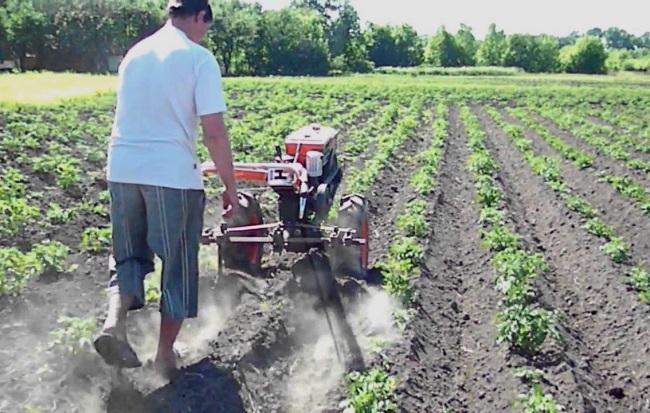
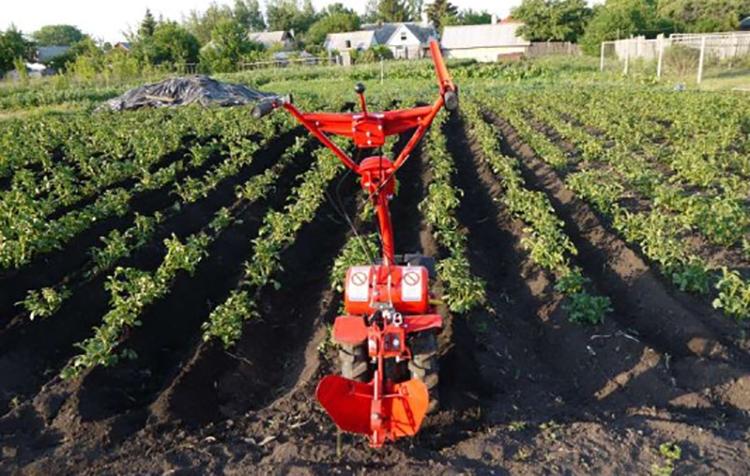
This is a multifunctional mobile power unit used for a wide range of agricultural tasks. It makes work much easier. A walk-behind tractor is used for plowing, harrowing, planting, and hilling. If the area to be planted is large, using a walk-behind tractor is ideal.
Disc hiller
This attachment for a walk-behind tractor is designed for hilling potatoes. A frame with discs positioned at a specific angle is attached to the walk-behind tractor. The discs grip the soil and hill the plants, forming a ridge. They can be height-adjustable and tiltable, or they can be permanently mounted. A disc hiller can be purchased at a specialty store, and some DIYers make their own.
Work performed with a hiller is of higher quality than with a cultivator.
Garden stores sell single- and double-row cultivators, which significantly simplify and speed up the hilling process. A single-row cultivator cultivates each row of plantings, while a double-row cultivator allows for alternate rows, covering both sides of the bed, making it easy to cultivate a large area.
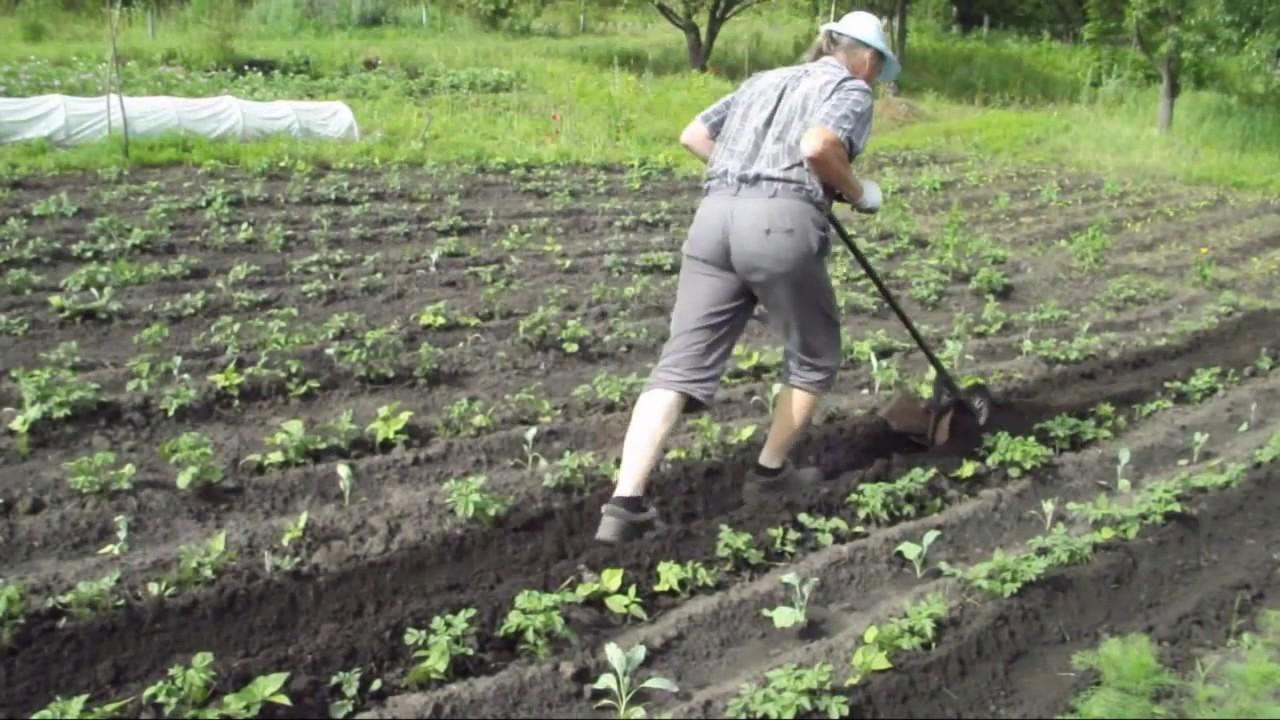
Plow
It can be used as an attachment for a walk-behind tractor or as a hand tool that allows you to quickly and efficiently complete work on the site.
A hand-operated hiller is a convenient tool that significantly simplifies potato cultivation. While it can be used alone, it's easier and faster to work with two people, with one person pulling the tool and the other adjusting the tilling depth.
Hoe
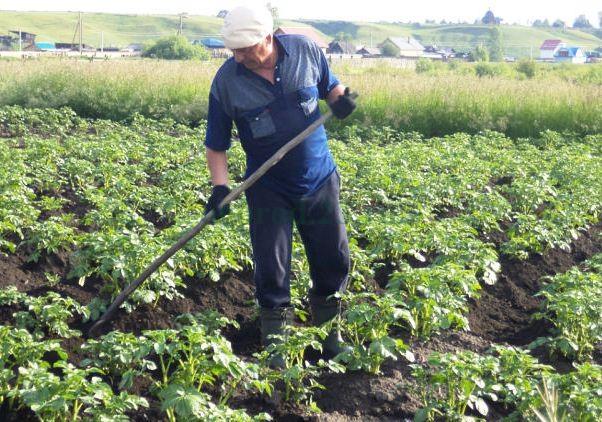
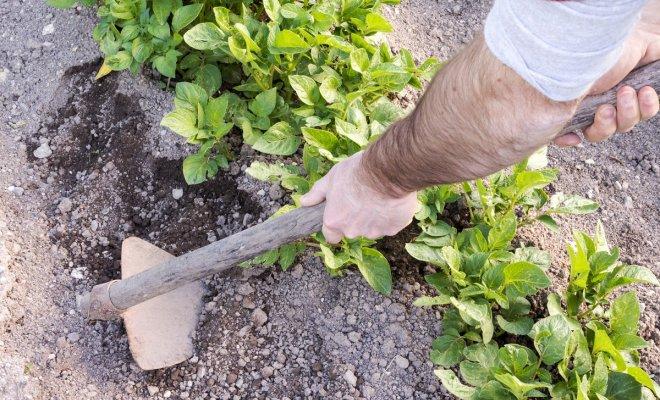
A familiar tool to all gardeners for weed control and manual hilling of beds. If the potato plot is small and the gardener is energetic, potato rows are cultivated by hand. A hoe is a tool consisting of a handle and a sharpened, trapezoidal, or rounded metal part attached to it—something between a pick and a shovel. A sharp, moderately heavy tool is chosen that is comfortable to use.

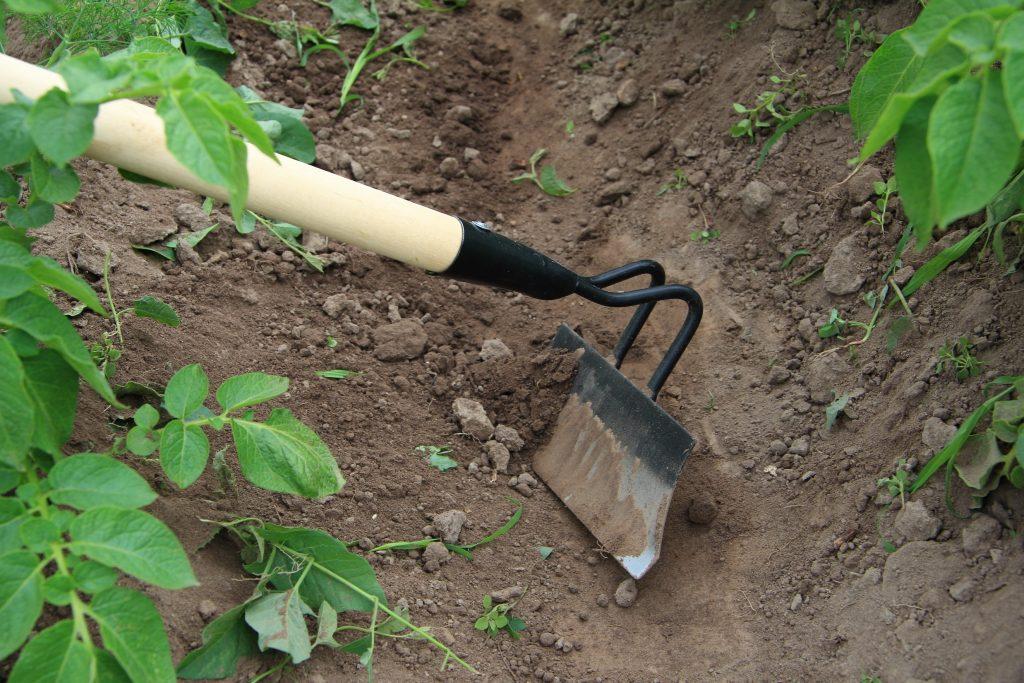 Important: you don’t have to remove any remaining grass and weeds from between the rows; they will prevent the soil from drying out.
In this case, add soil first to one side of the row, then to the other. You can rake the soil around each potato plant.
Is it possible to hill up potatoes when they are flowering?
During the flowering period, potatoes are not hilled. This procedure is not performed from the beginning of budding until the end of flowering, so as not to damage the developing tubers.
In what cases is hilling not required?
Hilling is a necessary procedure, and most experienced gardeners agree on its necessity. It's not used when planting potatoes using modern agricultural methods, where the potato beds are covered with a layer of straw or grass, because a thick layer of covering material retains moisture, prevents crust formation, weed growth, and soil compaction. This method also helps conserve heat, preventing overheating.
Bushes grown using agrofibre are not hilled. In this case, the plants do not require hilling—they are protected from moisture, overheating, and exposure to sunlight. Potatoes in southern regions are sometimes not hilled to prevent increased soil drying during dry periods.
Do you need to hill up potatoes in a rainy summer?
If there's too much rain in the summer, choosing the right time for hilling can be difficult. Immediately after a rain, the procedure is useless, so wait until the soil dries out slightly. In overly wet soils, it's often necessary to create special grooves around the beds to drain excess moisture.
Experienced gardeners navigate the situation. Growing techniques vary slightly depending on the region, weather conditions, and soil type. Hilling helps produce strong, healthy plants and a good harvest; properly grown tubers store well and are of better quality.
Related posts:
 How to properly hill potatoes with a walk-behind tractor: step-by-step instructions
 When and why to hill cabbage, timing and number of procedures, is it necessary after planting in the ground
 Step-by-step instructions and features of fan-shaped hilling of potatoes
 Why potatoes aren't growing well in the garden, and what to do to ensure a bountiful harvest
 How to make a manual potato hiller with your own hands, accessories
 Description and treatment of potato diseases, methods of control using folk and chemical means
 How to properly hill peppers in open ground and greenhouses, and whether it is necessary
 How to properly care for potatoes to ensure a good harvest