
- Why is it necessary to hill up potato beds?
- What is special about hilling using the fan method?
- Advantages and disadvantages of this technique
- Comparison with other methods
- With traditional
- According to Zamyatkin
- How to properly fan-hill plants?
- Timing and frequency
- Necessary tools
- Technology of carrying out works
- Vegetable growers' reviews of the fan method
Fan-shaped hilling of potato plants is a method used by many gardeners to protect the plant and ensure favorable conditions for growth and development with minimal impact from adverse environmental factors. It's important not only to know the hilling method but also to be able to apply it in practice, adhering to the correct timing and technique.
Why is it necessary to hill up potato beds?
Hilling is one of the important agricultural techniques in potato care, without which it is difficult to get a good harvest.
The procedure is aimed at:
- increase the number of fruits, since roots begin to form intensively on the powdery part of the stem, on which tubers are formed;
- enrich the soil with oxygen, which will enhance the growth of root crops, this is especially important in heavy clay soils;
- improve the soil structure, make it looser, this is useful when growing potatoes on dense, moist soil;
- provide the plant with useful nutrients from the environment;
- protect the fragile stems of the crop from strong winds, do not allow it to break or bend them;
- protect potatoes from the hot sun or possible night frosts;
- get rid of weeds that interfere with the growth and development of potatoes, as well as attract insects that feed on potato tops and tubers, infecting them with viruses;
- It will make harvesting easier in looser soil, resulting in fewer damaged roots during digging, which will improve the quality of the vegetables.
Regularly performing this procedure will make the bushes dense and vigorous, which will subsequently allow for a high-quality and quantitative harvest.
What is special about hilling using the fan method?
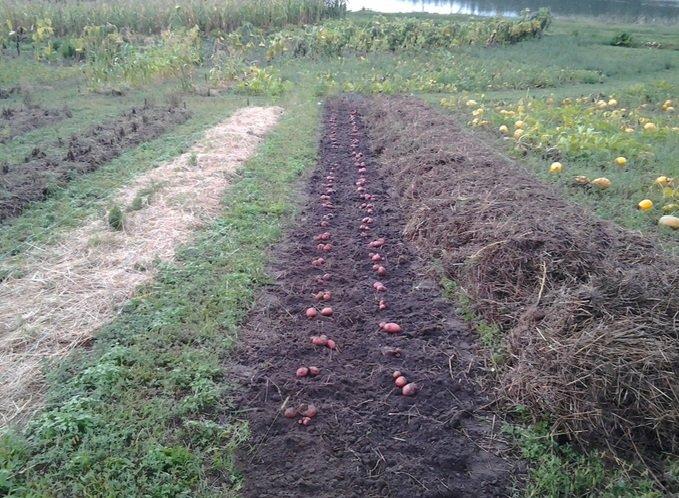
A Siberian landowner suggested fan-shaped hilling of potatoes. It involves widening the plant by separating the stems from each other. The goal is to reduce competition between individual shoots for moisture and light. Hilling is recommended using hay, straw, soil, or green manure grown between the potato rows, such as mustard or rye.

Advantages and disadvantages of this technique
Gardeners constantly debate the advisability of fan-hilling, a technique used to cultivate soil. To understand this, it's important to consider the pros and cons of the method.
Advantages:
- the crop yield increases by 20 percent;
- the commercial quality is increased, the shelf life and taste characteristics of the tubers are improved;
- the layer of soil above the plant's root system increases, which ensures a stable temperature and humidity necessary for the normal growth and development of root crops;
- care reduces to a minimum the need for watering, treating plants from pests, and weeding beds;
- The tubers are protected from contact with the sun and the accumulation of solanine, which is poisonous to humans.
Flaws:
- It is a labor-intensive process, requiring careful attention to each plant, so the hilling method is suitable for small potato plantations;
- In dry weather, using this method can have a negative impact on the plant; in hot weather, after hilling, the evaporation rate will increase three times compared to a flat surface, resulting in the potatoes overheating, which will cause slow tuber development.
To ensure that hilling is beneficial, it must be done carefully, avoiding injury to the above-ground portion of the plant and its roots. Otherwise, the condition of the bushes may worsen rather than improve.
Comparison with other methods
In addition to the fan-shaped method of hilling potatoes, there is the traditional method and the Zamyatkin method, each of which has clear advantages.
With traditional
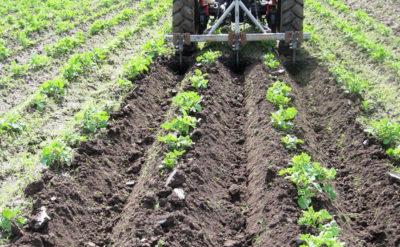
The most common method is the traditional one, which involves hilling the bushes from all sides.
Algorithm of actions:
- Remove all weeds and loosen the soil between the rows.
- Hill up the bushes to one side, adding loose soil from between the rows, and then rake up the soil on the other side of the bushes.
- Use a hoe to add soil to form a cluster of potato shoots. Finish the row by creating a mound that will trap rainwater and keep it within the plot.

As a result, the bushes become more slender, don't fall apart, and don't grow excessively, shading neighboring bushes. Furthermore, with proper site planning, you can plant 15 percent more plants in the same area than when growing without hilling, resulting in a more abundant harvest.
According to Zamyatkin
According to renowned vegetable grower I. P. Zamyatkin, the traditional method creates competition within the plant for light and water, ultimately reducing the yield. Therefore, he recommends planting the tubers in a staggered pattern, spacing them 20-40 cm apart. When the tops reach 17 cm, spread the stems apart and fill the center with organic material such as grass, last year's leaves, or straw. Only the stem tips should be left. This will produce leafy bushes that will grow quickly and double the yield.
The advantage is that the soil breathes and retains moisture even during drought, and such insidious pests as the Colorado potato beetle will bypass potato beds.
How to properly fan-hill plants?
Even a novice gardener can handle this activity, although the process is considered labor-intensive and requires significant physical strength.
Timing and frequency
When growing potatoes, it's important to know how often and when to hill the plants. Fan-shaped hilling is performed when the stems reach 15-20 cm in height. This is done before flowering by covering the plants with soil to a height of 15-18 cm; otherwise, the tubers will begin to protrude from the soil and accumulate solanine under the sun. When the shoots reach 25-30 cm, begin the next hilling. This time, make the ridge 20 cm high. If the plants become overgrown, which occurs when the soil is moist, it's worth hilling the plants again, as the tubers may emerge from the surface.

It's best to hill the beds in the evening on a cloudy day after rain. If natural moisture isn't available, water the beds using a sprinkler. This will prevent the soil from crumbling and keep the ridges in shape.
Experienced farmers recommend performing the procedure at least twice per season. Monitor the condition of the plants and the growth of the tops. If tubers are visible above the soil, begin the procedure immediately..

Necessary tools
Before you begin fan-shaped hilling, you'll need a shovel; a hoe won't work. Straw or grass clippings can be used as mulch.
Technology of carrying out works
Step-by-step instructions for fan hilling:
- Use your hands to spread the shoots apart and spread them out on the surface of the ground in a fan shape on different sides.
- Using a shovel, take soil from between the rows and pour it directly into the center of the bushes.
- Distribute the soil so that only the stems with leaves are located on top.
- You can put mown grass or straw on top, which will enrich the soil with nutrients and help retain moisture.

After a day, the stems will begin to grow upward. After two weeks, the bush will have grown significantly and will boast new shoots, on which tubers will form.
Vegetable growers' reviews of the fan method
Before using fan-shaped hilling, many gardeners seek the opinions of other vegetable growers who have mastered the method in practice:
Marina: "I own a small plot and love to experiment, so I decided to fan-hill my potato plants. It turned out to be an affordable and effective method. I use mustard and grass clippings for this purpose. This doubles the yield. I recommend this method to all gardeners."
Sergey: "I hill up potatoes using the fan method. I made some mistakes at first, but once I learned the technique and got the hang of it, I doubled my yield. It's important to maintain the proper distance between plants to make it easy to spread the mulch, and remember to loosen the soil. Then you'll have potatoes for the whole year."
Related posts:
 Why and when to hill up potatoes, the rules and timing
 How to properly hill potatoes with a walk-behind tractor: step-by-step instructions
 Why potatoes aren't growing well in the garden, and what to do to ensure a bountiful harvest
 Description and treatment of potato diseases, methods of control using folk and chemical means
 How to properly care for potatoes to ensure a good harvest
 Description and treatment of potato pests, control measures
 Description and characteristics of the Sante potato variety, planting rules and care
 Description and characteristics of the Bellarosa potato variety, planting and care