
- Description of the Yanka variety
- History of potato breeding
- Appearance of the bush
- Fruiting and taste qualities of root crops
- Where the harvest is used
- Necessary conditions for good growth and yield
- Climate conditions
- Humidity, temperature, lighting
- Recommended soil composition
- Planting technology
- Optimal timing
- Preparing the site and planting material
- Technological process of landing
- How to care for crops in open ground
- Watering and fertilizing
- Loosening and weeding
- Hilling
- Diseases and pests: control and prevention
- Harvesting and storage
- Reviews of Yanka potatoes
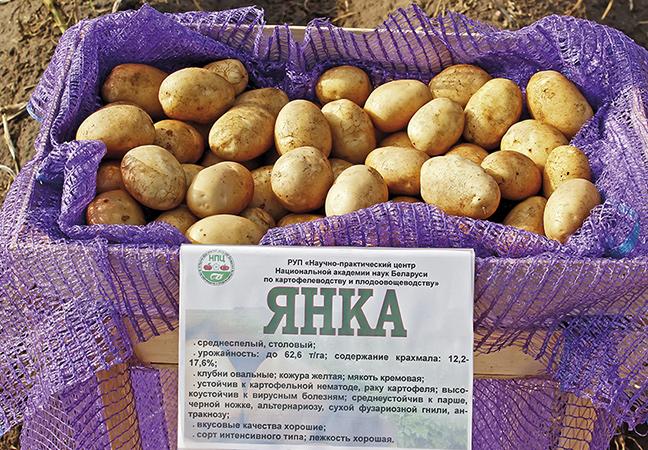
According to descriptions and reviews, the Yanka potato variety is easy to care for. It is grown in Belarus, Ukraine, and central Russia. It is a mid-season table potato variety characterized by average yields. The tubers have a marketable appearance and are easy to transport and store over winter.
Description of the Yanka variety
The variety's characteristics include the breeding history, the bush's appearance and description of the tubers, as well as the yield and area of application.
History of potato breeding
The Yanka variety was developed by Belarusian breeders at the Originator center. In 2012, the potato was included in the Russian state register.
Appearance of the bush
The plants reach a height of 50 cm, with spreading leaves and dense, upright stems. The foliage has a characteristic wavy texture. Flowering lasts about two weeks. The flowers are white, and eventually fall off or form berries.
Fruiting and taste qualities of root crops
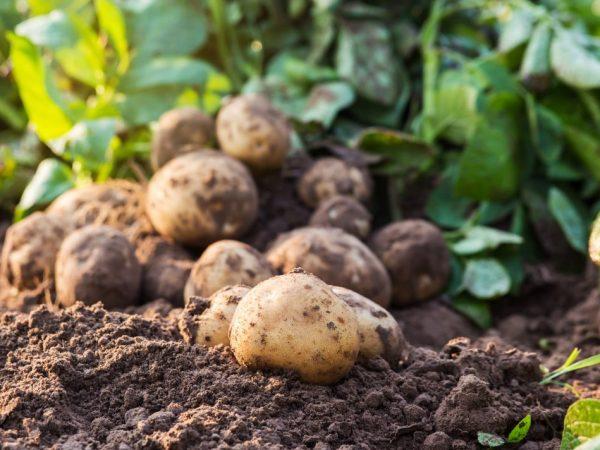
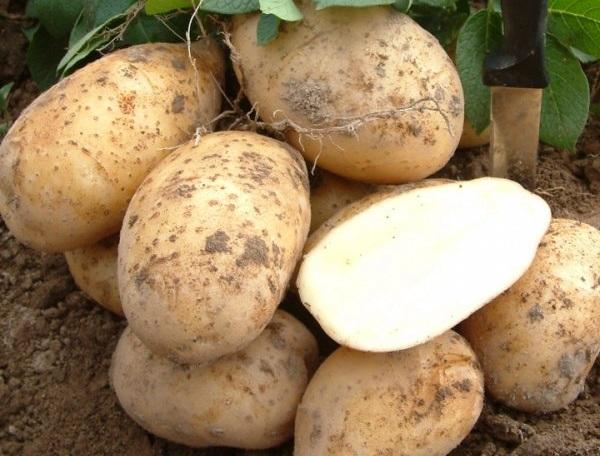
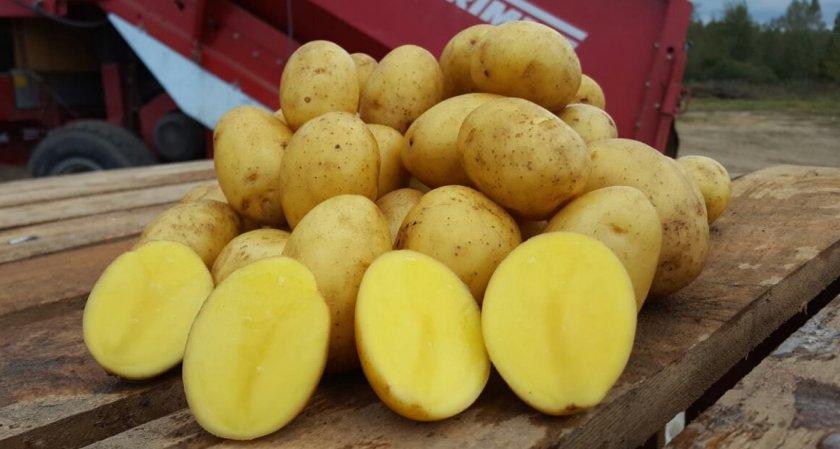
The root crops take 80 to 90 days to mature. Each plant yields 10 to 12 tubers weighing 70 to 100 grams. They are covered with a thin brown skin and have small, shallow eyes. The flesh is white or cream-colored when cut. The roots contain 18% starch and cook well. Taste testers rate their flavor as excellent.
Where the harvest is used
The Yanka variety is grown commercially, for processing into freeze-dried puree and starch. It is also very popular with gardeners, where the tubers are used to make mashed potatoes, salads, and soups.
Necessary conditions for good growth and yield
To successfully grow and obtain a healthy and rich harvest, it is necessary to create conditions for growing the crop.
Climate conditions
Temperate climates are considered optimal for the Yanka variety. In the south, the variety requires increased watering. In the north, potato yields decline. This should be taken into account when choosing a variety for your plot.
Humidity, temperature, lighting
The Yanka variety thrives in moisture but does not tolerate flooded soil or stagnant water. Therefore, it's important to choose locations that aren't exposed to excessive soil moisture.
The optimal temperature for growing potatoes is considered to be 20–24°C. If temperatures rise, increase watering and delay harvesting by 1–2 weeks. If temperatures drop and rainfall is frequent, harvest earlier and reduce watering.
Potatoes need at least 8 to 10 hours of light per day. The planting site should not be shaded. Constant exposure to wind will also reduce the quality of the fruit.
Recommended soil composition
Sandy and sandy loam soils are considered the best. Drainage is recommended for clay and loam soils. The optimal soil composition is considered to be:
- peat;
- sand;
- humus.
Planting technology
To plant potatoes, you need to adhere to a certain technology.
Optimal timing
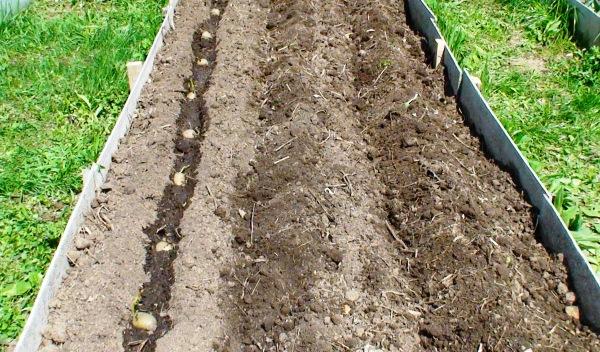
In temperate regions, potatoes are planted in mid-May. In the south, planting occurs from late April to early May. When growing in the north, seeds are sown in late May. The timing may vary depending on weather conditions. At the time of planting, the soil should warm up to 10°C (50°F) to a depth of 10 cm.
Preparing the site and planting material
Site preparation begins in the fall. The soil is dug over, removing all weeds, roots, and stones. Organic fertilizers and lime are added if the soil is too acidic. The following fertilizers are used:
- manure;
- chicken manure;
- compost;
- herbal infusions;
- humus;
- wood ash.
In the spring, the procedure is repeated. Fertilizing with organic or mineral fertilizers is repeated. Nitrogen fertilizers are used for potatoes.
Important! In early spring, oats are sown in the area; they cleanse the soil, restore it, and enrich it with nitrogen.
Planting material is purchased from reputable nurseries. Tubers go on sale in the spring; they can be purchased at agricultural stores, from friends, or ordered online. Roots from last year's harvest are also used.
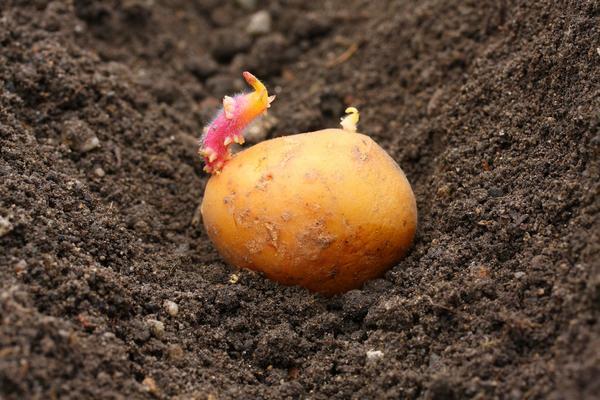
Place the potatoes in a bright, ventilated area two weeks before planting. Spread them out in an even layer. Every two to three days, rotate the tubers and spray them with water. As soon as sprouts 2 to 3 cm long appear, transplant them into the soil.
Technological process of landing
The planting process is carried out according to the following algorithm:
- On the plot, beds are formed with a gap of 50 cm from each other.
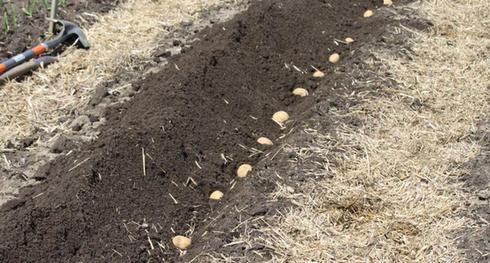
- Dig holes 10 cm deep, with a gap of 30 cm between them.
- 300 ml of settled water is poured into each hole.
- The seeds are soaked in a solution of potassium permanganate for 30 minutes.
- Place the tubers uncut.
- They cover it with soil.
- The beds are leveled with a rake.
Take a look Also
On sandy soils, the seeds are planted 15 cm deep, on sandy loam soils 10 cm deep, on clayey and loamy soils, drainage is laid, and the seeds are buried 5 cm deep.
 Important! Manganese treatment improves the taste of the harvest.
How to care for crops in open ground
Yanka potatoes are not demanding in care, however, to improve the quality of the harvest, it is necessary to weed, water, fertilize, hill up, and protect the crop from diseases and pests.
Watering and fertilizing
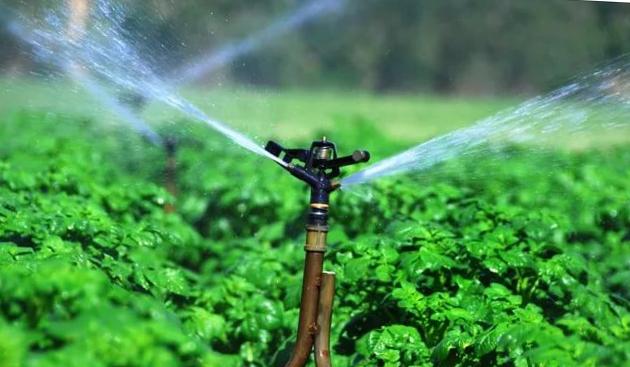
Potatoes are watered three times during the growing season. The first time is when the plant reaches 15-20 cm in height, the second time is at the beginning of flowering, and the third is after flowering has completed. Three liters of settled water are used per plant. The liquid is applied to the root zone of the bush.
Loosening and weeding
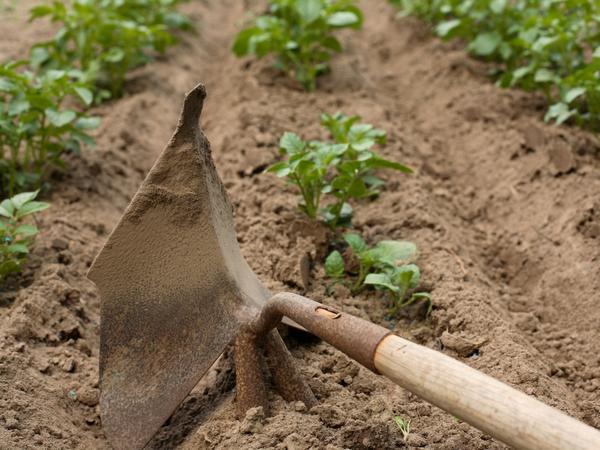
Loosening the soil ensures the tubers are saturated with oxygen. This procedure is performed after each watering and rain. This prevents the formation of soil crusts and promotes improved mineral absorption.
Weeds are removed along with loosening. If the beds become overgrown with foreign plants, this will affect the quantity and quality of the harvest.
Hilling
Hilling improves root development and increases their number. This procedure is performed three times per season: the first time when the plant reaches 20 cm in height, the second time two weeks later, and the third time three weeks later.
 Important! Cover the plant with soil so that 3-4 pairs of leaves remain above the surface.
Diseases and pests: control and prevention
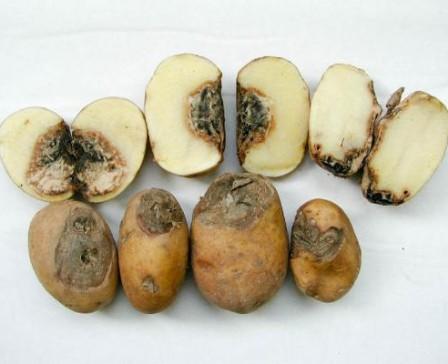
The crop is susceptible to infections and attacks by harmful insects. Frequent rainfall, adverse weather conditions, and poor care lead to increased risk of disease. They are susceptible to:
- late blight;
- fusarium;
- scab;
- Alternaria;
- blackleg;
- nematode.
To combat infections, damaged areas of the plant are removed and the bushes are sprayed with fungicides. To prevent infection, treatment is carried out before flowering and repeated twice per season.
The crop is also susceptible to insect attacks:
- Colorado potato beetle;
- wireworm;
- mole cricket;
- black aphids.
To control insects, spray with broad-spectrum insecticides. Once the effect wears off, repeat treatment. Stop treatment 20 days before harvest. This is the time it takes for the chemicals to break down.
Harvesting and storage
Harvesting begins after the end of the growing season, 80 to 90 days after planting. This period typically falls in mid- to late May, depending on the growing region. Ten days before digging, the tops are cut off, leaving 10 cm of shoots exposed. Once these are dry, harvesting begins.
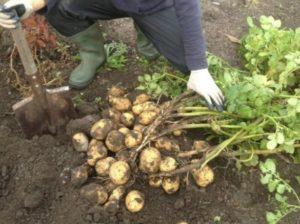
All tubers are dug up, any damaged ones are removed, and they are transferred to a dark, ventilated area to dry. Leave for 10-14 days. Then, the finished tubers are collected in cloth bags or breathable boxes. Store in a cool, dark place at 4-5°C. Suitable storage locations:
- cellar;
- insulated balcony;
- basement;
- garage.
The firmest and largest fruits are reserved for seed. These tubers are stored separately and removed before the start of the next season. The Yanka variety keeps well until summer.
Reviews of Yanka potatoes
Lydia, 60 years old, Moscow
I grew the Yanka variety for the first time this year. It took root well in my garden. The bushes grew straight and beautifully. We harvested the tubers in August; they were smooth and thin-skinned. I treated the potatoes for bugs and diseases in early June. They were disease-free. Each plant yielded 3 kg of potatoes. We saved the seeds for the next season.
Vladimir, 73 years old, Chekhov
My neighbors at the dacha gave me the Yanka potato variety to try. I cooked some of the tubers; they boil well and are perfect for mashed potatoes. The potatoes have a pleasant, slightly sweet flavor. They are planted in mid-May. Our soil is loamy, so we had to constantly loosen the soil. Due to frequent rains, the bushes developed late blight. This didn't affect the quality of the harvest. We dug up 8-10 tubers from each bush.
Polina 43 years old, Omsk
My husband and I farm potatoes for sale. The Yanka variety thrives in sandy soils. It takes root easily and produces well. The tubers are marketable and sell well, surviving transportation without damage. We dig up some of the harvest for new potatoes, and store the rest for the winter. We always take preventative measures against diseases and beetles. The variety is easy to care for.
Related posts:
 Why potatoes aren't growing well in the garden, and what to do to ensure a bountiful harvest
 Description and treatment of potato diseases, methods of control using folk and chemical means
 Description and treatment of potato pests, control measures
 Description of the best potato varieties of domestic and foreign selection
 Description and characteristics of the 15 best potato varieties for Belarus
 Description and characteristics of the Gulliver potato variety, planting and care
 Description and characteristics of the Rodrigo potato variety, cultivation and care
 Characteristics and description of the Adretta potato variety, planting and care