
- Composition and release form
- Mechanism of action of the herbicide
- Advantages and disadvantages of the product
- Preparing the soil before processing
- Breeding Zenkor
- Instructions for use on potatoes
- Pre-emergence treatment
- Post-emergence treatment
- Compatibility with other herbicides
- Toxicity and safety precautions
- Storage terms and conditions
- Analogues of the product
- Reviews of Zencor
Many gardeners use Zenkor, a herbicide considered effective and safe, to control weeds when growing plants and vegetables. Zenkor is a selective chemical that works selectively against weeds without harming vegetables or other crops.
Composition and release form
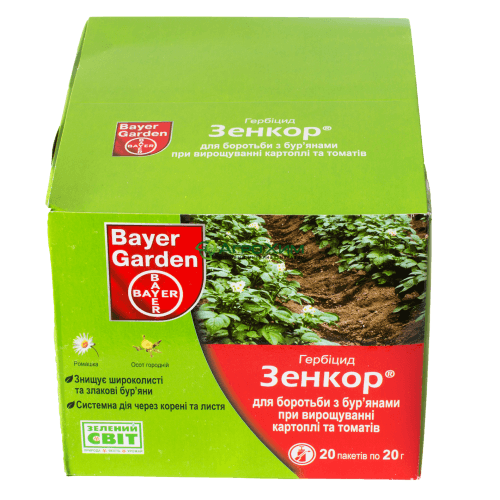
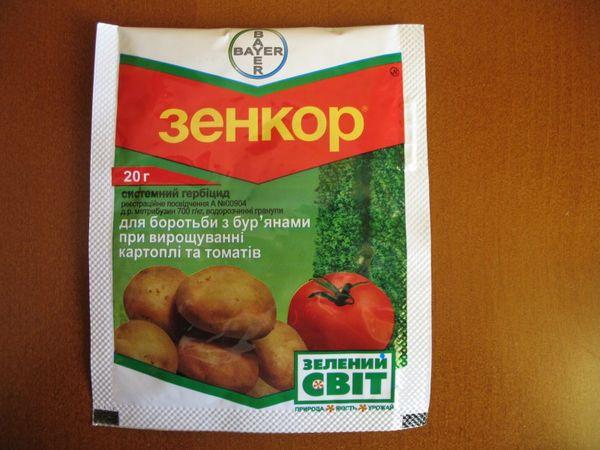
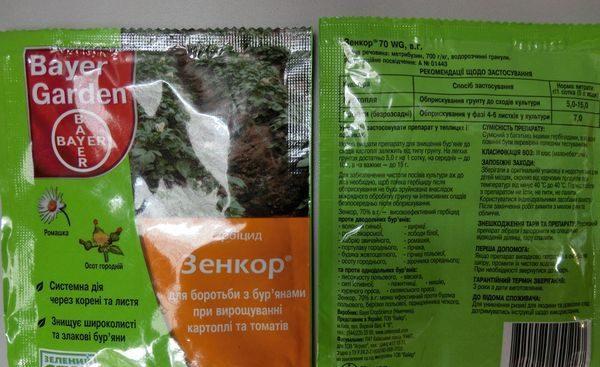
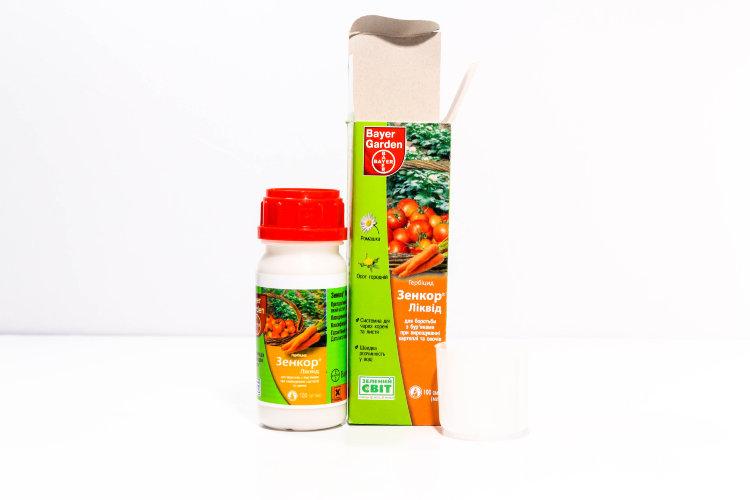
Zencor contains metribuzin. This element has low solubility in water, so the herbicide's activity persists in the soil for about three months. This weed killer is safe for bees and insects. Zencor herbicide is available in various forms: powders and capsules are packaged in 20g sachets, and the suspension is available in 100ml bottles. These are intended for private households, while 5-liter canisters of suspension are suitable for farms.
The outdated form of the product is now being replaced by a new-generation herbicide, Zenkor Ultra, an improved version with a reduced active ingredient content. However, the herbicide's effectiveness has not been reduced.
Mechanism of action of the herbicide
The herbicide is destructive to broadleaf and annual weeds. It is used to treat areas planted with tomatoes, potatoes, carrots, and corn. When applied before the shoots emerge, the herbicide's special chemicals form a film on the surface, preventing further weed growth.
When applied after seedlings emerge in the beds, the herbicide suppresses the elements needed for photosynthesis. As a result, Zenkor only affects the weeds, which dry out and stop developing. The effects become noticeable within a week.
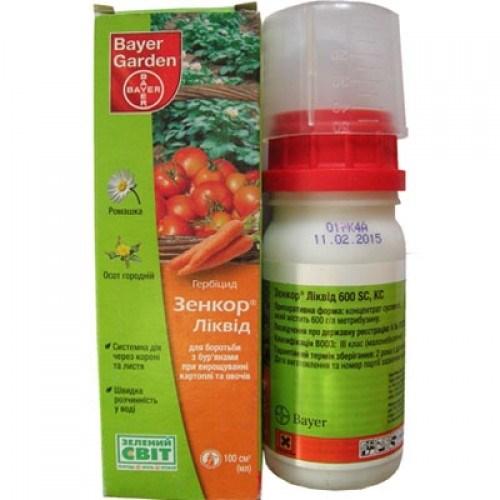
The product works comprehensively: it inhibits photosynthesis on leaves and weed root growth. The film formed by Zencor on the soil surface prevents weeds from germinating for two weeks.

Important! The soil in the beds must be settled and moist during cultivation to prevent a film from forming on the surface.
Advantages and disadvantages of the product
Zenkor has many advantages that distinguish it from other herbicides due to its ease of use.
- The drug does not require pre-dissolution.
- It consumes little.
- Sprayer filters do not get dirty and remain clean.
- The granules dissolve without sediment.
- The chemical has no smell.
- It's easy to dose. Its liquid form can be diluted in containers.
- Zenkor is safe and does not cause harm to health.
Complications from direct contact are extremely rare.
Zencor is not without its drawbacks. It is ineffective on light soils with a humus content of less than 2%. It will not kill weeds that are resistant to the herbicide:
- creeping wheatgrass;
- field bindweed;
- black nightshade;
- bedstraw;
- perennial cereals.
Zenkor cannot effectively control these weeds.
Also, this herbicide is not suitable for use in beds with the following vegetables:
- onions and garlic;
- salads and peppers;
- all types of cabbage and melons;
- beets and rapeseed.
Preparing the soil before processing
No special preparation of the beds is required before applying Zenkor. However, the soil in the beds should be free of clods. If there has been no rain for a long time and clods have formed, carefully break them up with a flat-top rake or a rake, then level the surface of the beds.
The soil should be settled and slightly moist. Zenkor is more effective in moist soil.
Important advice! Before tilling the soil, keep the weather forecast in mind. If prolonged rainfall is expected, you'll need to delay tilling, as it could neutralize the herbicide's effectiveness. Light rainfall will actually help achieve better results.
Breeding Zenkor
The instructions for use state that the herbicide should be diluted with water in the correct proportions. The specified 15 milligrams of the product should be diluted in 5 liters of water.
Take a look Also

Important: In dry weather, you can use a higher dose of the product, and in rainy weather, a minimal dose.
Instructions for use on potatoes
Zenkor is used differently depending on the crop. Potato processing carried out before and after emergence.
Pre-emergence treatment
Application in potato fields has its own characteristics:
- before emergence on light soils – 5 ml per hundred square meters is used;
- on normal soils – 7 ml per hundred square meters;
- on heavy soils – 11 ml per hundred square meters.
Post-emergence treatment
After emergence, spray 5 ml per 100 square meters, regardless of soil type, at a plant height of at least 10 cm. Treatment is carried out using a hand sprayer.
Compatibility with other herbicides
To enhance results and broaden the spectrum of action, Zenkor can be used with other weed control products. However, mixing Zenkor with certain substances is not recommended.
- Nitrogen-containing fertilizers increase vegetative mass, which is why the effect of Zenkor may be reduced.
- The herbicide must not be mixed with insecticides.
- Dry undiluted substances cannot be mixed.
All information about the chemical compatibility of the herbicide can be found on the product packaging upon purchase.
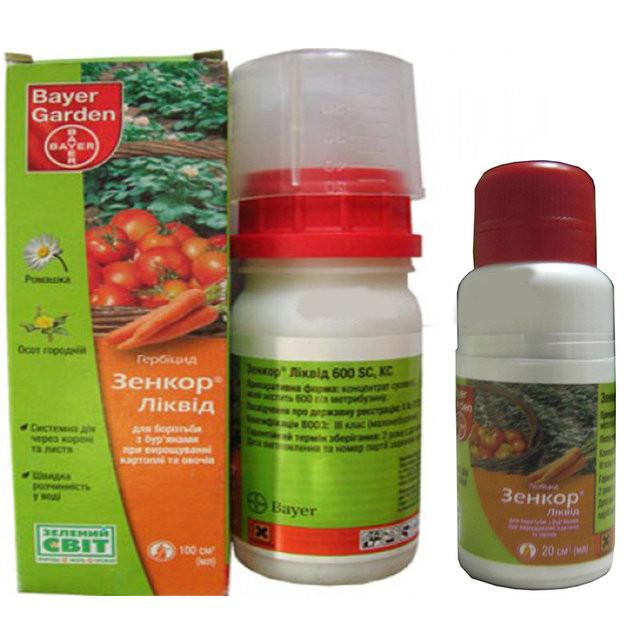
When creating mixtures, use herbicides from a single manufacturer. Products from the German company Bayer are compatible with Zencor.
Toxicity and safety precautions
The herbicide is classified as hazard level 3 for humans. It has low toxicity, does not cause irritation upon contact with skin, and does not cause allergic reactions. No adverse effects on the nervous system or reproductive capacity have been identified.
The chemical can form a film on treated surfaces. This indicates that its components can persist for a long time on the mucous membranes of the respiratory tract and end up in the digestive system. For this reason, it is essential to wear protective equipment for the respiratory system, eyes, and digestive system when working with the herbicide.
 Note! Zenkor is only used in open ground. Do not use it in greenhouses or hotbeds.

Storage terms and conditions
The manufacturer specifies a shelf life of 3 years from the date of manufacture for Zencor in the instructions. This herbicide is recommended to be stored in a dark, dry place, away from food products. If stored for an extended period under inappropriate storage conditions, the product's effectiveness will be reduced.
Analogues of the product
The most common substitute for Zencor is Metrizan, which is based on metribuzin. This medication is as effective and safe for grains and vegetables as Zencor.
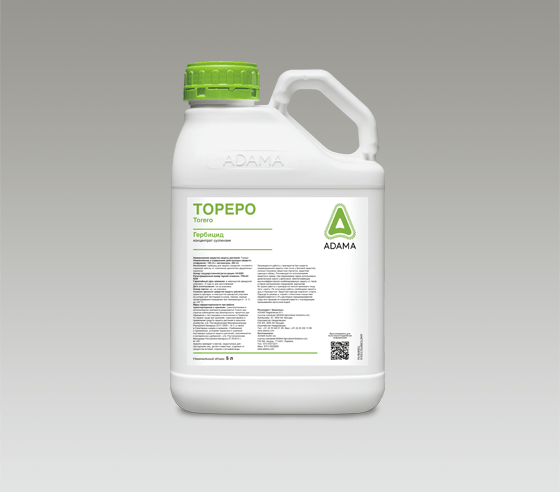
Another highly effective systemic herbicide analog is Torero, which is used in liquid form on potato, soybean, and corn fields. It destroys annual weeds and grasses.
Reviews of Zencor
Elena, Ivanovo.
We bought this on the recommendation of our neighbors. We treated the potatoes before they sprouted, and then again three weeks later. As you can imagine, there were no more weeds. I highly recommend it.
Maria, Vologda.
We decided to use Zencor to treat the areas where our potatoes and tomatoes grow. It's hard to believe how clean the beds are. We're pleased with the results.
Valery, Tyumen.
It turns out I didn't apply it according to the instructions. I should have applied it to moist soil. But there weren't that many weeds. Zenkor can be used successfully in any climate. Its price-to-quality ratio makes it one of the most effective herbicides.
Related posts:
 Instructions for use and composition of the herbicide Zenkor, dosage and analogues
 The best eggplant varieties for growing in a polycarbonate greenhouse: planting and care
 Instructions for the use of herbicides for potatoes, similar preparations
 Methods for planting and propagating cherries at home
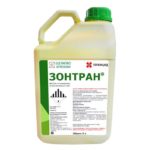 Instructions for use and composition of the herbicide Zontran, dosage and analogues
 Classification, selection and application of herbicides for beet treatment
 The health benefits and contraindications of black currants
 The best grape varieties for growing in the Urals, planting and care rules in summer