
- Description of the Kamensky potato variety
- History of origin
- External description of the plant
- Productivity and taste of root crops
- Main advantages and disadvantages
- Necessary conditions for growing
- Growing region
- Lighting, temperature, humidity
- Optimal soil composition
- Planting a crop on a plot
- Deadlines
- Preparing the site and planting material
- Step-by-step algorithm for planting potatoes
- We organize proper care for potato plantings
- Watering frequency depending on the season
- What to feed
- Loosening and mulching the soil
- Protection and control of potato insects and diseases
- Harvesting and storage
- Reviews of vegetable growers about the crop
According to reviews and descriptions, the Kamensky potato variety is characterized by high yields and resistance to drought and low temperatures. The tubers have a pleasant taste and sell quickly at retail. These potatoes are used for both commercial and home-grown cultivation.
Description of the Kamensky potato variety
The characteristics of the variety include the history of origin, external description of the bush and root crop, and yield.
History of origin
The Kamensky variety was developed by Russian breeders. It is an early variety. Scientists from the Ural Research Institute of Agriculture worked on it. In 2009, the potato was included in the Russian state register. It is intended for cultivation in the Ural and West Siberian regions.
External description of the plant
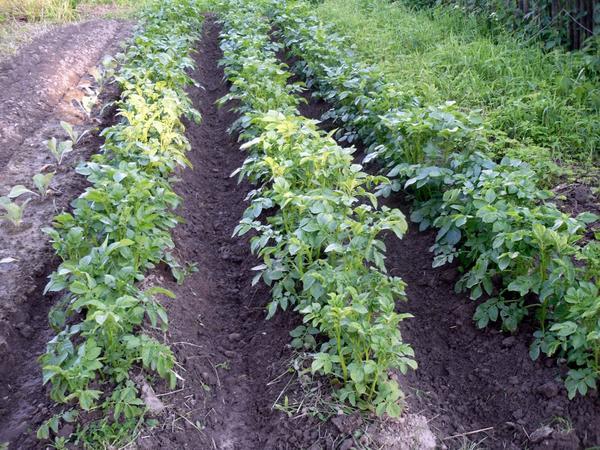
The bush is tall and semi-erect. The leaves are light green with characteristic wavy edges. It blooms with red-purple flowers. The stems are dense. The growing season lasts 50-60 days.
Productivity and taste of root crops
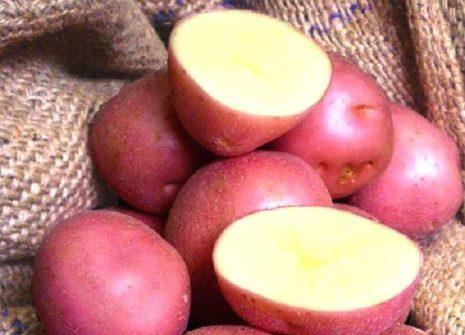
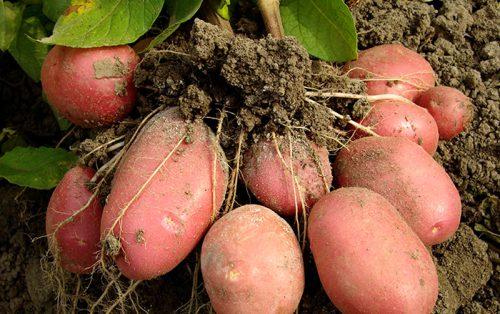
The root vegetable is medium-sized, weighing 70–150 g on average, with tubers weighing up to 180 g. They are covered with a thin red skin, forming shallow eyes. The flesh is white, contains 18% starch, and softens when cooked. According to tasters, the flavor is good.
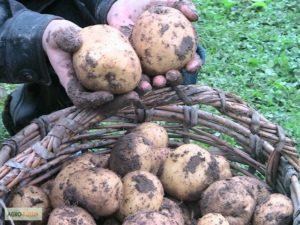
Kamenskoye's potato yield is high, with 500-550 centners of potatoes harvested per hectare. A single plant produces up to 25 tubers.
Main advantages and disadvantages
The Kamensky variety has its advantages and disadvantages. The advantages include:
- High yield.
- Early ripening of fruits.
- Duration of storage and transportability of the crop.
- Easy to care for.
- Resistant to Colorado potato beetle and some diseases.
Among the disadvantages, a tendency to be infected by the golden nematode is noted.
Necessary conditions for growing
To grow the Kamensky variety, select a site with suitable lighting, humidity, and soil composition.

Growing region
The Kaminsky potato is suitable for growing in northern regions. Its early maturity allows it to produce a good harvest unaffected by adverse weather conditions.
In temperate and southern regions, it allows for a double harvest per season. In the south, potatoes ripen faster.
Lighting, temperature, humidity
Potatoes prefer good, consistent light. The optimal air temperature for growth is 20–24°C. Regular watering ensures additional tuber formation and mineral absorption. However, frequent waterlogging can contribute to fruit rot, so drainage is recommended.
Optimal soil composition
The Kamensky variety is unfussy about soil conditions. It thrives in any soil. A mixture of peat, humus, and sand is a favorable soil composition. Loose, airy soils produce higher yields than heavy, wet soils.
Planting a crop on a plot
Potatoes are planted according to the recommended timing, a suitable location is selected and the seed material is prepared in advance.
Deadlines
In northern regions, tubers are transplanted into the ground at the end of May. By this time, the soil warms up to 10°C at a depth of 10 cm. In southern regions, planting can begin in late April, and in temperate regions, in mid-May.
Preparing the site and planting material
The selected plot is prepared in the fall. It is dug over, all weeds, roots, and stones are removed. Organic fertilizers are added:
- manure;
- chicken manure;
- herbal decoctions;
- wood ash;
- compost.
In the spring, the soil is dug again. Mineral fertilizers containing nitrogen, phosphorus, and potassium are added.
Seed material is purchased from trusted nurseries or root crops collected last year are used.
The tubers are transferred to a sunny and ventilated area two weeks before planting. They are laid out in an even layer, sprayed with water every 2-3 days, and then rotated. The tubers turn green and sprout. When the sprouts reach 2-3 cm in length, they are planted.
Step-by-step algorithm for planting potatoes
Potato planting is carried out according to the following algorithm:
- Beds are formed on the prepared area, leaving 50 cm between them.
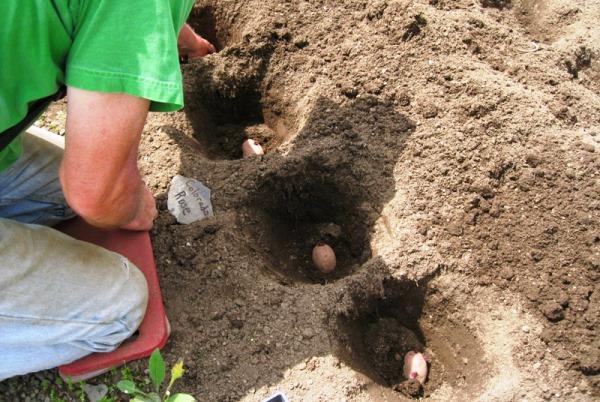
- Dig holes 10 cm deep at a distance of 25–30 cm from each other.
- The tubers are soaked in a solution of potassium permanganate for 30–40 minutes.
- 300 ml of water is poured into each hole.
- The seed material is placed in the holes.
- They touch the ground.
- The surface of the beds is leveled with a rake.
We organize proper care for potato plantings
To successfully grow and harvest a bountiful crop, proper care is essential. This includes regular watering, loosening, mulching, hilling, fertilizing, and preventative spraying against pests and diseases.

Watering frequency depending on the season
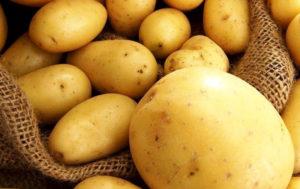
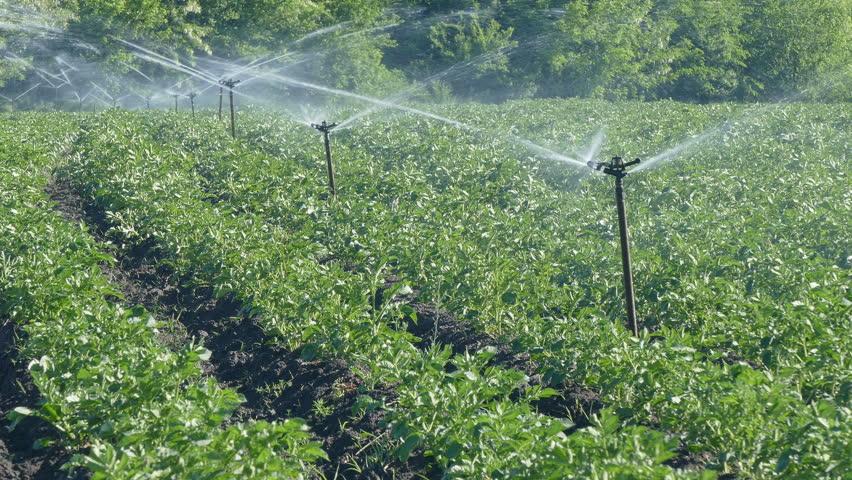
Water three times per season: once when the sprouts reach 15-20 cm in height, a second time during flowering, and a third time after flowering has finished.
Important! Increase watering during hot and dry weather, and reduce it during frequent rainfall.
What to feed
Fertilization is carried out with mineral or organic fertilizers. For this purpose, complexes containing nitrogen, phosphorus, potassium, and other elements are used.
When using organic matter, the compositions are distributed evenly over the beds.
Fertilizers are combined with irrigation. After irrigation, the crop is fertilized. Fertilizer application is done using two methods: root and foliar. In the first method, dry or liquid fertilizers are applied near the root system. In the second method, dissolved minerals are sprayed onto the surface of potato leaves. The foliar method is considered more effective, as the elements penetrate the plant more quickly.
Loosening and mulching the soil
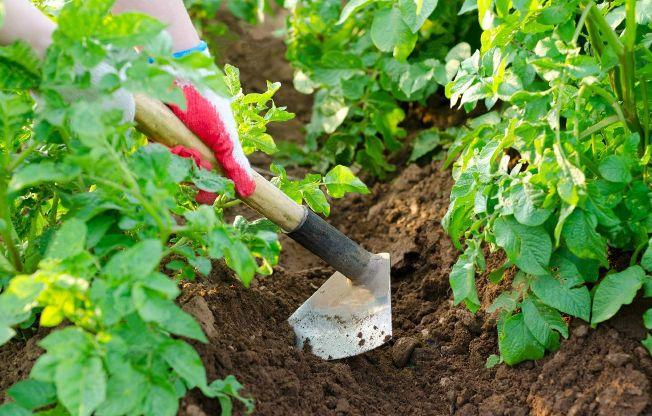
Loosening is done after each watering and rain. Using a hoe, the soil surface is worked, deepening the tines. This prevents the formation of soil crusts on the surface, which block water and minerals from reaching the plant roots.
When loosening the soil, weeds and their roots are removed. These plants deplete the soil and prevent the tubers from absorbing beneficial minerals.
Mulching retains moisture near the potato root system, preventing infection. Straw, wood shavings, and dry grass are used for mulch. The material is spread in an even layer over the entire surface of the bed.
Protection and control of potato insects and diseases
The Kamensky variety is resistant to potato cancer, leaf curl, and rugose and striped mosaic. Potatoes are rarely attacked by the Colorado potato beetle. The bushes have moderate resistance to late blight, but the disease rarely appears due to the variety's early maturity.
Of all the diseases, the golden nematode most often attacks Kamensky potatoes. To combat potato pests and diseases, insecticide and fungicide treatments are necessary at the beginning of the growing season. Proper care of the crop also prevents the development of diseases.
Harvesting and storage
The harvest is 50-60 days after planting. By this time, the tops have blackened and dried out, and the tubers are easily separated. The roots are dug up with a shovel. After harvesting, the crop is moved to a cool, ventilated, dark place. The potatoes are laid out in an even layer on racks and a covered floor. They are left to dry for 1-2 weeks.
Take a look Also


The potatoes are then packaged into cloth bags or breathable boxes and stored in a cool, dark place at 4–6°C. Kamensky potatoes can be stored until the following season and also withstand transportation well.
Important! Strong, healthy, and large tubers are reserved for seed production.
Reviews of vegetable growers about the crop
Artem, 34 years old, Astrakhan
I've been growing Kamensky potatoes for sale for three years now. The variety is easy to care for and produces a high yield. The tubers are marketable and sell quickly. I know potatoes are susceptible to nematode infestations, so I take preventative measures and apply mineral and organic fertilizers, which is quite sufficient.
Larisa, 56 years old, Murmansk
This year, I bought Kamensky potatoes to try. Before preparing the seed, I boiled a couple of tubers and tried them. They tasted good, cooked well, and were perfect for salads and soups. I planted them according to all the rules. The harvest ripened in two months. I was surprised by the number of tubers per plant: 23-25.
Dmitry, 45 years old, Sochi
Two crops of early-ripening potatoes are grown in one season. This year, I bought the Kamensky variety. I planted the first in late April and the second in mid-June. I dug up 20-25 potatoes from each plant. Had I known I'd have such a harvest, I wouldn't have planted so many. The variety is easy to care for and tolerates drought well.
Related posts:
 Description of the best potato varieties of domestic and foreign selection
 Description and characteristics of the Rodrigo potato variety, cultivation and care
 Why potatoes aren't growing well in the garden, and what to do to ensure a bountiful harvest
 Description and treatment of potato diseases, methods of control using folk and chemical means
 Description and characteristics of the Krasavchik potato variety, planting and care
 Description and treatment of potato pests, control measures
 Description and characteristics of the Gulliver potato variety, planting and care
 Description and characteristics of the Bellarosa potato variety, planting and care