
Weeds are a major problem when growing potatoes, as they have a detrimental effect on the vegetable crop's yield. In small gardens, hand weeding is preferred. However, when mechanical weeding is ineffective, potato herbicides are used to control weeds. These products have become a lifesaver for large agricultural complexes.
What are herbicides?
Chemicals used to control weeds in garden plots or large potato fields are called herbicides. They are also used to control pests in industrial water bodies, for clearing forest areas, and for landscaping parks.
Herbicides are divided into two categories:
- Contact weed control products. These are used to kill annual weeds such as sow thistle, quinoa, blue cornflower, and many others. When applied to plants, the above-ground parts of the weeds are killed.
- Systemic herbicides. These are suitable for controlling perennial weeds, such as field bindweed and pink sow thistle. These plants have extensive root systems, so internal herbicides are used to control them.
Today, in the agricultural industry, it is more cost-effective to use herbicides for large-scale vegetable cultivation than to spend time and money on manual or mechanical treatment.
Caution! Weeds not only rob vegetable crops of nutrients, but also create a favorable breeding ground for many harmful insects and promote the development of fungal infections.
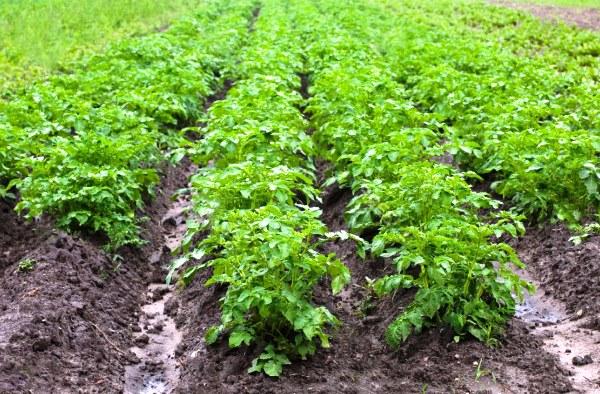
Types of herbicides
Herbicides are divided into two categories depending on their spectrum of action:
- Non-stop action products. They destroy all vegetation in the treated area.
- Selective products. They kill only weeds, leaving vegetable crops unharmed.
The only difference is the herbicide dosage. By varying the concentration, you can create a selective or non-selective herbicide. And using the herbicide in minimal doses can actually stimulate plant growth.
Depending on the timing of application or spraying, herbicides can be divided into two categories:
- Pre-emergence. These are used before potato planting, immediately after planting, or after harvesting.
- Post-emergence. These products can be sprayed directly onto plants.
In the first case, granular herbicides are more effective, applied to still-moist soil. This allows for better distribution of the chemical. In the second case, the leaves and stems of green plants are sprayed.
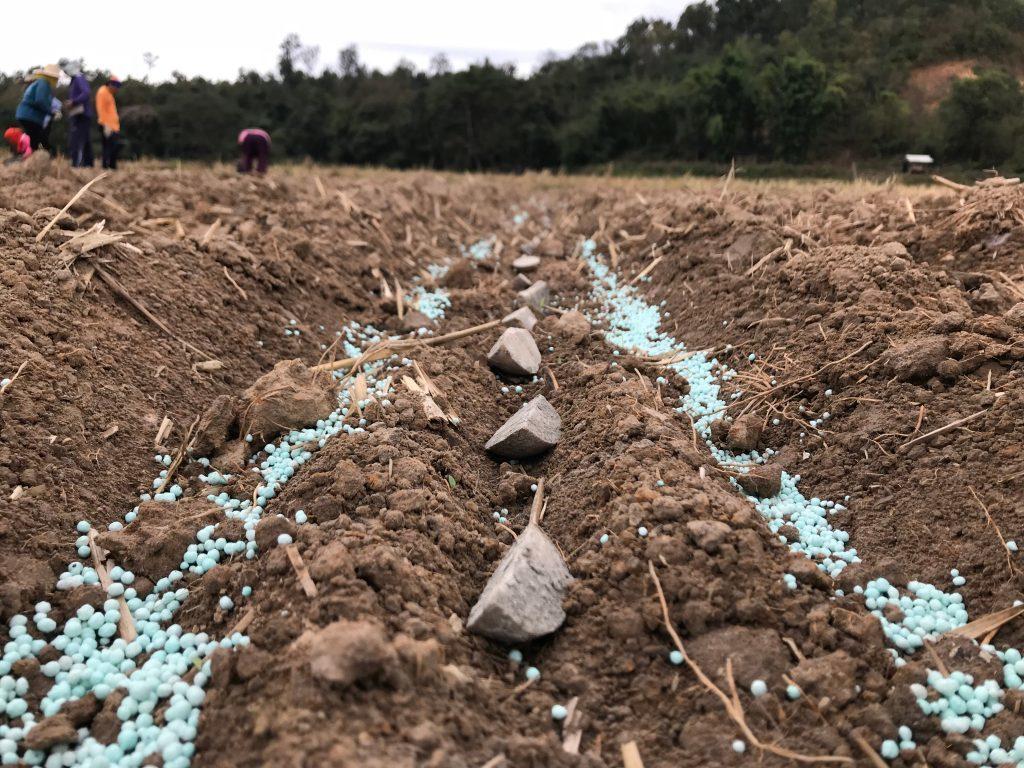
Continuous action
They are most often used for weed control in agricultural complexes, but can also be used by amateur gardeners to eliminate difficult-to-eradicate plants or overgrown areas. Furthermore, non-selective herbicides are essential for clearing all vegetation in areas designated for railway lines, runways, and power lines.

The main application of continuous action drugs:
- To accelerate the ripening of crops.
- Soil cultivation after completion of harvesting work.
- During the active growing season of agricultural crops.
Preventative weeding with non-selective herbicides helps reduce harmful weeds and maintain optimal soil moisture. An additional benefit is that it minimizes costs when growing vegetable crops.
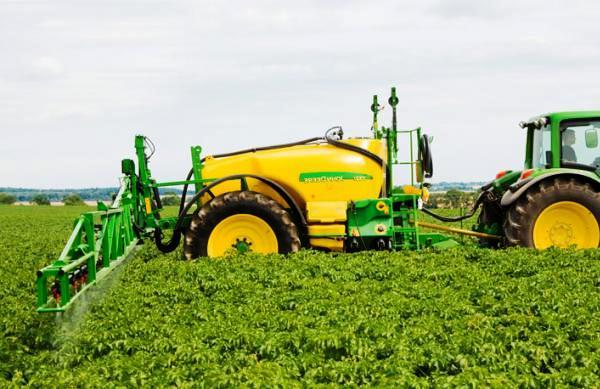 Important to know! Products in this group are divided into three subgroups. Systemic herbicides kill weeds completely. Soil herbicides are effective against seeds. Contact herbicides destroy only the above-ground portions of the plant.
Selective action
Modern selective pesticides penetrate through the leaves and stems to reach the weed roots, suppressing its growth and development. If the recommended dosage is not exceeded, potato crops are not harmed. They are most effective during dry weather.
Herbicides are sold in liquid, powder, and granular form. They are safe for use by animals and humans.
Therefore, they are often chosen to combat harmful plants in garden plots. If the garden is heavily infested with various types of grass, it is advisable to use them several times throughout the potato growing season.
Pre-emergent herbicides
These are non-selective herbicides, so they are used only when potato tubers have not yet sprouted. Applying them later than the recommended time will damage the vegetable crop. Herbicides are applied directly to the soil before planting, during planting, or after harvest. They kill annual and grass weeds.
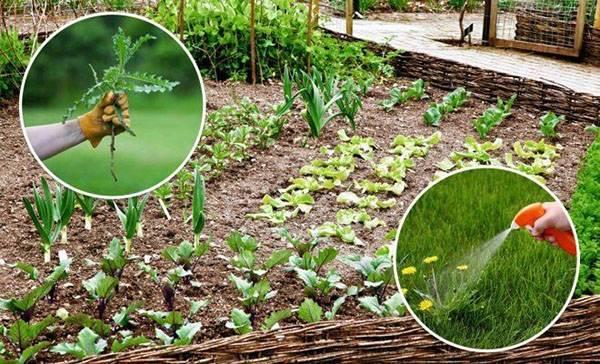
Post-emergence herbicides
This subgroup of products has different targets. Some herbicides are effective against annual weeds, while others are excellent against perennials. These products can be liquid or granular.
Important! Adhere to the optimal dosage of the chemical applied to avoid harming the potato crops.
The best herbicides for potatoes
Depending on the vegetable variety and the severity of the weed infestation, different herbicides are used. The selection is vast, and their number is growing every year. However, the following products are considered the best.
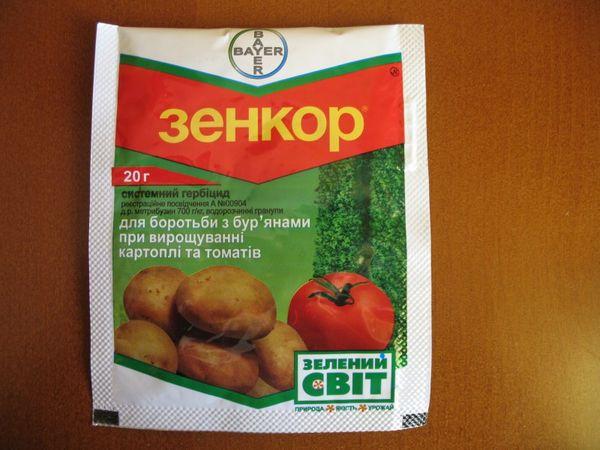
Zenkor
The substance metribuzin, which is part of this product, is capable of killing weeds during their emergence. It has a detrimental effect on various types of plants. It is most effective during periods of light rain. Heavy rain washes the product out of the soil. Plants die within a week or two, depending on humidity, soil type, and air temperature.
The herbicide can be used together with pesticides and is completely harmless to potato crops.
But if the variety is early maturing, it may begin to wilt. Therefore, it's best to use it before the vegetable sprouts appear, but when weeds have taken over the area.

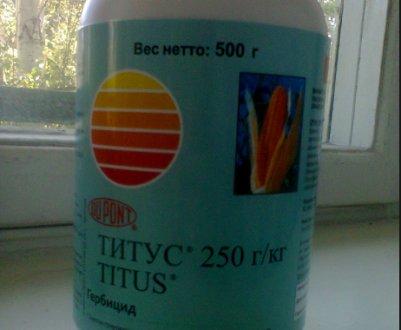
Titus
Contains rimsulfuron, which inhibits the growth of both annual and perennial grass weeds. It is effective for protecting potato crops from harmful plants. Apply only in dry, warm weather. The product penetrates the plant's foliage within 3 hours and decomposes within 10 days. It is often used when other herbicides fail to completely eradicate the vegetation.
"Lapis lazuli"
Some potato varieties are extremely sensitive to the product. Their growth is slowed, and the plants are unable to develop as well as before the herbicide was applied. It is used before planting or after harvesting. The product is primarily used to kill annual plants.
The amount of the applied preparation is adjusted taking into account the size of the area being treated, the condition of its soil and the amount of weeds.
Additional treatment may sometimes be necessary, but this should only be done a month after the initial application of the herbicide. Similar herbicide options, such as "Zenk" and "Antisapa," are known for their similar properties.
Herbitox
If you follow the instructions carefully, you can treat weeds in potato growing seasonIt can be used in conjunction with other agrochemicals, but only if no deterioration in weather is expected during the day. Air temperatures should range from 18 to 30°C.
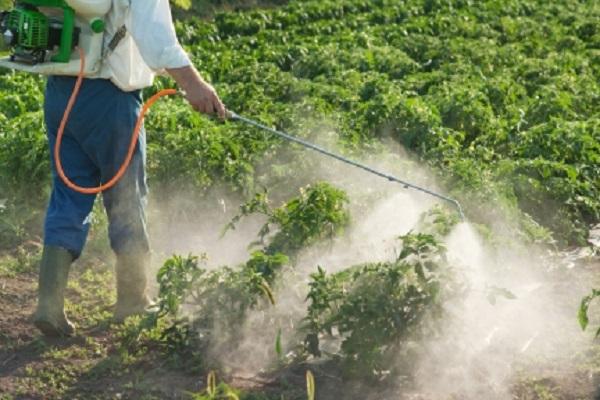
The first results can be seen within 5 days, with complete plant destruction occurring within a month. The best time to use is when weeds are actively growing, that is, when they are building up their green mass. The product penetrates the roots through the foliage, causing the plant to wilt and eventually die.
Caution! Before using the product as directed, ensure it is suitable for the potato variety to be grown in the area being treated.
General rules of application
If the potato variety is too sensitive to chemicals, a foliar herbicide should be selected. The dosage and type of product should be carefully selected, taking into account the timing of application: pre-emergence or post-emergence. Humidity should be maintained at 80%, but not higher.
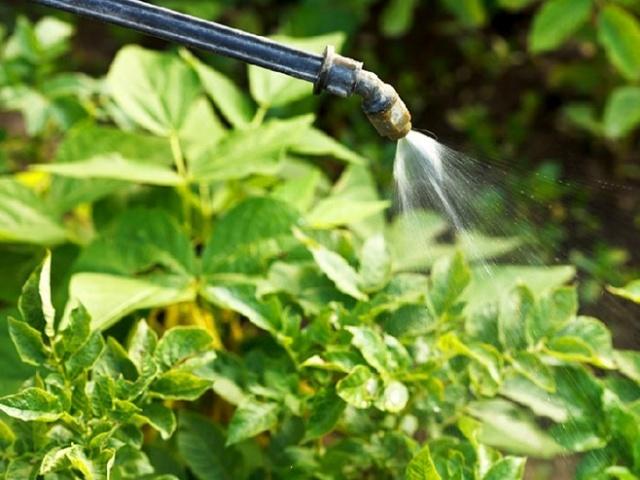
Bushes affected by various diseases, as well as those with tubers planted shallowly, cannot be treated. The soil should be thoroughly loosened to ensure even distribution of the product. The instructions also recommend using herbicides on a day when there is no forecast for precipitation, temperature fluctuations, or wind.
Contraindications for use
If potato plants are infested with insect pests or show signs of disease, herbicides should never be used. Otherwise, the weakened plant will die. Potato plants should be treated with herbicides only after 5 days have passed since the last frost. A small number of weeds is also a reason not to use herbicides. In this case, mechanical weeding is the best option.
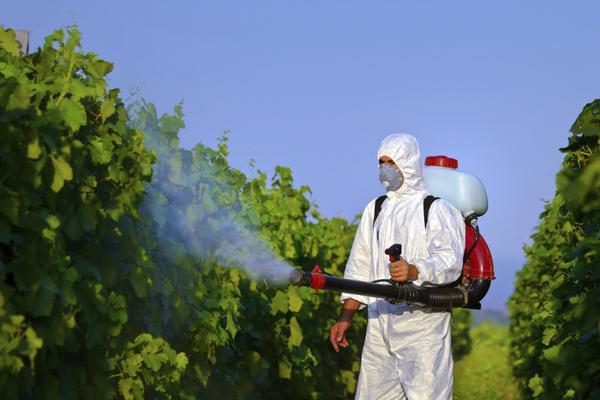 Important! Spraying or applying the product in granular or powder form should only be done while wearing protective equipment that prevents contact with herbicides.
The effect of herbicide treatment on potatoes
Mechanical tillage of potatoes can sometimes trigger the spread of viral diseases. Furthermore, constant tilling of the soil can only dry it out. Therefore, herbicides that can be simply sprayed are often chosen. This allows for rapid weed control and completely prevents the spread of viruses from other potato plants.
User reviews
Olga Nikolaevna, Stavropol: "I used to have to weed my garden every day. I especially struggled with bindweed, which kept growing back because I couldn't get rid of its roots completely. After using Lazurit, I've forgotten all about this harmful plant forever. I'll recommend this herbicide to everyone I know!"
Evgeny, Krasnoyarsk: "My father raises livestock and also plants a large potato field. We had problems with weeds almost from the very beginning. We tried all sorts of products, but only Titus helped us completely eradicate the weeds. The effect was immediate!"
Svetlana, Omsk: "A classmate recommended using Zenkor against weeds when he learned how difficult it was for me to control them in my garden. I've been using this herbicide exclusively for two years now. Now I don't have to spend hours weeding between the potato rows."
Related posts:
 Why potatoes aren't growing well in the garden, and what to do to ensure a bountiful harvest
 Description and treatment of potato pests, control measures
 Description and treatment of potato diseases, methods of control using folk and chemical means
 Top 10 Systemic Herbicides and How to Choose the Right One
 Types of garden fungicides and descriptions of the top 24 best, instructions for use
 Description of herbicides for treating cabbage and their use after emergence
 Types of herbicides for weeds and which ones are best to use, examples
 Description and characteristics of the Gulliver potato variety, planting and care