
- General information about the variety
- Characteristics of tubers
- Productivity
- Resistance to diseases and bugs
- The advantages and disadvantages of the Zhukovsky Early potato
- Rules for growing potatoes
- Soil preparation
- Preparation of planting material
- Time and planting pattern
- Further care of the crop
- Watering and fertilizing
- Loosening and weed control
- Hilling
- Protection from diseases and pests
- Harvesting and storing the variety
- Feedback from our readers
The Zhukovsky potato variety is widely grown in gardens across the CIS for both personal consumption and commercial sale. This variety is renowned for its excellent fruit appearance and rapid ripening. Its nutritious flavor makes it suitable for a variety of dishes. Caring for it is straightforward, as is the planting procedure. To successfully grow potatoes, please familiarize yourself with the information below regarding agricultural practices.
General information about the variety
The Zhukovsky potato variety was developed by Russian breeders from the Federal State Budgetary Scientific University in 1993. Since then, it has been included in the state register. As its description suggests, it is one of the earliest potato varieties with a guaranteed yield in any soil. The vegetable tolerates various temperature fluctuations and cyclones well. Based on its cooking characteristics, it is classified as a type A/B potato. It is a salad variety with universal use.
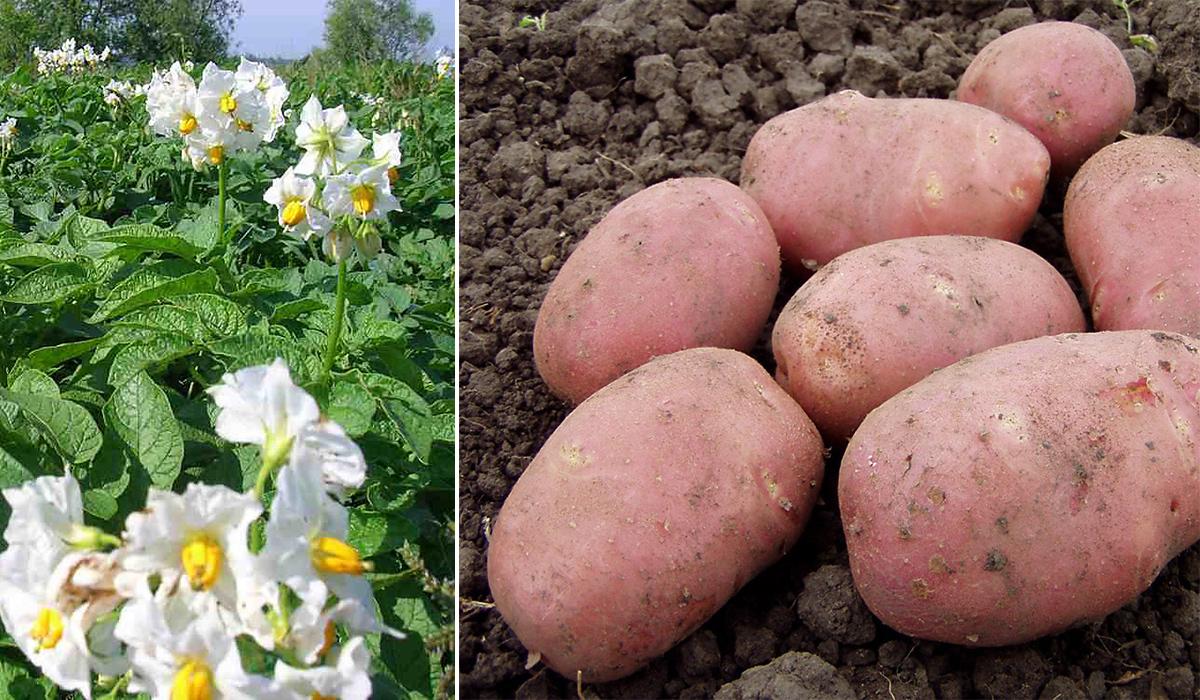
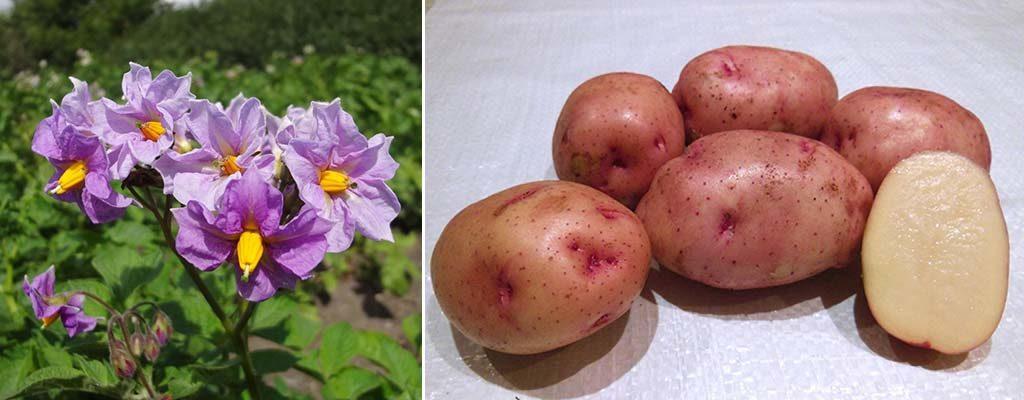
The plant is semi-spreading and medium-height. The bush has numerous, highly branched stems. The leaves are dark green, large, veined, and dissected. Flowering is short-lived but profuse. The flowers are reddish-purple, edged in white. The Zhukovsky variety is renowned for its resistance to droughts and frost. These qualities are inherent to the variety, as it is planted during periods of unstable weather conditions. Irrigation irregularities are also not harmful.
Characteristics of tubers
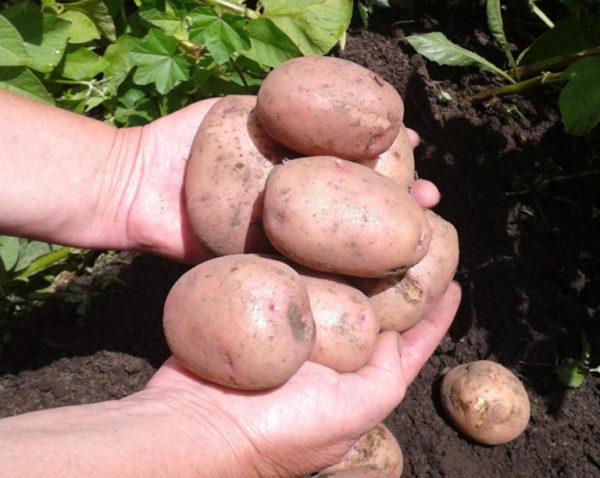
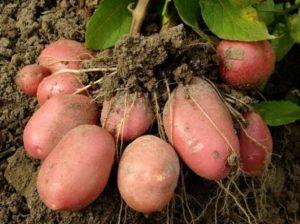
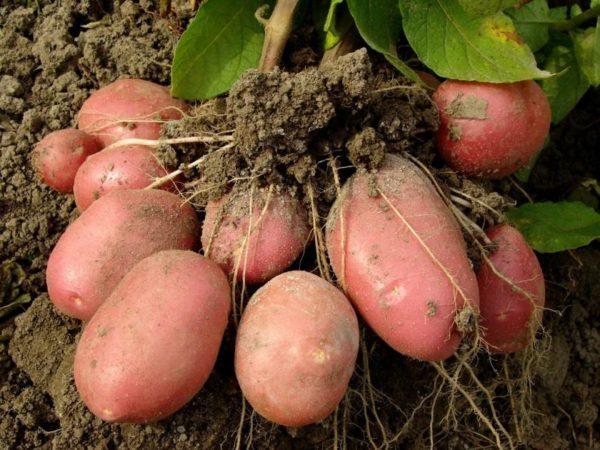
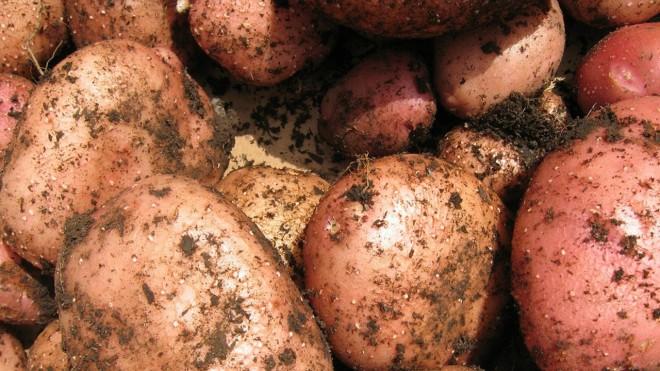
Potato tubers have an attractive marketable appearance, are medium to large in size, weighing between 100 and 150 grams. Their shape is round-oval. The skin is pinkish and thin; when picked early, it is almost translucent, with small eyes. The flesh is slightly sweet, white, and does not darken during peeling, cooking, or slicing. The potatoes have a firm texture, not mealy, and slightly watery.
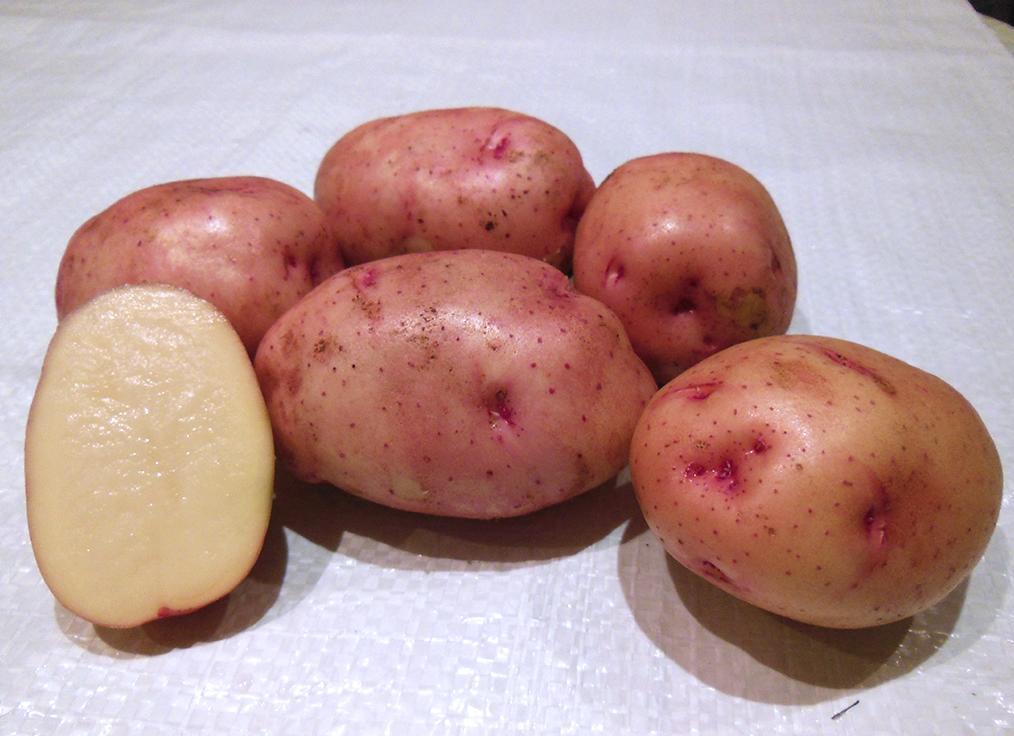
The starch content is 10-12%. The tubers do not overcook and retain their shape well, whether peeled or boiled. After cooking, the fruits are easy to cut and are widely used in salads. They are a source of protein, phosphorus, magnesium, potassium, and calcium. Potatoes contain almost no fat or cholesterol.
Productivity
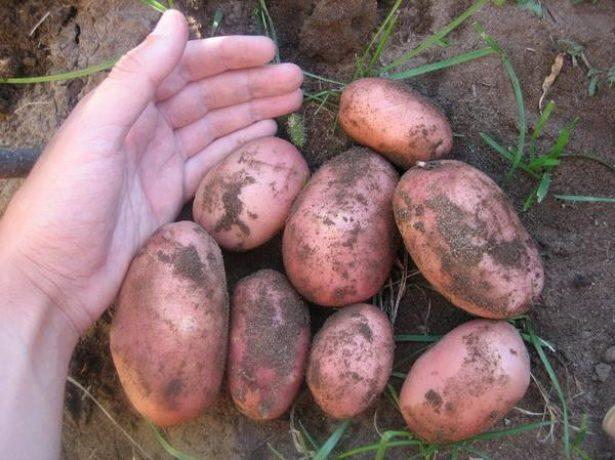
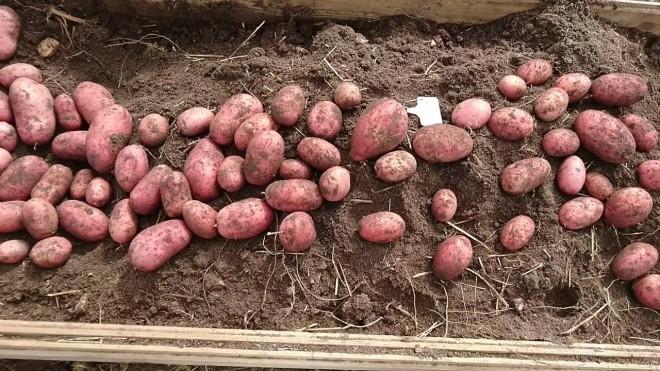
The Zhukovsky variety is renowned for its abundant yield and is ideal for mass cultivation. Farmers average 600 centners per hectare. Each plant produces 10 tubers. Fertility is stimulated by adding nutrients.
Resistance to diseases and bugs
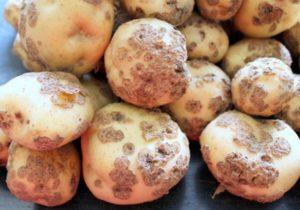
This variety has strong immunity, but is sometimes susceptible to canker, scab, nematodes, and rhizoctonia. With proper care, it remains disease-free. Its weaknesses include poor resistance to late blight, viral diseases, and Alternaria.
If you take preventative measures or deal with problems as soon as they are detected, the chances of curing potatoes are high.
The advantages and disadvantages of the Zhukovsky Early potato
The Zhukovsky potato variety has a number of advantages. Some gardeners have identified a couple of drawbacks worth considering.

| Pros | Cons |
| High marketability – 92% | Weak resistance to some diseases |
| Resistance to mechanical damage of tubers | |
| Stable yield | |
| Possibility of mechanized fruit harvesting | |
| Long shelf life of potatoes |
Rules for growing potatoes
The Zhukovsky potato variety doesn't require any special planting techniques; the principle is standard. With proper planting, the chances of a bountiful harvest are high.
Soil preparation
To ensure abundant potato production, the soil must be prepared. Avoid planting potatoes in heavy, clayey soil. If it's highly acidic, the yield will suffer. If the soil is poor, depleted, and low in organic matter, the fruits will be small and tasteless. It's best to plant potatoes in sandy or loamy soil. Fertilize the soil with nutrients before planting.
Preparation of planting material
Potato yield Depends on the quality of the planting material. Choose healthy, oblong tubers weighing 150 g. Sprouted tubers appear 10 days earlier. Prepare the planting material one month in advance. Preparation includes the following steps.
- Treatment of tubers from diseases and harmful bugs with Maxim.
- The planting material is transferred to a place with a temperature of 10 to 13 degrees Celsius.
- Root vegetables are laid out on a rack or in boxes in one layer.
- When the sprouts reach 1 cm, they are ready for planting.
- To reduce germination time, place the fruits in a peat mixture and periodically spray the tubers with water.
To increase germination and ensure high protective properties, potatoes are kept in bright light for 10 days until the skin turns green. Sprouted potatoes are planted by hand to avoid damaging the sprouts.
Time and planting pattern
Potatoes should be planted outdoors in late April or early May, depending on the region's climate. The soil should be moist enough to form a ball with a spatula rather than crumbling. Maintain a distance of 30 cm between tubers and 60 cm between rows. The optimal planting depth is 10 cm. If the soil is clay-rich, reduce the depth to 7 cm. Potatoes are planted in neat rows or using cords. This will make them easier to care for in the future.
Further care of the crop
The Zhukovsky potato is easy to care for; even an inexperienced gardener can grow it. Weeding, loosening the soil, watering, fertilizing the soil, and treating the plants for disease prevention are essential.
Watering and fertilizing
The Zhukovsky potato plant does not require watering during its growth phase if it is grown in moist soil and receives frequent rainfall. Soil conditions should be monitored. In hot weather, mulch should be used to retain moisture between the beds. Water the plant in the morning, before the sun shines, and in the evening. In hot weather, it is best to postpone watering. The first watering should occur after the first shoots emerge. 2-2.5 liters per plant. Insufficient moisture reduces the yield. The second watering should be done during budding and flowering. Add 4 liters of liquid under the plant. Irrigation is carried out using drip irrigation, sprinklers, and reel-type devices.
Fertilizer is applied earlier than with other potato varieties.
- Nitrogen-containing fertilizers are added in the spring, during preparatory work or into the planting hole.
- During the flowering period, potassium is added to the soil. For every 10 liters of water, add a matchbox of potassium. Minerals are added after irrigation or rain. Add 1.5 liters of potassium per 10 liters of water to the soil.
- The Zhukovsky potato prefers organic matter, especially bird droppings. It's not used in its pure form, but diluted with water at a ratio of 1:15. One liter of the mixture is recommended per plant. The fertilizer protects the crop from fungal infections.

Once the tops have dried out, fertilizing is useless. The plant must be burned.
Loosening and weed control
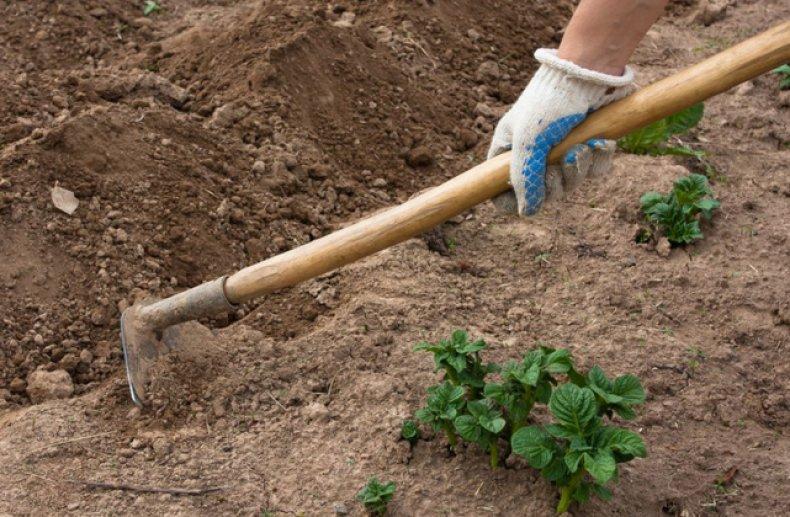
Weeding is carried out after planting potatoesTo prevent weeds from choking the seedlings, they should be removed promptly. Loosening the soil improves oxygenation, promoting better plant growth.
Hilling
Hilling protects potatoes from excess moisture and aerates the rhizomes. This procedure is repeated 2-3 times during flowering, and then as needed. Hilling helps prevent the plants from falling apart.
Protection from diseases and pests
There are a number of common potato diseases and pests. Each problem requires a unique approach to resolution.
- The Colorado potato beetle is considered the main enemy of Zhukovsky potatoes. Control should begin during planting. The tubers are sprayed with special agents before planting.
- The crop is rarely attacked by nematodes. Wireworms damage fruits and are difficult to eradicate. They are controlled with baits.
- The mole cricket eats potatoes, and its infestations occur during periods of high humidity or moisture. Baits are used to control this pest.
- Caterpillars damage leaves and tubers. After their attack, the plant loses its immune system and sometimes even rots. The problem is treated with poisons.
 In rare cases, potatoes are susceptible to cancer. This disease is incurable. The plant must be burned, as the root system decomposes and the cancer spreads.
Harvesting and storing the variety
Digging potatoes The harvest begins when the tops have completely dried and fallen off. This usually occurs in late July. Zhukovsky potatoes are harvested 60 days after flowering. By this time, the roots are fully formed, and this procedure protects them from late blight. The harvest is carried out mechanically or by hand. Don't delay digging up the fruit, as they may become overripe.
Vegetables should be stored in a location where the air temperature remains at no more than 5 degrees Celsius. Potatoes can be stored for approximately 6-7 months. Experienced gardeners believe that digging up unripe potatoes will keep them longer. Before storing potatoes in boxes, sort out any rotten or damaged ones and dispose of them. Avoid storing unusable potatoes nearby, as this will encourage healthy ones to rot.
Feedback from our readers
Feedback from gardeners growing Zhukovsky potatoes clearly outlines its advantages and disadvantages. Reading these reviews will help you make your choice.
Karina Ivanesova, 60 years old, Kyiv
Hello everyone! The Zhukovsky potato is my favorite. I've been growing it for over 10 years, and the fruits always ripen on time and in abundance. The plants have been attacked by Colorado beetles several times, but I've used insecticides to kill them. I grow it for personal consumption. I mash it, bake it in the oven, and boil it.
Tamara Sakhnik, 47 years old, Mogilev
Hello! My neighbor was growing Zhukovsky potatoes in her garden and gave me a couple of tubers. I decided to try this variety, as I've been growing potatoes for a long time. The plants haven't had any problems in three years, and the harvest is stable. I sometimes sell the potatoes when I have nowhere to put them. The dishes made with them are delicious. I recommend everyone to grow the Zhukovsky variety.
Olga Nikitina, 70, Dnipro. Hello everyone! I have only positive experiences with the Zhukovsky potato. I've been growing this variety in my garden for five years, ripening in late July. The fruits are filling and delicious. I make mashed potatoes, casseroles, and pan-fry them. This is the firmest potato variety, perfect for salads, and doesn't fall apart.
Related posts:
 Description and characteristics of the Rodrigo potato variety, cultivation and care
 Description of the best potato varieties of domestic and foreign selection
 Description and characteristics of the Krasavchik potato variety, planting and care
 Description and characteristics of the Rocco potato variety, cultivation and care
 Description and characteristics of the Gulliver potato variety, planting and care
 Description of the Sorkodnevka potato variety, planting and care, when to dig
 Description and treatment of potato pests, control measures
 Description and characteristics of the Bellarosa potato variety, planting and care