
For a beginning gardener, it's important to know the answer to the question: When is the best time to dig potatoes? This determines the tubers' shelf life over winter and the risk of losses during harvesting. Harvesting timing is influenced by the variety's ripening time and proper cultivation practices. Before beginning work, it's important to check the weather forecast. It's best to dig potatoes 4-5 hours before rainfall, so they have time to dry before storing.
Factors affecting potato ripening
Knowing a few secrets and recommendations from experienced gardeners will help you determine the best time to dig up potatoes.
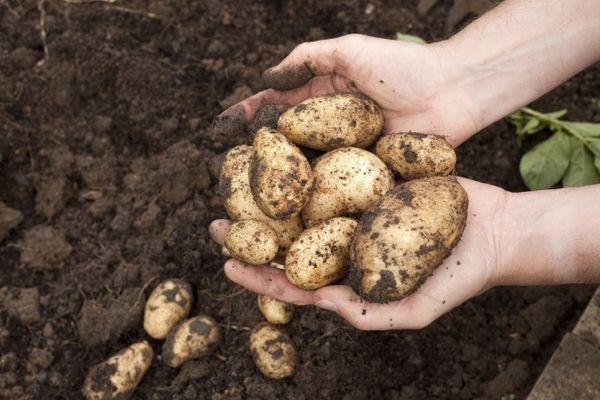
Signs of potato ripening
According to most "second bread" enthusiasts, the drying and complete death of the plant's tops indicates that root vegetables are ripening. This occurs when the growth and development of both the above-ground and underground parts of the plant slows.
Root crops stop developing if they aren't dug up in time; they begin to sprout and spoil. During this period, a hard skin forms on the surface of the tubers, and the tubers accumulate nutrients.
The potato's connection to the root system weakens, and the plant disintegrates into individual root crops. This is the period of root ripening and the optimal time for harvesting. Losses are minimized, and the harvested crop will keep well throughout the winter.
Knowing the variety and maturity level of the vegetables will help you determine the exact date to begin digging potatoes. However, planting time, weather conditions during the growing season, and the level of care provided should also be taken into account.
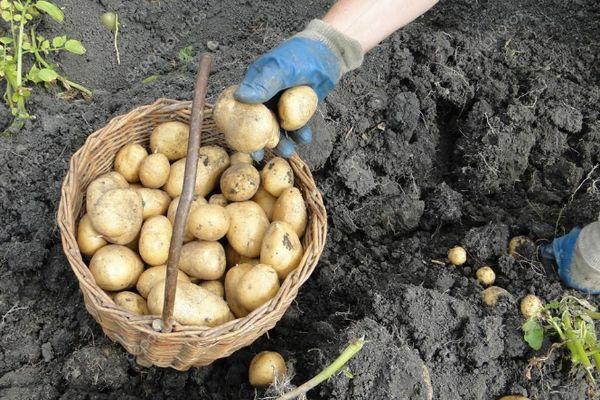
In the south of the country, harvesting begins as early as late July, while in the central part of the country, digging doesn't begin until late August or early September. In the summer, after the bushes have finished flowering, they can be pruned or completely dug up for cooking with new potatoes. For winter storage, the roots must be ripe and have a firm skin. Unripe or overripe potatoes are not suitable for long-term storage.
Beginning harvesting when the tops of the bushes turn yellow is the wrong decision, as it can lead to poor storage of the tubers. Bushes infested with pests or the Colorado potato beetle begin to dry out before ripening. It's best to additionally use knowledge of the variety's ripening time. The approximate harvesting period is 70-100 days after planting prepared, sprouted seeds in the soil.
Weather forecast and harvest
During dry periods with high temperatures and lack of irrigation, the harvest will need to be harvested earlier, but the yield will be smaller in terms of the volume of potatoes planted. Excess moisture during a rainy summer with cool air will increase the time it takes for potatoes to be ready for harvest.
Excessive moisture will cause root vegetables to rot, but the tops will remain green.
However, if the soil in the area is well-fertilized and drained, there won't be much of an impact on the ripening time of root crops. While ripening time may be longer in well-balanced soil, the harvest will still be a delight for any gardener. If there's excess moisture, it's not recommended to use nitrogen-based fertilizers, as this will cause root rot.
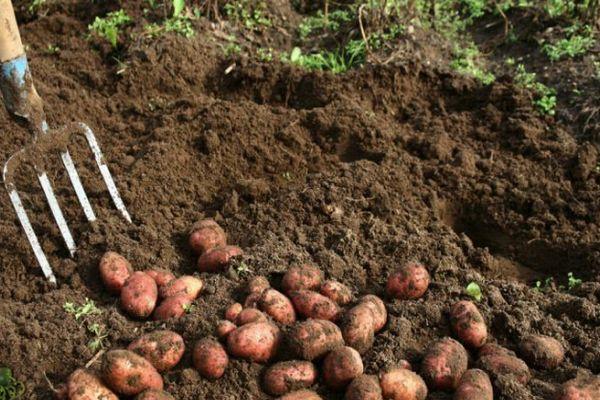
Potato harvesting is done on a sunny or cloudy day. It's not recommended to dig up potatoes immediately after heavy rains, as the roots won't dry properly and will rot during storage. The roots are left in the garden bed to dry and air out, then stored in a dark place, after packing the crop in bags. After 10-14 days, the skin will become firm, and any damage to the plant by diseases or pests will be easily visible.
Important! After digging up and storing the potatoes in the cellar, be sure to remove all weeds and bush tops from the area.
This work will protect future vegetable crops from pests and diseases. Abandoned plant waste will inevitably harbor insects and pathogenic fungi for the winter.
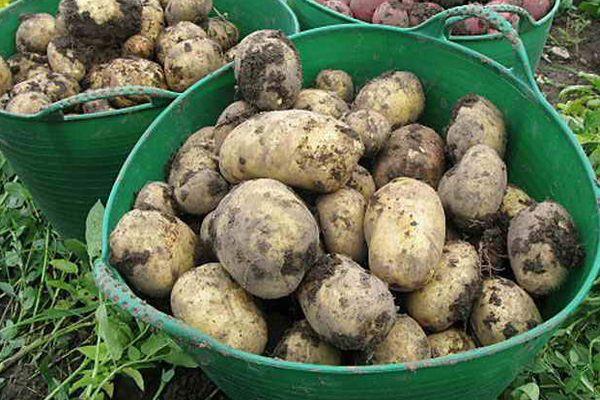
How does variety affect ripening period?
Potato varieties and hybrids are classified by maturity time. This determines the vegetative period of plant development, harvesting time, and storage time:
- Ultra-early root crop varieties. These plants are ready for harvesting just 35-36 days after planting varietal or hybrid tubers. Among these varieties are Bellarosa, Riviera, and Minerva.
- Early ripening root crops. Harvesting begins 40-50 days after planting. Popular regional varieties include Vineta, Arrow, Colette, and Dnepryanka.
- These are mid-early ripening plants. The harvest is ready after 55-80 days. Recommended varieties include Mriya, Sineglazka, Nevskiy, and Zabava.
- A mid-season potato variety, these plants are ready to harvest in just 95 days. The Picasso and Sante varieties are high-yielding.
- Late potatoes mature by the 120th day. These varieties include Zhuravinka, Asterix, and Lorkh.

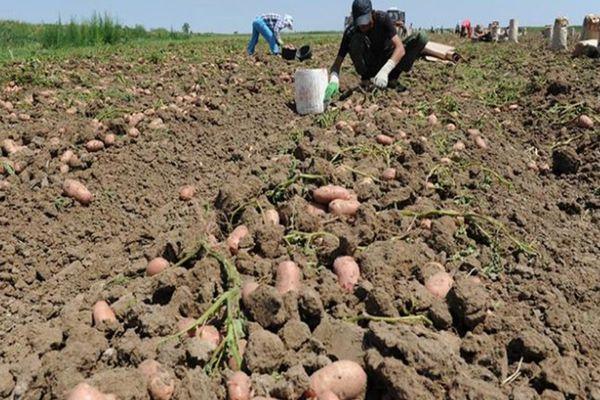
Important! When choosing planting varieties, consider the planting and harvesting times for root crops.
If late-season varieties are planted in a region prone to sudden spring frosts, the potatoes will have to be dug from under the snow. This variety is suitable for planting in southern regions; early planting will allow you to grow a harvest of large potatoes and store them in the fall, rather than in the summer heat.
Methods of harvesting tubers
In small garden plots and vegetable patches, potatoes are dug up using cultivators or a trusty shovel and strong hands. In larger fields, potatoes are harvested using a tractor and potato harvester. A small garden bed isn't the place to use a walk-behind tractor or agricultural machinery. Let's look at the step-by-step process of harvesting potatoes in your garden using simple methods.
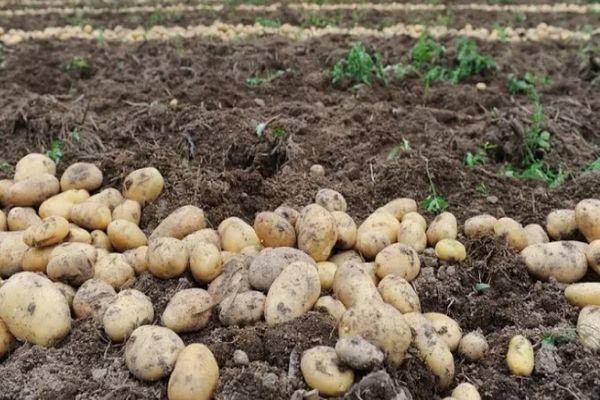
Operating rules for a walk-behind tractor
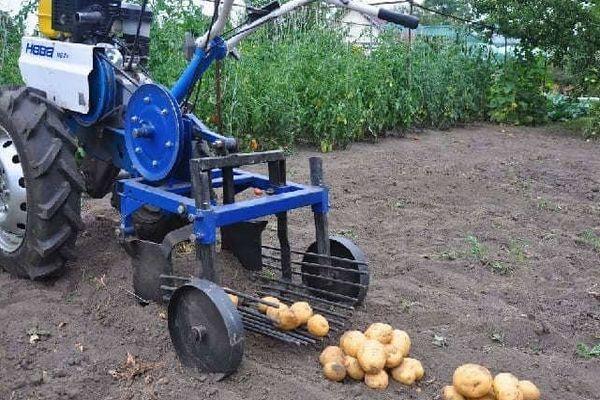
When using It is recommended to use walk-behind tractors for planting potatoes At a certain distance, use a plow to dig up potatoes and other root crops without damaging the harvest. The distance between rows should be slightly greater than the reach of the cultivator attachment.
Once in the row, a plow or homemade root crop harvesting tool is inserted to a depth of 200-250 mm and, at medium speed, is run along the entire length of the bed. The potatoes are thrown out of the ground and onto the edge, but if you move too slowly, some tubers will be buried. After working the entire plot, all that remains is to pick the roots from the ground, dry them in the sun and wind, and store them.
For greater clarity, inexperienced gardeners might find it helpful to watch videos online. To protect adjacent rows, it's recommended to dig up potatoes every other row, eliminating the risk of cutting the tubers. Harvesting a good crop of tubers won't take much time; you'll spend more time digging for potatoes in the ground than working with a tiller.
We dig by hand
Digging potatoes by hand with a pitchfork or shovel is no easy task, especially for an inexperienced person. Much of this process depends on physical strength and experience. An adult man can easily dig up several hundred square meters of root crops in a day. Keeping the plot weed-free and hilling the rows three times a day will make the job easier.
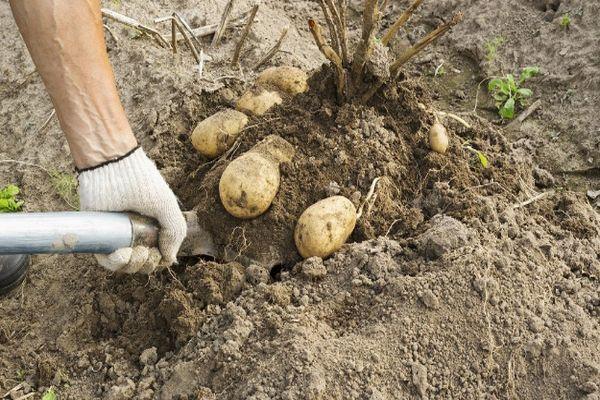
It's best to dig while positioned along a long row. Gradually advance the pitchfork, driving it all the way into the soil and turning over the clod of soil containing the potatoes. It's recommended to hold any remaining tops with one hand and gently pull them out as you turn the soil. This way, you can shake half the harvest directly into a bucket or into piles along the rows.
The shovel is driven into the soil opposite the bush and at a distance from the stems - this helps to avoid cutting the potatoes.
All potato beds are dug up this way, and after a few hours, the potatoes are placed in bags and transported to the cellar. The operation is simple but labor-intensive, so gardeners rely on garden machinery and a set of tools.
Why is it important to dig up potatoes on time?
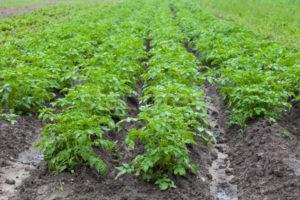
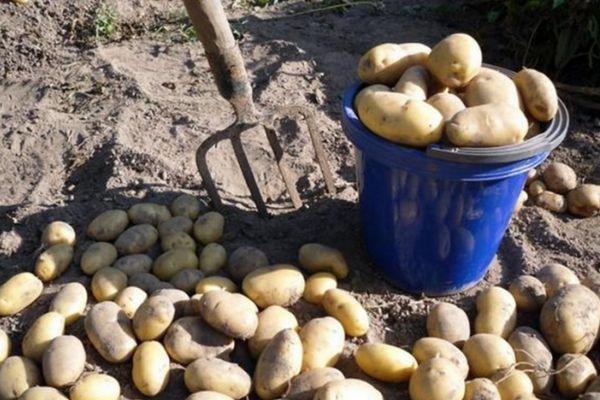
At growing potatoes Every vegetable grower hopes to not only get a bountiful harvest from potatoes and other plants, but also to preserve it until spring. This is especially true when it comes to harvesting potatoes, ensuring:
- the pulp of ripe potatoes accumulates a full range of nutrients and beneficial substances;
- Early digging of tubers does not allow the skin to gain the necessary strength and reduces the shelf life of vegetables;
- When harvested early, the tubers do not have time to grow to their optimal size, which leads to significant crop losses;
- If harvested late, the risk of tubers rotting in the ground increases, and in extreme heat they become wilted and unsuitable for consumption and storage;
- Tubers harvested at the wrong time will produce new sprouts, losing their nutritional value and not being able to be stored for a long period.
Conclusion
Any gardening task must be completed within a specific timeframe, but harvesting is the most important, final step, determining the storage life and volume of vegetables. This rule is especially true for growing large, soft potatoes, which have been considered the people's second bread since the time of Peter the Great.
Related posts:
 Why potatoes aren't growing well in the garden, and what to do to ensure a bountiful harvest
 Description and treatment of potato diseases, methods of control using folk and chemical means
 Is it possible to spray potatoes during flowering to protect against the Colorado potato beetle?
 Description and characteristics of the Krasavchik potato variety, planting and care
 How to properly prepare planting material and when to plant potatoes to get a rich harvest
 Description and characteristics of the Rodrigo potato variety, cultivation and care
 Description and characteristics of the Zorachka potato variety, planting and care
 Description of the best potato varieties of domestic and foreign selection