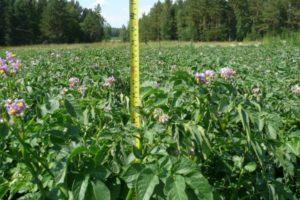
Gardeners need to know how to save potatoes and get a harvest during a rainy summer. The crop does not tolerate moisture accumulation in the soil and is easily susceptible to disease. Timely response and proper care will prevent damage to the planting material in the ground.
Planting potatoes in rainy weather
The planting period for vegetables depends on soil conditions and weather conditions. For a harvest to occur, the soil must warm up to the required temperature. However, prolonged rains often occur during the planting period, which can disrupt a gardener's plans.
Before the rain
Gardeners don't recommend planting potatoes during periods of heavy rainfall. This will kill the tubers, as oxygen is deprived of the soil, and the planting material suffocates.
During
If there's light rain, plant the tubers. The precipitation will moisten the soil and encourage sprouting. However, the gardener should dig holes to ensure the soil is loose and doesn't compact under the pressure of a shovel or potato planter.
After the rain
Cool weather often follows heavy rains. After the rain, it's important to wait at least three days for the soil to warm up and dry out. Digging holes in muddy ground is also difficult, which can also hinder potato planting.
Caring for potatoes during precipitation
Growing potatoes during heavy rains requires careful maintenance. If heavy rains occur during the potato planting season, gardeners often need to re-purchase planting material. To preserve the planting material, follow these recommendations:
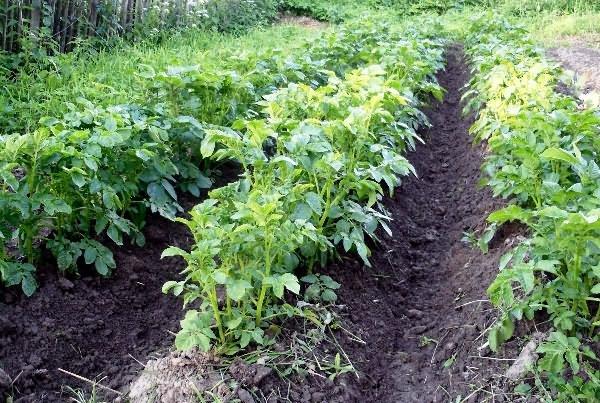
- Create raised beds. These beds are less likely to be washed away by rain, reducing the risk of tubers being washed away.
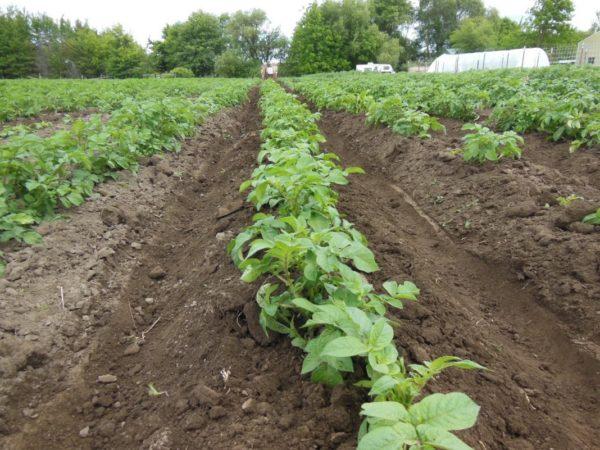
- The tubers are planted on top of the ridges, and a drainage system is created between the rows to absorb excess moisture.
Take a look Also
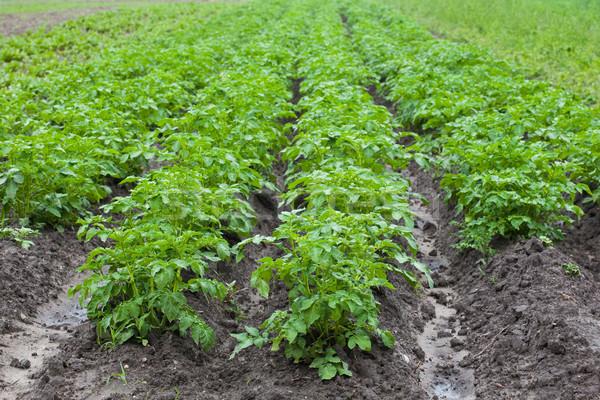
If rain occurs during the growing season, it is necessary to regularly loosen the soil; this will saturate the soil with oxygen and reduce the risk of disease.
After heavy rainfall, weeds appear in abundance. It's recommended to remove them by hand to avoid damaging the bushes.
Important: Regularly check the condition of the bushes; after the soil has dried, hilling should be carried out.
How to revive potatoes after rain
If the garden is flooded after planting vegetables, it is necessary to check the depth of the damage. If the soil does not turn into a liquid, there is no need to replant potatoes.
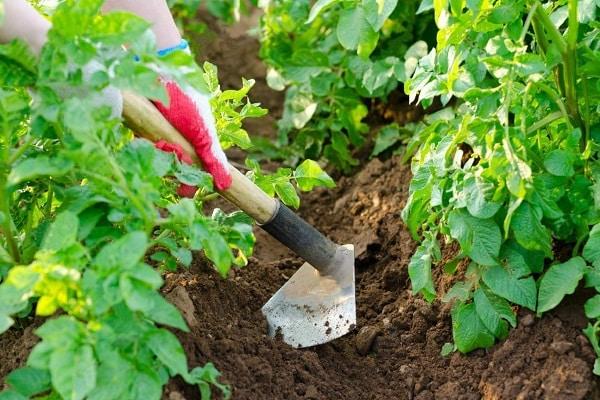
In order to save potatoes, you must first do the following:
- If the tubers haven't sprouted, mulch the area. Use a special mulch that absorbs excess moisture. This type of mulch can be purchased at seed stores.
- Loosen the soil every two days. This helps aerate the soil and remove excess moisture.
- Make special drainage ditches between the rows to allow excess moisture to drain away.
If a rotten tuber is discovered during loosening, it is replaced with a new one. Rotten tubers lead to disease and infection of other plants.
Methods of combating diseases caused by rains
During rainy season, the following types of diseases most often appear on potatoes:
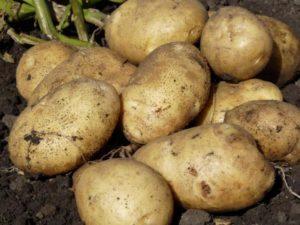
- Late blight is the appearance of rapidly growing brown spots on the bushes. Dark spots appear on the tubers, and the vegetable loses its flavor and is unfit for consumption. Treatment involves treating the crop with 1% Bordeaux mixture or specialized chemicals.
- Phoma blight manifests as dark spots on the stems. A rot also develops on the tubers, which gradually develops into a dry spot. The potatoes spoil. Treatment includes Maxim and Ditan.
- Fusarium wilt is a disease characterized by leaf drop and stems turning brown with a white coating. Tubers quickly begin to rot, infecting other vegetables. Treatment involves using copper sulfate, Baktofit, and Fitosporin.
- Blackleg causes the plant to wilt and quickly die. The tubers become soft, and a black formation is visible when cut. Storing these potatoes is prohibited, and they should not be eaten. Before planting, potatoes should be treated with antibacterial agents.
Treatment of crop diseases must be carried out immediately after the first symptoms appear, otherwise the drugs will be ineffective.
Harvesting in rainy weather
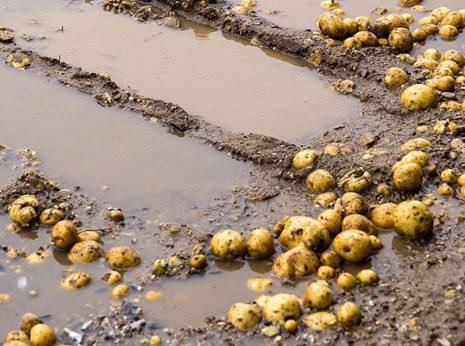
Regardless of weather conditions, the vegetable crop should be harvested. It is recommended to harvest 3-4 days after rain. However, if rainfall is prolonged, potato digging should be done in inclement weather. These tubers are placed in a dark place to dry. After the dirt has dried, the potatoes are sorted, and damaged and rotten ones are removed. This harvest should be sorted monthly.
Important: If potatoes are washed in water, they must be thoroughly dried before being stored.
Preventive measures
In order to protect the harvest, it is necessary to observe the following preventive methods:
- Before planting, a drainage layer is placed in the holes;
- plant potatoes in a plot that is located on a hill;
- Make the beds high, with large distances between rows, so that drainage ditches can be created if necessary.
Following simple rules for planting potatoes reduces the loss of planting material.
Rainy weather often hinders vegetable growing. Under such conditions, planting material develops very slowly and is often susceptible to disease. Potatoes require care during prolonged rainfall to preserve their yield and flavor.
Related posts:
 How to plant grapes step by step, with a description of the process and care
 How to propagate and grow peas, cultivation technology, and care in open ground
 How to properly plant peas in a greenhouse and open ground
 Description of the best potato varieties of domestic and foreign selection
 Description of varieties of sowing peas and cultivation, to which family they belong
 How to grow a watermelon in a greenhouse in the Moscow region: planting and care guidelines
 Description and characteristics of the Rodrigo potato variety, cultivation and care
 Description and characteristics of the Rocco potato variety, cultivation and care