
- General information about the Labella variety
- Description of the plant
- Bush
- Productivity and taste of Labella potatoes
- Scope of application of fruits
- Necessary conditions for growing the crop
- The required soil composition for Labella potatoes
- Desired predecessors of Labella potatoes
- Optimal location: lighting, humidity
- Temperature conditions
- Pros and cons
- Planting Labella potatoes
- Recommended timeframes
- Preparing the soil and plot for Labella potatoes
- Preparing Labella potato seedlings
- Planting pattern and depth
- How to care for potato bushes
- Watering
- We add fertilizer
- Mulching and loosening the soil
- Hilling up the beds
- Preventive and curative treatments
- Harvesting and storage
- Reviews of the variety from experienced gardeners
The Labella potato is one of the most beloved varieties among gardeners in the CIS. It is renowned for its abundant harvest, long shelf life, and excellent flavor. It is grown for sale or personal consumption. Based on the description and reviews of the Labella potato variety, it is worthy of cultivation. It is important to familiarize yourself with all the specifics of its cultivation beforehand.
General information about the Labella variety
The Labella potato was developed by German breeders Solana. The company specializes in developing hybrid varieties of various vegetable crops. In Russia, the potato has been approved for cultivation since 2001, when it was added to the state register. This variety is recommended for cultivation in the central, North Caucasus, Far Eastern, and Volga-Vyatka regions. Today, the variety is cultivated throughout the former Soviet Union.
Description of the plant
The Labella potato variety thrives in regions with harsh climates, easily tolerating heat and short-term droughts. True to its characteristics, it's an early-ripening variety. The plant adapts to almost any soil and requires little care.
Bush
Labella potato plants grow low and upright, without spreading shoots. The leaves are small, dark green, with slightly wavy tips. The inflorescences are small, pinkish-purple, and clustered in compact crowns. The rhizome is well-developed and robust. This potato is resistant to diseases and harmful bugs. This member of the Solanaceae family is almost immune to canker, rot, late blight, and viral diseases.
Productivity and taste of Labella potatoes
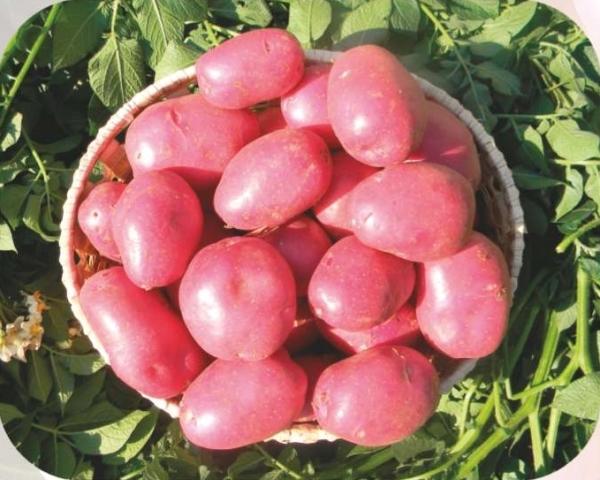
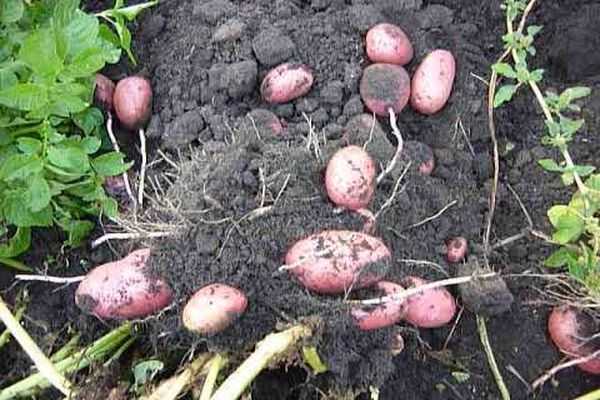
The yield is high, with up to 300 kg of fruit being harvested from 100 square meters. Each bush produces 11-14 large potatoes. The first tubers are dug in early June. The maximum yield is reached at the end of the growing season. Almost all the tubers are uniform in size, simplifying the process of sorting the crop, which does not require repeating. Their color is pinkish-brown, the skin is thin, with small eyes.
The flavor is rich, not watery, and slightly sweet. Labella potatoes do not darken when cut and cooked.
The potato's cooking time is average, which appeals to many culinary enthusiasts. Each potato weighs 80-100 grams.
Scope of application of fruits
Labella potatoes are great for making chips, mashed potatoes, casseroles, boiling, and frying. They hold their shape well. This variety is a table variety, widely used in cooking by professional chefs and home cooks.


Necessary conditions for growing the crop
Labella potatoes prefer to grow in light, sandy soil. Fertilizer is added periodically to increase yield. The variety is quite young, so the fruits do not degenerate. Mature tubers can be used for sowing. There are no special planting or growing requirements for Labella. It is cultivated in the garden using the same techniques as other potato varieties.
The required soil composition for Labella potatoes
The soil should be moderately acidic, free of clay impurities, and sandy or sod-podzolic. Weeds can help determine the soil's acidity: if the soil is overgrown with dandelions, coltsfoot, clover, and chamomile, this indicates the soil is fertile and has a balanced pH. Clay impurities are detected by water absorption.
If puddles form quickly on the surface and drain slowly or not at all, it's clay soil. If water is absorbed immediately, such soil is suitable for growing Labella potatoes.
Desired predecessors of Labella potatoes
Optimal precursor crops include legumes, pumpkins, cucumbers, and cabbage. Phacelia and oilseed radish are recommended as green manure.
Optimal location: lighting, humidity
Labella potatoes thrive in natural light conditions, so there's no need to worry about sunlight shortages. They prefer to grow in areas free from shade from trees. Ultraviolet rays are essential for plant growth. Groundwater levels should be at least 1.5 meters deep.
The variety requires moderate humidity.

Temperature conditions
The Labella variety tolerates temperature fluctuations, including heat and cold down to -25 degrees Celsius. During hot weather, watering should be increased to prevent the plant from drying out.
Pros and cons
The Labella potato has a number of positive and negative aspects. Some gardeners consider the negative aspects to be imaginary.
| Pros | Cons |
| Same weight and size of tubers | Poor frost resistance |
| Low maintenance | |
| High yield | |
| Resistance to drought and heat | |
| Excellent taste | |
| Immunity to diseases | |
| Possible cultivation for sale | |
| Low starch content | |
| Long shelf life | |
| The presence of vitamin B, protein, and mineral salts in large doses | |
| No need for re-sorting of the crop |
Planting Labella potatoes
Potatoes should be planted according to the given rules.
- Sprout the tubers 1 month before planting. The seeds are transferred to a warm place where they develop and germinate.
- Plant whole seedlings up to 90 grams in size.
- Strictly adhere to the planting pattern and maintain the required distances.
- Pre-fertilize the soil if it is not nutritious.
- After planting, the bushes are watered and loosened.
By following these rules, you will be able to successfully plant Labella potatoes and get a decent harvest.

Recommended timeframes
It's best to plant the bushes in late April or early May, when there's no risk of frost. Humidity during this time of year is at an optimal level, so additional irrigation isn't required.
Preparing the soil and plot for Labella potatoes
If the soil is fertile, there's no need to add fertilizer. Otherwise, start preparatory work in the fall. The soil is tilled, cleared of weeds, and phosphorus and potassium are added. In the spring, nitrogen-containing compounds such as ammonium nitrate and urea are added.

Preparing Labella potato seedlings
Selection of planting material should be done immediately after harvest. Choose seedlings that are intact, free of damage, rot, or black spots. Before planting, inspect the fruits, checking the quality of the sprouts. When the sprouts are intact and strong, they are ready for planting. You can dip the seedlings in a solution of Epin, which stimulates root development.
Planting pattern and depth
Labella potatoes are planted according to the scheme below.
- The tubers should be planted into the ground to a maximum depth of 10 cm. In heavy soils, the desired planting depth does not exceed 8 cm.
- Maintain a distance of 70 cm between beds; this will provide the bushes with good lighting and ventilation, and will simplify hilling.
- The distance between holes should be 30 cm.

Dig the holes 2-3 days before planting, digging to a spade-sized depth. When placing the seedlings, carefully straighten the rhizomes.
How to care for potato bushes
Caring for Labella potatoes is simple. The key is to water, fertilize, and loosen the surrounding soil. Hilling is key to a bountiful harvest.
Watering
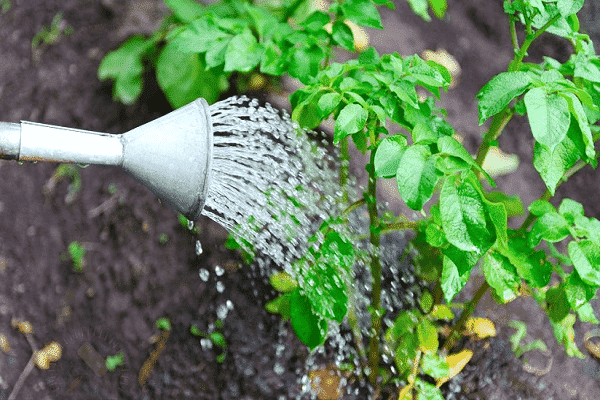
Labella potato plants are irrigated with settled water only during dry periods. When the soil becomes dry, it needs to be watered. 12 liters are used per plant. Typically, 3-4 irrigations are performed per month.
We add fertilizer
If the soil was fertilized with humus in the fall, no additional fertilizer is required. If the soil is poor, add wood ash to each hole when planting. This will accelerate the growth of the tops and improve the plant's adaptation process. Ash also serves as an excellent antibacterial agent. It can also be sprayed over the area before planting, and the potato holes can be sprinkled with ash. This effectively prevents the growth of fungal or mold bacteria.
After the first feeding, a second one is applied during budding. Use 1 tablespoon of potassium sulfate and 3 tablespoons of ash, diluted in 10 liters of water. A third application is performed during flowering; this fertilizer accelerates root formation. Add mullein or bird droppings.
Nutrients should be added to well-moistened soil after rain or irrigation.
Mulching and loosening the soil
Two to three days after planting Labella potatoes, weeds will begin to grow. They should be removed immediately, as they rob the soil of nutrients. Loosen the soil with a spade-blade spade, being careful not to disturb the weeds. This will enrich the soil with oxygen.
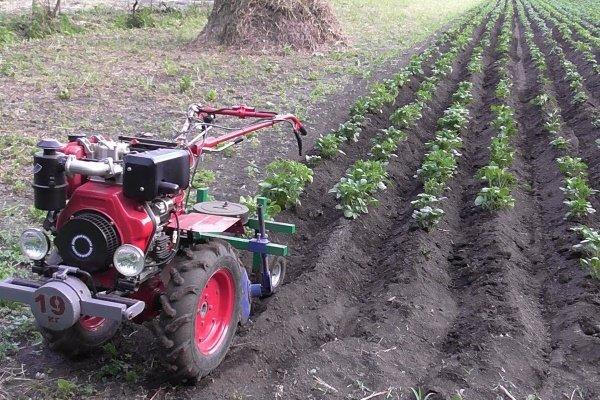
Hilling up the beds
Potato beds should be hilled twice during the growing season: once when the shoots reach 15 cm, and again two weeks later. This should be done before the tops close over the rows. This procedure helps the plant develop fully and receive oxygen.

Preventive and curative treatments
Several potato varieties are often planted in the same plot, which weakens their immunity. Preventive measures are essential, and treatment begins at the first sign of disease or beetle infestation. Herbicide treatment is used. These potato plants are dug up before the others, and the tops are burned.
It is not advisable to use processed potatoes as seed material.
Potatoes are most often attacked by harmful insects, including wireworms and the Colorado potato beetle. The former can be controlled with wood ash, sprinkled under each plant. Seedlings are best treated with a pesticide. The Colorado potato beetle can be controlled by hand picking and treatment with insecticides such as Anti-Colorada or Inspector. Potato plots should be rotated every three years to ensure crop rotation.

Harvesting and storage
The tubers are resistant to mechanical damage and can be harvested mechanically. The marketable appearance of the potatoes is unaffected by wounds caused by hoes or combine harvesters. Farmers are advised to use side-digger harvesters for harvesting. The vegetables should be dried before storage. This is done directly on the plot.
During rainy weather, dry potatoes under cover. They should be stored in basements or cellars with 90% humidity and temperatures up to +5°C. Ventilate the rooms approximately 2-3 times a week. Potatoes should be stacked in a layer up to 0.5 cm high to allow oxygen to reach the bottom potatoes.
Reviews of the variety from experienced gardeners
Reviews of Labella potatoes from gardeners will help you make your choice.
Olga Ivanova, 60 years old, Moscow
Hi everyone! Labella potatoes are one of my favorite varieties. I've been growing them in my garden for eight years. I highly recommend them to everyone. The fruits are delicious and don't fall apart when boiled.
Oleg Nikitenko, 70 years old, Dnepr
Hello! A friend treated me to a Labella potato casserole and asked him for some seedlings. The variety is disease-resistant and produces a bountiful harvest. I haven't noticed any negative effects.
Rostislav Onuprienko, 48 years old, Minsk
Greetings! I've been selling potatoes since 1997, and my favorite variety is Labella. Sales are always high, and customers rave about them. Growing them is hassle-free.
Related posts:
 Description and characteristics of the Rodrigo potato variety, cultivation and care
 Description of the best potato varieties of domestic and foreign selection
 Why potatoes aren't growing well in the garden, and what to do to ensure a bountiful harvest
 Description and characteristics of the Gulliver potato variety, planting and care
 Description and treatment of potato diseases, methods of control using folk and chemical means
 Description and characteristics of the Krasavchik potato variety, planting and care
 Description and characteristics of the Rocco potato variety, cultivation and care
 Description and treatment of potato pests, control measures