
- History of the Lasunok variety's development
- Description and characteristics of the variety
- Bush
- Productivity and taste of root crops
- Pros and cons of culture
- Requirements for potato growing conditions
- Planting and caring for potatoes
- Selecting a site and forming beds
- Preparation of planting material
- Potato planting scheme and rules
- Irrigation and fertilization
- Loosening and weeding the soil
- Hilling potatoes
- Diseases and pests
- Harvesting and storing potatoes
- Reviews of the culture
The Belarusian potato variety Lasunok is a favorite among gardeners in the CIS. It requires little care, produces excellent-tasting fruits, and yields a stable harvest. These potato plants are resistant to adverse weather, diseases, and beetles. Before planting, please read the description, photos, and reviews of the Lasunok potato variety below.
History of the Lasunok variety's development
The Lasunka potato was bred in Belarus 30 years ago by researchers at the Scientific and Practical Center for Potato, Fruit and Vegetable Growing of the National Academy of Sciences of Belarus. The name translates as "delicacy." This vegetable variety was added to the state register in 1988. This high-yielding potato variety, known as "classic," offers numerous advantages.
Description and characteristics of the variety
This mid-late potato variety boasts a long growing season of 100 days. It is widely grown in all regions, even in the North. It is resistant to temperatures as low as -25 degrees Celsius, drought, and windy conditions.
Bush
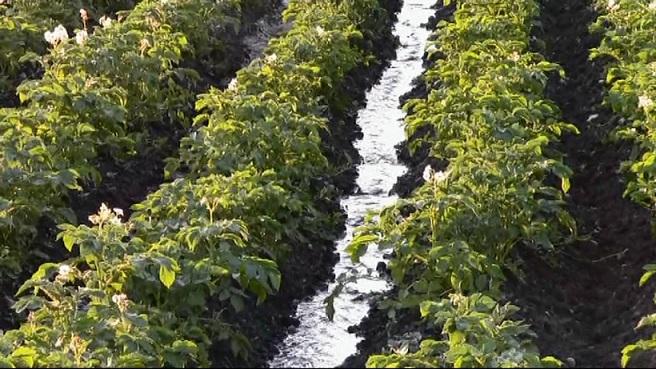
The bushes grow upright and tall, with a strong rhizome. The leaves are large and covered in a stiff downy hair. This provides reliable protection against the pesky Colorado potato beetle. The flowers, with numerous inflorescences, bloom profusely and for a long time. The plant serves as an additional decorative element for the garden. The foliage grows up to 1 meter tall. When planted in a standard 70x40 pattern, the bushes are closely spaced, leaving no room for weeds. The dense stems retain moisture well, which is an advantage for regions with arid climates.
Productivity and taste of root crops
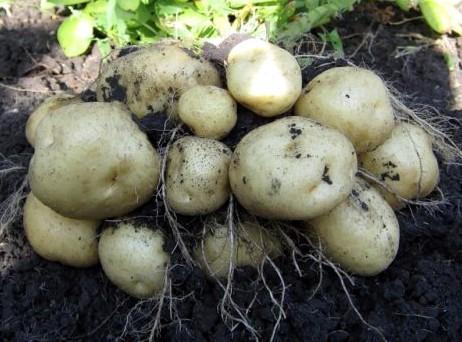
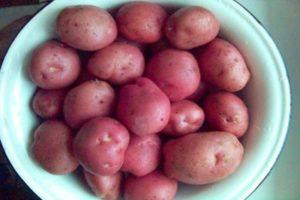
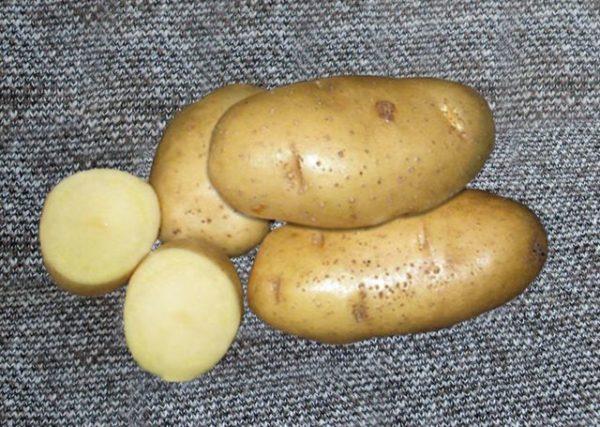
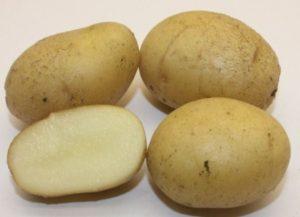
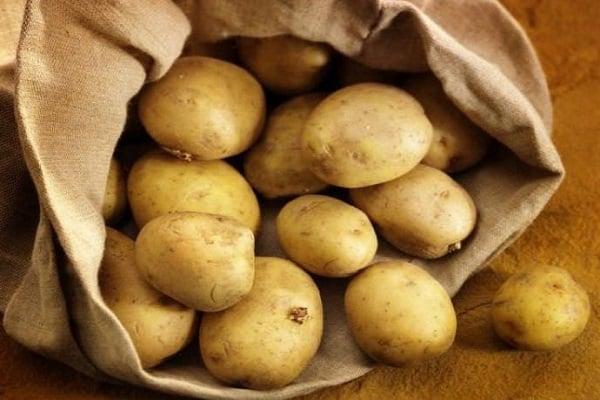
The potato produces a bountiful harvest, yielding approximately 60 tons per hectare, and one plant produces 15 potatoes. Their creamy, delicate flavor is considered the best among their peers. This variety is suitable for growing for personal consumption or for sale. The tubers have a marketable appearance, with dark beige, whole skin and small eyes.
The appearance of these potatoes is first-class. They are large and heavy, with an average fruit weight of 200 grams. The potatoes are oval-shaped, with light beige flesh. They contain 22% starch, indicating a high nutritional value. Gardeners value this variety for its excellent flavor, as the potatoes retain their original color when cooked and remain crisp. They are widely used in mashed potatoes, casseroles, zrazy, chips, and soups. The potatoes can be boiled, fried, or baked in the oven.
Pros and cons of culture
Before planting potatoes, it's important to familiarize yourself with their strengths and weaknesses. Negative aspects can be considered insignificant.
| Pros | Cons |
| High yield, large tubers | Short dormancy period, tubers germinate quickly in spring |
| Easy to care for, easy to grow | The fruit structure is loose; after exposure to temperature, the vegetable becomes too crumbly. |
| High immunity to plant diseases | |
| Resistance to harmful bugs | |
| Excellent table qualities |
Requirements for potato growing conditions
To ensure abundant fruit production, the bushes thrive in any soil type. It's important to bury the sprouted roots to a depth of 7 cm in loam soils and 10 cm in sandy loam soils.
Planting and caring for potatoes
Planting takes place in April or early May, when the soil has warmed up. The planting pattern is typical for potatoes. Sand and humus are added to the holes, watered with a weak solution of potassium permanganate, and sprinkled with ash. The seeds are planted 8-10 cm deep. Caring for potatoes is simple: just water them regularly, loosen the soil around them, hill up the beds, and remove weeds.
In the first week after planting potatoes, they are not irrigated, as this will prevent the productive formation of rhizomes.
Selecting a site and forming beds
This potato variety prefers to grow in partial shade, in spacious areas. The soil surface should be level, without depressions. In heavy soils, ridge planting is recommended.
The process of preparing landing sites:
- In the fall, the area is plowed and fertilized with manure. To replenish nutrients, oats, rye, and watercress are planted.
- When the snow melts, the area is plowed again with early shoots of winter crops and weeds.
- Before planting, loosen the soil again and water.
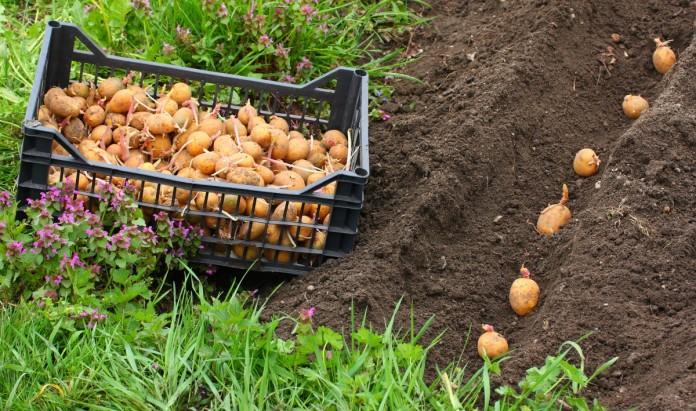 Every four years, the potato growing area should be rotated, as this variety depletes the soil too much. Vegetable plants are planted in areas previously cultivated with grains and legumes.
Preparation of planting material
To ensure a bountiful harvest, it's essential to properly prepare the seedlings. Three to four weeks before planting, remove the potatoes from storage and allow them to sprout. This will take one week to activate their vitality after winter. The first sprouts will emerge after two weeks. Before planting, the potatoes can be divided into two wedges. Each wedge should have a sprouted eye.
To obtain sprouts, resort to one of the following methods.
- Dry. Potatoes are stored in a box exposed to light. Solanine forms in the fruit, causing the skin to take on a green tint. These tubers are not suitable for eating, but are suitable for planting. They will be less susceptible to disease and beetle attacks.
- Moist. The fruits are stored in damp sawdust or humus at temperatures up to +15°C. This allows not only sprouts but also small roots to appear.
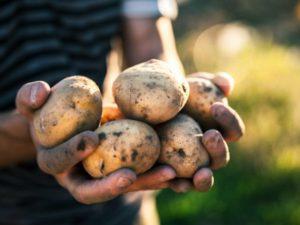
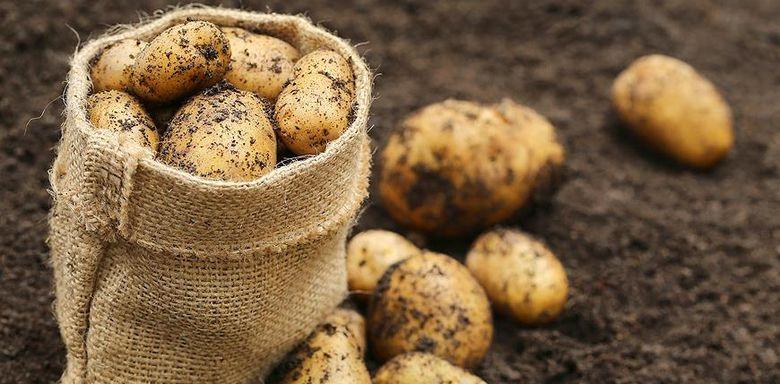
After planting potatoes prepared in this way, they will take root faster.
Potato planting scheme and rules
The seedlings are planted according to the following scheme:
- the distance between the beds is 70-90 cm;
- between bushes – 45-50 cm;
- The tubers are placed in holes 5-7 cm deep on loam soils and 10-12 cm deep on sandy loam soils.
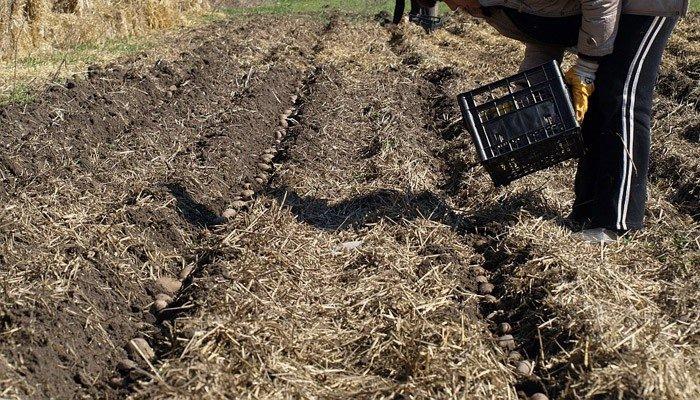
If the soil is too wet, potatoes are planted in furrows. Using a hoe or shovel, a heated roller is formed, into which the sprouted seedlings are buried. Then the bushes will have enough space to develop, the desired level of soil moisture will be maintained, and the stems and lower leaves will have enough sunlight and warmth.
Irrigation and fertilization
The first watering of the potatoes occurs 7-10 days after planting, before germination, using a fine misting technique with a watering can or sprinkler. If the weather is dry, water the potatoes again after the first shoots have formed. Subsequent waterings are carried out as needed, depending on soil conditions. If the soil is dry, water more frequently. Use settled water, not ice-cold water.
Abundant irrigation is required during flowering. Water is allowed to flow naturally through furrows. This ensures the soil is thoroughly saturated, penetrating deep into the root system. During hot weather, water early in the morning or after 4:00 PM, closer to sunset. Otherwise, the tubers will become limp and soft.
To improve the yield of bushes, complex mineral compounds, humus or urea are added during planting.
The next feeding is done during budding. Nitrophos, Diammophoska, and Monopotassium Phosphate are added to the soil. It's important to calculate the dosage correctly, as Lasunok potatoes react poorly to excess potassium, resulting in reduced yield.
Loosening and weeding the soil
Potato plants prefer to grow in loosened soil. Providing fresh oxygen to the roots is essential for a bountiful harvest. The soil is first loosened 10 days after planting. Repeat as needed, usually once or twice a month, especially after rain.
Hilling potatoes
The first time you hill up potatoes is two weeks after the first shoots emerge. Rake the soil from the row spacing up to each plant from all sides, loosening the soil and removing weeds. After another month, repeat the process. The furrows should be 10-15 cm deep.
Diseases and pests
Lasunka potatoes are rarely susceptible to disease when properly cared for. The variety is virtually immune to common potato diseases, such as late blight, canker, verticillium wilt, black knife, scab, nematodes, viruses S, M, Y, and L, fusarium, and alternaria. Colorado potato beetles rarely attack the plants because the stems and leaves are covered in hairs.

In rare cases, potatoes are attacked by mole crickets, potato moths, wireworms, cutworms, cicadas, and aphids. These pests are controlled with insecticides by spraying the tops and roots. You can also wash the plant with a soapy solution, then hose it down generously with purified water. The smell of household cleaners repels insects.
Harvesting and storing potatoes
Potatoes are harvested in August, and the harvesting process is completed in September. Mechanical harvesting can be used, or they can be harvested manually. Before storing the potatoes in boxes, let them air-dry for 3-4 hours. Sort the tubers, remove any rotten ones, and keep only the whole ones. Store the vegetables in a basement or cellar. The air temperature should be around 2°C (37°F), and the humidity should be 80%. This will ensure the potatoes remain marketable until spring.
Reviews of the culture
Gardeners' feedback on the Lasunka potato is positive and reflects their real impressions of it.
Valentina Podmazina, 66 years old, Zhytomyr
Hello everyone! I'm growing Lasunka potatoes on the advice of a neighbor. The fruits are incredibly tasty; I make mashed potatoes, potato pancakes, and casseroles with them. The potatoes are fluffy and filling. I haven't noticed any drawbacks yet. The plants have never been sick.
Pavel Priluchny, 70 years old, Krasnodar
Hello! I planted Lasunka potatoes in my garden six years ago, and I haven't regretted it. The bushes were attacked by aphids once, but they were successfully controlled by generous watering and insecticide spraying. The fruits are marketable, yielding about 50 kg from five beds.
Irina Donchenko, 58 years old, Dnepr
Hi everyone! The Lasunka potato is my favorite variety. I've been growing it for 10 years now, for personal consumption. The dishes turn out excellent, with a rich, creamy flavor. About twice during this period, the plants were attacked by mole crickets. I controlled the infestation with store-bought traps and insecticides.
Related posts:
 Description of the best potato varieties of domestic and foreign selection
 Description and characteristics of the Rodrigo potato variety, cultivation and care
 Description and treatment of potato diseases, methods of control using folk and chemical means
 Description and characteristics of the Gulliver potato variety, planting and care
 Why potatoes aren't growing well in the garden, and what to do to ensure a bountiful harvest
 Description of the Sorkodnevka potato variety, planting and care, when to dig
 Description and characteristics of the Krasavchik potato variety, planting and care
 Description and characteristics of the Zhukovsky potato variety, planting and care