
Despite the global market being flooded with a multitude of potato varieties with varying ripening times, modern breeders continually strive to develop new varieties. After all, business demands innovation. And so, twenty years ago, German breeders succeeded in developing a new variety, the Karatop.
The origin of the Karatop potato variety
The variety was developed in 1998 by German breeding professionals. In early 2000, authorized officials entered this potato variety into the unified state register for each region of Russia.
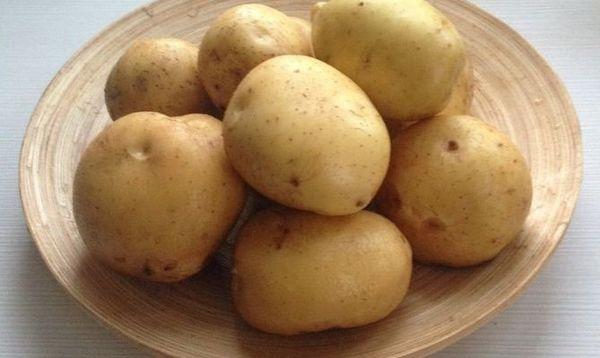
For many years, German breeders tried to develop a root vegetable variety that would be significantly different from its early-ripening relatives. After numerous attempts, they succeeded in developing the Karatop variety, which is extremely early, disease-resistant, and has excellent flavor.
Description and characteristics of potatoes
The main distinguishing feature of this potato variety is its accelerated growth. It is a very early-ripening variety. Harvesting begins fifty days after germination. The stem is semi-erect, and the bush is medium-height.
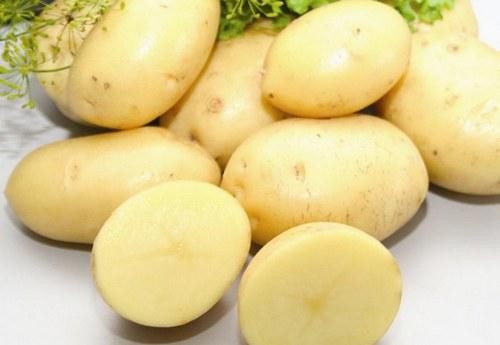
The main characteristics include the following:
- absence of blue-violet color;
- average size of intermediate leaflets;
- the tops are green in color;
- a small number of white flowers during flowering;
- high level of productivity;
- the total number of root crops from each bush is up to 30 pieces;
- high resistance to some diseases affecting fruits and stems;
- resistant to various types of mechanical damage;
- can be stored for a long period of time (provided it is kept in a warm place).
Karatop produces the same yield regardless of the soil type it's planted in. It's worth noting that this variety doesn't tolerate drought well.

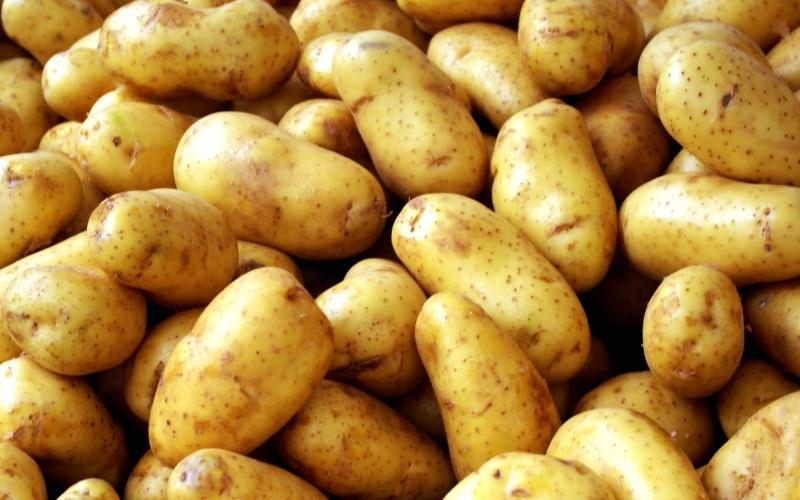
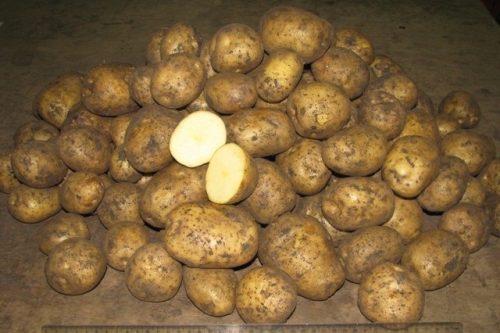
Karatop potato tubers also have some distinctive features from other varieties.
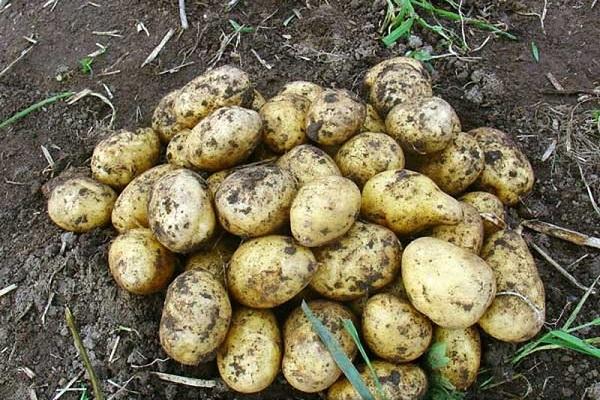
- Spherical shape of the root vegetable.
- The peel is yellow.
- The surface is smooth, without irregularities.
- The pulp has a medium-grained structure.
- It is easy to clean mechanically.
- An individual tuber weighs from 70 to 110 grams.
Pros and cons
The Karatop potato variety has become very popular due to its many advantages.
- High level of productivity.
- Unpretentious to the type of soil in which it will grow.
- Resistant to some diseases affecting plants.
- It has a good marketable appearance.
The following are some of the negative aspects of potatoes:
- increased need for abundant watering;
- has low resistance to late blight.
Cultivation
Cultivating this variety involves creating optimal environmental conditions to meet the needs of the cultivated plant. The planting field should be prepared in early autumn, clearing away plant debris and deep digging.
Fertilizer should be added during digging. This is to ensure the tubers receive everything they need for successful growth and development.
How to germinate seeds
To ensure a good harvest, Karatop needs to be germinated before planting in open soil.
To do this, you will need soil, a medium-sized box, and the seed itself.
- Pour moistened soil (up to 3 cm thick) into the bottom of a shallow container. Ensure the average soil temperature does not drop below 15 degrees Celsius.
- The tubers are laid out with the eye facing up.
- Fill the container with soil to a thickness of up to 3 cm. Keep in mind that the number of layers in one box should not exceed three.
- The filled box is placed in a lighted room.
To improve germination, it is recommended to use copper sulfate. The ratio is 1 gram of copper sulfate per half a bucket of water (5 liters).
Correct planting of potatoes
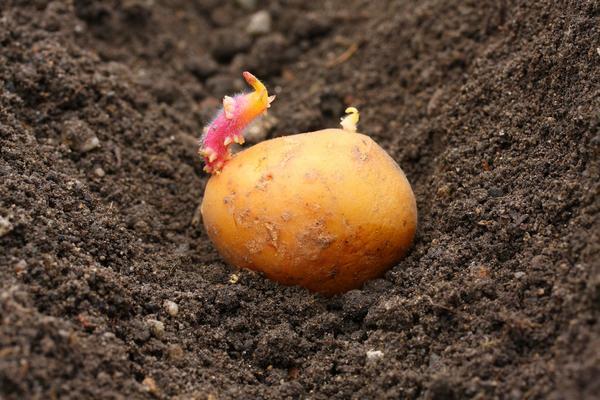
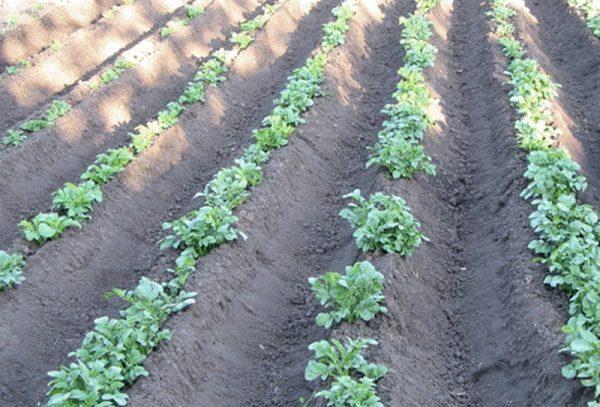
As mentioned above, this variety thrives in any soil type. Planting involves several stages. First, trenches are dug. The width between trenches should be at least 65 cm, and the distance between tubers in the trenches should be at least 40 cm. After planting, the tubers should be covered with a three-centimeter layer of soil.
Key points of care
Caring for planted tubers of this variety isn't much different from caring for other early-ripening varieties. Simply follow these steps:
- loosening the soil;
- hilling the field;
- abundant watering;
- fertilizing.
Watering and fertilizing
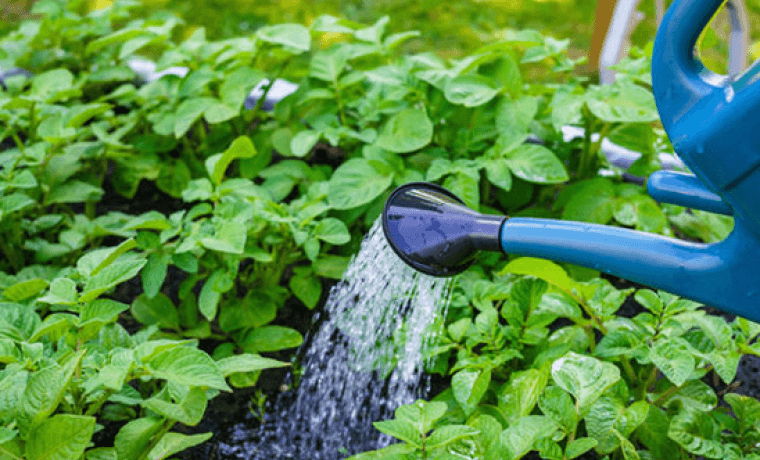
Due to their resistance to blackleg disease, the tubers require adequate watering. They do not tolerate high temperatures or drought, but respond well to regular watering. The beds should be watered at least twice every seven days.
The key nutrients in fertilizing are potassium and phosphorus. Before flowering, phosphorus-containing fertilizer should be applied, and after flowering, potassium should be applied, which improves yield.
Loosening and weeding
Monitor the soil. The first loosening is done 6 days after planting. Weeding and loosening should be regular to protect the fruit from weeds and grass and to retain soil moisture.
Hilling
Each seedling should be earthed up to protect it from grass growth and spring frosts. The main danger is a sharp drop in temperature at night and unexpected frosts. Experienced gardeners recommend using a layer of peat crumbs up to 4 cm thick.
Diseases and pests
This variety boasts strong immunity to most diseases and pests. The cultivated plant is resistant to viruses A and Y, canker, and spotted and golden nematodes. However, the root crop is susceptible to late blight. To prevent this, treat the tubers with a fungicide.
Harvesting
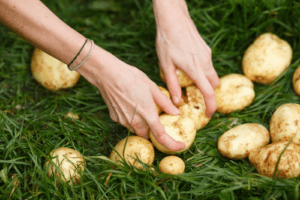
The harvest is collected on the sixtieth day, but if you want to get an early harvest, then this procedure should be carried out 10-12 days earlier.
- The bush is dug up with a shovel, after which the fruits are selected.
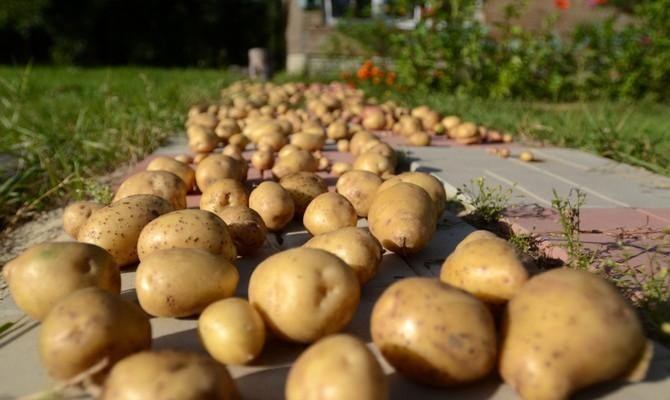
- The potatoes are laid out in a place exposed to direct sunlight to dry.
- After this, the harvest is stored in a dark, ventilated room for three weeks to ripen.

Taste and uses
The cultivated plant is used in cooking. It can be cooked (boiled, fried), stuffed, or frozen. The vegetable is used as an ingredient in salads, soups, and main courses. Consumers say the potato has excellent flavor no matter how it's prepared.
Reviews from gardeners
Roman Gordienko, 56 years old, Kharkov
Hello. I'd like to share my personal experience growing Karatop potatoes. I've been growing various vegetables, including potatoes, for many years. I tried Karatop. The root vegetable ripened after two months, we harvested the crop, and decided to taste it. The potato has a delicate flavor and doesn't fall apart after cooking. I highly recommend it.
Vasilisa Pluzhnikova, 64 years old, Krasnodar
Hello everyone. I've been growing a potato variety called Karatop for about five years now. I'm very pleased with the yield and the taste of the potatoes after cooking. I'm also pleased that, thanks to the variety's disease resistance, the roots always remain whole and undamaged. Overall, I recommend everyone try it; you won't regret it.
Kirill Andreev, 67 years old, Voronezh
Hello! I learned about Karatop by chance. I was choosing potatoes for planting (I wanted to try something new), and the seller recommended this variety. I can say I'm very happy with my choice. The root vegetable is large and the flavor is excellent. And by the way, I was also pleased with how easy it is to grow and how quickly it ripens.
Related posts:
 Why potatoes aren't growing well in the garden, and what to do to ensure a bountiful harvest
 The best grape varieties for growing in the Urals, planting and care rules in summer
 Description and treatment of potato pests, control measures
 Description and treatment of potato diseases, methods of control using folk and chemical means
 80 Best Eggplant Varieties for Different Regions with Descriptions and Characteristics
 Description and characteristics of the Gulliver potato variety, planting and care
 Description of the best potato varieties of domestic and foreign selection
 Description of the best potato varieties for 2025, selection for regions