
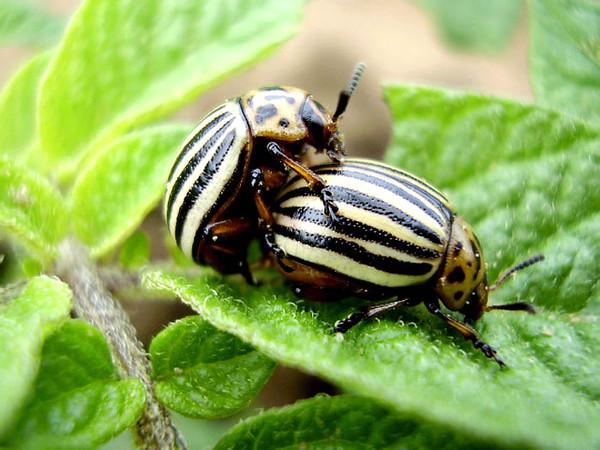
It's crucial for gardeners to know what eats and thus destroys Colorado potato beetles, as they can destroy entire potato and other vegetable plantings by actively devouring their foliage. Potato leaf beetles reproduce at an incredible rate and are quite resilient in adverse conditions.
Who eats the Colorado potato beetle?
There aren't many animals in Russia that would eat Colorado potato beetles or their larvae. However, nature has provided some birds and insects that can help humans combat this pest.
Birds
Some poultry eat Colorado potato beetles and their larvae, which can help eradicate them. This control method eliminates the need for chemicals; simply release the birds into the garden beds.
Guinea fowl
Guinea fowl's main diet, of course, consists of grain crops, but these birds also enjoy eating various insects, particularly Colorado potato beetles. Guinea fowl are attracted by their bright appearance. Gathering in groups, they enthusiastically hunt pests. This is why they are so beloved by farmers.
Pheasants and partridges
Pheasants and gray partridges are considered natural predators not only of Colorado beetles and their larvae, but also of other garden pests. Gardeners often use these birds to control insects, but it's best not to leave them unattended in garden beds, as they can trample other plantings.
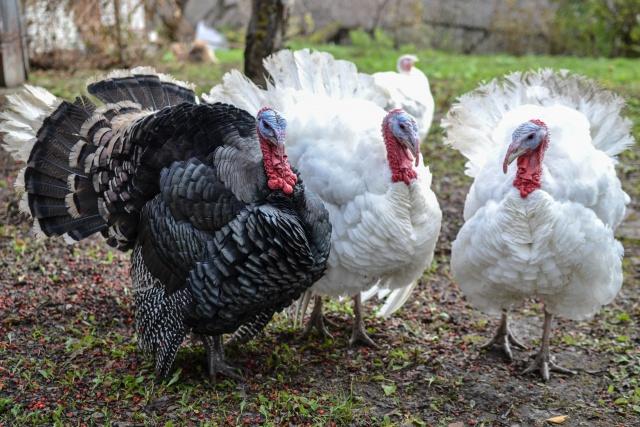
Turkeys
Turkeys are among those birds that don't dig up the soil when searching for food. They simply scavenge from the ground or plants. Therefore, they are also allowed into potato fields and other plants where this insect infests.

Important! When releasing poultry onto garden beds, remember that they should not be treated with chemicals. This can cause significant harm to the birds.
Insects
Birds aren't the only ones who can eliminate pests in gardens. Certain insect species also successfully perform this mission. They feed on eggs, larvae, and sometimes even adult beetles.
Ladybugs
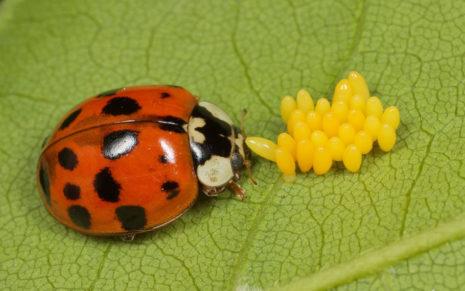
These attractive bugs are quite useful for gardeners. They eat the eggs of garden pests, preventing them from reaching the most harmful stage of development—the larval stage.
Colorado beetles are most often eaten by ladybugs (variable, seven-spotted, thirteen-spotted, and fourteen-spotted). On average, one ladybug can consume up to 15 eggs of these striped pests.
Lacewings
This insect resembles a midge in appearance, but is predatory. Like ladybugs, lacewings feed on Colorado potato beetle eggs, but they can also eat small larvae. A single lacewing can destroy 200-300 Colorado potato beetle eggs in its lifetime. They are powerless against adult beetles.
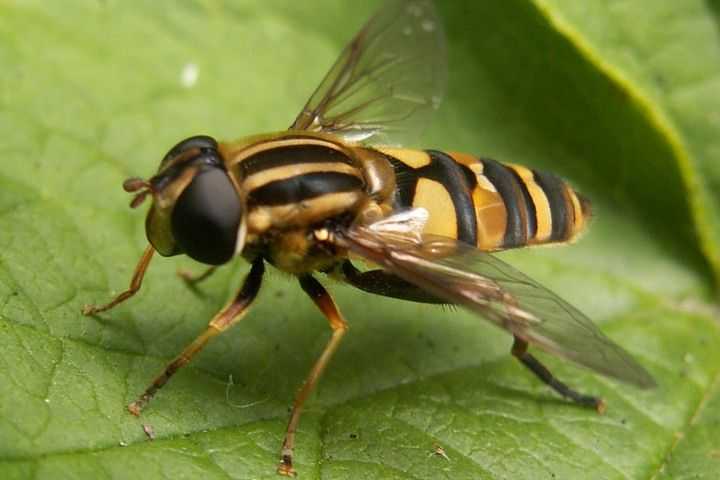
Syrphidae or hoverfly
These insects resemble hornets and can be seen in summer over dill or carrot beds. Adults feed on the nectar of small-flowered plants, while their larvae consume small insects such as aphids, spider mites, and Colorado potato beetle larvae. Syrphids develop over 2-3 weeks, and the older they become, the more voracious their appetite becomes. They can consume up to 200 insects in a day.
Who else eats the Colorado potato beetle?
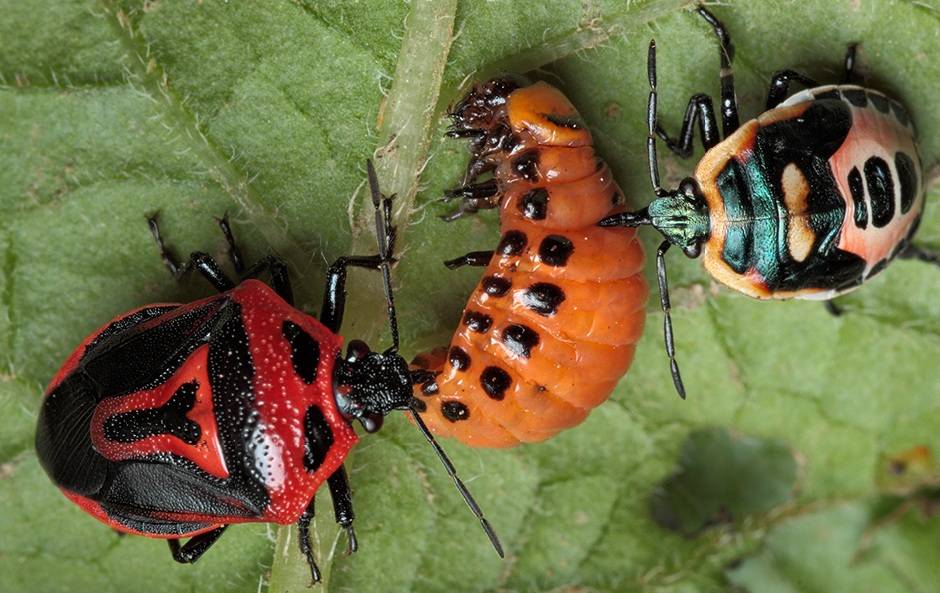
The potato leaf beetle also has natural enemies. For example, the American potato leaf beetle (Perillus spp.). Both adults and their larvae feed on the eggs and, in rare cases, the larvae of this pest. A larva of this bug can destroy up to 250 eggs during its development. An adult bug consumes 3,000-3,500 eggs in its lifetime.
Another American bug, the Podisus, is even more voracious than the Perillus, devouring around 70 eggs in a single day. It can also eat larvae.
Grasshoppers can also become enemies of Colorado beetles. They are omnivorous, feeding on a variety of insects, including potato leaf beetles. Grasshoppers are a fairly common insect, so they pose a real threat to pests. The common toad is also a threat to potato leaf beetles. It eats pests that live underground. Toads also prey on mole crickets, which are just as damaging to gardens as Colorado beetles.
Training chickens to eat bugs
Gardeners who don't have poultry that eat Colorado potato beetles can train their chickens to do so. However, they should be trained from a young age, 3-4 months, otherwise the effort will be unsuccessful. Training should look like this:
- First, crushed larvae are mixed into the chickens' feed.
- The next step is to add crushed potato leaves or tubers to the feed. This will help the chickens get used to the smell of this plant.
- After a week, the amount of “seasonings” is increased.
- Once the chickens have become accustomed to this food, they can be released into the garden beds. They will peck pests from the bushes themselves.
Colorado potato beetles are not easy to control; they are quite hardy and tenacious. If the pest has nothing to eat, it can hibernate for up to three years. Harsh winters are also not a problem for them, as they burrow up to 70 cm underground. This insect has few natural enemies, so gardeners who don't want to resort to chemicals must be resourceful and patient.
Related posts:
 What is the best way to treat cabbage from pests? Folk, chemical and biological remedies.
 How to use tar to combat the Colorado potato beetle: methods and tips
 Causes and treatment of eggplant pests and diseases, how to combat them at home
 Instructions for use of Corado against the Colorado potato beetle
 What is the best way to treat cabbage from caterpillars and butterflies, folk remedies
 Instructions for use of the Colorado potato beetle repellent Inta-Vir
 Which pests are eating cucumber seedlings in a greenhouse, what to do, and how to treat them?
 Instructions for use of the Colorado potato beetle repellent Commander