
- Description of the pest
- Why is he so tenacious?
- Reasons for the appearance of insects on potatoes
- Signs of defeat
- Methods for controlling the Colorado potato beetle on potatoes
- Chemicals
- Prestige
- Taboo
- Aktara
- Golden spark
- Commander
- Corado
- Tanrek
- Regent
- Use of biological insecticides
- Colorado Forte
- Bitoxybacillin
- Agravertin
- Nemabact
- Bicol
- Traditional methods
- Red pepper
- Birch tar
- Ash
- Mustard
- Sagebrush
- Preventive measures
- Varieties that are resistant to the Colorado potato beetle
- Reviews from summer residents
Growing vegetable crops often presents challenges. Fertilizing, regular watering, and monitoring fruit or tuber development are all key steps in ensuring a good harvest. One common problem when growing Solanaceae is the Colorado potato beetle. This pest is particularly notable among insects because it can ruin a significant portion of the harvest or even cause its complete loss.
Description of the pest
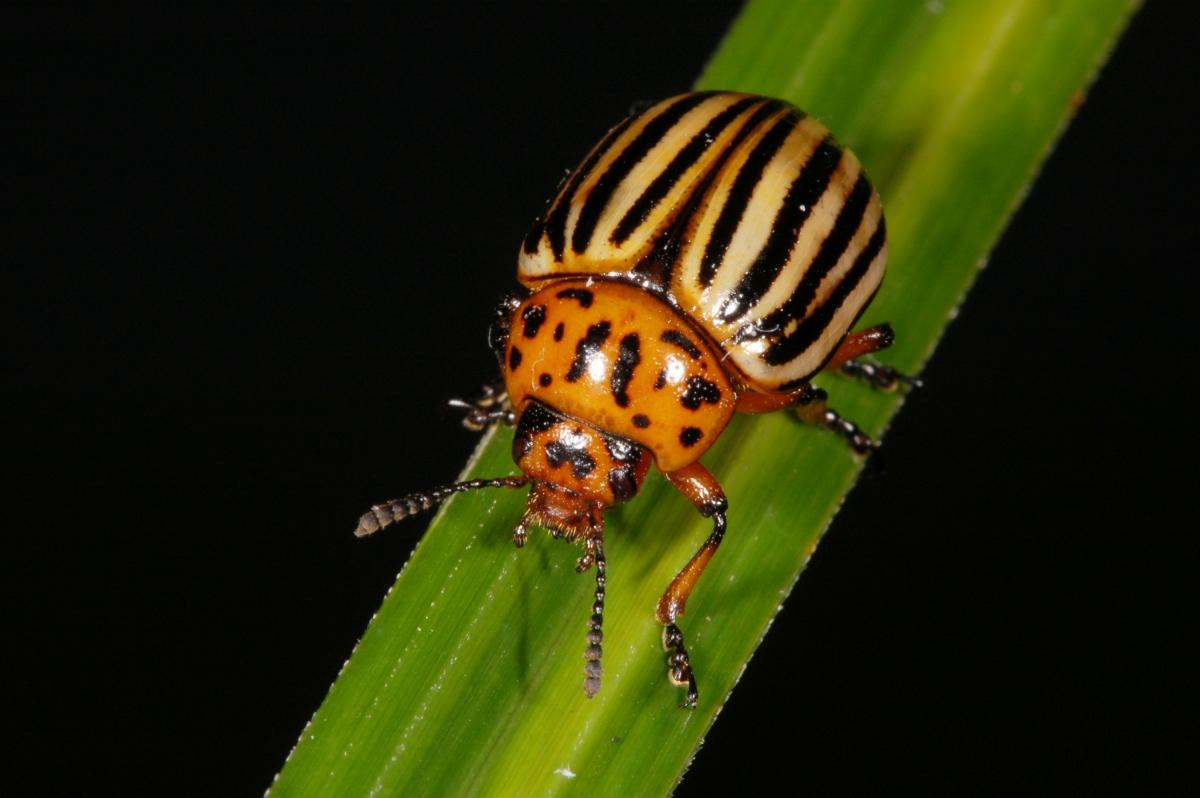
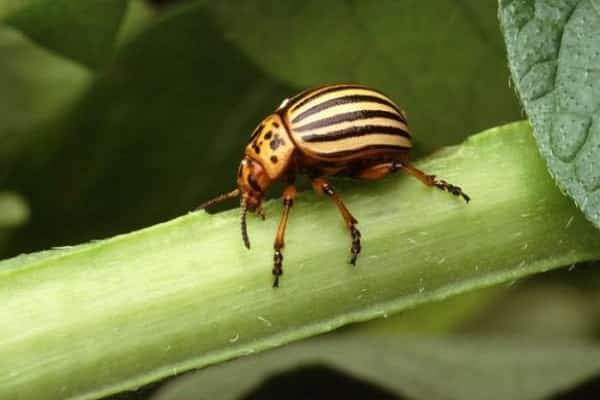
The beetle's appearance in the 19th century in southern Colorado and its devastation of large tracts of crops made it world-famous. Since then, it has been known as the Colorado potato beetle. Its first appearance is associated with the loss of the nightshade crop in Mexico several years earlier. This species of beetle belongs to the leaf beetle family. Its preferred food sources are potatoes, bell peppers, tomatoes, tomatillos, and eggplant.
Appearance of the pest:
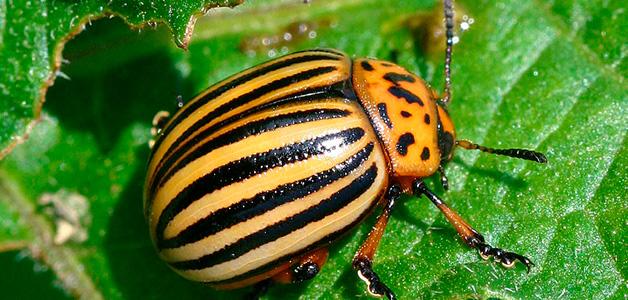
- body length: from 8 to 12 millimeters, width reaches 5-8 millimeters;
- body shape: oval, streamlined;
- the color varies from yellow to yellow-orange, with black inclusions;
- The wings have elytra, are suitable for long flights, are dense and developed.
The Colorado potato beetle larva resembles a ladybug larva, and the two are often confused. The beetle larva is an elongated body up to 15 millimeters long with a black head and rows of black dots along the sides. Its body is brownish in color early in development, but over time, it turns yellow. By feeding on potato leaves, the larva becomes saturated with carotene, which it cannot digest. Because of this characteristic, the larva gradually acquires a bright orange hue.
Adult beetles, or adults, are able to survive the winter without loss. To do this, they burrow into the soil to a depth of about 1 meter and wait for warmer weather. Once warmer, they emerge to the surface, begin feeding on plant debris, and lay their eggs. A female can lay several clutches in a single day. Over the course of a season, females produce approximately 1,000 eggs. In southern regions, where warm weather favors more active development, up to three generations of Colorado potato beetles can occur during the summer.
Information! Larvae emerge in 5-10 days and begin to develop rapidly. The lifespan of the Colorado potato beetle is 2-3 years.
Why is he so tenacious?
The Colorado potato beetle remains the most dangerous pest for members of the Solanaceae vegetable family. Potato crops are particularly vulnerable.
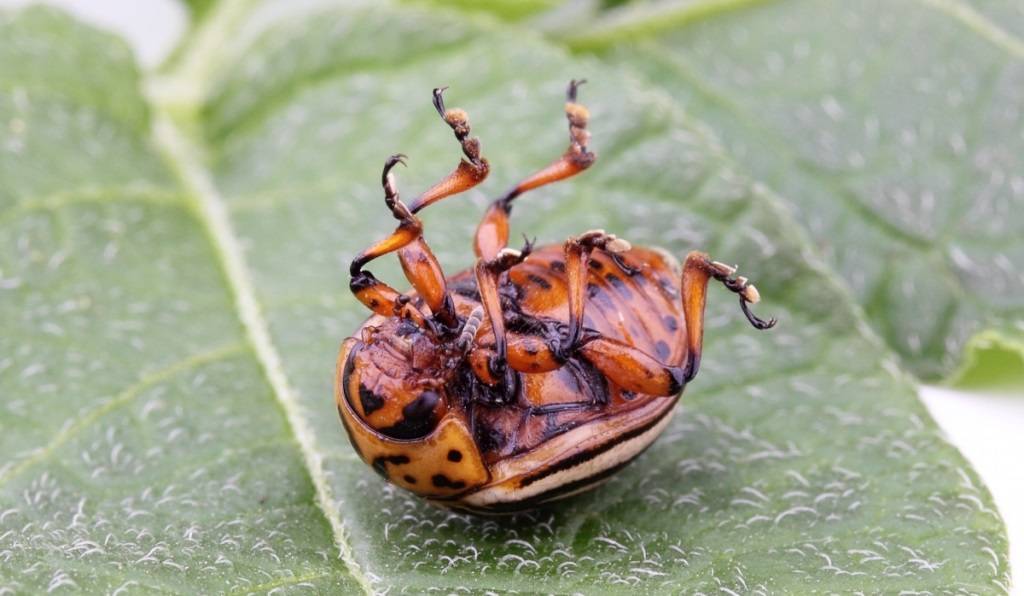
Although the beetle has been around for centuries, and botanists have invented dozens of methods to combat it, getting rid of it is not so easy.
- The beetle's body contains toxic substances that it deliberately accumulates, so it is not destroyed by birds or other individuals.
- The beetle is able to withstand long periods of sleep, which prevents its destruction.
- Beetles are capable of moving quickly from one field to another, and it is impossible to track their movements.
- One adult female is enough to restore the population.
- Larvae can only be destroyed through total treatment and disinfection.

Gardeners have learned to repel the beetle and force it to temporarily leave the plantings, but getting rid of the beetle completely remains a difficult task.
Reasons for the appearance of insects on potatoes
The Colorado potato beetle feeds on a variety of plants of the Solanaceae family, but the pest's main food is potatoes.
The beetle begins to eat potatoes for several reasons:
- selects weakened lashes;
- settles on bushes planted on depleted and uncultivated soils;
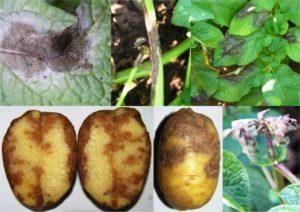
- selects potato bushes that are already infected with a fungal or bacterial infection;
- appears where the bushes are excessively moist and the soil is damp and hard.
Signs of defeat
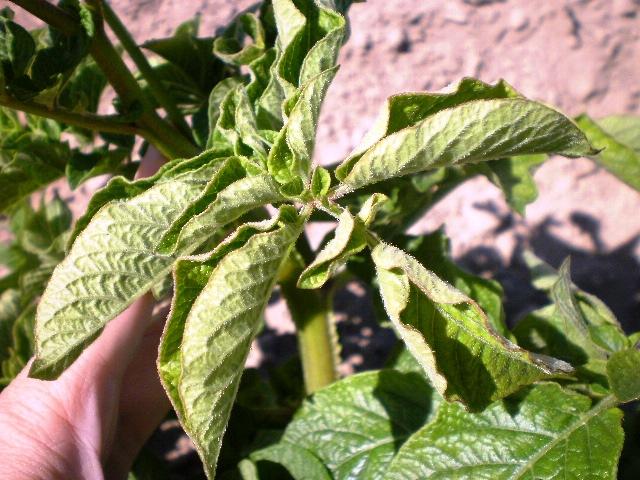
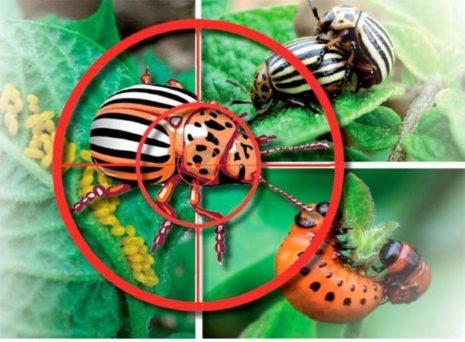
The appearance of Colorado potato beetles in potato fields can be immediately noticed. The insects move together, infesting numerous bushes upon emergence. The beetles are recognizable by their bright orange coloration. Egg clutches can also be found on the underside of the blades. The tops of the plants appear limp, and the leaves curl.
Methods for controlling the Colorado potato beetle on potatoes
Over the long history of the Colorado potato beetle, specialists have developed a variety of sophisticated methods for controlling it. All of these have advantages, but also drawbacks. Chemical treatments can be effective, but they affect the taste and nutritional value of the potato. Folk remedies aren't always effective quickly, but they won't harm the plant as a whole.
Chemicals
Insecticides can kill adult beetles and also prevent the development of eggs. Treatment at the early stages of parasite emergence is considered most effective.
Important! When treating vegetables with chemicals, it is important to monitor the concentration of the prepared solutions.
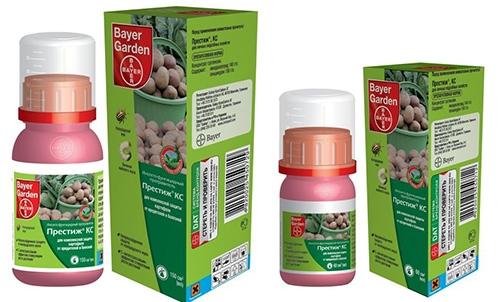
Prestige
This effective product is used to treat tubers before planting. It contains several active ingredients. It prevents beetles from approaching the treated tubers for 50 days. Potatoes are eaten only 50-60 days after treatment.
Taboo
The main ingredient of the product is imidacloprid. It is available as a suspension that can be diluted with the required amount of water. The tubers are treated before planting; the effect lasts up to 45 days. If Colorado potato beetles appear on the tops of the plants, Tabu is used for foliar application. This treatment helps eliminate the beetle permanently.
Aktara
A thiamethoxam-based product. This insecticide helps eliminate beetles as soon as they appear. Bushes are treated with an Aksara solution. The beetles feed on the treated foliage and die within a few hours due to the effects of the solution's components on the nervous system.
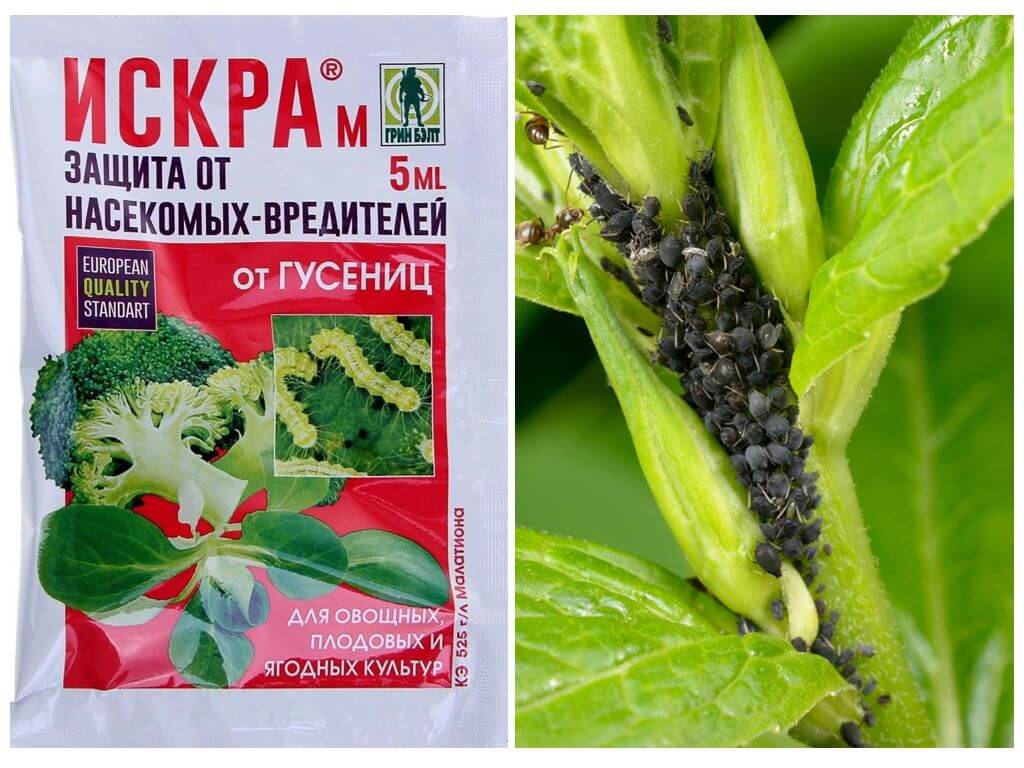
Golden spark
The active ingredient, imidacloprid, makes this product quite effective. After application, it doesn't wash off leaves in rain and remains effective for one month. It can also be used to control aphids, anteaters, and potato flies.

Commander
Komandor is a true poison for the Colorado potato beetle. When applied, the active ingredient penetrates all layers of the plant, capable of killing not only adults but also larvae.
Corado
This product is said to kill instantly. The active ingredient affects the insect's nervous system, paralyzing it in minutes. The solution's effects can last up to three weeks.
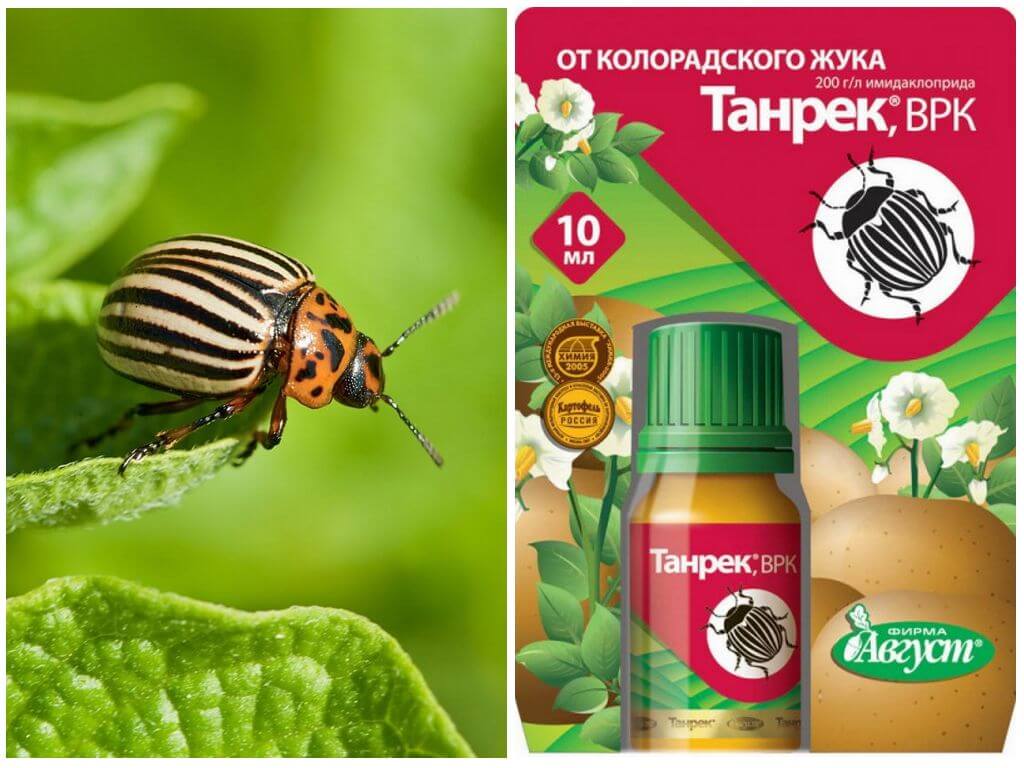
Tanrek
The composition contains an effective poison for beetles. A small dose of Tanrek is enough to spray 100 square meters of crops.
Regent
Fipronil is the product's main ingredient. It comes in ampoules. A few drops are added to 10 liters of water and sprayed on the bushes. The component acts as a paralytic on the parasite, killing adult insects within a few hours of consuming the treated tops.
Use of biological insecticides
Biological products are safer than chemical ones. After treatment with biological agents, there's no need to wait for the substances to wear off.
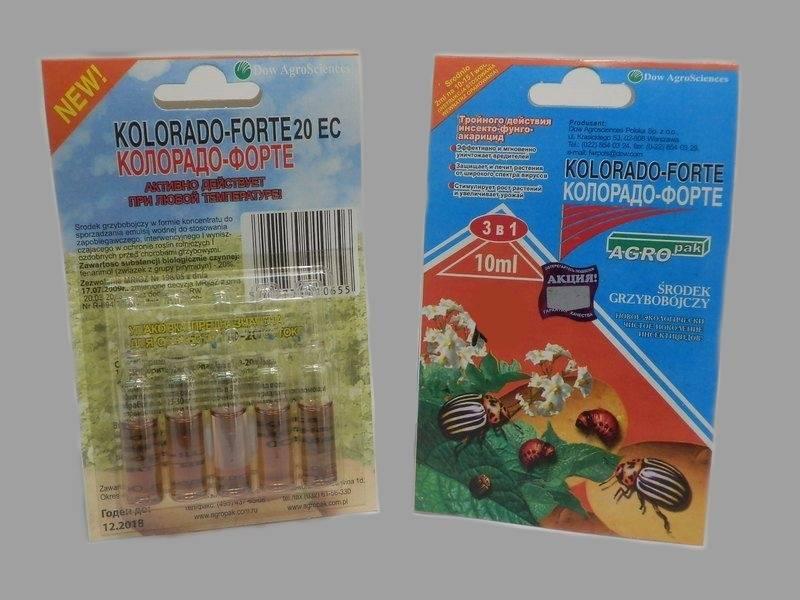
Colorado Forte
The product acts as both a fungicide and a growth stimulant. The active ingredient is a powerful poison for the Colorado potato beetle. Maximum effectiveness is achieved three days after the primary treatment.
Bitoxybacillin
A biological insecticide produced as a powder for mixing with other insecticides. It remains effective for several hours after application. It can be toxic not only to beetles but also to silkworms.
The disadvantage of the drug is that its effectiveness decreases at air temperatures below +18 degrees.
Agravertin
This product is available in 10-milliliter ampoules. The active ingredient is spores of a fungus toxic to pests. It acts as a paralytic, affecting the insect's nervous system. Its effects are enhanced at temperatures above 25 degrees Celsius.
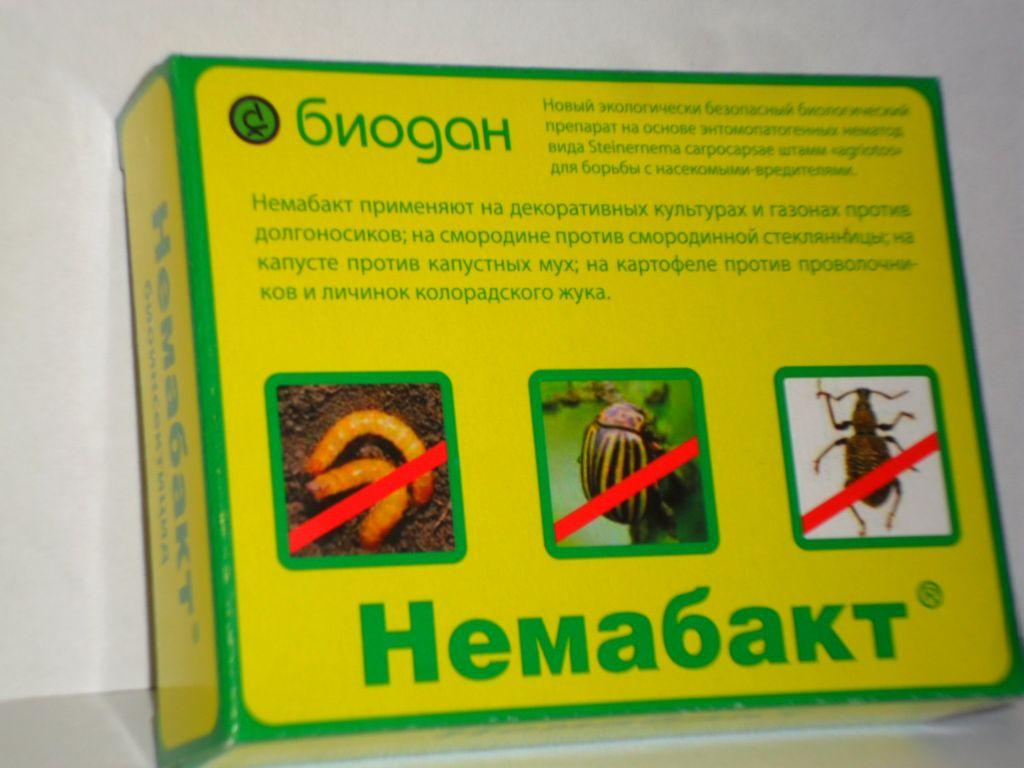
Nemabact
The product is based on pathogenic nematodes and bacteria. Its action is based on the influence of natural microorganisms. Powder solutions are applied to the roots, avoiding contact with the leaves. The effect of this biological insecticide lasts for several months. Experts recommend additionally spraying the foliage with auxiliary substances after treatment with Nemabact.
Bicol
The drug targets beetle larvae and is administered in stages, every 7 days. Based on strains and bacteria, it acts as a systemic paralytic.
Traditional methods
The advantage of using folk remedies for treating potato plots is that they don't require chemicals. Chemicals won't accumulate in the leaves or tubers, making the crop unsuitable for consumption.
Red pepper
Crush 100 grams of red pepper and steep it in 10 liters of warm water for several hours. Spray the tops with this solution.

Birch tar
Mix 30 milliliters with 10 liters of water. Apply this solution to the tubers when planting. To kill existing beetles, water the young tops with this solution.
Ash
Birch ash is a good beetle repellent. It also helps prevent beetles from burrowing into the soil for the winter. Spread 10 kilograms of ash over 100 square meters of land, making sure to cover all areas.
Mustard
Mix 1 kilogram of mustard powder with 10 liters of water until completely dissolved. Apply this liquid to the mustard tops. This method kills adult insects and their clutches.

Sagebrush
Wormwood can repel many pests from potatoes. A decoction or infusion of wormwood is used for treatment. Fresh leaves are steeped in water, then steeped or boiled. The mixture is diluted with water to a medium concentration and sprayed on the crop using garden sprayers.
Preventive measures
Regular potato growers know that the fight against the Colorado potato beetle begins long before planting. There are several rules that can help prevent pest infestations:
- maintaining crop rotation (potatoes are not planted in the same area for several years in a row; the predecessor of potatoes should not be other representatives of the Solanaceae family);
- disinfection and treatment of the soil (in the spring, before sowing, the soil is plowed and gradually treated with agents - the beetle is afraid of such disinfections, especially if it overwinters in the soil);
- treating tubers with any chosen means will protect the future harvest from the effects of insect parasites;
- timely removal of weeds, loosening the soil around potato bushes.
An important step when growing potatoes is to completely remove any remaining vines in the fall. This prevents rotting and soil contamination.
Advice! Potato vines should be burned after harvesting.
Varieties that are resistant to the Colorado potato beetle
Selective breeding, the development of hybrid potato varieties, and ongoing research efforts to improve their quality allow gardeners to select varieties that are resistant to the Colorado potato beetle. These include:
- Bryansk tender;
- Glow;
- Kamensky;
- Nikulinsky;
- Pace;
- Early morning.
Reviews from summer residents
Many potato growers admit that chemical treatments often damage the potato's flavor. Gardeners prefer to treat their potatoes with folk remedies, resorting to chemicals only as a last resort. Mulching the soil with onion peels is considered a good treatment method. The distinctive smell of onions repels the Colorado potato beetle. This method works only as a preventative measure.
When pests appear, gardeners recommend combining treatments. After insecticide treatment, sprinkle the potatoes with wood ash.
Gardeners note that crop rotation isn't always followed, so to prevent risks, the soil is intensively cultivated before planting. Potato fields are typically fertilized with manure and compost.
Related posts:
 Is it possible to spray potatoes during flowering to protect against the Colorado potato beetle?
 Pre-plant potato treatments for Colorado potato beetle
 How to dilute Fitoverm for Colorado potato beetles and instructions for use
 Instructions for use of "Sonnet" against the Colorado potato beetle and its composition
 Instructions for using the poison "Executioner" against the Colorado potato beetle
 Description and treatment of potato pests, control measures
 Instructions for using the Apache remedy against Colorado potato beetles, how to dilute
 Instructions for use of the "Alatara" remedy against the Colorado potato beetle