
In open ground, the first symptoms of powdery mildew on cucumbers appear on plants growing in shade or partial shade with high humidity. In greenhouses, outbreaks occur near doorways and vents. The disease spreads rapidly. Without immediate action, cucumber losses can reach 40-50%.
Description of the pathogen
The disease is caused by fungi of the species Oidium erysiphoides. The pathogen reproduces sexually and asexually. In the asexual mode, the fungus reproduces by cleistothecia. These cleistothecia are formed by hyphae and contain countless spore-bearing sacs. Their formation occurs in the second half of summer.
Each ascus contains 4 to 8 ascospores. Cleistothecia overwinter in plant debris. In the spring, with the onset of warmer weather, the ascospores mature and are released. This leads to the emergence of new foci of infection.
The fungus reproduces asexually by conidia (immotile spores). These form a whitish coating on the surface of infected cucumber leaves. Conidia are transferred from one plant to another. Wind and drafts facilitate their spread.
Conditions for the occurrence of the disease
The fungus actively reproduces in cool (16-20°C), damp weather. Conidia actively germinate when humidity approaches 95% and temperatures reach 20-25°C. Ashweed becomes epidemic when there is a large temperature difference between night and day. Signs of infection typically appear on rainy days when the average daily temperature is close to 10°C.
The disease can develop at normal air temperatures if the greenhouse has poor ventilation or cucumbers are planted densely. In this case, powdery mildew is caused by high soil and air humidity.
Fungal spores easily penetrate plant tissue if the irrigation water is cold. Improper watering causes the greatest damage during hot, dry weather, when cucumbers' turgor is reduced. Cucumbers overfed with nitrogen fertilizers are also susceptible to infection, as their immunity is weakened.
Signs of defeat
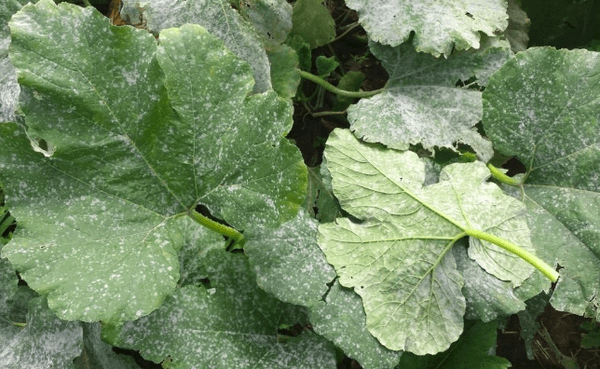
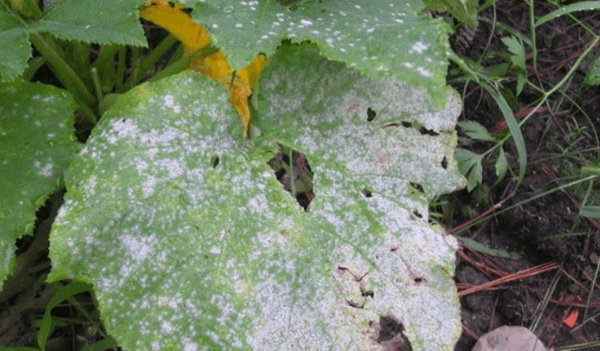
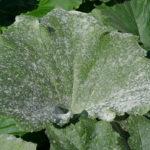
The disease was named powdery mildew because, in the initial stages, a white coating appears on the leaves of the affected plant. It looks as if they've been dusted with flour. The vines of infected cucumbers stop growing and gradually wither. The thin white coating is mycelium, formed by chains of conidia.
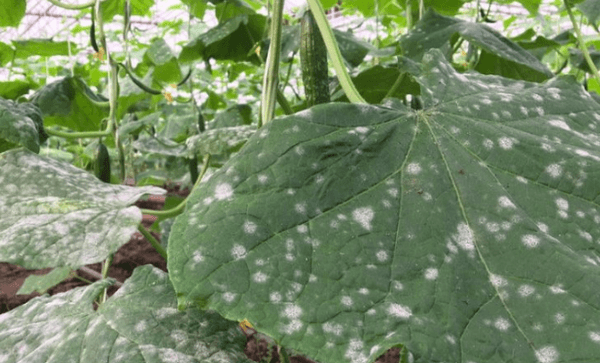
Buds and ovaries fall off, and the cucumbers rot. Eventually, the fungus-infected plant dies. The pathogen first attacks the lower leaves. In addition to a whitish coating, spots appear on them. This is mycelium. The spots are initially yellow, then turn brown and increase in size. Gradually, the infection affects the entire above-ground portion of the cucumber:
- stem;
- peduncles;
- fruit;
- flowers.
Under favorable conditions for fungal growth, damage can reach up to 70%. It causes greater damage to greenhouse plants. Other fungal species, such as Sphaerotheca fuliginea and Erysiphe communis, cause similar symptoms in cucumbers.
Development cycle
In winter, the pathogen of ash leaf spot occurs in the form of cleistothecia. These remain on the remains of foliage and leaves. In the spring, they mature, releasing spores enclosed in asci. These asci, when they land on cucumbers, cause primary infection.
It takes 3-5 days from the moment cucumbers are infected until the first symptoms appear. During the growing season, the infected plant becomes a carrier of the infection. Spores are spread from plant to plant through the air, contact with humans, and insects.
Methods for combating powdery mildew on cucumbers
If you notice a white coating on your leaves, you need to take immediate action to save them. Learn how to treat powdery mildew and yellowed leaves on cucumbers. Choose a safe folk remedy or purchase an effective antifungal treatment.
Before treating cucumbers with a solution for powdery mildew, inspect the plants and remove all infected leaves and stems. Weed the bed containing the infected cucumbers. Thin out the plantings if necessary.
Biofungicides
This group of fungicides is safe for humans, soil, and pollinating insects. They can be used during flowering and cucumber formation. The beneficial bacteria contained in biofungicides inhibit pathogenic fungi.

Biofungicides are safe, but to achieve a therapeutic effect, treatments must be repeated multiple times. Fungal infections can be controlled with fungicides:
- Planriz;
- "Pseudobacterin 2";
- Fitosporin-M;
- "Alirin B";
- "Gamair".
Chemical fungicides
The choice of treatment depends on the stage of the disease. If symptoms are just beginning, chemical fungicides such as Bayleton and Topaz will help. These can be used in both the garden and the greenhouse. Only cucumbers grown in the garden can be treated with chemicals:
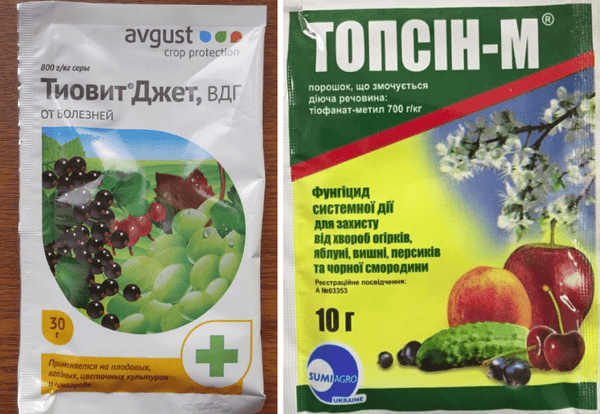
- "Topsin M";
- Thiovit Jet.
In the later stages of the disease, treatment with colloidal sulfur is effective, but it should only be applied in the garden. In a greenhouse, there is a high risk of burning plants. Colloidal sulfur can be used once per season at air temperatures between 20 and 30 °C.
Folk remedies
Simple remedies can help eliminate powdery mildew on cucumbers in the garden and greenhouse. They can be used safely during the flowering and fruit-setting stages. Copper sulfate is a popular option.

Gardeners use this solution to combat fungus on vegetable plants. You'll need 7 g of powder per 10 liters of water. First, mix 100 g of liquid soap into the water. It reduces acidity and acts as an adhesive. The antifungal effect begins within 2 hours. It will protect the plant for 7-12 days. The duration depends on the air temperature: 7 days at 25°C, 12 days at 15°C.

Cucumbers can be sprayed once every 7 days until the symptoms of powdery mildew completely disappear with a soap and soda solution:
- soda ash - 25 g;
- hot water - 5 l;
- liquid soap - 5 g.
Cucumbers can be treated for powdery mildew with pharmaceutical medications:
- potassium permanganate - 1.5 g per bucket of water;
- iodine - 10 drops, milk (kefir) - 1 l, a bucket of water;
- brilliant green - 1 drop, water - 1 l;
- aspirin - 4 tablets, water - 1 l.
Preventive measures
The biofungicide "Alirin B" is a good preventative measure. It should be used to prevent powdery mildew. In damp weather, apply it to cucumbers two days after a heavy rainfall; it will protect them from fungal spores.
During the summer, weed and feed cucumbers with potassium-phosphorus fertilizers, but avoid overfeeding with nitrogen. Monitor the temperature and humidity in the greenhouse. Water with settled, warm water.
In the fall, clear the soil of plant debris. In the greenhouse, remove the topsoil every two years. In the garden, maintain crop rotation and sow green manure in the fall (or spring). A good protection method is to choose a fungus-resistant variety.
Varieties and hybrids of cucumbers resistant to disease
The manufacturer indicates the variety's disease resistance on the seed packet. Preference should be given to hybrids (varieties) that are resistant to fungal infections.
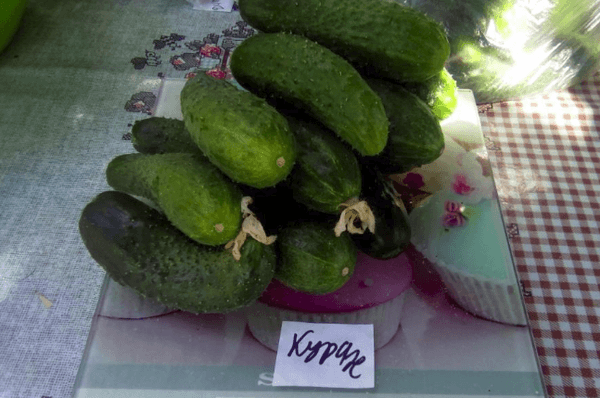
The F1 hybrid "Kurazh" deserves attention. It matures early, in 45-50 days, and produces a productive yield of 6-8.5 kg per bush. The fruits are bitter-free, tasty, and versatile. "Kurazh" can be grown in both the garden and greenhouse.
An excellent shade-tolerant hybrid, Ural Express F1 is resistant to downy and powdery mildew. It's very early and can be grown in a vegetable garden, a hotbed, or a greenhouse. Its small (8-12 cm) white-spined cucumbers are delicious fresh, salted, and pickled.
F1 Chinese is a cold-hardy hybrid with good immunity. This cold-hardy, shade-tolerant, and productive cucumber can be grown in both greenhouses and gardens. The first cucumbers are harvested after 50-55 days. The cucumbers are long (30-50 cm), dark green, with tender, aromatic flesh and thin skin. Fruiting of the Chinese cold-hardy cucumber continues until autumn.

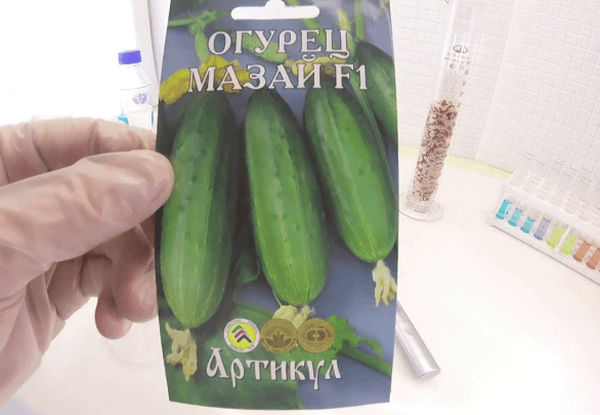
Mazai F1 is a greenhouse hybrid with comprehensive disease resistance. It ripens early and produces a bountiful harvest. The fruits are versatile, white-spined, and 10-12 cm long. They are grown for pickling. In southern regions, this cucumber hybrid can be grown in the garden.
Downy mildew
Downy mildew is another name for the disease. It refers to the microscopic fungi of the Peronosporaceae family that parasitize plants. The pathogen's zoospores enter the plant, where they develop into hyphae—germ tubes. These hyphae penetrate plant tissue through microcracks and grow, forming mycelium. Using suckers (haustoria), mycelium extracts sap from the infected plant.
Zoospores require a moist environment to spread, so downy mildew symptoms appear on cucumbers in damp weather. It takes about three days for the mycelium to grow. After that, it emerges. This is the mycelium that can be seen on the underside of the diseased cucumber leaf. It appears as a light, white or grayish-white fluff.
At this stage, cucumbers cannot be cured. The leaves wrinkle, and yellow-brown spots form, spreading across the entire leaf blade. These spots dry out and fall apart. These fragments become sources of infection. Fruiting bodies containing zoospores are found on these fragments.

In favorable weather (warm, damp), downy mildew can destroy most cucumbers in just a week. Zoospores are spread by insect pests (whiteflies, aphids), which increase the area of infestation. To protect cucumbers from downy mildew, a range of measures is used.
Spring and autumn soil cultivation is carried out - digging to a depth of 30 cm, disinfection with a fungicide solution:
- "Gamair";
- "Alirin B";
- "Baikal" EM1.
The cucumber bed is moved to a new location annually, returning the crop to the same plot after three years. Regionalized cucumber varieties (hybrids) resistant to downy and powdery mildew are grown, and phosphorus and potassium fertilizers are applied.
Related posts:
 Description of the best varieties of Chinese cucumbers, planting, growing and care
 Description of unusual methods for planting and growing cucumbers
 How to treat grapes for mildew, the best control measures and treatment rules
 Causes of powdery mildew on zucchini and methods of disease control
 35 Best Powdery Mildew-Resistant Cucumber Varieties with Descriptions
 TOP 30 best determinate cucumber varieties with descriptions
 How to plant cucumbers in open ground under film: timing and cultivation technology
 How to properly plant cucumbers in open ground with seeds, and at what depth