
- History of hybrid breeding
- Advantages and disadvantages of the variety
- Description and characteristics
- Bush and fruits
- Resistance to temperature changes
- Susceptibility to diseases and pests
- Growing bee-pollinated cucumbers Libella F1
- Soil requirements for planting
- Preparing seeds for planting
- Timing and technology of sowing
- How to grow Libella seedlings
- Trellis method
- Greenhouse method
- Caring for cucumbers after planting
- Irrigation and fertilization
- Garter and shaping the bush
- Weeding and loosening the soil
- Preventive treatment against insects and diseases
- When to harvest and how to store vegetables
- Reviews of gardeners and vegetable growers about the variety
Every year, breeders introduce new vegetable varieties to consumers. Those varieties for which demand remains strong remain on the market. One such variety is the Libella cucumber. It appeared in garden plots in the last century. Its flavor and consistent fruit production have made it popular among both gardeners and commercial growers.
History of hybrid breeding
Libella was developed by German scientists. Its main characteristic was considered to be its ability to adapt to challenging climatic conditions. In 1977, the variety was added to the Russian state register, and since then, cucumbers have been grown in plots across the country.
In 2010, the description of the variety’s history was continued: it was recorded as Libella F1.
Advantages and disadvantages of the variety
The main advantages of the variety include:
- stable fruiting throughout the season;
- resistance to infections;
- taste qualities, universal use of fruits;
In addition to its advantages, the variety has several disadvantages that must be taken into account when planning plantings:
- fruits tend to overgrow;
- unripe fruits have bitterness;
- does not belong to the parthenocarpic type, that is, it requires pollination.

Description and characteristics
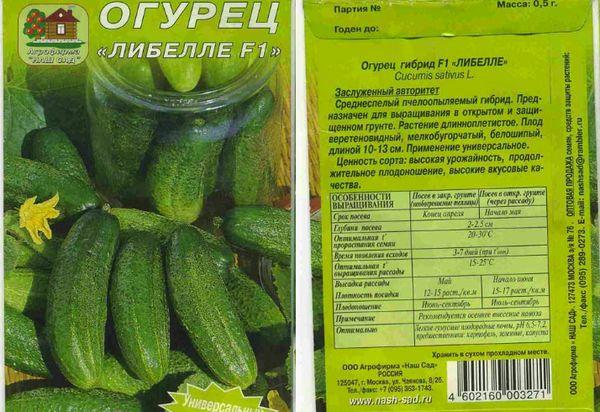
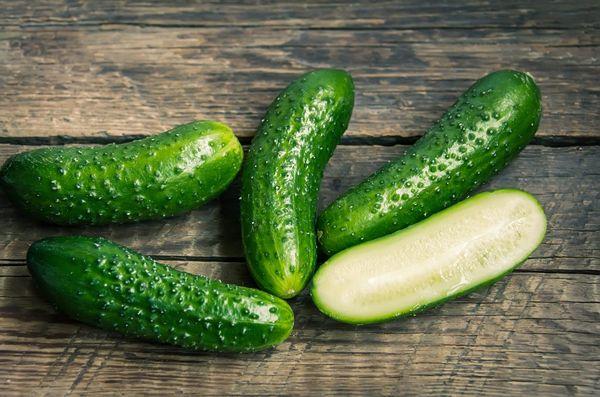
The variety is considered mid-season. It takes about 55 days from germination to fruit ripening. The distinctive feature of the variety is the formation of white spots on the cucumber skinThey appear as a response to exposure to sunlight, but are not burns.
Bush and fruits
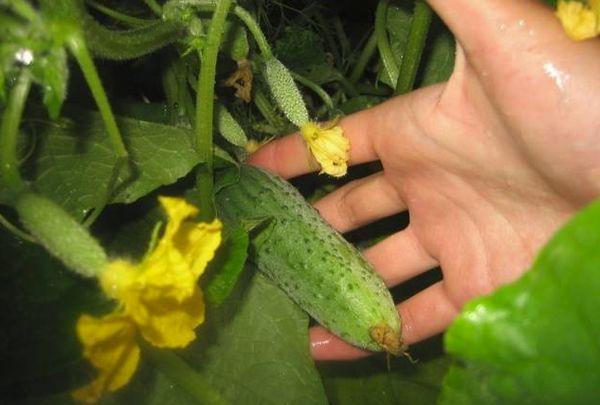
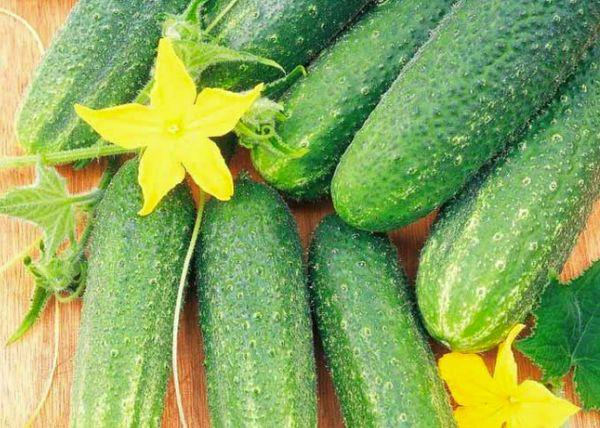
The Libella variety produces several vines on a single bush, which can grow up to 5 meters in height. The lack of pinching does not affect the yield or taste of the cucumbers.
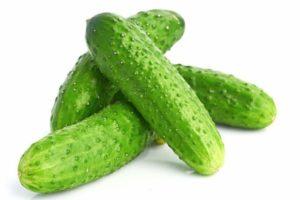
The fruits are distinguished by their elegant shape and have the following characteristics:
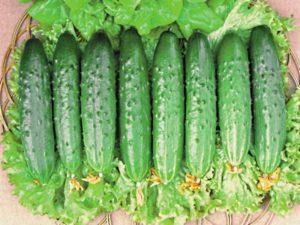
- length – from 12 to 14 centimeters;
- weight – from 100 to 180 grams;
- Up to 4 kilograms of cucumbers are harvested from one bush.
The bitterness of cucumbers is associated with their high content of cucurbitacin, an element that has beneficial effects on many body systems.
Many gardeners speak positively of this quality. The fruit's unobtrusive bitterness distinguishes this variety from many others and makes it delicious in marinades and pickles.
Resistance to temperature changes
The variety was brought to Russia and recommended for cultivation in the Northwestern and Central regions. Over time, it was discovered that, provided a preparatory stage, including hardening off the seeds and seedlings, it could be grown in the Urals and Siberia, in greenhouses or under greenhouse film.
The variety's resistance indicators are considered average, so it is not recommended to plant seedlings if there is a risk of recurrent frosts.
Susceptibility to diseases and pests
The variety's advantage is its resistance to disease. With proper care, the hybrid is not susceptible to powdery mildew or cucumber mosaic.
Aphids are a dangerous insect pest. They infest cucumbers in the spring, and ants can carry the larvae. Aphids feed on plant sap and are known for their ability to reproduce rapidly.
Aphid control measures include spraying with a soap solution and mulching the soil with wood ash. The difficulty with foliar treatment lies in the fact that aphids often hide in the folds of leaf blades, so it's common to manually treat each leaf to get rid of them.
A preventative measure is considered to be the destruction of ant colonies located near cucumber plantings.
Growing bee-pollinated cucumbers Libella F1
The need for pollination dictates specific growing conditions. Lower flowers are not removed; they will contribute to further pollination. Many gardeners recommend alternating plantings with varieties that produce many male flowers.
Soil requirements for planting
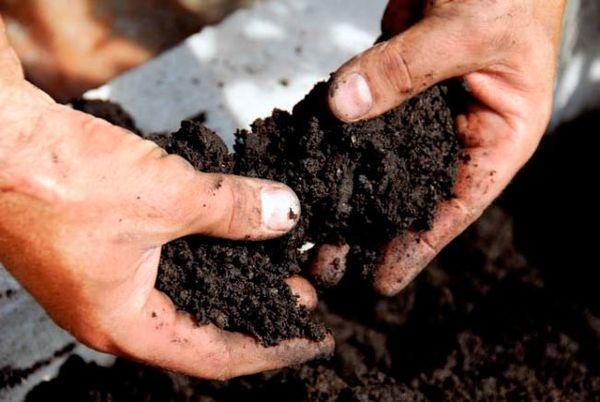
The soil is prepared several weeks before planting seedlings or seeds. It is dug and fertilized with organic fertilizers. Mineral fertilizers are added 5-6 days before planting and the soil is covered with plastic film. The additional covering is removed 48 hours before planting.
Preparing seeds for planting
Cucumber seeds are prepared before sowing using several procedures:
- calibration;
- germination;
- soak.
The preparation stages help select suitable planting material and increase the effectiveness of seedlings.
Timing and technology of sowing
Sowing is planned based on several factors:
- soil warming – not less than +15 degrees;
- elimination of recurrent frosts.
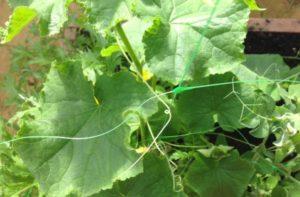
Seedlings are planted in open ground at the end of May or the beginning of June.
How to grow Libella seedlings
In the Urals and Siberia, cucumbers are grown using seedlings. Seeds are sown in March-April, with harvesting expected in 52-55 days.
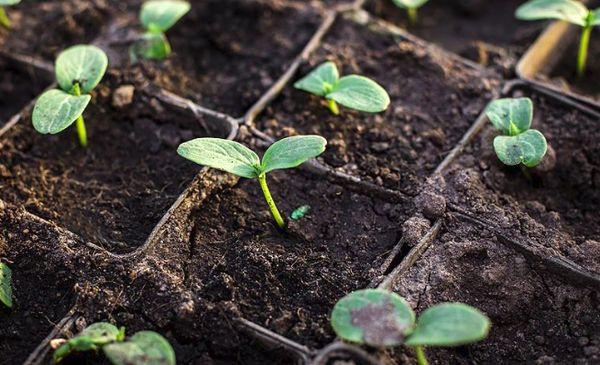
Seeds are sown in individual containers. Peat pots are considered a good option. Cucumbers are a crop that does not tolerate transplanting well due to the nature of their root system. Seedlings are placed on sunny windowsills, under plastic or glass, which is removed after the first shoots appear.
Information! Seedlings with 3-4 leaves are suitable for planting.
Trellis method
Trellis are special devices that allow cucumber vines to be grown vertically. The Libella variety is particularly suitable for trellis cultivation, as the hybrid's root system is underdeveloped, in contrast to its vigorously developing aboveground part. Trellis cultivation is used in the southern parts of the country.
Greenhouse method
In Siberia and the Urals, cucumbers are recommended to be planted in greenhouses. These can be heated rooms with regular ventilation or in-ground greenhouses. For the latter option, plastic bottles with the bottoms cut off are used. This completely covers the seedlings, creating a greenhouse effect.
Caring for cucumbers after planting
Cucumbers require regular, proper care. They don't like drought and require fertilizing.
Irrigation and fertilization
The Libella cucumber variety requires ample watering. Using warm water is essential. Watering with temperatures below 10°C (50°F) can damage the root system, leading to reduced resistance to disease.
The soil is fertilized in stages:
- Organic fertilizers are added before planting.
- During flowering and fruiting, mineral complexes containing phosphorus and potassium are used.
- At the last stage of fruiting, ammonium nitrate is added.
Important! It is not recommended to fertilize cucumbers with horse manure., it reduces the taste qualities.

Garter and shaping the bush
In the southern regions, cucumbers of this variety are grown on trellises. This is convenient for harvesting and arranging the crop in a limited space. The trellises are tied every 30 centimeters.
In Siberia and the Urals, seedlings are planted in high beds with humus.
Weeding and loosening the soil
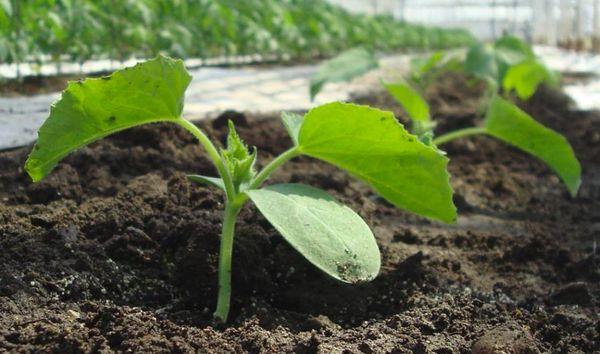
To ensure consistent fruiting, the hybrid's root system needs to receive nutrients from the soil and develop fully. Numerous weeds around the vine can interfere with this, so weeding is necessary regularly.
The hybrid requires soil loosening to increase air access to the root system. The soil is loosened after heavy watering and rainfall, to a depth of no more than 6 centimeters.
Preventive treatment against insects and diseases
To prevent infestations, it's recommended to closely monitor the bushes. Before fruiting, treat the leaves with a solution of laundry soap and spray with Zircon. Fertilize the soil with ammonium nitrate.
Greenhouse cucumbers can suffer from condensation, so they are planted in rooms equipped with ventilation holes.
When to harvest and how to store vegetables
Fruiting begins in late June to early July. The fruits are harvested every 1-2 days. Unripe fruits are especially attractive and are used to make gherkins.
This variety has excellent shelf life. The harvested crop can be stored for several days in a cool, dark place without loss.
Reviews of gardeners and vegetable growers about the variety
Over its long history, this cucumber variety has received numerous positive reviews, with gardeners highlighting several qualities of Libella:
- stable fruiting;
- unpretentiousness;
- resistance to infections.
To ensure the hybrid grows and develops as planned, it is recommended to follow these growing guidelines:
- When growing in a greenhouse, eliminate the possibility of cross-ventilation.
- At temperatures below +10 degrees, the soil is covered with agrofibre to protect the root system from freezing.
- If the air temperature exceeds +35 degrees, the hybrid is transferred to twice-daily watering.
According to gardeners, the Libella variety requires additional potassium during fruiting.
Related posts:
 Description of the best varieties of Chinese cucumbers, planting, growing and care
 35 Best Powdery Mildew-Resistant Cucumber Varieties with Descriptions
 Description of the best varieties of pickling and barrel cucumbers for greenhouses and open ground
 Top 50 Best Cucumber Varieties for Polycarbonate Greenhouses with Descriptions
 The best grape varieties for growing in the Urals, planting and care rules in summer
 TOP 30 best varieties of cold-resistant cucumbers with descriptions and characteristics
 Description of the best, most productive and new varieties of cucumbers for 2025
 80 Best Eggplant Varieties for Different Regions with Descriptions and Characteristics