
- Benefits of natural fertilizers for feeding cucumbers
- In what cases is it recommended to use manure?
- What kind of manure is best for cucumbers?
- Mullein
- Horse manure
- Bird droppings
- Rabbit ground
- Sheep manure
- Pig manure
- When is it necessary to feed cucumbers?
- Fertilizer application technology
- Features of use as biofuel
- Mulching
- Fresh
- Liquid
- Granulated
- Rules and duration of manure storage
Fertilizing cucumbers with manure-based fertilizers yields good results. Each type of manure has its own beneficial properties. The key is to use the components correctly, observe the dosage, and apply the fertilizer at the right time. There are several ways to apply the nutrient to the soil. This results in improved foliage and more high-quality fruit.
Benefits of natural fertilizers for feeding cucumbers
Organic fertilizers are environmentally friendly and do not harm the environment. Their nutrients are derived from the remains or byproducts of living organisms (animals and plants).
The advantages of natural fertilizers include:
- have a slow, gradual effect on plants;
- the soil becomes loose, light, air- and moisture-permeable;
- soil fertility increases;
- many organic components activate the activity of beneficial soil bacteria and fungi;
- normalize the soil acidity balance;
- economical type of fertilizer.
Thanks to timely fertilizing, cucumbers become strong and resilient, the yield increases, and the taste of the fruit improves.
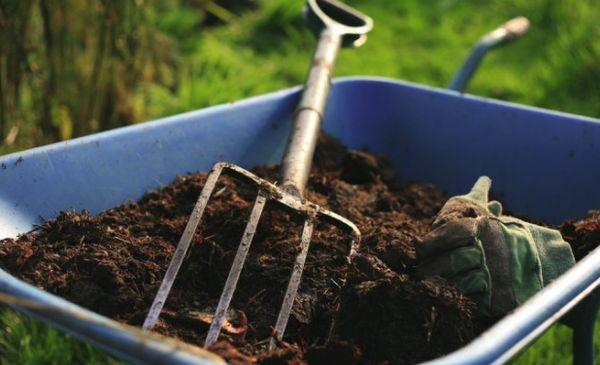
In what cases is it recommended to use manure?
Fertilizing cucumbers can be done not only according to the prescribed schedule, but also as needed. If the following symptoms appear, apply additional nutrients:
- change in leaf color, deformation;
- drying and falling of leaves and ovaries;
- the stem becomes thinner;
- the appearance of spots of different colors;
- decrease in yield;
- bitter taste of the fruits, their small size and irregular shape.
Manure-containing mixtures will increase the crop's resistance to infections, pest attacks, cold, drought, and other adverse factors. Cucumbers should be planted according to a pattern, maintaining space between beds and seedlings.
What kind of manure is best for cucumbers?
For growing cucumbers in open ground, it is best to choose horse, cow, or bird manure, but with proper use, you can also benefit from other compositions.
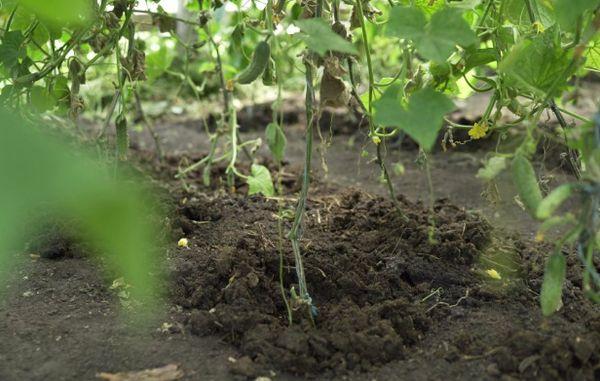
To recommend any type of fertilizer, its effect on the soil and its nutrient composition should be studied.
Mullein
Cow manure contains many micronutrients. Cucumbers love and respond well to its presence in the soil:
- Litter manure is a mixture without a liquid base, as the liquid is absorbed by the bedding material. Over time, it begins to rot, turning into humus.
- To obtain humus, liquid cow dung must be placed in a hole along with other organic components, such as sawdust, straw, and weeds.
The compost pit layout is as follows:
- First you need to make a hole;
- It is recommended to put straw, sawdust, and leaves at the bottom of the pit;
- a layer of liquid manure is poured on top;
- then comes another layer of organic components;
- another layer of slurry;
- The layers are repeated until the hole is completely filled.

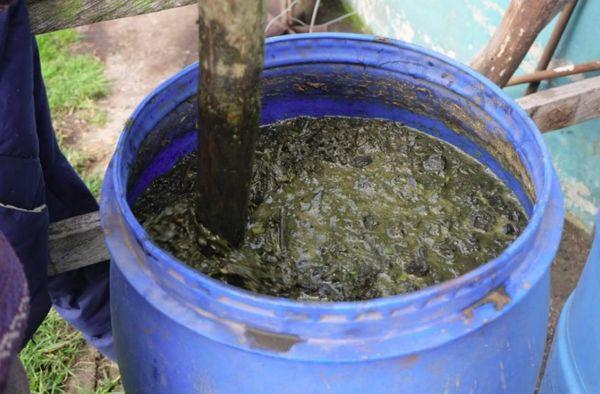
Fresh manure can only be added to the soil in the fall, when digging the plot. It will have time to rot over the winter and won't harm the plant roots. Young cucumber seedlings are fed with a mullein-based infusion in the spring.
The first time you apply mullein is when the cucumber plants develop their first pair of true leaves. Then, repeat the process during the initial fruiting period.
Horse manure
Horse manure is considered a popular and effective fertilizer for greenhouses and open ground. It contains a lot of phosphorus, nitrogen, calcium, and other valuable components. Horse manure helps warm the soil and improve its structure.
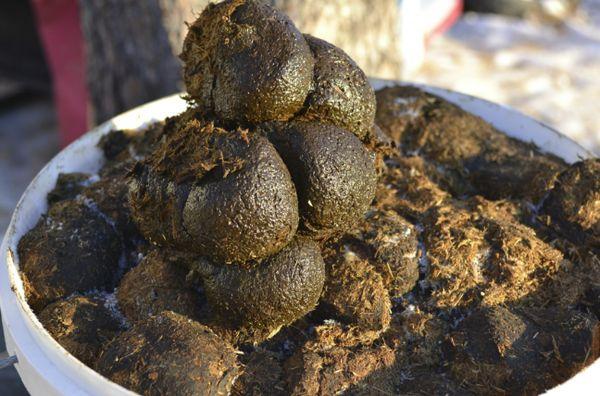
Fresh manure is best used during fall garden preparation. Spring is considered the best time to prepare beds with rotted horse manure. During flowering and fruit set, apply the liquid solution.
Instructions for preparing a liquid solution:
- a bucket of manure together with leaves, straw, sawdust should be placed in a large container and filled with 6 liters of water;
- the mixture is infused for 12 days;
- stir periodically;
- The finished concentrate must be diluted with water.
Horse compost is beneficial for cucumbers. The hole is filled with plant tops, sawdust, straw, and mixed with horse manure.
Bird droppings
Bird droppings have a beneficial effect on cucumber growth. The fertilizer boosts immunity, accelerates crop development, promotes abundant harvests, and prolongs the fruiting process. The micronutrients contained in bird droppings decompose slowly in the soil, improving soil quality for several years.
Chicken manure is applied in the form of granules, liquid solution, or compost. The benefits of any type of fertilizer can only be achieved if used correctly.
To prepare a liquid solution yourself, mix chicken manure with water (use equal parts). Cover the container with a lid and leave for 15 days. Dilute the prepared concentrate with water before use. You can water your cucumber beds at any stage of their development.
Compost is added in the fall during soil digging. Manure should be prepared in advance. Place a layer of manure at the bottom of a deep hole, followed by a layer of straw and peat. Repeat the process until the hole is completely filled. Leave the components to rot for two months.
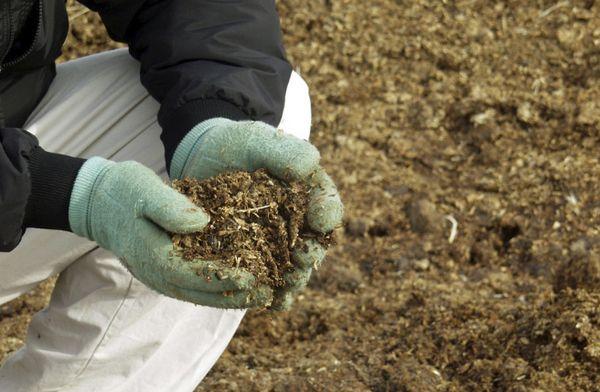
Rabbit ground
Rabbit manure contains equal amounts of beneficial micronutrients and organic compounds. It loosens, warms, and nourishes the soil. In the fall, after clearing all vegetation from the area, the soil is dug over and fresh fertilizer is evenly spread. Fresh manure should not be used on seedlings.
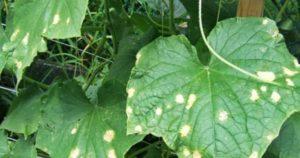
To prepare the infusion, pour 2 kg of manure into a bucket of water. Leave the mixture for 12 days until it dissolves completely. It is recommended to apply the fertilizer to the holes before planting. Rabbit manure can be used in its dry form. The manure is dried in the sun, then ground into a powder and mixed with the soil.
Sheep manure
Sheep manure is well suited for heavy, clay-based soils. Its main components are nitrogen and potassium. Sheep manure is dense and dry.
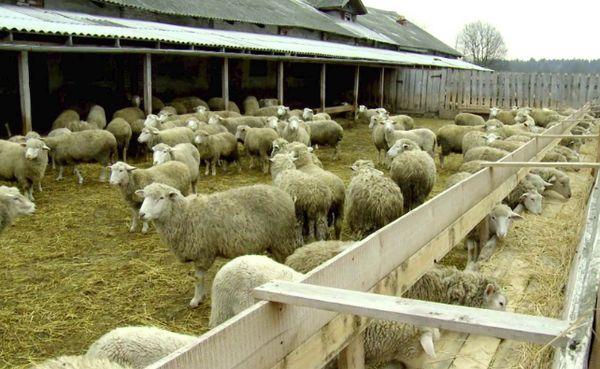
Since soil contains a lot of nitrogen, it's best to add it to the soil as compost. Sheep manure is placed in a pit and watered with slurry. This method promotes intensive decomposition of the components and improves thermal properties.
Fertilize the soil in the fall and add it to the holes in the spring before planting. It's recommended to use fertilizer no more than once every six months.
Pig manure
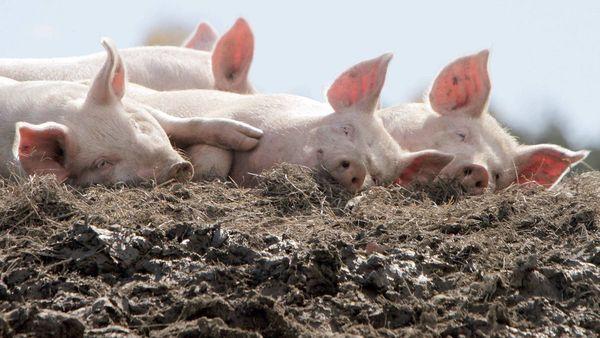
Pig manure is rich in nitrogen, phosphorus, and other micronutrients. When using this fertilizer, keep the following in mind:
- cannot be used fresh; the component must first be processed;
- the composition is acidic, so it is not suitable for every soil;
- low calcium;
- the process of decomposition of components is slow, therefore it is most effective to use it in the form of humus;
- insufficient heat transfer.
It's best to use well-rotted manure. It doesn't contain pathogens, plant seeds, or pest larvae.
When is it necessary to feed cucumbers?
Fertilize the soil with manure in the fall, after the entire harvest has been gathered. During the active growing season, four applications are recommended:
- Before flowering, the soil is watered with a liquid solution with the addition of urea and superphosphate.
- During the period of active fruiting, it is useful to water the beds with a solution based on manure and wood ash.
- After 14 days, repeat the feeding. Use a mixture containing manure, superphosphate, potassium sulfate, and urea.
- After another 12 days, the beds are watered with a solution with the addition of mineral components.
If signs of wilting and yellowing appear, additional organic fertilizer is required. Frequent fertilization is not recommended.
Fertilizer application technology
The technology of applying fertilizers is determined by their state of aggregation:
- Liquid fertilizers are applied either through the roots or foliar sprays. It's best to alternate between these two methods. At the beginning of the season, it's best to water the beds and then spray the foliage.
- The solid composition is embedded into the soil to a depth of at least 15 cm during autumn digging of the land plot.
Natural ingredients in any form will benefit your cucumber beds. The key is to follow the correct dosage and application timing.
Features of use as biofuel
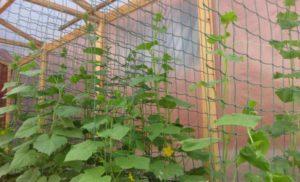
Natural fertilizer is used as biofuel for the construction of manure warm bed for cucumbers.
Mulching
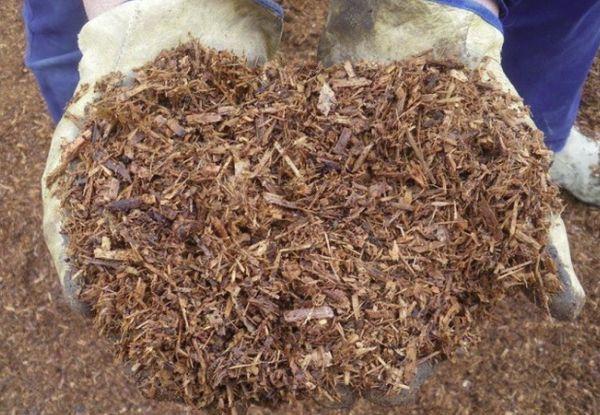
Horse or cow manure is best for mulching garden beds. As these fertilizers decompose, they will warm the soil and release valuable micronutrients. A small amount is required, mixed with straw. If compost or humus is used, it should be mixed with the topsoil to avoid losing beneficial micronutrients.
Fresh
Fresh manure should not be used as fertilizer for cucumbers during the summer months. The reactions that occur during the breakdown of its components negatively impact plant development. Fresh manure can be added to the soil during deep tillage.
Liquid
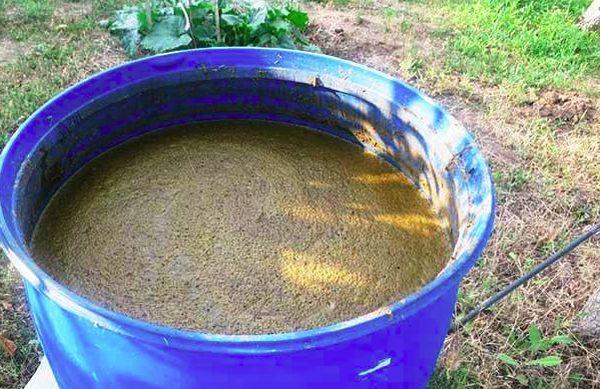
When you need to quickly replenish the soil with micronutrients, use a liquid solution. A certain amount of manure is steeped in a bucket of water. The fermentation process releases ammonia, destroying pest larvae and weed seeds.
After a week of infusion, the mixture will be ready to use in your cucumber beds. Before fertilizing the beds, dilute the concentrate with water.
Granulated
If manure undergoes biological treatment and compaction, it becomes granules. These granules can slowly enrich the soil with nutrients throughout the growing season.
The granules are applied to the soil at a depth of 30 cm in the fall or in the spring before planting. The granules absorb moisture well during watering and rainfall, then release it back into the soil during dry periods.
Rules and duration of manure storage
Fertilizer won't be beneficial if stored incorrectly. There are several ways to store it properly:
- Cold storage is preferred. Dig a hole and line the bottom with straw, sawdust, leaves, or peat. Then add the manure itself and cover with peat or regular soil. Cover the hole with plastic for the winter.
- With hot storage, manure is left loose in piles. The downside is that air easily penetrates the pile, leading to bacterial growth.
With the hot method, the fertilizer's benefits last only 2-3 months. The pile's surface may turn white, indicating the onset of rotting and the spread of fungus. This fertilizer cannot be used.
Related posts:
 Description of unusual methods for planting and growing cucumbers
 How to use and prepare manure as a fertilizer, its types and composition
 How to properly plant cucumber seedlings in a greenhouse and care instructions
 How to properly plant cucumbers in open ground with seeds, and at what depth
 How to make a cucumber trellis with your own hands from scrap materials
 Description of the best varieties of Chinese cucumbers, planting, growing and care
 How to care for cucumbers in open ground from planting to harvesting
 Why do cucumber leaves curl inward and what to do about it?