
- History of selection
- Description and characteristics of the variety
- Main characteristics
- Appearance
- Clusters
- Berries
- Frost resistance
- Productivity
- Transportability
- Disease resistance
- Pros and cons
- How to plant correctly
- Site selection and preparation
- How to choose and prepare a seedling
- Recommendations for choosing deadlines
- Planting diagram
- Care instructions
- Watering
- Mulching
- Top dressing
- Formation
- Preventive spraying
- Protection from wasps and birds
- Shelter for the winter
- Methods of reproduction
- seedlings
- Cuttings
- Diseases and pests
- Leaf roller
- Phylloxera
- Phomopsis
- Oidium
- Lime chlorosis
- Harvesting and storage
- Applications of berries
- Tips and advice from experienced gardeners
The Moldova grape variety is considered one of the most widely grown. This crop is easy to care for and boasts high yields. To ensure successful grape growing, regular watering, fertilizing, and pruning are recommended. This will ensure tasty and sweet grapes, which are widely used in juices and compotes. Moldova is also often used for wine production.
History of selection
This variety was developed quite a long time ago. It was developed experimentally in Moldova. Breeders crossed Seive Villar and Guzal Kara to create this variety. The result was a new variety. Moldova is also known as the Black Prince or Late Codreanca. The crop is widely grown in the southern regions.
Description and characteristics of the variety
The grapes ripen in mid-October, taking 155-160 days. This variety is characterized by tall bushes that begin bearing fruit quite early. The flowers are considered bisexual.
A characteristic feature of the variety is good ripening of shoots. It is worth considering that the variety does not tolerate thickening well. That is why it is so important to prune the bush in a timely manner.
The crop is suitable for cultivation in southern regions. It is actively grown in the Rostov Region and Krasnodar Krai. Moldova is also suitable for cultivation in Crimea. With proper care, the variety can also be planted in northern regions. However, in conditions with insufficient heat, the fruits may not ripen.
Main characteristics
Moldova was obtained as a result of combining two varieties, which gave the crop some characteristics.
Appearance
This variety is characterized by strong and vigorous bushes. They have large leaves that are dissected into five lobes and have slight roundings. The grapes have bisexual flowers, so they do not require pollination.
Clusters
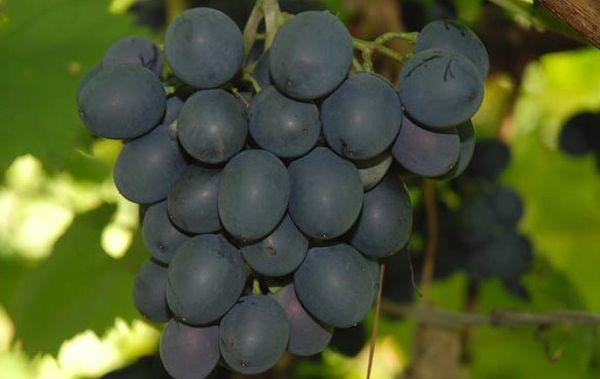
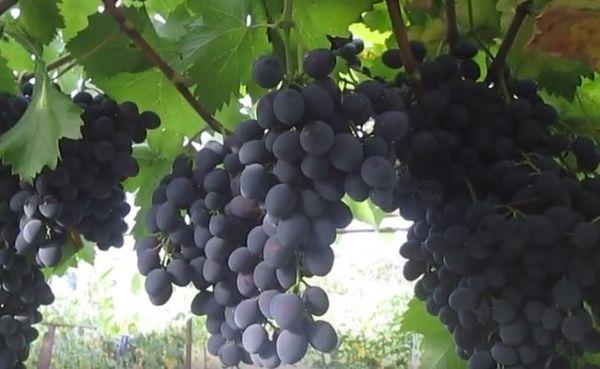
The plant produces large clusters weighing 400-600 grams. The clusters are conical or cylindrical-conical in shape and are characterized by medium density.
Berries
The fruits are conical or cylindrical in shape. Inside, they contain sweet, moderately firm flesh. The outer skin is thick, which improves shelf life.
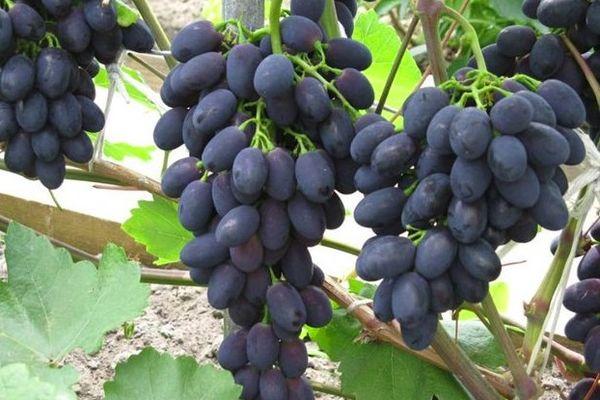
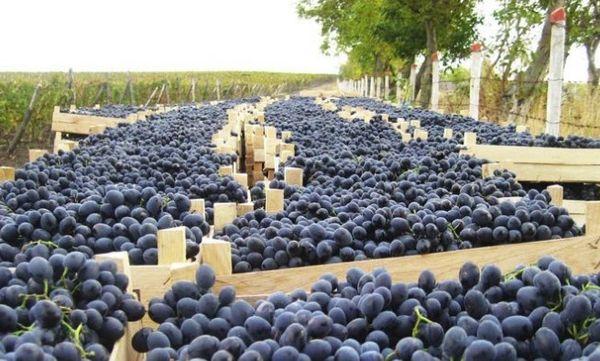
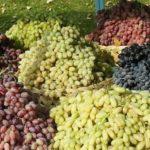
The berries are quite large, reaching 25 millimeters in length and weighing 5-6 grams. They are a rich purple color and covered with a waxy coating. The berries have a perfect oval shape and excellent flavor.
Frost resistance
In warm regions where the plant can thrive, it is highly frost-resistant. It can tolerate temperatures as low as -22 degrees Celsius. Under these conditions, the grapes do not require winter protection.
Productivity
This variety is characterized by high yields. An 8-10-year-old bush can produce up to 150 kilograms of high-quality fruit.
With intensive grape cultivation, each hectare of plantings can yield 150-165 centners of grapes. Hobbyists can harvest up to 4 kilograms of grapes per square meter of plantings.
Transportability
Berries transport well and have a long shelf life, up to six months. However, it's important not to overripe the berries, as this significantly reduces their shelf life.
Disease resistance
This variety is highly resistant to many diseases that affect other grape varieties. It is resistant to powdery mildew and downy mildew. However, it can be susceptible to Phomopsis and lime chlorosis.
Pros and cons
The main advantages of this variety include the following:
- Easy to care for.
- A bountiful harvest. The fruits have a tough skin, allowing for long shelf life. The berries are easy to transport. Provided there are no sudden temperature fluctuations, the grapes can remain on the vine for a long time.
- Versatility. The fruits of this table variety can be used in a variety of ways.
- Disease resistance. The plant is virtually immune to mildew and gray mold.
- Wasp resistance. This is due to the late ripening of the berries.
- Fast recovery after pruning and plant damage.
- High frost resistance. The crop can overwinter in southern regions without additional shelter.
However, Moldova grapes also have certain disadvantages:
- Risk of powdery mildew. Preventative plant treatments can help prevent this disease.
- Reduction of shelf life of fruits when left on the bush for a long time.
- Highly sensitive to pruning. If pruning is performed incorrectly, there is a risk of significant yield reduction.
How to plant correctly
To ensure a strong and well-developed plant, it's important to plant it correctly. This will help the crop establish quickly and ensure a high-quality and abundant harvest.
Site selection and preparation
To ensure proper growth, it's important to carefully select a planting site. A south-facing, sunny location is ideal for this variety. It doesn't tolerate excess moisture well, so it's recommended to plant it at elevated sites.
Protecting the crop from wind and drafts is essential. The plant also requires light, fertile soil.
How to choose and prepare a seedling
The plant's yield directly depends on the quality of the seedlings. It is recommended to purchase them only from nurseries or reputable growers. In any case, the bush should be carefully inspected for diseases and the condition of the roots.
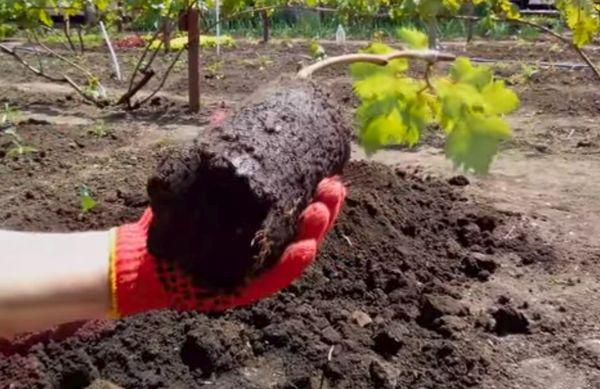
It's not recommended to purchase weakened plants with signs of disease. Such plants may not thrive in the garden.
Recommendations for choosing deadlines
Planting can be done in spring or fall. The soil warms up to 10 degrees Celsius before planting.
Planting diagram
When planting grapes, you should do the following:
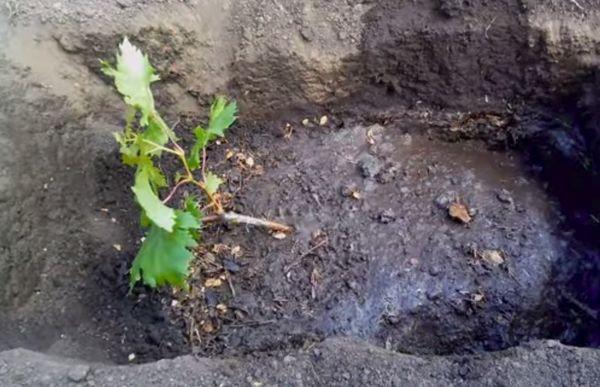
- Dig a hole 70 centimeters deep and 1 meter wide. Fill the planting hole 2/3 full with fertilizer and cover with soil.
- Place the seedling in the center of the hole and spread out the roots.
- Sprinkle with earth.
- Water generously.
- Tie to a support.
The bushes grow rapidly. Therefore, when planting, ensure each plant has sufficient space. Ideally, space plants at least 4 meters apart. The distance between rows should be 5 meters.
Care instructions
To ensure the crop develops normally and bears fruit consistently, it is recommended to provide it with proper care.
Watering
This variety requires high-quality soil moisture. When growing Moldova grapes, it's important to constantly monitor soil moisture. If the soil is very dry, water the plant. On average, it's recommended to water once a month. During prolonged droughts, increase the frequency of watering. Excess water should be drained into special drainage ditches.
Mulching
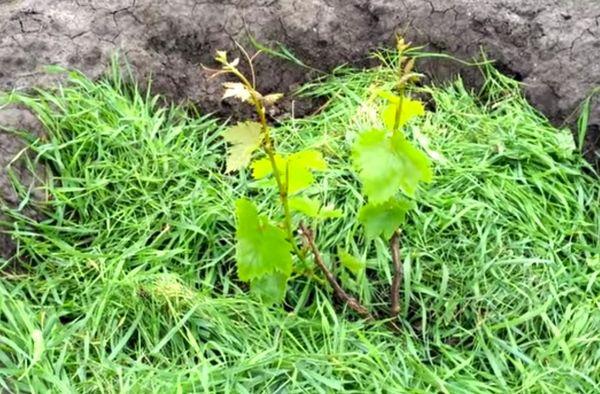
This procedure is necessary for the plant's full development. Mulching is done using rotted manure. It should be spread around the plant's trunk at a depth of 1-1.5 meters. The mulch layer should be 3-3.5 centimeters thick.
This procedure is performed in the fall and spring. Mulching is not used in the summer, as it will cause the roots to evaporate.
Top dressing
The bush receives organic fertilizer through mulching. In addition, mineral fertilizers should be used. When digging the soil, it's recommended to use potassium- and phosphorus-based fertilizers.
Formation
Formative pruning helps provide the plant with warmth and light. This improves leaf function and increases yield. This is best done in early spring or late fall.
When pruning in the fall, it's a good idea to leave a double supply of buds. This is done in case of frost damage. This is especially important in the central part of the country, where prolonged frosts are possible.
When growing a standard plant, two branches should be left. Some growers don't stretch them horizontally, but rather direct them upward. In this case, the bush can be formed into three or four branches. It's important to avoid overloading the plant. The vine should be pruned to four to six buds. The total number of buds should not exceed 70.
Preventive spraying
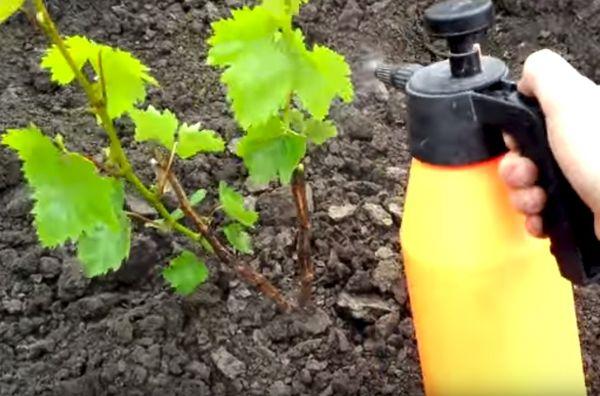
This variety is disease-resistant. However, under unfavorable conditions, it can be susceptible to powdery mildew. Preventative treatments can help prevent this. These should be applied before flowering. Bordeaux mixture at a concentration of 1% is often used for this purpose.
Protection from wasps and birds
Wasps and birds often damage berries. To protect the fruit, you can use the following methods:
- isolate the branches with a mesh;
- set up scarecrows or other devices;
- use ratchets.
Shelter for the winter
This grape variety easily tolerates temperatures down to -23 degrees Celsius. If temperatures in the region drop even lower, the plant should be covered.
After autumn pruning, the shoots should be bent to the ground and secured with metal arches. Covering material, film, or hay can be used.
In the south, it is permissible to leave grapes without cover.
Methods of reproduction
There are various ways to propagate grapes, allowing gardeners to choose the most suitable option.
seedlings
In this case, you can purchase a ready-made seedling. This is the simplest and most accessible method, suitable even for novice gardeners.
Take a look Also
Cuttings
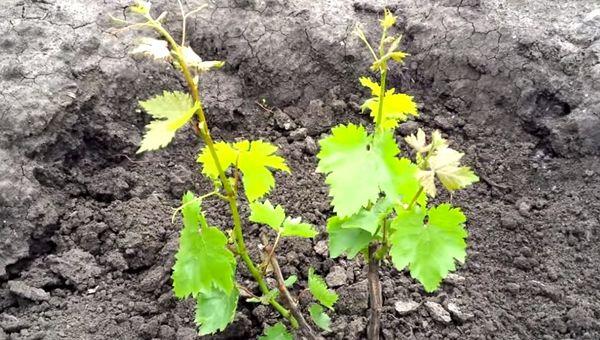
In this case, the cuttings are harvested in the fall and stored in a cellar. In early February, it is recommended to remove them and soak them in water. Once roots appear, the grapes are transferred to separate containers. By the end of May, leaves will form on the seedlings. At this stage, the plants can be planted outdoors.
Diseases and pests
Grapes are susceptible to various diseases and pest attacks. This negatively impacts fruiting and can lead to the death of the plant.
Leaf roller
In this case, the grapes are attacked by small butterflies. Their caterpillars eat the buds, ovaries, and fruits. Insecticides such as Alatar, Decis, and Inta-Vir can help combat the problem.
Phylloxera
This is a grape aphid that causes damage to the roots or leaves of the plant. There are no effective methods for controlling the pest. Deep planting and pruning are recommended for prevention.
Phomopsis
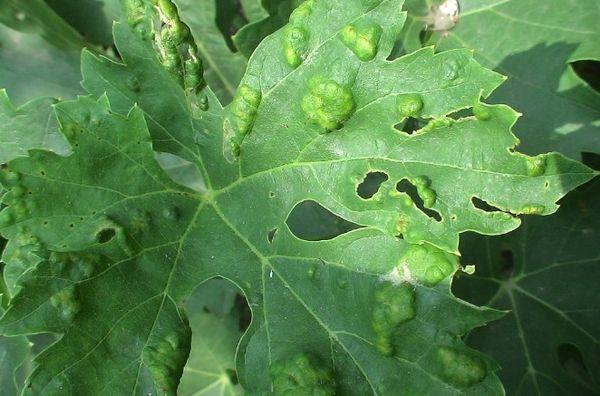
As the disease progresses, young vines become covered with lumps, berries spoil, and branches die. Dampness is the cause of the problem. Copper-containing products can help prevent the disease. Ridomil Gold fungicide should be used during flowering.
Oidium
As the disease progresses, the leaves become covered with a grayish-white coating, and the berries crack and dry out. Thiovit Jet can help prevent this.
Lime chlorosis
This disease affects grapes grown in dense soil with poor gas exchange. Iron chelate can help combat this problem.
Harvesting and storage
The harvest should be done immediately after the fruit ripens. If the berries are overripe, they become too soft and do not store well. Harvesting should be done by hand. It is recommended to do this very carefully.
The harvested fruits are taken for sale or used as intended. It is recommended to store the harvest in the refrigerator.
Applications of berries
Moldova is considered a versatile variety, its fruits suitable for fresh consumption. They are also used to make juices and wine.
Tips and advice from experienced gardeners
When growing grapes of this variety, you need to follow the basic recommendations:
- water the crop on time;
- loosen and weed the beds;
- apply fertilizers;
- carry out pruning;
- protect the bush from diseases and pests.
Moldova grapes are known for their high yields and excellent flavor. Their fruits are versatile, making them popular among gardeners. To achieve good results, comprehensive care is recommended.
Related posts:
 The best grape varieties for growing in the Urals, planting and care rules in summer
 Description of 30 grape varieties for Siberia, planting and care for beginners
 Description of 30 varieties and types of Muscat grapes, planting, cultivation and care
 The best methods for growing grapes from seeds at home
 Description and rules for growing Solaris grapes
 Methods for planting and propagating cherries at home
 The ripening time of grape vines by variety, how to speed up the process, and what to treat the plant with
 Beginner's Guide to Growing Grapes in Open Ground in Central Russia