
- Description of the variety
- Productivity and fruiting
- Sustainability
- Characteristics of berries
- Taste properties
- Landing algorithm
- Recommended timeframes
- The right choice of seedling
- Soil preparation
- Landing plan
- Growing and care
- Watering
- Top dressing
- Trimming
- Shelter for the winter
- Protection from diseases and pests
- Methods of reproduction
- Cuttings
- Layering
Developed in sunny Bulgaria and approved by the state commission for cultivation in the North Caucasus, the Augustin grape variety has become popular among gardeners in the temperate central regions. Its widespread distribution is due to its resilience to harsh growing conditions.
Description of the variety
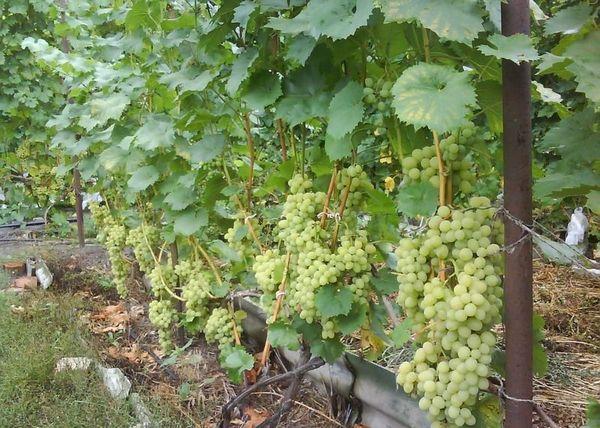
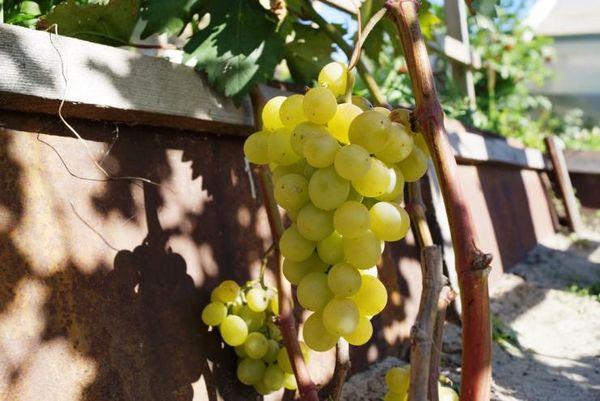
The mottled red-brown Augustine grapevines, with their slightly dissected, rounded, five-lobed leaves and large clusters of amber berries, are not only capable of producing a bountiful harvest but also, when planted correctly, become a beautiful addition to any garden. This hybrid is used to decorate hedges, garden beds, and arbors. Thanks to its tenacious tendrils, Augustine can be used to camouflage unsightly outbuilding walls. The bushes are vigorous. A vine with a diameter of 2 cm can grow up to 7 m in a season.
The grapevine blooms in May; first, panicle-shaped inflorescences open at the bottom of the vines; after 3–4 days, small flowers open along the entire length of the vine.
The crop is self-fertile and can act as a pollinator.
Productivity and fruiting
The early table grapes of the Augustin variety ripen by mid-August. With proper agricultural practices and growing conditions, yields reach 50–60 kg per vine or 130 centners per hectare. After ripening, the berries retain their marketable appearance and flavor for up to 14–20 days, remaining on the vine.
Sustainability
Thanks to its French-bred parent variety, Villard Blanc, the Augustin grape has developed a high immunity to diseases and pests. The plant is completely resistant to gray mold and has moderate resistance to powdery mildew (downy mildew and oidium). Wasps only damage the bush when rotting berries are present.
The Augustin variety tolerates winter temperatures down to -25°C without any problems. This is considered above average for grapes. The plant is sensitive to sudden changes between thaws and frosts. The crop survives drought, but lack of moisture affects the yield.
Characteristics of berries
The ability to grow in unfavorable weather conditions with minimal agricultural technology and still produce a consistently high annual yield explains other names for the Augustin grape variety: Pleven Stable (from the parent variety Pleven) and Phenomenon, which refers to the exceptional properties of the crop.
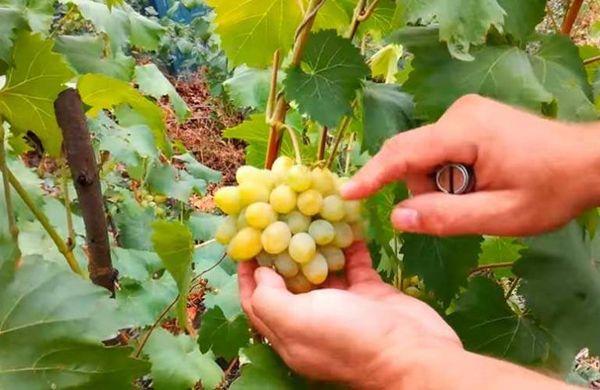
The minimum weight of a hybrid bunch is 0.4 kg, the maximum is 1.2 kg. The yellow berries with a white bloom, translucent in the sun, grow freely on the cluster, not tightly packed together. The average weight of one bunch is 7 g. The bunch is cone-shaped, with a base diameter of 15 cm and a length of up to 20 cm.
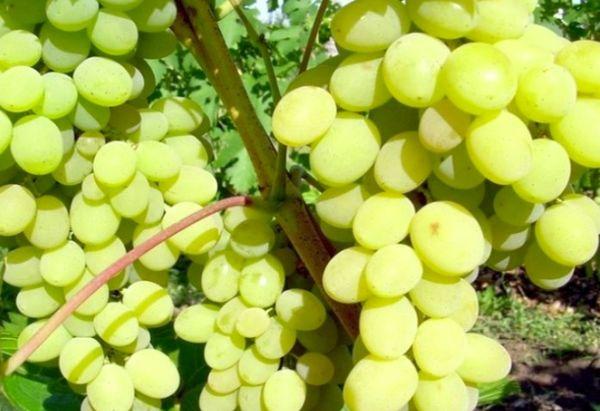
The dense flesh and thick skin of grapes ensure good transportability when shipping to retail and processing sites. The few disadvantages of this grape include the presence of large seeds.
The skin on the fruit bursts in two cases: when the soil is over-watered or when it is infected by grapevine moth.
Taste properties
The tasting panel rated the Augustin grapes 8.2 out of 10. The fleshy, juicy pulp has a harmonious, classic flavor with a subtle aroma. Despite the sugar content being lower than most other varieties (21–22%), the berries are sweet, but not cloying. There is no muscat flavor.
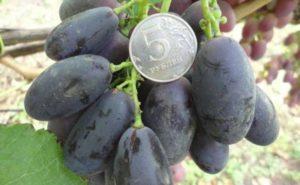
Augustine's fruits are used to juice, make wine, and dry them. Hobby gardeners often eat the berries fresh or sell them at market.
Landing algorithm
Agricultural technology for the Augustine grape begins with determining the timing, preparing the site, soil, seedlings, and adhering to the planting scheme.
Recommended timeframes
Augustine grapes are planted in spring or fall. In spring, the heat-loving variety grows and produces fruit faster. In fall, varietal seedlings are more readily available and resilient. In warm climates, planting material has time to root from mid-October until frost. In temperate climates, planting is recommended from mid-April to June.
The right choice of seedling
Augustine grape seedlings are purchased at garden centers, markets, and online stores. A more reliable way to obtain reliable information about the variety and select high-quality planting material is to visit the vineyards.
Signs of a suitable Augustine variety seedling:
- at least three long elastic roots;
- green trunk under brown bark;
- 3-5 live buds;
- vine length - 30–35 cm;
- the root is white when cut.
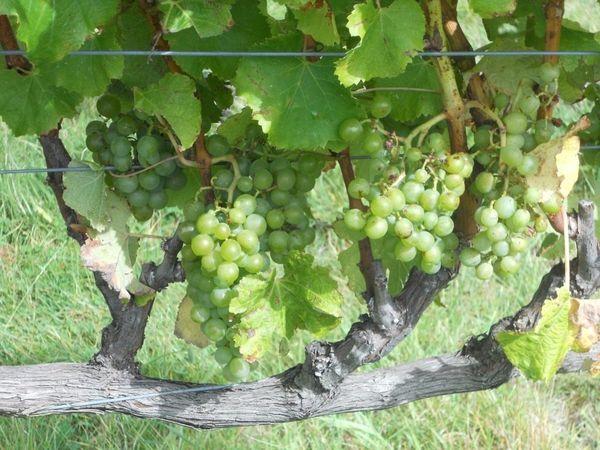 Seedlings with thin or dry roots, deformations, damaged bark, and non-viable buds are rejected.
Soil preparation
To ensure proper development and abundant fruit production each year, the Augustine grape variety is planted in light, fertile soil—black soil, sandy loam, or clay loam. The plant will not survive in heavy clay soils, as the roots are not supplied with sufficient oxygen and moisture.
If planting a single plant, dig a hole 70 cm deep and wide. If planting a vineyard, dig trenches. Add a bucket of compost and 2 tablespoons of nitrophoska per square meter to the bottom. Drainage made from crushed rock and building debris is added as a second layer.
The following layers consist of topsoil and humus, which are filled in alternately. The trench or hole is watered generously and left open for the winter. If planting in the fall, the hole should be prepared at least two weeks in advance.
Landing plan
A distance of 2 m is maintained between seedlings, and 2–2.5 m between trenches.
Planting technology of Augustine grapes:
- the seedling is deepened into the hole so that the root collar is at the level of the soil surface (40 cm);
- straighten the roots;
- covered with a fertile layer of soil;
- compact the soil, water it;
- The planting is mulched with peat, and the spaces between rows are mulched with a mixture of chicken manure and rotted sawdust.
Immediately after planting, a support is constructed to form the bushes into the desired shape.
Growing and care
Proper development and stable fruiting depend on proper care for the Augustine grape. The plant requires irrigation, weeding, mulching, and pruning. Preventative measures to protect the vines from diseases and pests, as well as fertilization, significantly increase yield.
Watering
If the winter was snowless, the Augustine grapevine is watered for the first time in March to accelerate growth. The next watering with warm water is done in April, and the third is two weeks before flowering.
In summer, the plant is watered as the soil dries out. Watering the grapes in the days leading up to and after flowering increases the risk of fruit drop. The vines require irrigation during the fruit ripening period, but when the berries turn yellow, watering is stopped to prevent cracking.
To prevent the root from freezing in winter, Augustine is generously watered in October-November.
Top dressing
In early spring, before the Augustine grape vines open after winter, dissolve 1 tablespoon of superphosphate, ½ tablespoon of potassium salt, and 1 teaspoon of potassium salt in a bucket of water. Water the vine with this mixture. For better absorption of the fertilizer, it is recommended to dig a trench around the plant, 40 cm from the base of the vine, to allow the nutrients to flow.
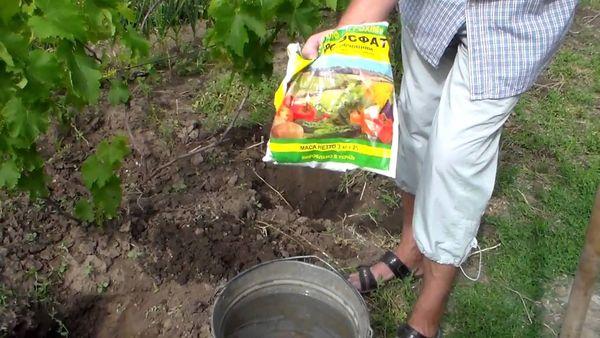
Two to three weeks before Augustine blooms, repeat the same feeding. When the fruit begins to ripen, apply superphosphate and potassium fertilizers to the grape bushes. Before wintering, fertilize the plant with ash. Every three years, add rotted manure or compost during the spring tillage; if the soil is sandy, apply it every other year.
Trimming
The Augustine grapevine is trained in a fan shape. The advantage of this method is the ease of insulating the vine from winter frosts and the formation of perennial branches with fruiting links. During the first winter, two shoots with four buds are produced. The following year, four branches are left, growing from the lower buds of the previous year's shoots. The ideal branch is considered to be at a 45° angle to the ground surface. Augustine vines are pruned for the winter, leaving a length of no more than two meters.
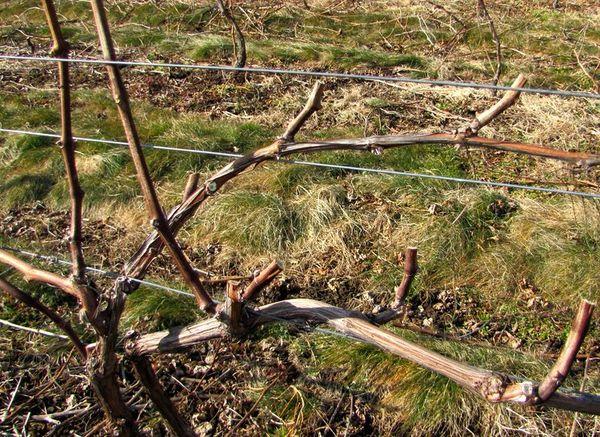
In the third year, the vines are tied to the trellis at a height of 70 cm. The buds located below the first row of wire are broken off, leaving only the top 3-4 buds, from which new fruiting branches grow. In the third year, gardeners reap the first full harvest. If the fruiting canes have more than one inflorescence, it is recommended to remove the excess after flowering.
Each subsequent year, the fruiting links are removed, and replacement shoots are formed from the overwintered buds.
Shelter for the winter
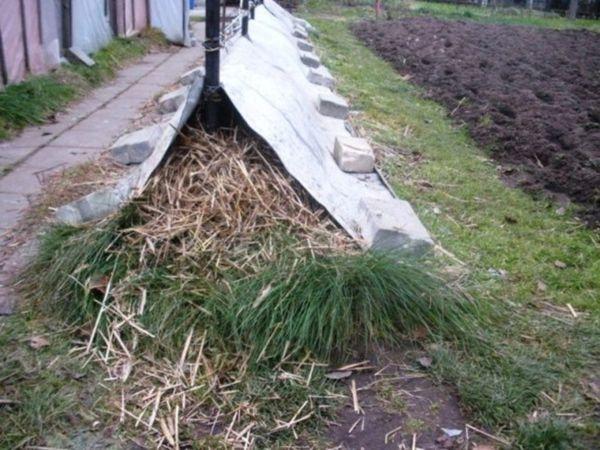
Since gardeners can't predict how harsh or snowless the winter will be in a given year, Augustine grapes are insulated. The optimal frost protection option is to plant the bushes in a pre-dug trench. A frame is erected over the trench or metal arches are inserted. Plastic film is stretched over the support, and then straw, spruce branches, or other readily available insulating material are laid on top.
Protection from diseases and pests
Despite its high immunity, the Augustine grape variety is susceptible to the following diseases and pests if improperly planted, cared for, or if unsuitable seedlings are chosen:
- Mildew and oidium (types of powdery mildew) are prevented by treating grapes with a 3% copper sulfate solution before the growing season and before covering the vines for the winter. For prevention, spray the grapes on the leaves with Horus. If diseases appear during the fruit ripening stage, use Fitosporin, a harmless solution.
- Grape leaf roller. Yield losses due to the activity of caterpillars, which eat the ovaries, can reach 30%. Insecticides such as Inta-Vir, Koragen, and Tanrek are used to protect grapes from pests. The first spraying is carried out three weeks after the moths have left, and the second two weeks later.
- Grapevine root aphid inhabits the upper soil layers, attacking the root system of grapevines. This causes swellings and growths. Leaf phylloxera parasitizes the leaves of grapevines, forming galls on the underside of the leaf blades. These insects can completely destroy the plant within a few years. Control the leaf form by spraying with Actellic, Fastak, and Zolon when the larvae emerge from the galls. Treatments are carried out twice a year.
To prevent wasp attacks on the vineyard, inspect ripening bunches of grapes and remove berries with cracked skins or those damaged by pests.
Methods of reproduction
The most acceptable and reliable methods for propagating the Augustine grape are cuttings and layering. Seed propagation is not very effective for vineyards.
Cuttings
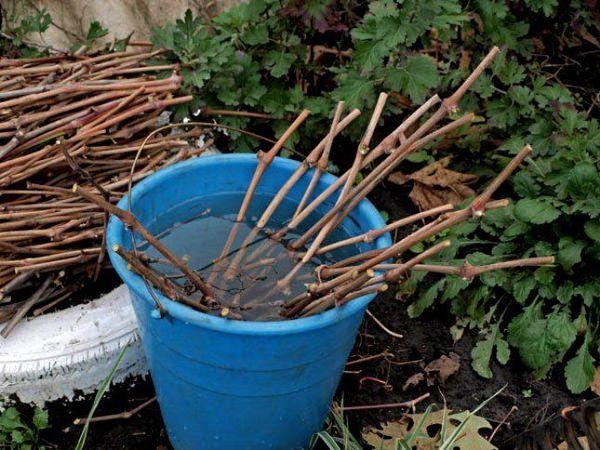
Cuttings are taken after the leaves fall in the fall. Suitable cuttings are one-year-old grape shoots no larger than 1 cm in diameter with four buds. The cuttings are tied into a bundle, wrapped in cotton cloth, and placed in a cellar, after being dipped in a solution of potassium permanganate or copper sulfate to prevent mold. In March, the Augustine cuttings are soaked for two days in water with honey added. Then, they are buried 1 cm deep in a substrate of garden soil, humus, and sand. A plastic bottle is placed on top, creating a greenhouse effect.
Already in May, seedlings with an independent root system are transplanted into the vineyard.
Layering
After the grape harvest, a strong, mature vine located close to the ground is selected. It is bent down, the lower part is placed in a pre-prepared trench, and the upper part is tied to a support. The trench is filled with compost with added superphosphate. The buried vine is watered and mulched with organic matter. The seedling is separated from the mother plant after two years.
Related posts:
 Description of the Julian grape variety, planting and care instructions
 How to grow grapes in the Moscow region in open ground without a greenhouse
 Description of the Krasotka grape variety, planting and care technology
 The ripening time of grape vines by variety, how to speed up the process, and what to treat the plant with
 Description of 30 grape varieties for Siberia, planting and care for beginners
 Description and characteristics of the Laura grape variety, planting and care
 Description and characteristics of the Preobrazhenie grape variety, planting and care
 Description and characteristics of the Livia grape variety, cultivation and propagation