
- Description and Features
- Properties and characteristics
- Caloric content
- Benefits and harms
- Acidity
- Bunch
- Productivity
- Frost resistance
- Pros and cons of the variety
- Planting methods
- Graft
- Cuttings
- Seeds
- Layering
- How to plant correctly
- Recommendations for choosing deadlines
- Choosing a location
- Soil preparation
- Preparing the planting hole
- Selection and preparation of planting material
- Planting diagram
- Care instructions
- Watering
- Top dressing
- Crown formation
- Topping
- Pinching out stepsons
- Ventilation
- Treatment with Bordeaux mixture
- Bird protection
- Preparing for winter
- Diseases and pests
- Oidium
- Mildew
- Anthracnose
- Bacteriosis
- Chlorosis
- Bacterial cancer
- Rubella
- Wasps
- Harvesting and storage
- Applications of berries
- Tips and advice from experienced gardeners
Livia is a young grape variety renowned for its sweet, muscat flavor. It was developed by Vitaly Vladimirovich Zagorulko, a breeder from Zaporizhzhia. Thanks to its high yield and long shelf life, Livia quickly gained popularity. The grapes produce beautiful, heavy bunches with uneven berries, ranging from green to pink.
Description and Features
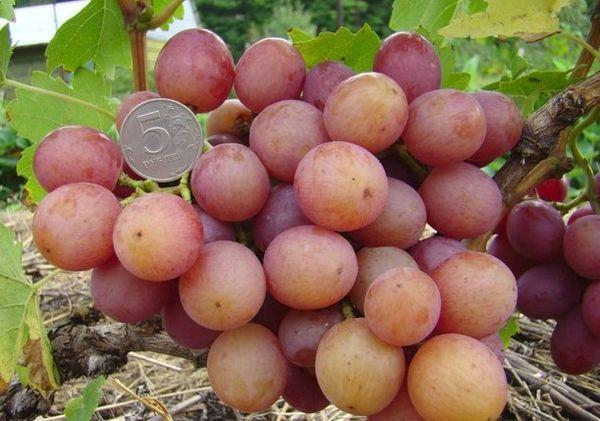
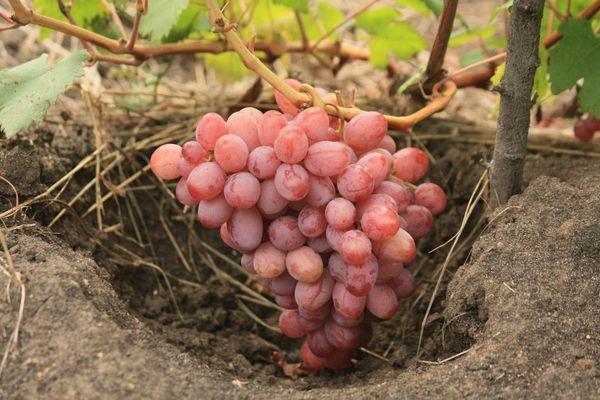
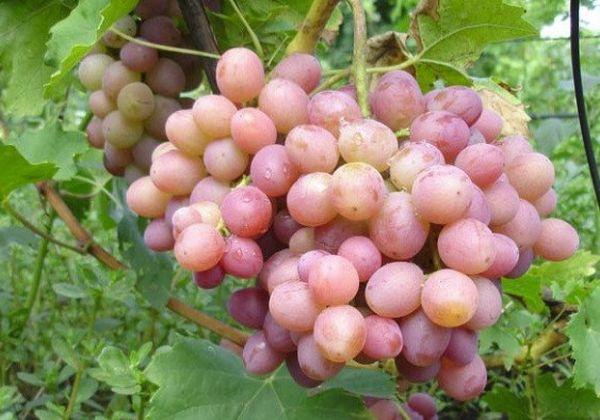
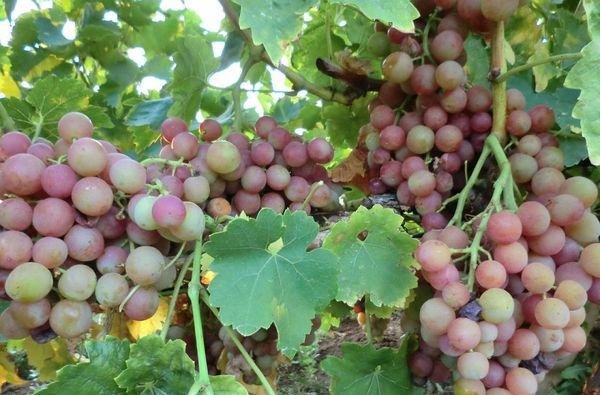
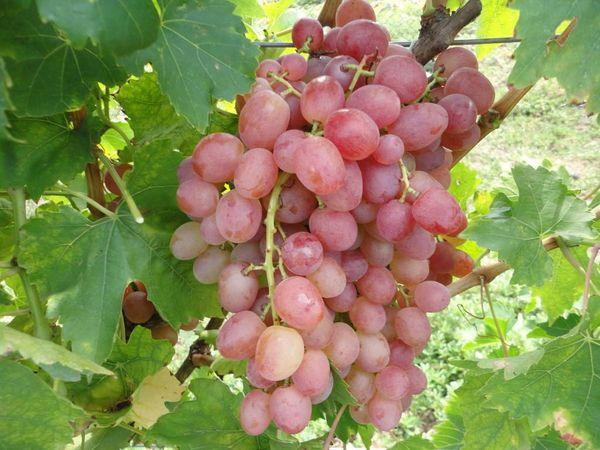
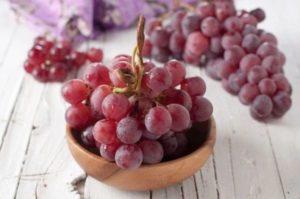
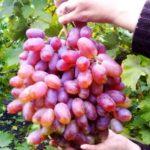
Livia is a hybrid of pink table grape varieties. The clusters reach 40 cm in length, with a loose, not dense, surface. The bunches are heavy, with each branch weighing 1 kg. The berries vary in hue due to uneven ripening, a distinctive characteristic of this variety. Depending on the ripening process and stage of each berry, the color can be yellow, green, pink, or purple.
The fruits vary from one another: some are oval in shape, while others are perfectly round.
The berries are very juicy and fleshy, with a muscat flavor. The skin is soft and almost imperceptible when eaten.
It differs from other varieties in the small number of seeds in the berry, up to three in each fruit.
Livia produces both male and female flowers, resulting in a high yield. The flowers themselves require no pollination. The vines are very strong, growing well upward even with heavy bunches. Young shoots have a light green crown. The first leaf is undivided, while subsequent leaves have five lobes, each moderately divided.
Properties and characteristics
Libya has a great advantage in properties compared to other grape varieties.
Caloric content
Livia grapes are very sweet, with each fruit containing 20% sugar. Calories per 100g of grapes are 65 kcal.
Benefits and harms
Livia contains beneficial fiber, organic acids, and antioxidants that detoxify the body. Its increased glucose levels have a beneficial effect on brain function.
Eating the fruit helps relieve intestinal problems and improve the health of the top layer of skin.
However, grapes are harmful to people suffering from stomach ulcers and gastritis. Grapes are especially contraindicated for diabetics. Grapes negatively affect the liver, so excessive consumption should be avoided.
Acidity
The maximum acidity of Libyan berries is 6 grams per liter. The further north the grapes are grown, the lower their acidity. However, this variety is not used for wine production, as its acidity falls short of the required 7-10 grams.
Bunch
Whole-cut grape clusters have excellent shelf life. They remain fresh and flavorful for up to a month without being crushed.
The berries do not crack or lose their elasticity quickly, despite the large size and heavy weight of the bunch.
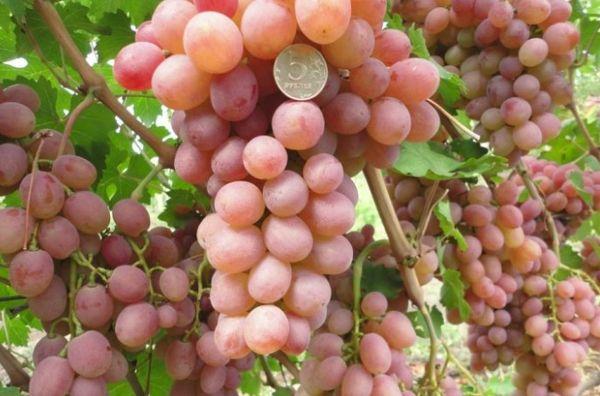
During each flowering period, it's necessary to trim off excess flowers to form clusters. This procedure helps prevent unripe clusters from becoming overloaded on the vine.
Productivity
Grapes produce their first harvest as early as the third year after planting. However, improper or no care can delay fruiting. Livia is an early-ripening variety, so the period from the first buds to the full ripening of the berry clusters is three months.
To avoid overloading the clusters and ensure a healthy harvest, it's necessary to remove several flowers during flowering. This also helps ensure all the berries in the cluster ripen more evenly at the same time. However, an overly overloaded branch only produces up to 75% of the harvest.
Frost resistance
Livia, like all grape varieties, is not particularly frost-hardy. The maximum temperature it can withstand is -20 degrees Celsius. Therefore, if this variety is planted in harsh weather conditions, it is essential to provide adequate cover.
Pros and cons of the variety
Libya has many advantages. It's no coincidence that Libya grapes have gained immense popularity in a relatively short time since their introduction.
Take a look Also
Advantages of the Livia grape variety:
- early ripening;
- high yield;
- beautiful appearance of bunches;
- pleasant and sweet taste;
- good presentation over a long period of time;
- preservation of taste and shape of fruits during transportation.
Some gardeners, however, have also found some negative qualities of Libya:
- uneven ripening of berries on one bunch;
- reduced resistance to diseases: oidium and mildew;
- Due to the high sugar content in the fruits, the variety is susceptible to attacks by birds and wasps;
- low frost resistance.
Planting methods
The Livia grape variety can be propagated in a variety of ways: by cuttings, grafting, seeds, and layering. It's crucial, no matter the method, to select healthy, disease-free planting material.
Graft
A healthy scion is grafted onto the mother plant, which is pre-cut to a small stump. The junction is then securely bound with plastic wrap, and a layer of loose soil and moss is placed around it.
Cuttings
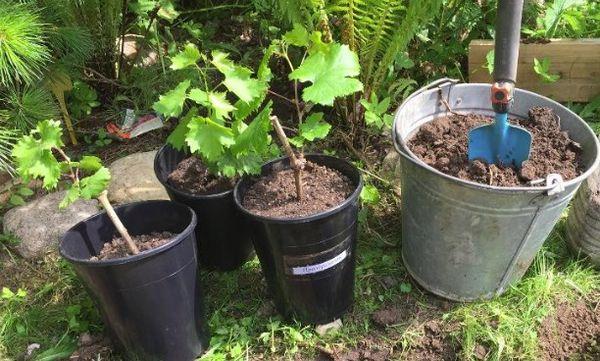
Propagation by cuttings is the most commonly used method. A seedling with three buds and healthy roots is taken and placed in a hole three times its size. The hole is carefully filled with soil and humus.
Seeds
Rarely used by gardeners, the method is common among breeders to develop new grape varieties. Seeds are disinfected.
Layering
The required number of vines are laid horizontally in the dug holes in a line. To ensure they lie firmly in the ground, they are pinned with iron clamps. The main part of the vine is covered with soil, while the upper part is left exposed, and all buds are removed with a knife. Once the vines have rooted, the trench is completely filled with soil to the desired level.
How to plant correctly
Properly planted grapes can yield a bountiful harvest every season. It's important to choose the right location and planting material, as well as take care of the soil.
Recommendations for choosing deadlines
It's recommended to plant grapes in the spring. Livia will have an easier time establishing itself in warmer weather, as it doesn't like cold.
Choosing a location
Choosing a growing site requires special care, as it will determine the quality and quantity of the harvest. Livia prefers loamy soils. The site should be well-lit and well-ventilated.
Agronomists advise planting grapes on the south side of houses and outbuildings.
It is especially recommended to plant the plant in such a place in middle and northern latitudes to protect the grapes from the cold northern wind.
Soil preparation
Libya isn't very picky about soil composition. Even the most unfavorable soil can be improved with regular fertilization and top dressing. However, it's best to ensure the soil is suitable in advance.
This variety grows particularly well in light loamy and clayey soils, as well as black soil with underlying groundwater. If the site doesn't have these types of soil, it's necessary to fertilize it with well-rotted manure or compost before planting. The necessary ready-made complex fertilizers for each grape variety are available at specialty stores.
Before planting, the dug soil must be well leveled and stones removed.
Preparing the planting hole
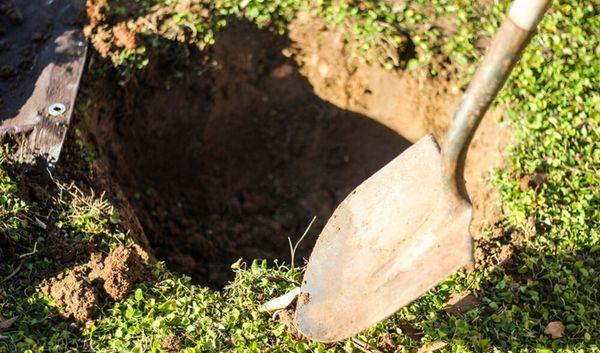
Before planting seedlings, prepare planting holes. The depth of the holes depends on the seedling's root system and should be 2-3 times its length and diameter. Fill the bottom of each hole with compost.
Selection and preparation of planting material
Only healthy seedlings with a strong root system are selected for planting. Before planting, gardening tools must be disinfected to prevent the introduction of infections and pathogenic bacteria.
For planting, prepare a substrate containing loose black soil, humus, or compost; sometimes, peat soil is used. Rainwater or river water is used for irrigation.
Planting diagram
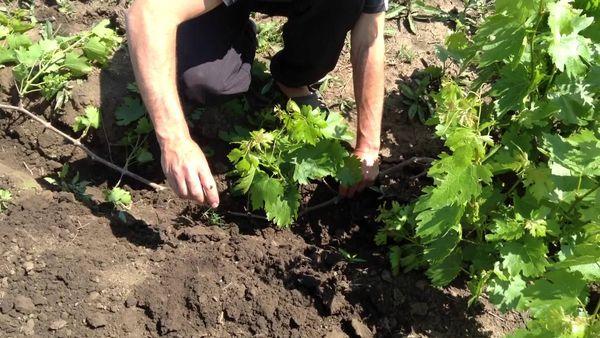
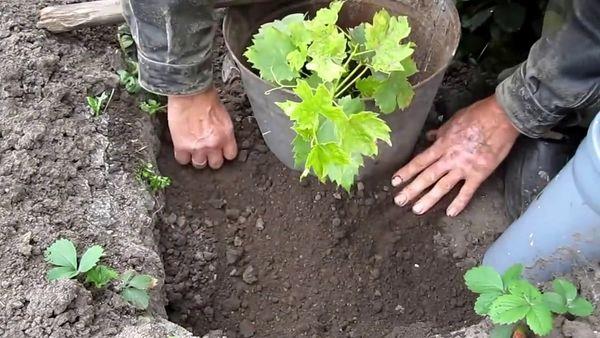
I carefully place the seedlings into the holes, taking care not to damage the root system. The root collar should remain above ground. Then, carefully cover the bush with soil. A sturdy vertical object is inserted into the north side of the seedling for support if the vines are not being planted near a house or other buildings. Finally, water the vines generously with soft, slightly cool water.
Care instructions
Care for Livia grapes should not be ignored. The plant's harvest and health depend on it. Care is especially necessary during flowering, as the grape clusters need to be formed. Livia grapes often need to be protected from diseases and pests, especially birds and wasps.
Watering
Livia requires watering twice per season in moderate climates. The first watering is done before the flowers bloom, and the second watering is done when flowering has ceased and the first berries begin to set.
The infrequent watering is explained by the fact that excessive moisture causes the fruit to crack. Furthermore, in summer, rainfall brings additional watering. However, during particularly dry seasons, increased watering is acceptable.
Top dressing
Libya requires organic and mineral fertilizers. Fertilizers high in potassium and phosphorus are especially essential. Dry fertilizers are recommended for application in spring and fall, with periodic feeding throughout the growing season.
A solution of mullein and rotted manure can be used as organic fertilizer. However, it's better to purchase a comprehensive organic fertilizer specifically for this grape variety. The same applies to mineral fertilizers. Products such as Aquarin, Novofert, and Plantafol are good alternatives to traditional methods.
Crown formation
Livia requires mandatory bush training to avoid subsequent heavy strain. No more than 45 buds are left on a single vine.
This procedure is essential. It increases yields, as fewer bunches remain on the vine, allowing them to grow well and ripen on time.
Topping
Livia is distinguished by its large number of shoots and side shoots. To obtain a high-quality harvest, these need to be pinched. Before flowering, remove excess side shoots and fruiting stems by hand. The tips of each shoot are torn off and broken off.
Pinching out stepsons
Pinching out side-sons protects Livia from fungal diseases and chlorosis and promotes timely ripening of the berries. Pinching out side-sons is done in the spring. On branches from the main vine, only the lower leaves are left, and the upper part is trimmed off.
Ventilation
If the winter is warm, the grapes covered for the winter need ventilation. When the weather thaws, make cuts in the covering to allow air to reach the vines. Alternatively, on a warm day, remove the film and fill the area around the trunk with two buckets of soil. Then pin each vine to the ground again and cover it with fiberglass, which provides good ventilation.
Treatment with Bordeaux mixture
It is recommended to treat Livia vines with Bordeaux mixture regularly throughout the season. The procedure is performed six times per season, early morning or evening. Spray the entire above-ground portion of the vine, making sure to include cracks and crevices, as this is where most of the microbes reside.
In spring, spray with a 3% Bordeaux mixture before bud break. Before the first flowers appear, spray again with a 1% solution. Stop the treatment during flowering and resume in summer.
Bird protection
To protect your grape harvest from birds, you need to isolate the bunches. To do this, wrap the vines in vegetable netting. Large plastic bottles, cut for ventilation, can be used for the bunches.
In addition to isolating the grapes, it's important to repel birds. Hang homemade structures made of tape, mirrors, and noise-making objects around the perimeter of the plot. Birds are wary of the color blue, so hanging blue bags is recommended.
Preparing for winter
Livia has low frost resistance, so in regions where winter temperatures drop below -20°C, insulating the bushes is necessary. For winter insulation, cover them with straw, soil, spruce branches, burlap, or agrofibre.
If the seedlings are young, they are covered regardless of the climate.
Diseases and pests
Livia suffers more from diseases and pests than from improper care. Treatment and control measures are necessary even at the first sign of problems. The variety is particularly susceptible to diseases known as powdery mildew and mildew.
Oidium
The main sign of powdery mildew is gray mold on the leaves of the Libya plant. Over time, if left untreated, the mold will spread to other parts of the plant: bunches of grapes, shoots, inflorescences, fruits, and vines. The fungus spreads quickly, especially in hot and dry weather. Therefore, it is necessary to begin treatment at the first sign of the disease and implement preventative measures regularly.
Colloidal sulfur is used to treat oidium, but it is better to use special biological preparations for the treatment of oidium.
Mildew
Downy mildew is also known as false powdery mildew. The disease is most likely to occur in densely planted vines with poor ventilation. It can be prevented by pruning and removing side shoots, which should be done every season. To treat grapes, treat them with Bordeaux mixture and ensure good ventilation. Sometimes the disease can be prevented by planting several rows of dill nearby.
Take a look Also
Anthracnose
The disease appears as a fungus and attacks shoots, inflorescences, and leaves. It can sometimes infect berries, causing dry, dark spots to appear on the skin. Mature bushes can avoid advanced disease, but young seedlings are particularly susceptible.
To successfully treat the disease, it's necessary to ventilate the bushes, eliminate weeds, and spray the grapes with Bordeaux mixture. Treatment with fungicides such as Fundazol or Previkur is particularly effective.
Bacteriosis
Bacterial wilt is a disease caused by bacteria in the soil and water. Sometimes, the disease is transmitted by contaminated gardening tools and planting materials.
With bacteriosis, the color of the leaves and fruits of the grapes changes to a brownish-brown color.
Treatment with Bordeaux mixture helps combat the disease. The concentration should be higher during the initial treatment and then decreased with each subsequent treatment. Sulfur-based preparations are also used.
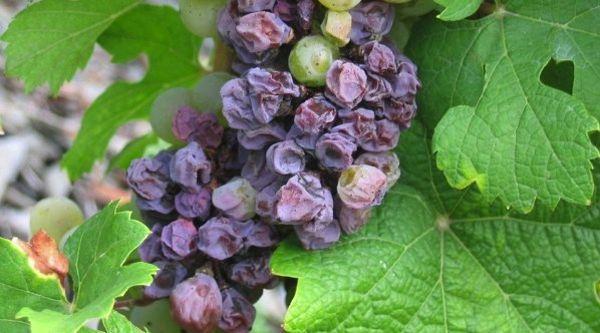
Chlorosis
Chlorosis disrupts photosynthesis due to a lack of minerals, especially iron. Livia begins to fade and turn white, followed by yellowing and drying of the green parts.
Regular soil drainage is essential to ensure the roots absorb nutrients, and mineral fertilizers are applied. A solution of ferrous sulfate is helpful. Water the soil around the plant's roots with the solution. You can also spray the above-ground portions of the grapes with this solution.
Bacterial cancer
Most common in colder regions, it attacks the above-ground portion of the grapevine, close to the roots. Brownish tumors appear on shoots and branches. The entire vine's growth is reduced because moisture is cut off from the plant tissue.
The disease is virtually untreatable with conventional treatments. Galltrol is the most effective. However, it only kills visible lesions; the bacteria remain within the Livia plant's cells. Infected bushes should be removed from the area by the roots as quickly as possible, otherwise they will spread to other plants.
Rubella
Rubella is caused by a fungus that first infects the leaves, then the rest of the plant. Brown and dark red spots appear on the leaves. The affected leaves soon begin to die and fall off, causing the flowers to drop and the loss of most of the crop. The disease is treated in the same way as mildew.
Wasps
Libya suffers from wasp attacks, which are attracted to the sweet grapes. To protect the grapes from pests, it is recommended to cover them with transparent netting, preferably stretched between the trellises.
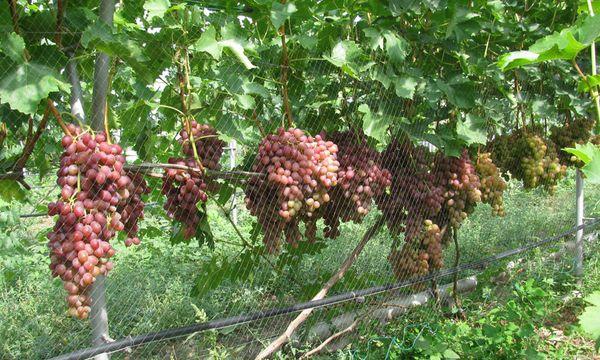
It's important to remove all wasp nests from the area and set traps for the wasps. These traps are containers filled with honey or sugar syrup treated with insecticide. These containers are left throughout the grapevine area.
Harvesting and storage
Harvesting takes place in dry, clear weather, as soon as the berries are ripe and pink. The clusters are cut at the base with pruning shears and placed in large, clean, dry containers. The berries must be stacked carefully to avoid damaging the waxy coating on the skin.
Before storing the berries, remove any rotten or damaged berries from the bunches. The grapes are then placed in the refrigerator. Livia grapes are stored at a temperature of at least 0 degrees Celsius and a humidity of 90%.
Applications of berries
Due to its acidity of 6g, compared to the required 7-10g, Livia is not used in wine production. The berries are more often consumed fresh due to their long shelf life. Jams, preserves, compotes, and juices are made from the fruits of this variety.
Tips and advice from experienced gardeners
Experienced gardeners and agronomists advise against fertilizing with nitrogen-containing fertilizers during flowering. Nitrogen negatively impacts flower emergence and development. Excess nitrogen in the soil can significantly reduce yields.
Related posts:
 Description of 30 grape varieties for Siberia, planting and care for beginners
 Beginner's Guide to Growing Grapes in Open Ground in Central Russia
 How to grow grapes in the Moscow region in open ground without a greenhouse
 Description of 30 varieties and types of Muscat grapes, planting, cultivation and care
 The ripening time of grape vines by variety, how to speed up the process, and what to treat the plant with
 Description of the Julian grape variety, planting and care instructions
 Description of the Krasotka grape variety, planting and care technology
 Description and characteristics of the Alpha grape variety, the subtleties of cultivation